
Mergers and acquisitions in Los Angeles move fast, and the stakes are high. Getting the fundamentals right-from due diligence to deal structure-separates successful transactions from costly mistakes.
We at Pierview Law have guided LA-based businesses through complex M&A processes. This guide walks you through the key stages, common pitfalls, and strategic considerations that matter most in Southern California’s competitive market.
What Happens Before You Sign
The foundation of any successful M&A transaction in Los Angeles rests on three interconnected activities that occur before papers get signed. Due diligence, valuation, and deal structure determine whether you acquire a sound business or inherit hidden liabilities. Most deals that fail do so because one of these phases was rushed or handled superficially. In Los Angeles, where real estate holdings, intellectual property, and multi-jurisdictional operations are common, skipping steps costs millions.
Getting Due Diligence Right
Due diligence is not a checkbox exercise. It requires systematic investigation of financial records, contracts, licenses, real estate holdings, employment agreements, and regulatory compliance across multiple jurisdictions. For LA-based businesses, this includes verifying California business licenses, employment law compliance, environmental clearances for any real estate, and intellectual property registrations. Deloitte research shows that comprehensive due diligence reduces post-acquisition risk and improves pricing accuracy, yet many buyers compress this phase to close faster. That pressure is a mistake. A business with multiple lease agreements, franchise arrangements, or pending litigation needs deeper investigation than most teams budget for. If your target operates in Hermosa Beach or coastal areas, environmental due diligence becomes critical-beach-adjacent properties carry climate risk, erosion liability, and potential restoration obligations that become perpetual maintenance costs. Assign clear ownership to each work stream, set realistic timelines, and budget for specialist input on IP, real estate, and regulatory compliance.
Valuation Requires Market Reality, Not Formula
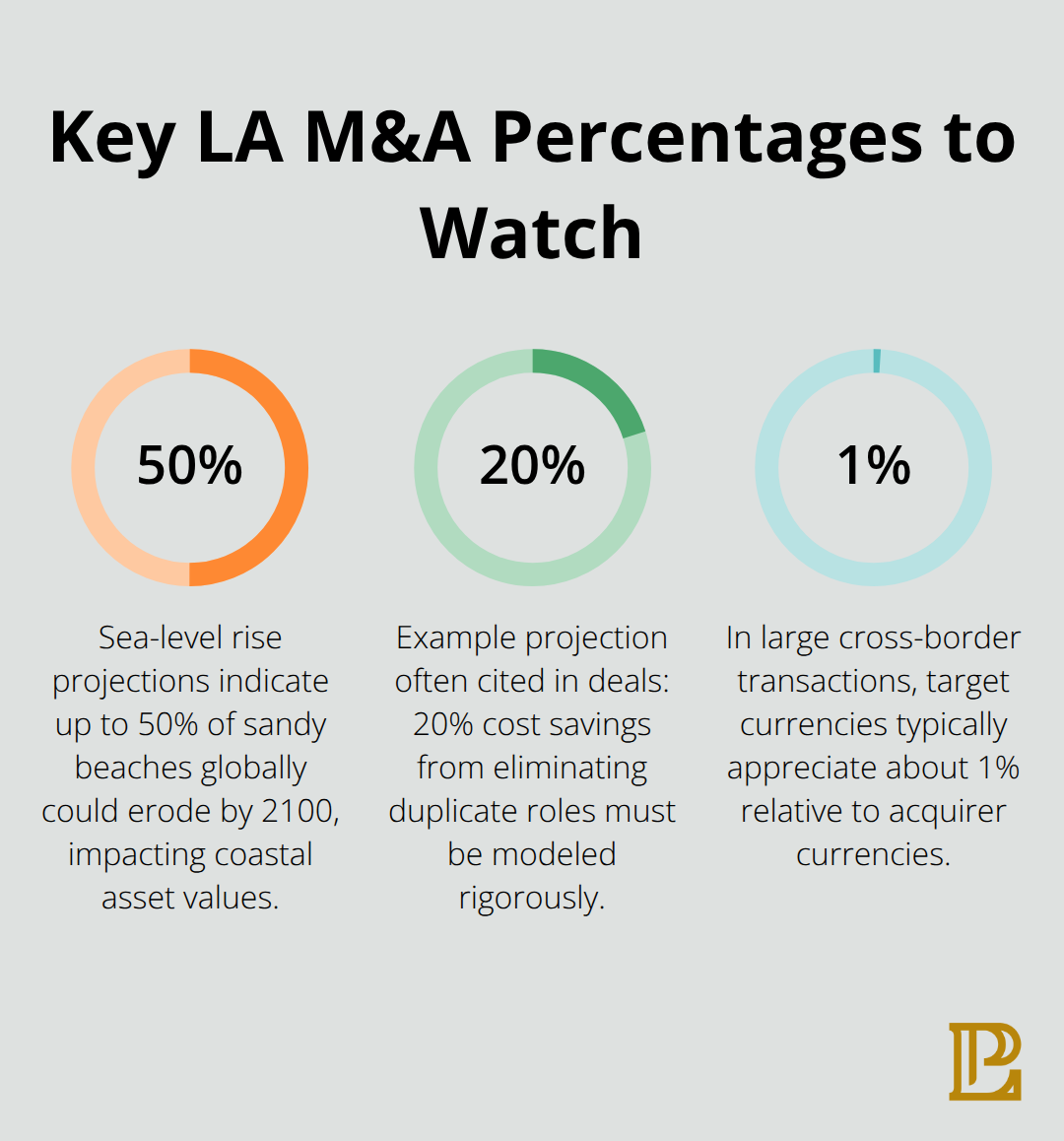
Valuation in Los Angeles M&A often relies on five triangulation methods: asset-based approaches, historical earnings, future maintainable earnings, relative valuation, and discounted cash flow analysis. None of these work in isolation. A restaurant business with strong lunch-to-go revenue and private dining events shows different cash flow patterns than a traditional hospitality operation, and relative valuation must account for that specificity. Enterprise value versus equity value confusion leads to pricing errors-enterprise value accounts for debt and cash, while equity value is what shareholders receive. Cross-border deals introduce currency effects; research shows target currencies typically appreciate about 1% relative to acquirer currencies in large transactions, which affects final price. For LA businesses, factor in local market dynamics: coastal location premiums, labor cost trends in Los Angeles County, and competitive density. Synergy claims inflate valuation constantly. If you project cost savings from eliminating duplicate functions, quantify them rigorously. If you claim revenue synergies from cross-selling, model customer overlap conservatively. Overpaying for synergies that never materialize destroys value faster than operational mistakes.
Structuring the Deal Shapes Risk and Taxes
Deal structure determines liability exposure, tax consequences, and closing speed. An asset purchase lets you select which assets and liabilities to acquire, avoiding historical problems tied to the target. A stock purchase conveys everything-including hidden liabilities. A merger can be structured as a forward or reverse triangular merger to preserve contracts and simplify closing. Two-step mergers close faster: an initial tender offer for a majority stake followed by a short-form merger can bypass a full shareholder vote under certain California law provisions, compressing timelines.
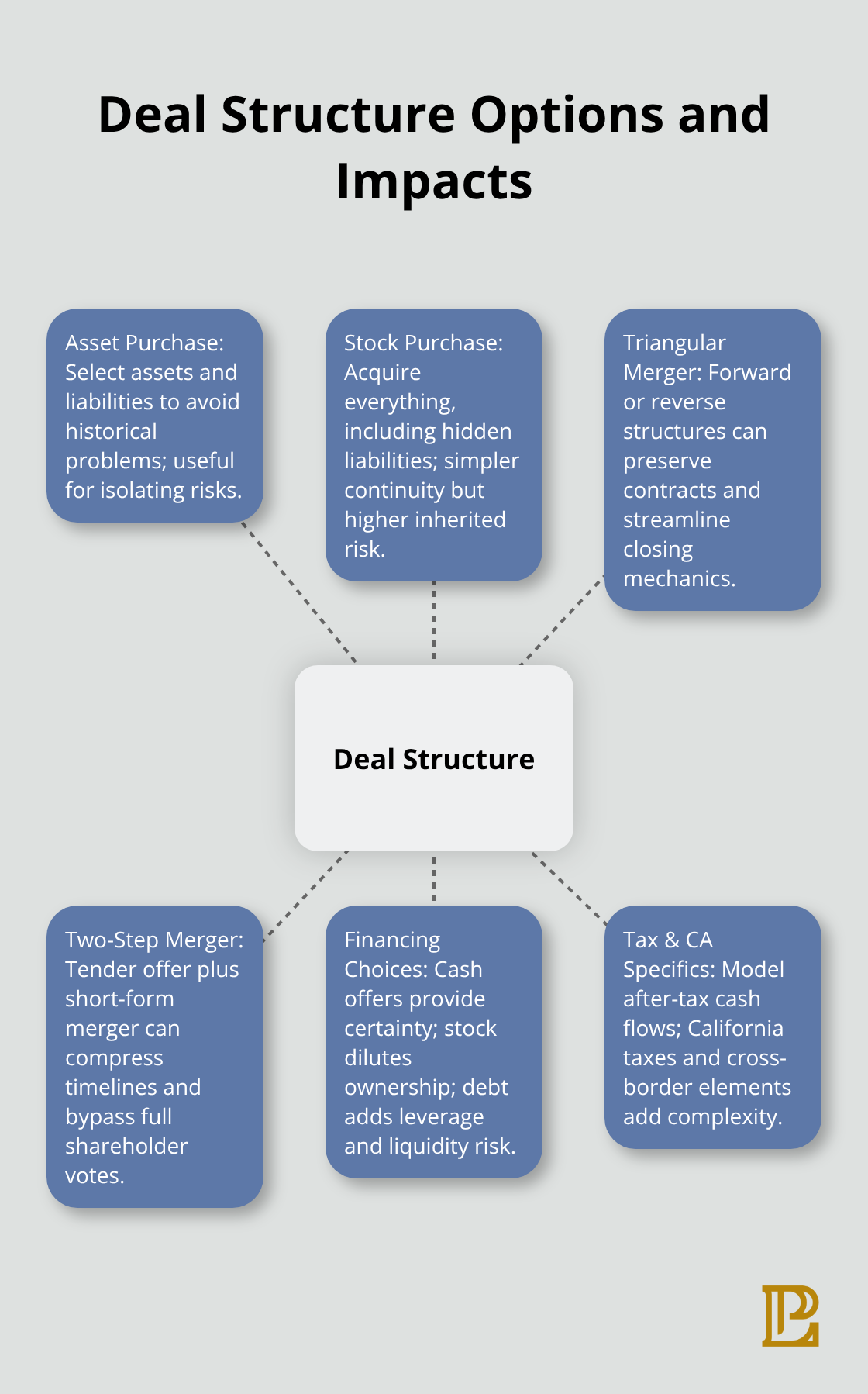
Financing structure matters equally. Pure cash offers appeal to sellers for certainty; stock deals dilute the buyer and complicate balance sheet management; debt financing is common but increases leverage and liquidity risk. Your legal and tax advisors must model the after-tax cash flow impact of each structure. California taxes corporate transactions, and cross-border elements add complexity. The cheapest structure on paper often costs the most after accounting for integration friction and tax bills.
Negotiation Sets the Terms That Matter
Negotiation determines not just price but also representations, warranties, indemnification, and post-closing mechanics. A non-binding letter of intent signals intent and sets negotiation parameters, but the definitive agreement-whether a merger agreement or asset purchase agreement-locks in conditions, liability caps, and dispute resolution. Representations and warranties protect the buyer if hidden problems surface after closing. Indemnification provisions specify who pays for breaches. Working capital adjustments or locked-box pricing mechanisms handle balance sheet changes between signing and closing. In Los Angeles, where real estate and IP assets are prevalent, negotiate carefully around title verification, lease assignments, and IP ownership transfers. Locked-box pricing (fixing value at a past date) simplifies closing but shifts risk to the seller; working capital adjustments (settling final price post-close) protect the buyer but extend uncertainty. Each choice affects deal certainty and post-close friction. The negotiation phase is where legal and tax advisors earn their fees-poor language in a purchase agreement creates disputes that cost far more than careful drafting upfront.
Integration Planning Starts Now
Successful M&A requires integration planning to begin during negotiation, not after closing. Identify which functions you will consolidate, which you will retain separately, and how you will preserve customer relationships and key talent. For businesses in Hermosa Beach or other coastal markets, understand how the target’s operations, real estate leases, and local regulatory relationships will fit into your structure. Synergy tracking must start at closing so you can measure whether projected savings actually materialize. Culture alignment, brand strategy, and HR integration are not afterthoughts-they determine whether the combined entity retains customers and staff. The deals that create value are those where integration planning shapes the deal structure itself, not those where integration happens to whatever structure was negotiated.
Where M&A Deals Fail
Financial Analysis Stops Too Early
Most M&A transactions in Los Angeles collapse not because the strategic rationale was flawed, but because teams skip financial verification, ignore operational reality, or treat integration as an afterthought. Financial analysis often stops at headline revenue numbers and EBITDA multiples. You review three years of tax returns, see consistent growth, and assume the business is sound. That assumption kills deals.
A restaurant operation with strong lunch-to-go revenue and private dining events requires deeper cash flow analysis than a traditional hospitality business because seasonal patterns, customer concentration, and event-dependent income streams create volatility that standard multiples miss. Dig into accounts receivable aging, customer concentration (if one customer represents more than 15% of revenue, that’s a material risk), inventory turnover, and accounts payable terms.
For real estate-heavy targets in Hermosa Beach or coastal Los Angeles, conduct environmental due diligence that quantifies beach nourishment obligations, erosion liability, and climate-related restoration costs as ongoing capital expenditure, not one-time items. Many LA deals assume synergies will cover valuation gaps. If you project 20% cost savings from eliminating duplicate roles, model exactly which positions disappear, what severance costs, and whether remaining staff can absorb the workload without service degradation. Quantify revenue synergies conservatively-cross-selling rarely delivers at projected levels because customer acquisition and retention depend on relationship quality, not just operational overlap.
Cultural Misalignment Destroys Value After Closing
Cultural and operational misalignment destroys value after closing because integration teams focus on financial consolidation and miss the friction that drives customer churn and talent loss. The target’s staff, customers, and operational workflows have developed over years. You cannot transplant them into your structure without understanding what makes the target’s operations work.
A business in Hermosa Beach with deep local relationships and community reputation requires different integration handling than a corporate division. Interview key operational leaders before closing to understand how decisions are made, which customers drive profitability, and where informal processes replace documented procedures. Misalignment on post-close leadership creates immediate dysfunction-if the target’s founder or key operator exits because integration governance removes autonomy, customer relationships deteriorate fast.
Integration Planning Determines Success or Failure
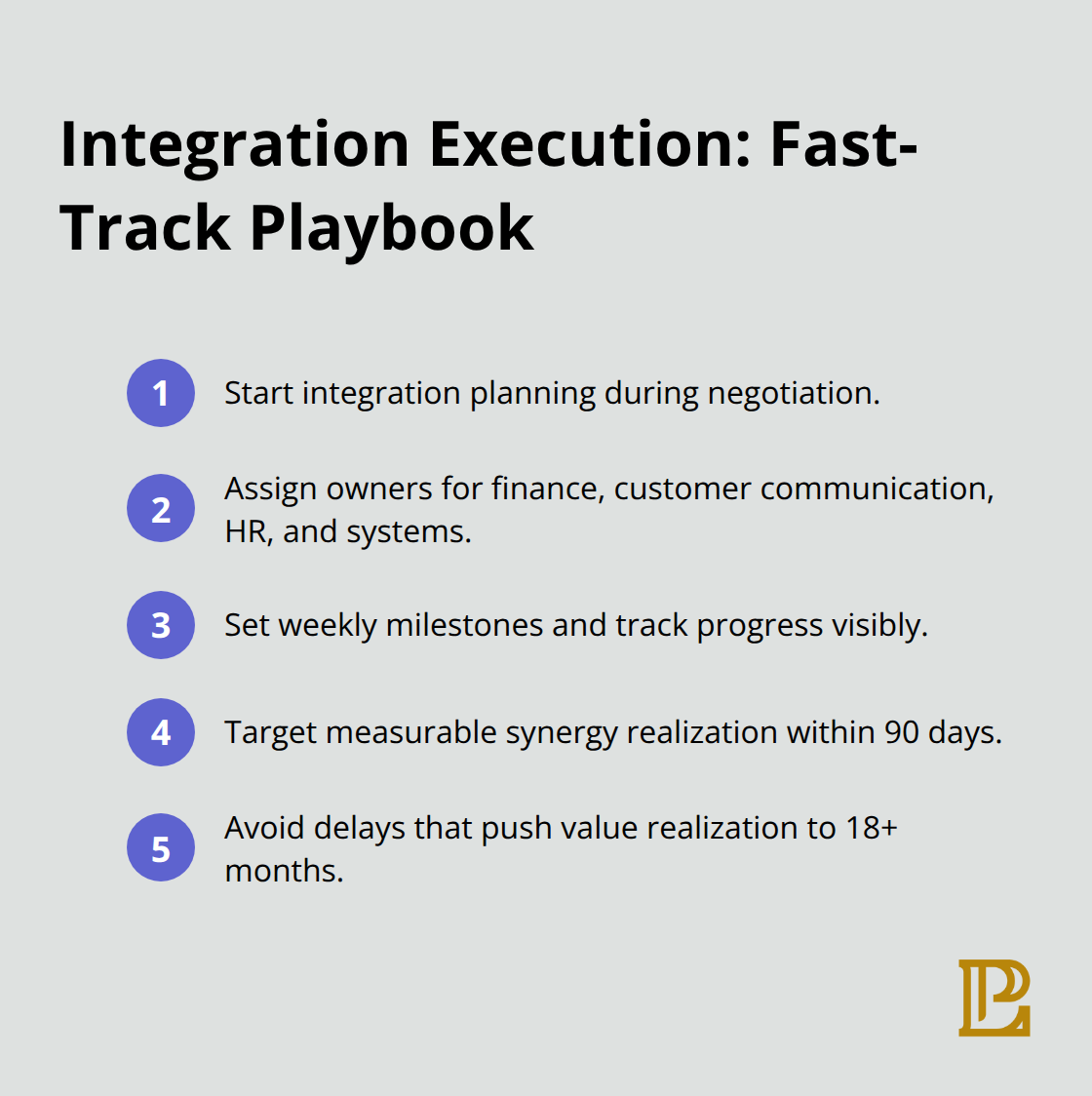
Plan integration governance during negotiation, not after closing. Assign clear accountability for each workstream: finance consolidation, customer communication, HR integration, and systems migration each need an owner with decision authority. Set integration milestones and measure progress weekly.
Most LA M&A integration plans fail because teams create them weeks after closing when momentum and clarity are already lost. Integration planning that begins during deal negotiation and accelerates at signing produces measurable synergy realization within 90 days. Delayed integration planning typically extends value realization to 18 months or longer, during which customer attrition and staff turnover erode projected benefits.
These operational failures compound quickly, which is why the next section examines how LA-based businesses can navigate the specific regulatory and market conditions that shape transaction outcomes.
Strategic Considerations for LA-Based Businesses
Los Angeles M&A transactions operate within a distinct regulatory and competitive landscape that fundamentally shapes valuation, deal structure, and integration outcomes. The Southern California market combines high asset valuations, complex multi-jurisdictional operations, and aggressive competition that demands precise local knowledge.
Environmental and Coastal Property Risks
Coastal properties in Hermosa Beach and surrounding areas introduce environmental due diligence requirements that inland transactions avoid entirely. Beach-adjacent real estate carries climate-related risks that affect long-term asset value; sea-level rise projections indicate up to 50% of sandy beaches globally could erode by 2100, creating material valuation impact for properties with beach frontage or proximity.
If your target operates beachfront hospitality, retail, or recreational facilities, factor beach nourishment costs as perpetual maintenance obligations rather than one-time expenditures. Environmental liability assessments must quantify erosion patterns, seasonal beach profile changes, and regulatory restoration requirements mandated by California coastal commissions.
California Employment Law Complexity
California employment law complexity exceeds most states significantly. Employment agreements, severance obligations, wage and hour compliance, and union considerations vary dramatically across LA County municipalities. Hermosa Beach operates under specific municipal codes that differ from Los Angeles proper, affecting everything from business licensing to employment regulations. Many LA deals collapse during integration because employment law compliance costs exceed projections or labor disputes emerge from inadequate pre-close analysis. Conduct employment law due diligence that identifies all active employment agreements, union relationships, pending wage claims, and severance obligations before valuation finishes.
Regulatory Approval Timelines and Jurisdiction
Regulatory approval timelines in California extend longer than most states because multiple agencies hold jurisdiction over business operations. The California Department of Financial Protection and Innovation, local coastal commissions, and municipal business bureaus all review transactions affecting licensed operations or real estate. Cross-border transactions add federal layers including potential Hart-Scott-Rodino filing requirements if deal size exceeds current thresholds. Plan for 90 to 180 days of regulatory review time and budget for specialized regulatory counsel to navigate California-specific requirements.
Intellectual Property and Digital Assets
Intellectual property due diligence in LA requires attention to entertainment assets, software licensing, and digital media rights that concentrate heavily in the region. Verify trademark registrations, copyright assignments, and patent portfolios across federal, state, and international registries before closing. These assets often represent significant value in Southern California transactions and demand rigorous verification.
Building Your Advisory Team
Your legal and tax advisors must operate in parallel during negotiation and due diligence phases rather than sequentially. Many LA businesses hire counsel only after signing a letter of intent, compressing timelines and forcing reactive decisions. Bring attorneys into deal planning immediately; their input on deal structure, regulatory pathways, and liability allocation directly reduces closing friction and tax costs. The difference between advisory teams that integrate early versus those that join late typically amounts to 15 to 25% of total transaction costs through avoided restructuring, tax planning optimization, and faster regulatory clearance. Select advisors with specific LA County market experience and coastal property familiarity if your target operates in Hermosa Beach or similar waterfront locations. Generic M&A advisors miss jurisdiction-specific risks that cost millions during integration. Pierview Law brings deep roots in Hermosa Beach and LA County, handling business law, real estate transactions, and corporate matters that shape M&A outcomes in this market.
Final Thoughts
Successful M&A transactions in Los Angeles require discipline across three core areas: rigorous financial analysis, cultural alignment planning, and integration execution. The deals that create value are those where due diligence uncovers operational reality rather than confirming assumptions, where valuation reflects market conditions rather than synergy hopes, and where integration planning starts during negotiation rather than after closing. For LA-based businesses, coastal property risks, California employment law complexity, and regulatory approval timelines add layers that generic M&A advisory misses entirely.
Coastal properties in Hermosa Beach and surrounding areas introduce environmental due diligence requirements that inland transactions avoid. Environmental liability assessments must quantify erosion patterns, seasonal beach profile changes, and regulatory restoration requirements mandated by California coastal commissions. Employment law verification and regulatory pathway planning must happen in parallel with financial analysis, not sequentially, because the cost difference between early advisory involvement and reactive counsel engagement typically runs 15 to 25 percent of total transaction costs through avoided restructuring and tax inefficiency.
Engage legal counsel immediately, even before signing a letter of intent, so your attorneys can shape deal structure, identify regulatory requirements, and model tax consequences before negotiation locks you into suboptimal terms. Pierview Law provides business law, real estate, and corporate services across Los Angeles County with deep roots in Hermosa Beach, handling entity formation, contract drafting, title review, lease negotiations, and dispute resolution that directly impact M&A outcomes. Contact Pierview Law to discuss your transaction and build an advisory foundation that reduces risk and accelerates value creation.