
Hermosa Beach offers unique opportunities for investing in commercial real estate, with its prime coastal location and growing business district attracting investors nationwide.
The city’s tourism-driven economy and limited commercial inventory create favorable conditions for property appreciation. We at Pierview Law guide clients through the legal complexities of commercial real estate transactions in this competitive market.
What Makes Hermosa Beach Commercial Real Estate Different
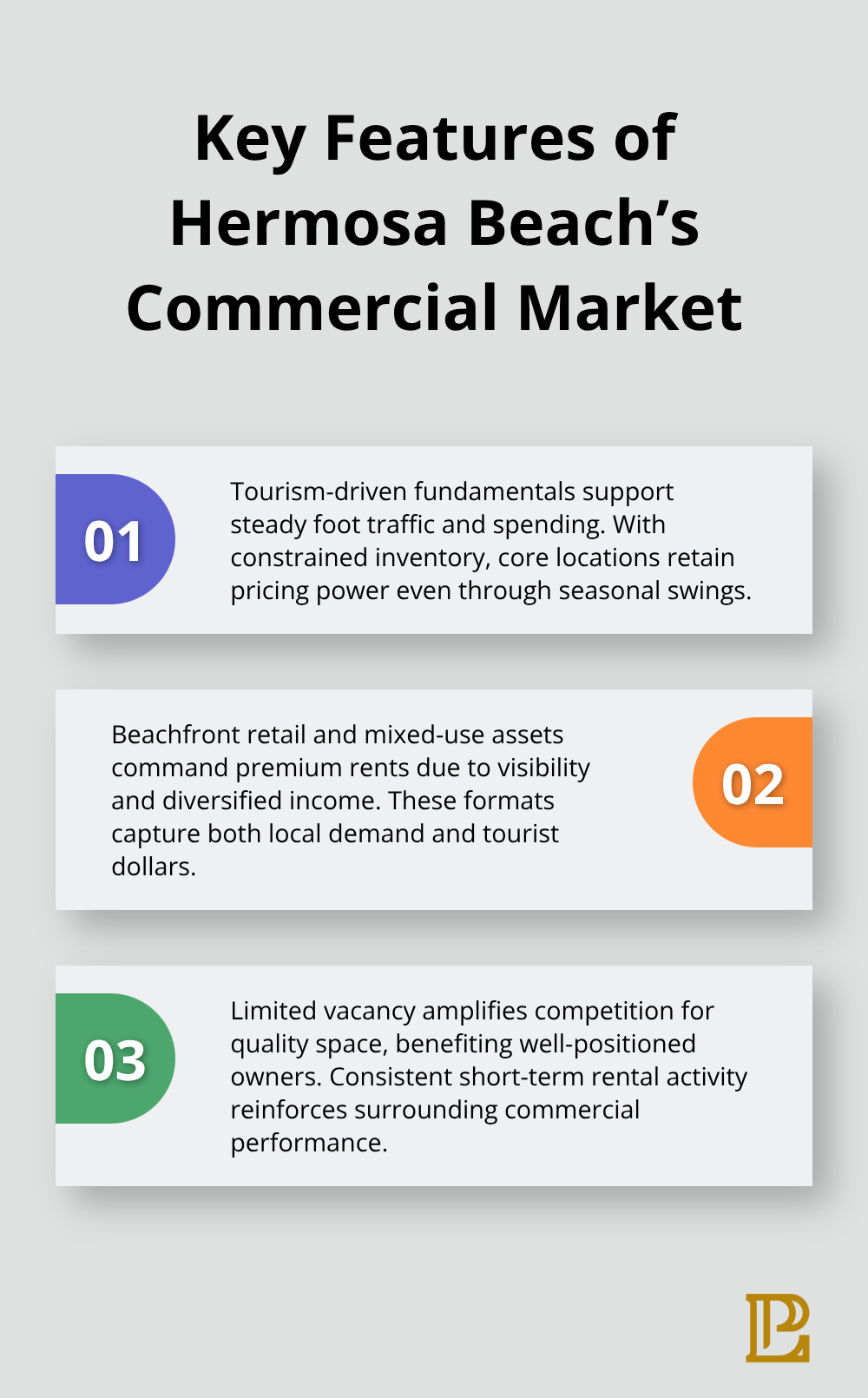
Hermosa Beach’s commercial real estate market operates with distinct characteristics that set it apart from other Los Angeles County markets. The city currently maintains approximately 170 active short-term rental properties that generate average annual revenues of $61,897, while commercial vacancy rates hover around 5% according to early 2023 data. Property types range from beachfront retail spaces that command premium rents to mixed-use developments that capitalize on the city’s tourism influx (with vacation rentals averaging over 226 nights annually).
Prime Location Creates Consistent Demand
The proximity to Los Angeles International Airport and major employment centers creates sustained demand for commercial properties. Retail establishments benefit from both year-round residents and seasonal tourists, with July marking peak revenue months. Restaurant and hospitality businesses particularly thrive given the average daily rate of $293 for short-term accommodations. Mixed-use properties that combine retail ground floors with residential units above represent the strongest investment category, as they capture both tourism dollars and housing demand in a market where residential inventory remains constrained.
Infrastructure Investment Signals Growth
The city’s IN-THE-ZONE project, which follows the 2017 PLAN Hermosa adoption, streamlines zoning regulations to attract business investment. This initiative reduces permitting delays that previously discouraged commercial development. The 2021-2029 Housing Element Update (certified by California’s Housing and Community Development Department in August 2024) rezones properties to increase density allowances. These regulatory changes create opportunities for property redevelopment and value enhancement. Commercial properties positioned near these rezoned areas often experience appreciation as development potential increases.
Legal Framework Shapes Investment Success
Commercial real estate transactions in Hermosa Beach require careful navigation of local regulations and state requirements. Due diligence periods typically extend 30 to 90 days for commercial properties, allowing investors time to conduct thorough inspections and legal reviews. The city’s streamlined permitting process helps reduce regulatory hurdles, but investors must still comply with zoning laws and obtain proper business licenses. Understanding these legal requirements from the outset prevents costly delays and positions investors for smoother transactions when they move forward with financing and closing procedures.
What Legal Steps Protect Your Commercial Investment?
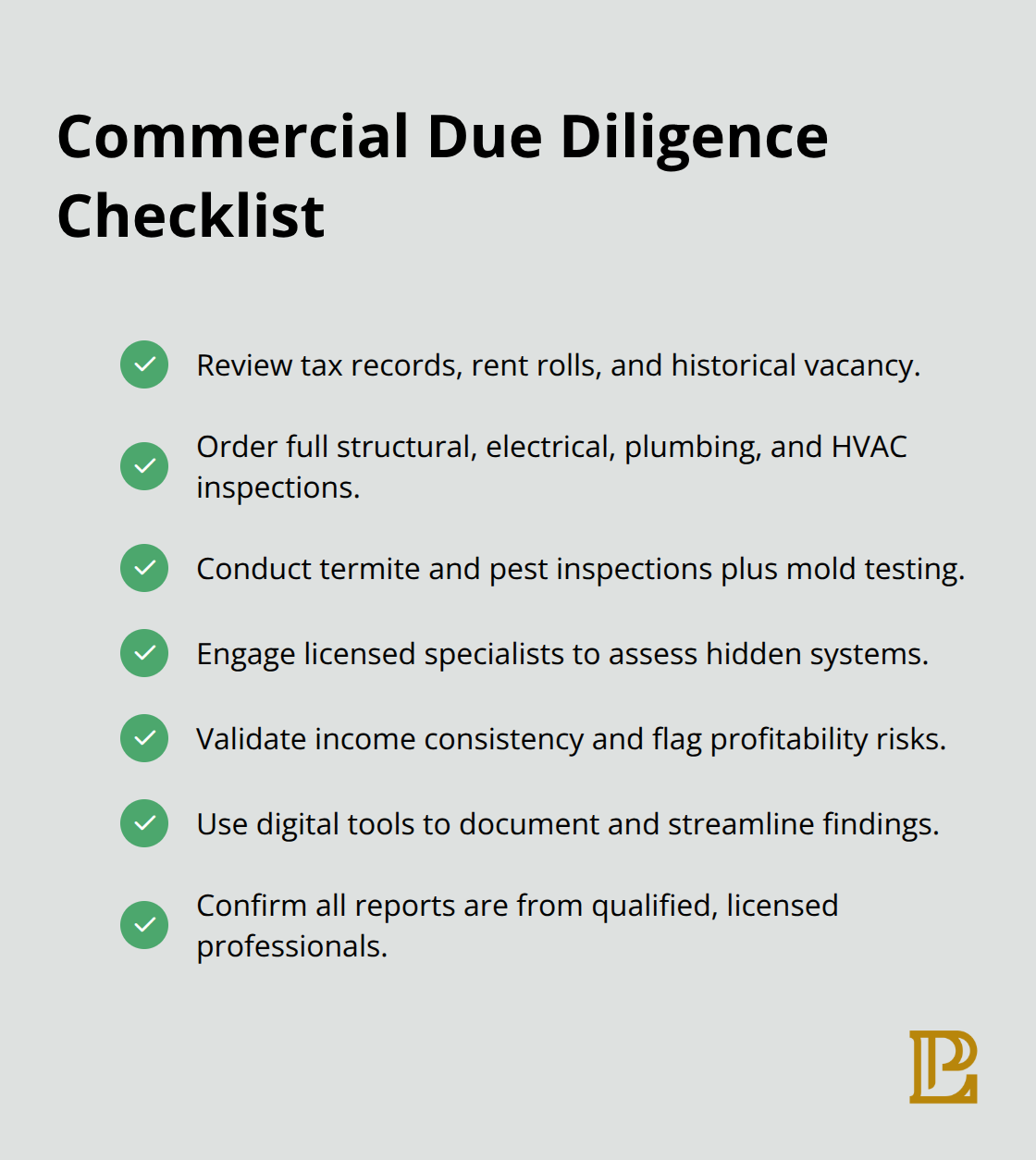
Commercial real estate transactions in Hermosa Beach require thorough due diligence within the standard 30 to 90-day investigation period. California mandates comprehensive property inspections that cover structural integrity, electrical systems, plumbing, and HVAC components, with licensed inspectors who identify potential repair costs that average investors underestimate. Title searches reveal existing liens, encumbrances, and unpaid property taxes that could result in tax sales or legal complications. Environmental assessments become mandatory for properties with industrial histories, as Phase I studies identify contamination risks while Phase II assessments involve soil and water testing when concerns arise.
Property Investigation Requirements
Financial analysis includes a review of property tax records, rental income consistency, and vacancy rates to avoid properties with underlying profitability issues. Physical inspections must include pest evaluations for termite damage and mold testing in older properties (particularly important in coastal environments). Licensed professionals should assess hidden systems and components that buyers cannot evaluate independently. Technology now plays a role in over 80% of real estate professional investigations, with digital tools that streamline the verification process and provide more comprehensive property assessments.
Purchase Agreement Terms That Matter
Contract negotiations in Hermosa Beach commercial deals require specific contingency clauses that protect buyers during the due diligence phase. Purchase agreements should include inspection contingencies that allow price adjustments or repair credits at closing when significant issues surface. Appraisal contingencies provide negotiation leverage when independent valuations fall below offered prices, while financing contingencies protect buyers if loan approval fails. California law permits buyers to request seller repairs, price reductions, or closing credits based on inspection findings (making these contractual protections valuable tools for cost management).
Zoning Compliance Prevents Costly Mistakes
Hermosa Beach’s IN-THE-ZONE project updates zoning regulations to align with the city’s Economic Development Strategy, but investors must verify current zoning allows intended property uses. The 2021-2029 Housing Element Update rezoned multiple properties to increase density, which creates development opportunities while changing permitted uses for existing structures. Operating businesses without proper zoning compliance leads to legal complications and potential closure orders. The city’s streamlined permitting process reduces approval delays, yet investors still need business licenses and special event permits for properties that host large gatherings or entertainment activities.
These legal protections form the foundation for successful commercial real estate investments, but securing adequate financing remains the next critical step that determines whether promising opportunities become profitable realities.
How Do You Finance Commercial Real Estate in Hermosa Beach?
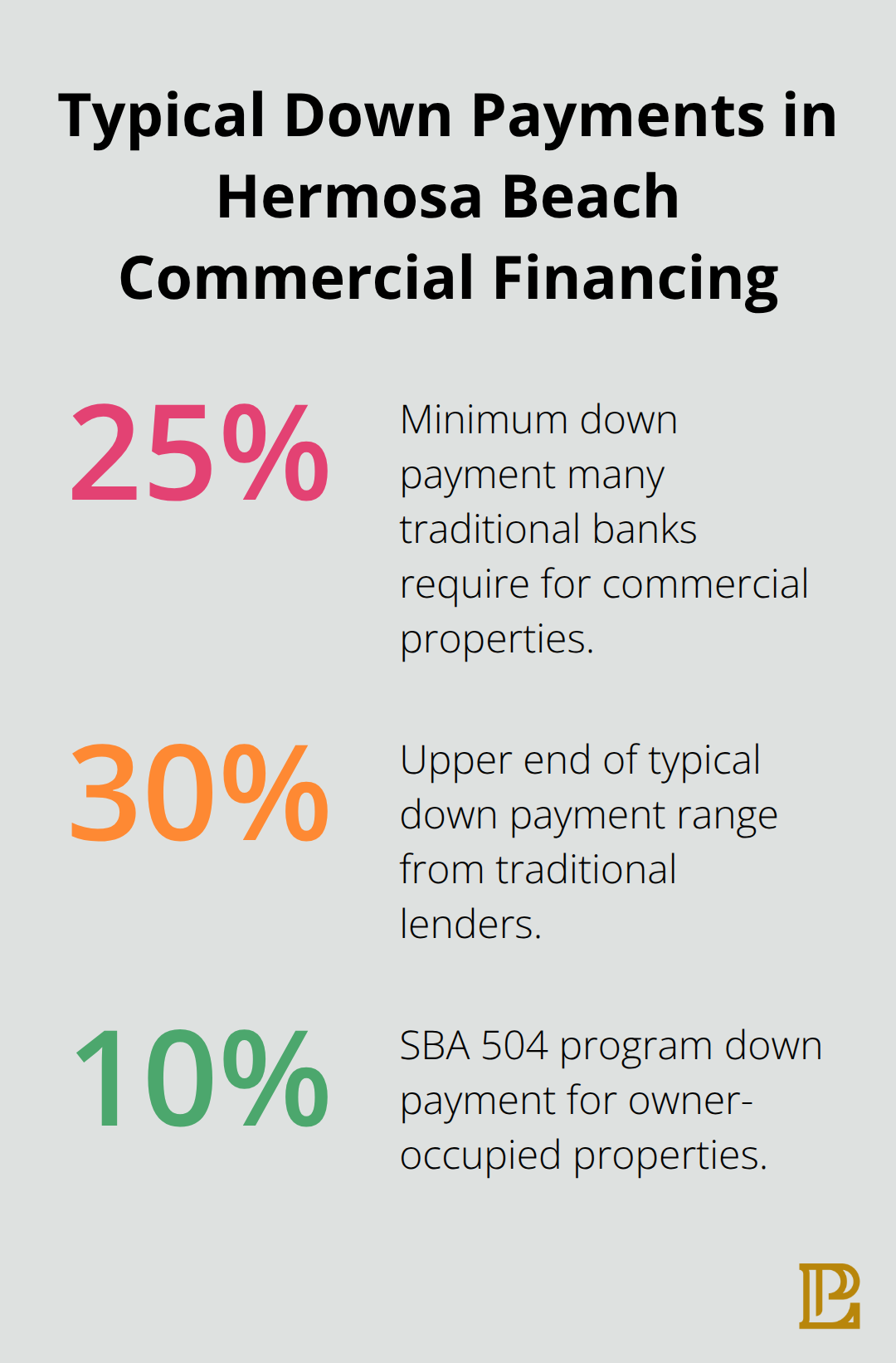
Commercial real estate lenders in Hermosa Beach view coastal properties differently due to higher values and tourism-dependent income streams. Traditional banks require 25-30% down payments for commercial properties, with loan-to-value ratios capped at 70-75% for investment properties. Wells Fargo and Bank of America dominate commercial lending in Los Angeles County and offer SBA 504 loans that reduce down payments to 10% for owner-occupied properties. Community banks like California Bank & Trust provide more flexible terms for local investors, particularly for mixed-use properties that generate both rental and business income.
Traditional Lending Requirements and Rates
Commercial mortgage rates in 2024 range from 7.5% to 9.5% for qualified borrowers, with credit scores above 680 and debt-to-income ratios below 40% receiving preferential pricing. Lenders require two years of tax returns, profit and loss statements, and rent rolls for income-producing properties. Properties that generate consistent cash flow receive better terms, with the 1% rule (monthly rent equals 1% of purchase price) serving as a baseline for approval. Banks demand personal guarantees from borrowers, which makes individual financial strength as important as property performance. Commercial loans typically carry 20-25 year amortization schedules with 5-7 year balloon payments that require refinancing or payoff at maturity.
Alternative Financing Opens More Opportunities
Private lenders fill gaps where traditional banks decline and offer bridge loans at 10-15% interest rates for properties that need renovation or quick closings. Hard money lenders like Lima One Capital provide 70-80% loan-to-value ratios with approval in 7-14 days, which makes them valuable for competitive bidding situations. Real Estate Investment Trusts allow passive investment in Hermosa Beach commercial properties without direct ownership responsibilities. Seller financing arrangements let property owners act as lenders and often accept lower down payments in exchange for steady income streams. Partnership structures with established investors provide access to capital while sharing profits (though legal agreements must clearly define responsibilities and exit strategies).
Tax Benefits Maximize Investment Returns
Commercial real estate investors qualify for depreciation deductions that average $15,000-25,000 annually on typical Hermosa Beach properties and reduce taxable income substantially. Section 1031 exchanges allow investors to defer capital gains taxes when they sell properties and purchase replacement investments of equal or greater value. California’s Proposition 13 limits property tax increases to 2% annually and protects long-term investors from excessive tax escalation. Interest payments on commercial mortgages remain fully deductible, while operating expenses that include maintenance, management fees, and professional services reduce taxable income. These tax advantages often improve cash flow by 15-20% compared to pre-tax calculations and make marginal deals profitable for investors in higher tax brackets.
Final Thoughts
Commercial real estate investment in Hermosa Beach demands careful market analysis and professional legal support. The city’s 5% vacancy rate and $61,897 average annual revenue for short-term rentals demonstrate strong market fundamentals. Investors must secure financing early, as commercial loans require 25-30% down payments and extensive documentation from traditional lenders.
Due diligence periods of 30-90 days allow thorough property investigation, including zoning compliance under the IN-THE-ZONE project and environmental assessments for coastal properties. We at Pierview Law handle the legal complexities of commercial real estate transactions, from contract negotiation to title review. Our team manages entity formation and lease agreements throughout Los Angeles County.
Hermosa Beach offers compelling opportunities for investing in commercial real estate with its tourism-driven economy and limited commercial inventory. The city’s proximity to LAX and ongoing infrastructure investments create favorable conditions for property appreciation. These market dynamics position investors for long-term success in this competitive coastal market (particularly for mixed-use properties that capture both tourism and residential demand).