
Mergers and acquisitions legal challenges can derail even the most promising business deals. Companies in Hermosa Beach face complex regulatory requirements, hidden liabilities, and documentation hurdles that demand careful navigation.
At Pierview Law, we see businesses struggle with due diligence gaps and inadequate legal protections. The right legal framework protects both buyers and sellers from costly mistakes.
What Documentation Powers Successful M&A Due Diligence
Financial Records Expose Hidden Transaction Risks
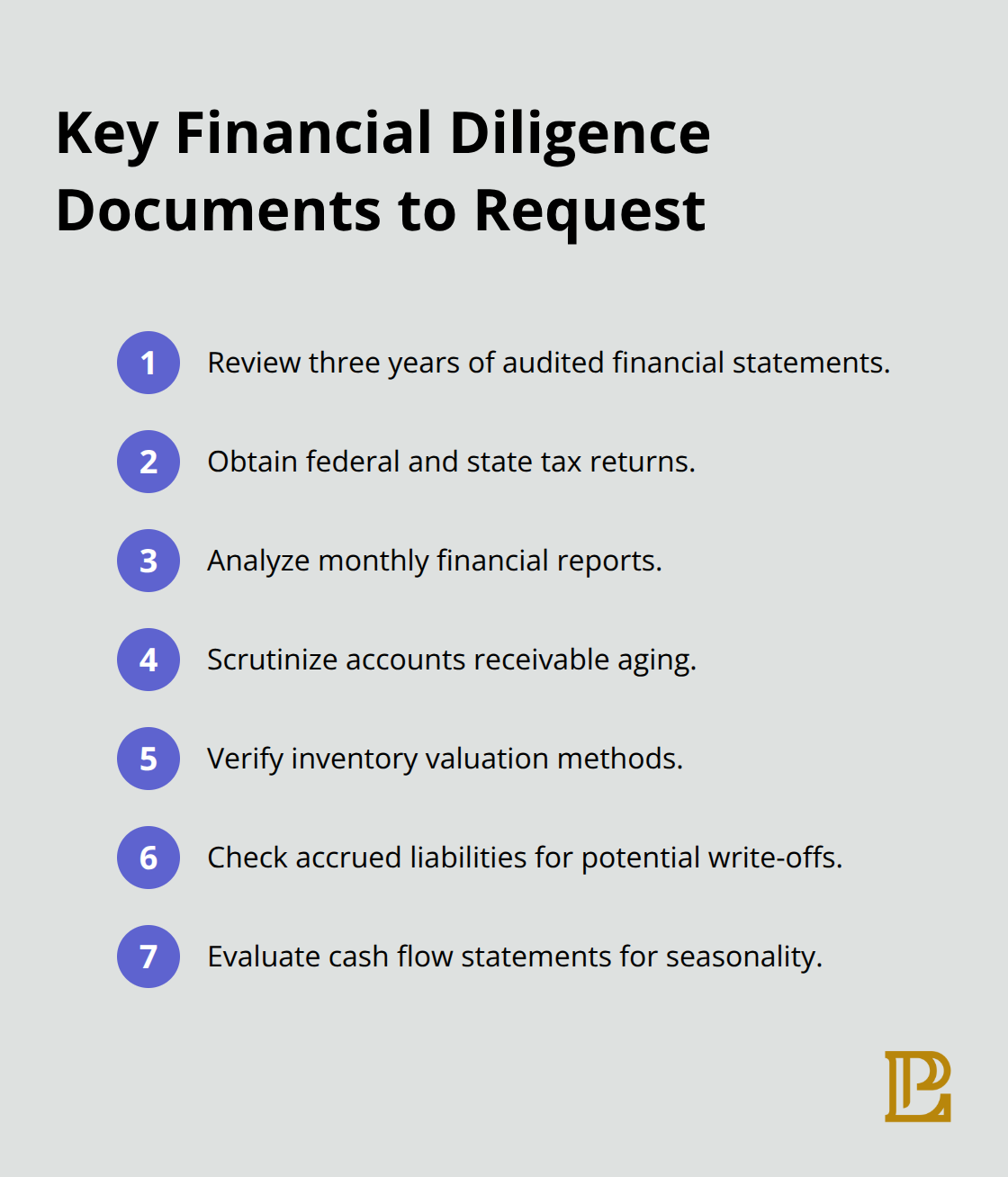
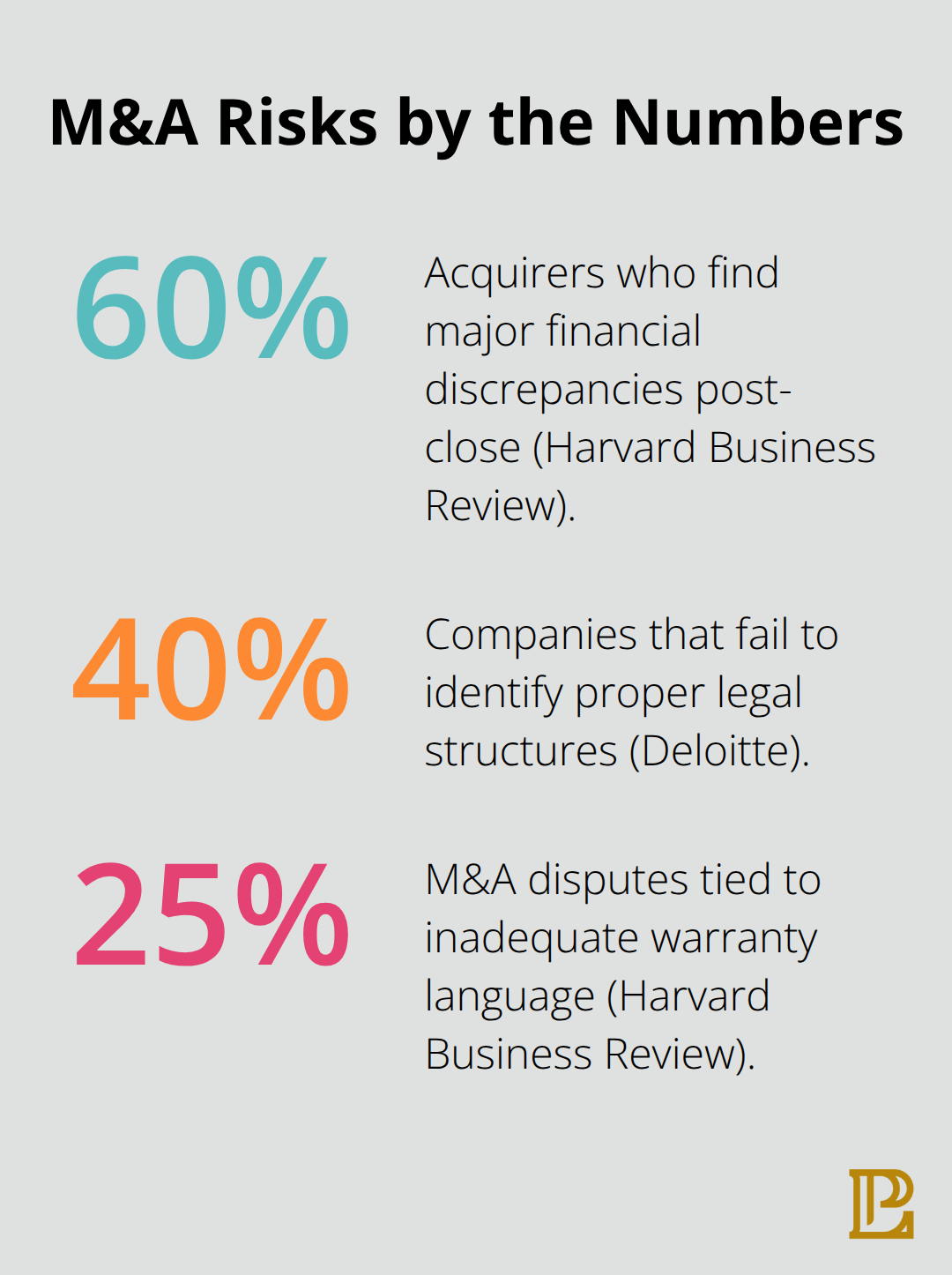
Financial records review forms the foundation of any M&A transaction, yet 60% of acquirers according to Harvard Business Review discover major financial discrepancies only after they close deals. Smart buyers demand three years of audited financial statements, tax returns, and monthly financial reports to identify revenue recognition issues, off-balance-sheet liabilities, and cash flow irregularities that sellers often hide.
Buyers must scrutinize accounts receivable aging reports, inventory valuations, and accrued liabilities to uncover potential write-offs. Cash flow statements reveal seasonal patterns and operational challenges that impact future performance projections.
Contract Analysis Reveals Deal-Breaking Provisions
Material contracts present the most dangerous hidden risks in M&A deals. Supplier agreements, customer contracts, and employment agreements require line-by-line review for change-of-control provisions, termination rights, and assignment restrictions that could trigger contract losses post-transaction.
We examine every lease agreement, loan document, and licensing arrangement to assess transferability and identify potential obstacles before they surface. Key customer contracts often contain termination clauses that activate upon ownership changes (potentially eliminating 30-40% of projected revenues). Loan agreements frequently include acceleration clauses that make debt immediately due upon merger completion.
Regulatory Compliance Creates Transaction Roadblocks
Regulatory filing requirements vary dramatically by industry and transaction size, with healthcare and financial services facing the strictest scrutiny. Antitrust filings under Hart-Scott-Rodino become mandatory for transactions exceeding $111.4 million in 2024, which triggers waiting periods that can extend deals by months.
California environmental compliance adds another layer of complexity, particularly for manufacturing and real estate transactions where environmental liabilities can exceed the purchase price. Securities filings, state merger approvals, and industry-specific licenses demand early attention to prevent last-minute compliance failures.
Documentation Standards Shape Legal Protection
Purchase agreements must include detailed representations that cover financial accuracy, legal compliance, and operational status to protect both parties from post-closing disputes. Warranty provisions should address material contracts, pending litigation, and regulatory compliance with specific dollar thresholds and survival periods.
These documentation requirements become even more complex when deals involve multiple legal challenges that can emerge during negotiations.
What Legal Traps Destroy M&A Deal Value
Asset valuation mistakes and hidden liabilities sink more M&A deals than any other factor, with Deloitte research showing that 40% of companies fail to identify proper legal structures for their transactions. Buyers routinely accept seller financial statements without independent appraisals and miss environmental contamination costs that average $2.4 million per affected property according to EPA data.
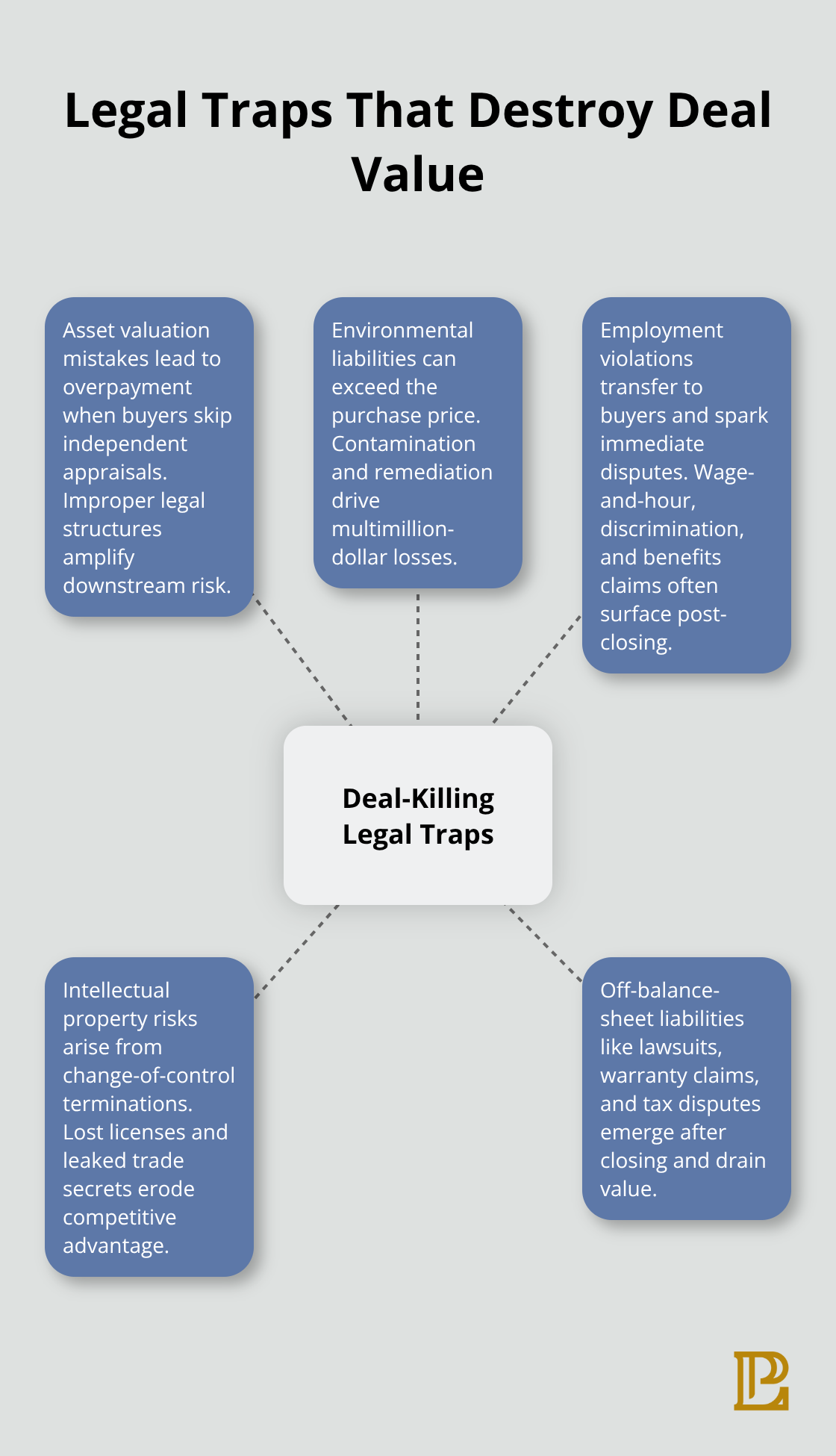
Off-balance-sheet liabilities like pending lawsuits, warranty claims, and tax disputes surface post-closing when sellers have already departed with their proceeds. Employment law violations create immediate post-transaction crises when buyers inherit wage and hour claims, discrimination lawsuits, and benefits obligations that sellers never disclosed.
Hidden Environmental Liabilities Drain Transaction Value
Environmental contamination represents the most expensive surprise in M&A transactions. Sellers often conceal soil contamination, groundwater pollution, and hazardous waste disposal violations that trigger cleanup costs exceeding purchase prices. California environmental regulations impose strict liability on property owners regardless of when contamination occurred.
Phase I environmental assessments miss subsurface contamination that only Phase II testing reveals. Underground storage tanks leak petroleum products that require soil remediation costing $50,000 to $500,000 per incident. Asbestos and lead paint in older buildings create removal obligations that can reach millions of dollars.
Employment Obligations Transfer Without Warning
California labor law automatically transfers all employment liabilities to buyers in asset deals, regardless of what purchase agreements state. WARN Act violations trigger penalties of $500 per day per affected employee when companies fail to provide 60-day advance notice of mass layoffs or plant closures.
Benefits continuation under COBRA becomes the buyer’s responsibility, often costing 102% of premium costs for terminated employees who elect coverage. Collective bargaining agreements survive ownership changes and force buyers to honor union contracts they never negotiated and may find economically unfeasible.
Intellectual Property Rights Vanish During Transfers
IP licensing agreements frequently contain change-of-control provisions that terminate rights upon ownership transfer and eliminate technology access that formed the acquisition’s strategic foundation. Patent infringement claims emerge when sellers used unlicensed technology or violated existing licensing terms without buyer knowledge.
Trademark ownership disputes arise when sellers never properly registered marks or allowed registrations to lapse (leaving buyers with worthless brand assets). Trade secret protection collapses when departing employees take confidential information to competitors and create immediate competitive disadvantages for the combined entity.
These legal pitfalls require comprehensive protection strategies that both buyers and sellers must implement through carefully crafted contractual provisions.
How Do Smart Contracts Protect M&A Deals
Warranty Provisions Block Post-Closing Surprises
Representation and warranty provisions must address financial accuracy, legal compliance, and operational status with specific dollar thresholds that trigger seller liability. Harvard Business Review data shows that 25% of M&A disputes stem from inadequate warranty language that fails to cover material misstatements.
Buyers should demand survival periods of 18-24 months for general representations and 3-6 years for tax and environmental warranties to match statute of limitations periods. Warranty baskets should start at 0.5-1% of purchase price to prevent frivolous claims while caps should range from 10-50% (based on deal size and risk profile).
Indemnification Creates Financial Safety Nets
Indemnification clauses transfer specific risks from buyers to sellers through escrow arrangements that hold 10-20% of purchase price for 12-18 months post-transaction. California courts enforce indemnification provisions strictly, which makes precise language critical for successful claims.
Escrow thresholds must exceed warranty basket amounts to prevent double recovery. Carve-outs for fraud, criminal acts, and willful breaches should have no caps or time limits. Non-disclosure agreements must survive transaction completion indefinitely to protect confidential information exchanged during due diligence (with liquidated damages of $50,000-$500,000 per breach based on deal sensitivity).
Non-Compete Terms Preserve Deal Value
Non-compete agreements protect buyers from seller competition for 2-5 years within defined geographic markets and customer bases that formed the acquisition rationale. California restricts non-compete enforcement to business sale contexts, which makes M&A transactions the primary avenue for enforceable restraints.
Geographic scope should match actual business operations rather than arbitrary boundaries. Customer non-solicitation provisions must identify specific accounts rather than broad categories. Violation remedies should include injunctive relief plus monetary damages calculated on lost profits or seller gains to make enforcement economically viable when breaches occur.
Final Thoughts
M&A transactions demand comprehensive legal preparation that addresses due diligence gaps, contractual protections, and regulatory compliance from the transaction’s start. Companies that skip thorough financial reviews, contract analysis, and environmental assessments face average losses of $2.4 million per overlooked liability (according to EPA data). Smart buyers and sellers implement robust warranty provisions, indemnification clauses, and escrow arrangements that protect against post-closing disputes.
These mergers and acquisitions legal safeguards prevent the costly surprises that derail 70% of deals according to Harvard Business Review research. Documentation errors, compliance failures, and hidden liabilities destroy deal value when parties lack proper legal preparation. Experienced legal counsel identifies these risks before they become expensive problems.
At Pierview Law, we guide Hermosa Beach businesses through complex M&A transactions with comprehensive legal support. Our business law practice handles everything from initial due diligence through final documentation. Contact Pierview Law to protect your next business acquisition with proper legal guidance from the start.