
Intellectual property frauds cost businesses billions annually, yet many owners don’t recognize the warning signs until significant damage occurs. Counterfeit products, unauthorized trademark use, and fraudulent licensing agreements threaten your revenue and brand credibility.
At Pierview Law, we help Hermosa Beach business owners protect what they’ve built. This guide walks you through identifying fraud early and taking action before it impacts your bottom line.
What Does IP Fraud Actually Look Like
How Fraudsters Hide in Plain Sight
Fraudsters rarely operate with obvious red flags. They’re banking on you missing the signs until they’ve already damaged your business. The most dangerous IP frauds don’t announce themselves with forged documents or obvious counterfeits. Instead, they slip into your operations through seemingly legitimate channels: a licensing agreement that arrives via email, a cease-and-desist letter claiming you’ve infringed someone’s rights, or products that look nearly identical to yours flooding the market.
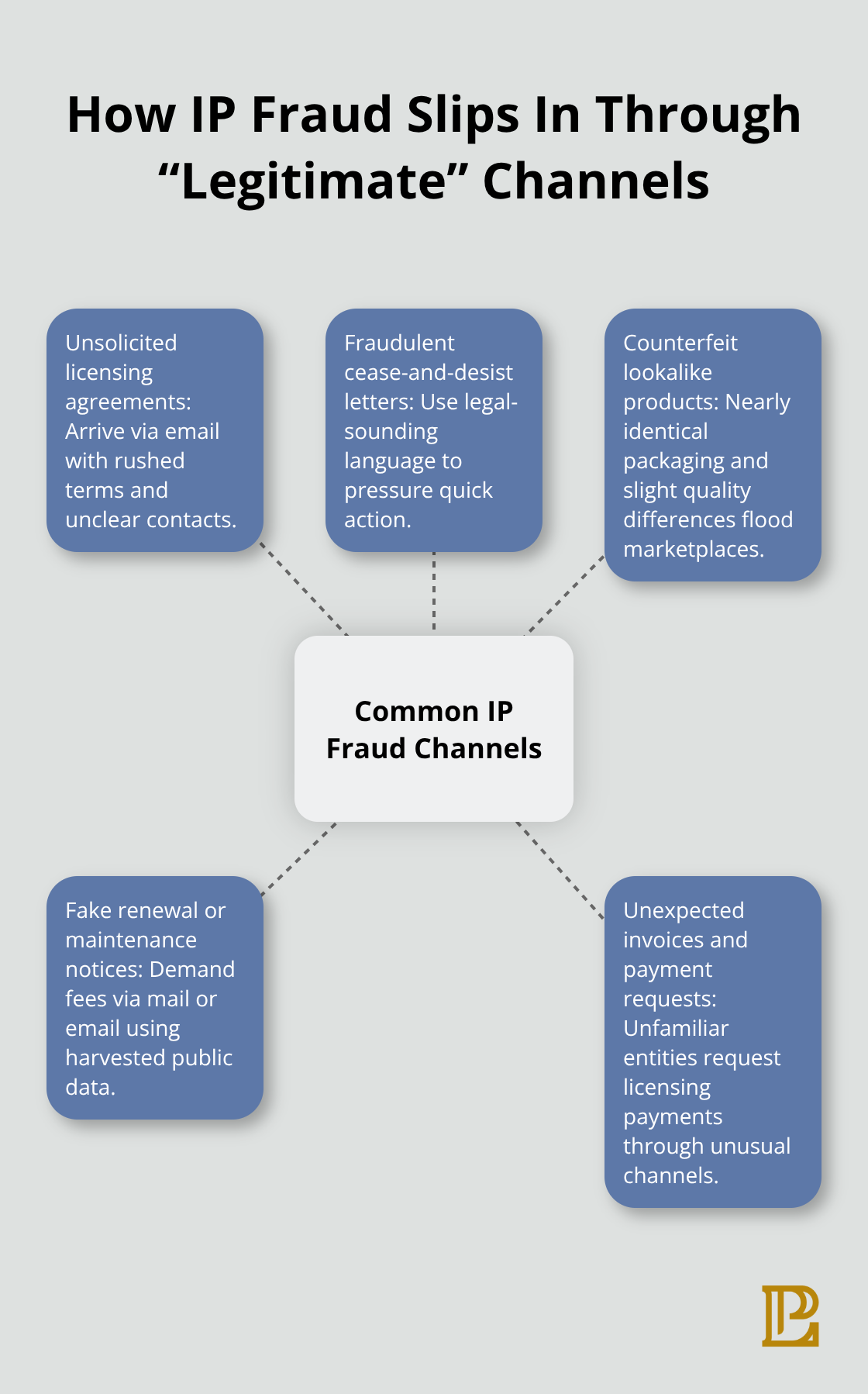
A 2022 California fraud operation called Operation Checks in the Mail resulted in 56 arrests and nearly $5 million stolen from hundreds of victims by using mail-based deception tactics. The scheme ran from 2018 before law enforcement shut it down, showing that sophisticated fraud operations can operate undetected for years. For IP-related fraud, this means watching for unusual licensing payments that settle quickly, invoices arriving through unexpected channels, or requests for payment from unfamiliar entities claiming licensing authority.
Spotting Fake Renewal Notices and Licensing Scams
If someone contacts you about trademark renewal fees, patent maintenance costs, or licensing agreements through unsolicited mail or email, pause and verify independently. The U.S. Patent and Trademark Office regularly warns businesses about fake renewal notices and directory listing scams that prey on legitimate trademark holders. Scammers harvest public information from patent applications and trademark registrations to appear credible, then pressure you into rushed payments for services you don’t need.
Recognizing Counterfeit Products and Fraudulent Letters
Counterfeit products entering your market often show subtle quality differences-slightly off colors, misspelled text, or packaging that’s almost right but not quite. A cease-and-desist letter threatening legal action over alleged trademark or patent infringement can be legitimate or fraudulent. Before panicking, verify the sender’s identity through official USPTO channels or contact an attorney. Many scam letters use urgency and legal-sounding language to force quick decisions.
Red Flags in Licensing Agreements
If licensing agreements contain unusual payment terms, demand rapid settlement, or reference unfamiliar jurisdictions, those are red flags. Legitimate licensing partners provide clear documentation, verifiable contact information, and standard industry terms. These warning signs matter because fraudsters count on your fear and time pressure to bypass your normal verification processes. Understanding what legitimate agreements look like protects you from signing away rights or paying for services that don’t exist.
The Real Cost of IP Fraud to Your Business
Financial Damage That Compounds Over Time
IP fraud drains your bank account immediately and continues to damage your business long after the initial fraud occurs. Counterfeit products flooding the market force you to compete against inferior knock-offs sold at lower prices, which directly reduces your sales. A California fraud operation that ran from 2018 to 2022 stole nearly $5 million from hundreds of victims by exploiting trust in seemingly legitimate communications.
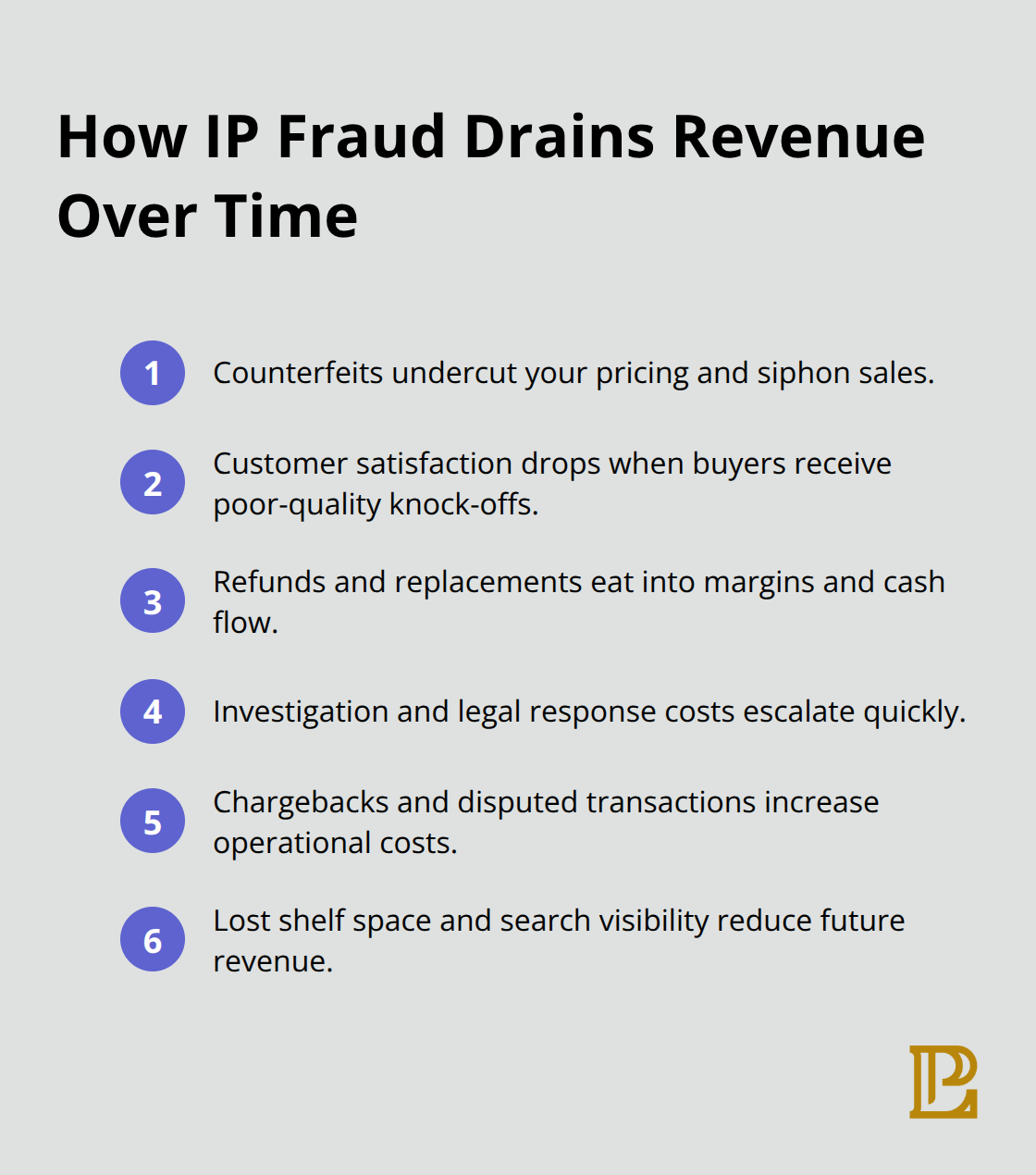
For IP holders, this translates to financial losses that accelerate over time. Counterfeit goods undercut your pricing, damage customer satisfaction when they receive poor-quality products, and create refund obligations that eat into profits.
Brand Reputation Damage That Spreads Quickly
When a customer buys a counterfeit version of your product and experiences a problem, they blame your brand, not the fraudster. This erosion of customer trust happens faster than you can repair it. A single negative review from someone who unknowingly purchased a counterfeit product influences dozens of potential customers to shop elsewhere. Your brand reputation, built over years of quality and service, deteriorates in weeks once fraud enters your market.
Legal Exposure From Fraudulent Claims and Cease-and-Desist Letters
Cease-and-desist letters claiming trademark or patent infringement create serious legal exposure. Ignoring a fraudulent letter wastes your resources responding to a scam, but ignoring a legitimate letter exposes you to lawsuits that cost tens of thousands in legal fees alone. If the letter is real and you ignore it, you face injunctions, damages, and court orders that compound your losses.
Compliance Violations and Regulatory Scrutiny
California’s Uniform Trade Secrets Act treats misappropriation of trade secrets as a civil matter, meaning fraudsters who steal your proprietary information face liability for damages and attorney fees. The FBI investigates IP theft cases involving copyrights, patents, and trade secrets, which means federal charges can apply to serious IP fraud. Your compliance obligations multiply when fraud occurs. If you unknowingly licensed your IP to a fraudulent entity, you may have violated licensing agreements with your legitimate partners, triggering breach-of-contract claims. Financial institutions flag suspicious licensing payments and royalty transfers as potential money laundering activity, which can trigger regulatory investigations into your business. The IP fraud protection market shows North America accounts for the largest share of IP fraud incidents, with high-risk sectors including defense, government, and financial institutions. If you operate in these sectors, your exposure to regulatory scrutiny increases significantly.
Why Early Detection Matters More Than You Think
The longer fraud operates undetected, the more damage it inflicts across multiple fronts simultaneously (financial losses, brand damage, and legal complications). Fraudsters count on your delayed response to maximize their gains before you take action. Identifying fraud early stops the bleeding before regulatory agencies, customers, and legal adversaries become involved in your situation.
How to Lock Down Your IP Before Fraud Strikes
Create a Complete Inventory of Your IP Assets
Start with a complete inventory of what you own. Document every trademark, patent, trade secret, copyright, logo, slogan, domain name, and proprietary process your business uses. Write down registration numbers, registration dates, renewal dates, and which government agencies hold your records. This sounds tedious, but it’s non-negotiable. When fraud happens, you’ll need this documentation to prove ownership and establish damages in court. Without it, you’re fighting with one hand tied behind your back.
Register Everything With Government Agencies
Register everything with government agencies immediately. For trademarks and patents, file with the U.S. Patent and Trademark Office. For copyrights, register with the U.S. Copyright Office. These registrations create an official record that strengthens your legal position if fraud occurs. Federal registration gives you the ability to sue in federal court, recover statutory damages up to $150,000 per infringement, and recover attorney fees from fraudsters. State-level protection through California’s Uniform Trade Secrets Act provides additional remedies for trade secret misappropriation, including civil damages and attorney fee recovery. Without federal registration, you’re limited to state remedies and significantly weaker legal standing. The registration fees are modest compared to the legal costs you’ll face if you need to prove ownership without them.
Monitor Your Brand and IP Assets Continuously
Monitor your brand and IP assets continuously. Set up Google Alerts for your trademark and brand name. Search for your products on major marketplaces monthly to catch counterfeits early. Review your licensing agreements quarterly to verify that counterparties are legitimate and complying with terms.
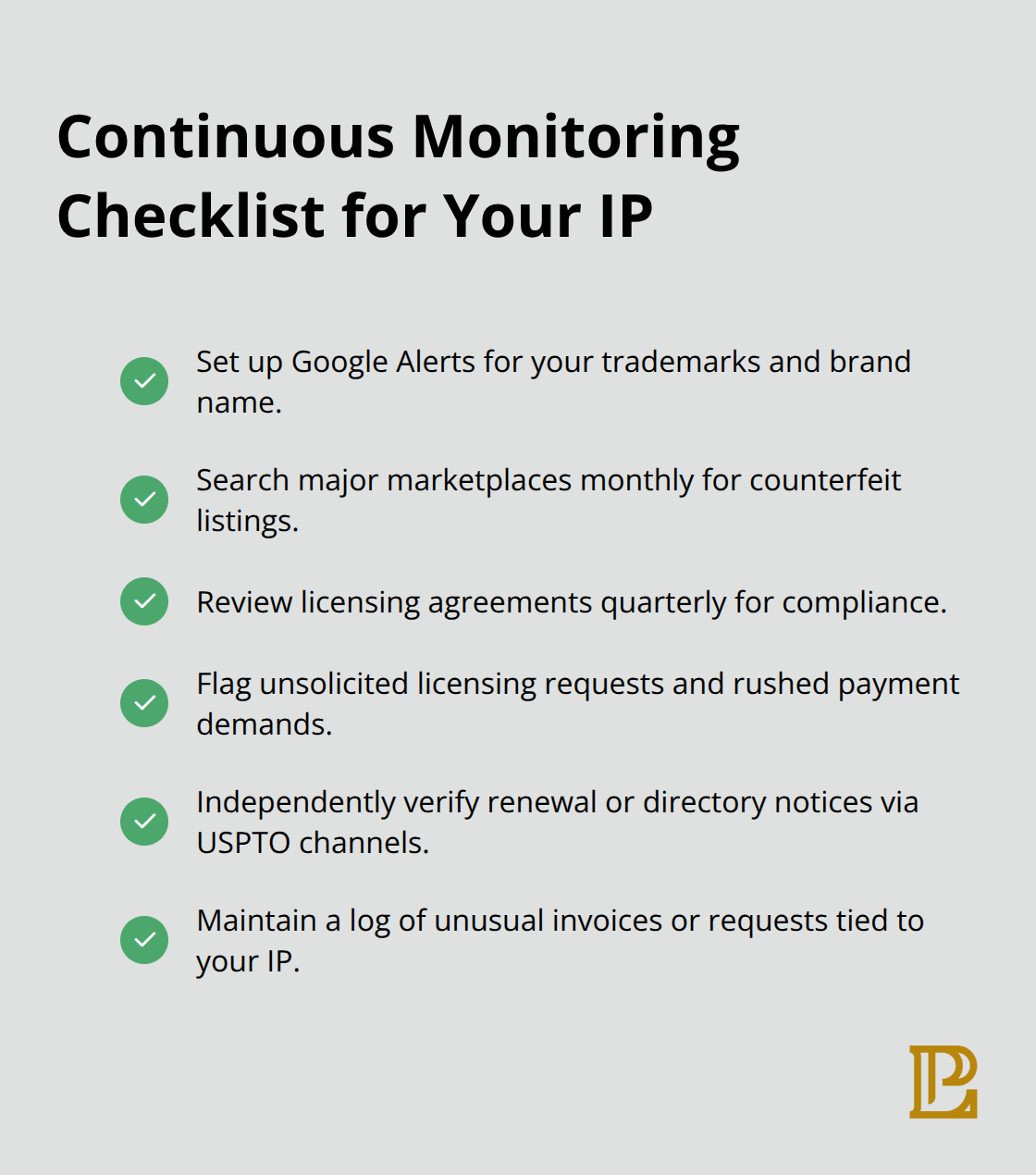
Track unusual licensing requests, especially those arriving through unsolicited channels or demanding rapid payment. If someone contacts you about renewal fees, verification services, or directory listings you never requested, verify independently through official USPTO channels before responding. Fraudsters harvest public information from trademark and patent databases to appear credible, so skepticism toward unsolicited IP communications is your strongest defense.
The IP fraud protection market is growing at 11.20% annually from 2022 to 2029 according to Data Bridge Market Research, driven by rising fraud incidents and increasing organizational investment in detection tools. That growth reflects a hard truth: IP fraud is accelerating, and businesses that wait to act are losing ground to those protecting themselves now.
Contact an Attorney When You Detect Suspicious Activity
When you detect suspicious activity, contact an attorney immediately rather than responding directly to the suspicious party. If the communication is real, delay in responding creates legal risk. If it’s fraudulent, engaging directly tips off the scammer and wastes your resources. An attorney protects you in both scenarios. Pierview Law handles IP enforcement for Hermosa Beach business owners and can verify whether a communication is legitimate or fraudulent before you take action.
Report Serious IP Fraud to Law Enforcement
For serious IP fraud involving counterfeits or large-scale unauthorized use, the FBI investigates IP theft cases involving copyrights, patents, and trade secrets. Local law enforcement can also file reports that create an official record of the fraud. Cross-jurisdictional cooperation among federal, state, and local agencies has successfully prosecuted organized IP fraud rings, as demonstrated by Operation Checks in the Mail, which resulted in 56 arrests and recovered nearly $5 million from hundreds of victims in California. Your documentation and early reporting increase the likelihood that law enforcement will prioritize your case.
Final Thoughts
IP fraud doesn’t announce itself with obvious warning signs. Unsolicited renewal notices, unusual payment demands, cease-and-desist letters from unfamiliar parties, and products that look almost identical to yours all signal that intellectual property frauds have entered your business. These warning signs matter because they give you time to act before financial losses, brand damage, and legal complications spiral out of control.
Your first step when you suspect IP fraud is contacting an attorney rather than responding directly to the suspicious party. An attorney verifies whether the communication is legitimate or fraudulent before you take action, protecting you in both scenarios. For serious fraud involving counterfeits or large-scale unauthorized use, report the incident to the FBI or local law enforcement so documentation creates an official record that increases the likelihood of investigation and prosecution.
Hermosa Beach business owners can contact Pierview Law to verify suspicious communications, document IP assets, and pursue legal action against fraudsters. Our team helps you register intellectual property with government agencies, establish monitoring systems, and develop compliance strategies that prevent fraud from taking root in your business.