
Many business owners in Hermosa Beach confuse corporate law with commercial law, thinking they’re the same thing. They’re not.
Corporate law and commercial law serve different purposes and apply to different situations. Understanding which one applies to your business matters for compliance, liability, and growth. We at Pierview Law help clients navigate both areas so they make informed decisions about their operations.
What is Corporate Law
Corporate law handles how your business is structured, governed, and operated from formation through potential dissolution. It focuses on the internal mechanics of your company-who makes decisions, how profits are distributed, what rights shareholders have, and how the company complies with state regulations. Unlike commercial law, which covers transactions between your business and external parties, corporate law shapes the rules that govern your business itself.
How Structure Affects Your Liability and Taxes
In California, the Secretary of State oversees corporate formation, and your choice of structure determines everything from your personal liability to how you pay taxes. A sole proprietorship gives you full control but exposes your personal assets to business debts. A general partnership requires at least two people and splits liability among partners unless you structure it differently. A limited partnership needs at least one general partner with unlimited liability and at least one limited partner whose liability is capped at their investment. An LLC provides liability protection similar to a corporation but allows pass-through taxation, meaning profits are taxed as personal income to members rather than at the corporate level.
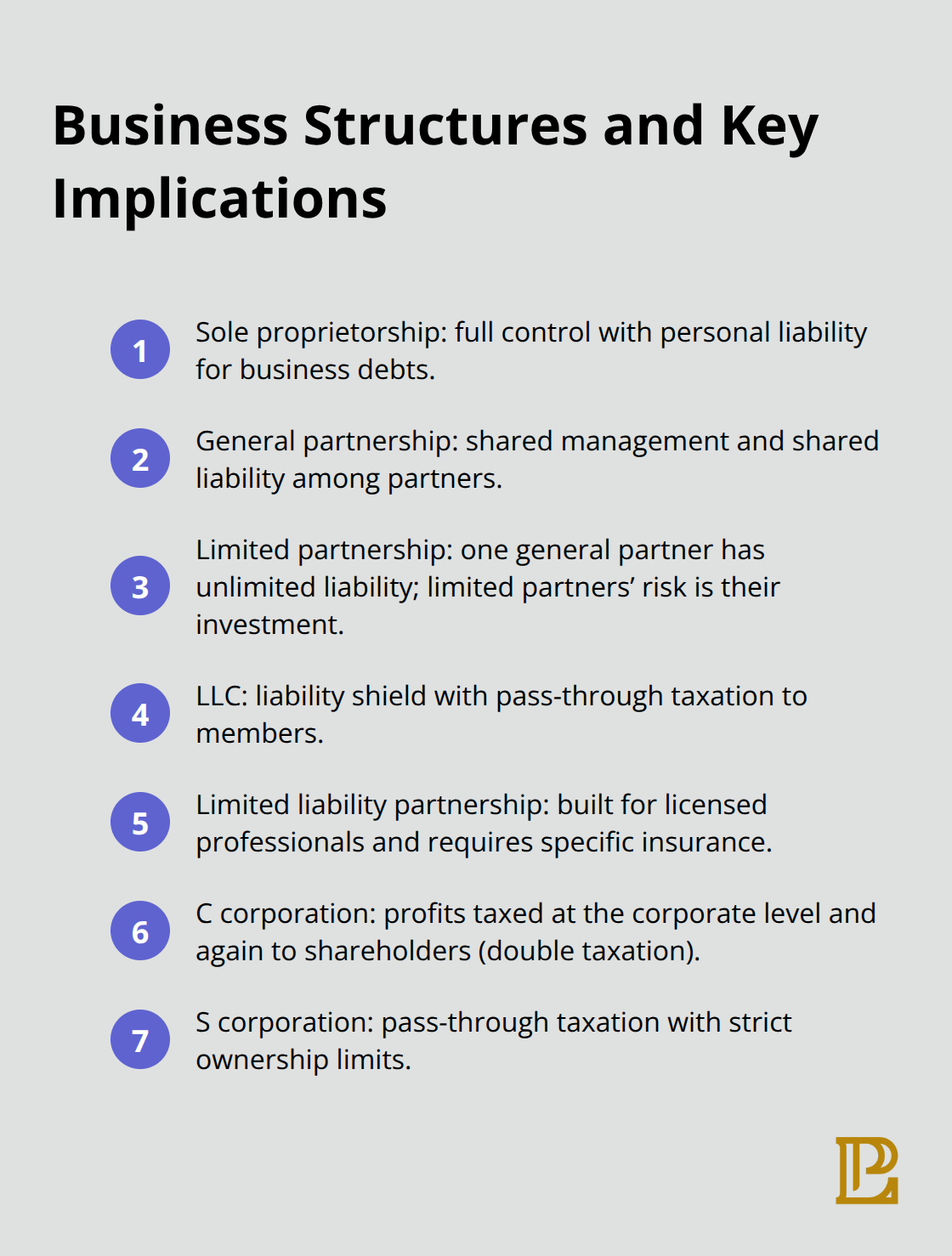
A limited liability partnership is designed specifically for professional services like law, accounting, architecture, and engineering, and requires certain insurance levels. Corporations themselves come in two main forms: C corporations, which face double taxation at both the corporate and shareholder levels, and S corporations, which offer pass-through taxation but have strict ownership requirements.
Formation and Governing Documents
To form a California corporation, you file Articles of Incorporation; for an LLC, you file Articles of Organization through bizfileOnline.sos.ca.gov. Each structure has different governance requirements. An LLC requires an operating agreement detailing member roles, though this stays in your records and isn’t filed with the state. Corporations require bylaws and often shareholder agreements defining voting rights, dividend distribution, and share transfer procedures. These governing documents are your private law-they control how your company operates internally.
Compliance and Fiduciary Duties
Compliance matters significantly. Directors and officers have fiduciary duties to act in the company’s best interest, and failing to maintain proper records or follow governance procedures can pierce the liability shield that protects your personal assets. When you understand these structural and compliance requirements, you’re ready to explore business law services that address the transactions and day-to-day operations that keep your business running.
What Commercial Law Actually Covers
Commercial law governs the transactions and day-to-day operations that keep your business running. Where corporate law shapes your internal structure, commercial law handles what you do with that structure-selling products, signing contracts, hiring employees, protecting intellectual property, and complying with regulations that apply to those activities. The Uniform Commercial Code, adopted across all U.S. states including California, standardizes how sales, leases, negotiable instruments, secured transactions, and funds transfers work. For a Hermosa Beach business owner, this means commercial law touches nearly every external interaction your company has.
What Commercial Law Covers
If you manufacture goods, sell services, enter supply agreements, or license technology, commercial law applies. Employment contracts fall here too. So does intellectual property protection, whether you register a trademark for your brand or secure a patent for a product innovation. Product liability, advertising compliance, consumer protection regulations, and even international trade fall within commercial law’s scope. The practical reality is that most business owners encounter commercial law far more frequently than corporate law because it covers the actual transactions that generate revenue.
How Contracts Shape Your Business Obligations
Contracts are where commercial law lives. The UCC provides a framework, but your specific contract language determines what you owe, what the other party owes, and what happens if something goes wrong. When you draft a supply agreement with a vendor, an employment contract with a manager, or a licensing agreement for software, those documents must clearly state delivery terms, warranties, liability limits, and data protection obligations. Many Hermosa Beach business owners skip proper contract review and pay for it later through disputes or unexpected liabilities. A well-drafted contract specifies what constitutes acceptable performance, who bears the cost if something fails, and how disagreements get resolved. The Uniform Commercial Code itself recognizes that contract language typically overrides default UCC rules, which means your negotiating power matters. If you buy equipment, lease commercial space, or partner with another business, the contract defines your risk. Getting this wrong costs money and time. Getting it right protects your assets and clarifies expectations upfront.
Intellectual Property and Regulatory Compliance Protect Your Assets
Intellectual property protection and regulatory compliance represent two areas where commercial law directly impacts your bottom line and your ability to operate. Registering your trademark with the U.S. Patent and Trademark Office prevents competitors from using confusingly similar marks and gives you grounds to stop infringement. Patents protect inventions and give you monopoly rights for a limited time. Copyright protects original works of authorship. For businesses handling customer data, GDPR compliance and California’s own privacy laws impose specific obligations on how you collect, store, and use information. Violations carry substantial penalties.
Employment law within commercial law covers wage and hour compliance, anti-discrimination obligations, workplace safety under OSHA standards, and proper classification of workers as employees versus independent contractors. The California Department of Industrial Relations actively enforces wage laws, and misclassification of workers exposes you to back pay claims, penalties, and litigation costs. Regulatory compliance isn’t optional-it’s foundational to operating legally and avoiding costly enforcement actions.
These commercial law obligations exist alongside your corporate structure. The next section explores how corporate law and commercial law differ in their focus, the parties they involve, and the legal outcomes they produce.
Where Corporate Law Ends and Commercial Law Begins
Different Timelines, Different Problems
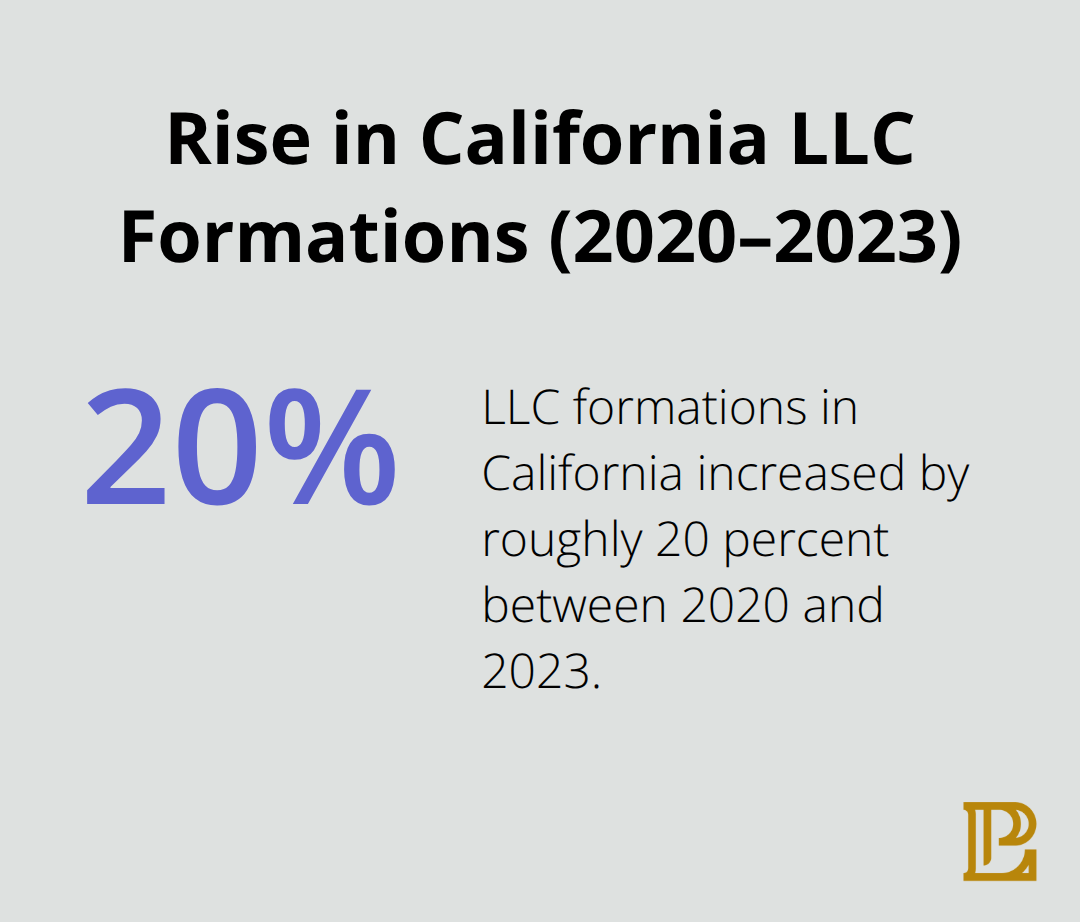
Corporate law and commercial law operate on different timelines and solve different problems. Corporate law addresses structure and governance-it answers questions like what entity type protects your personal assets, who holds voting rights, and how you distribute profits. You engage corporate law when you form your business, restructure ownership, prepare for a merger, or dissolve the company. These milestone events happen occasionally, not daily. Commercial law, by contrast, governs the constant flow of business activity. It applies when you sign a contract with a vendor, hire an employee, license your trademark, or sell products. The California Secretary of State data shows that LLC formations in California increased by roughly 20 percent between 2020 and 2023, indicating that business owners understand the importance of choosing the right structure. But choosing the structure marks just the beginning. Once that structure exists, commercial law takes over and never stops applying.
A Hermosa Beach manufacturer might form an LLC once and feel satisfied about liability protection, then spend the next ten years signing supply contracts, employment agreements, and licensing deals-all governed by commercial law.
Where the Two Fields Intersect
The two fields intersect at certain moments. When you merge two companies or acquire another business, you need corporate lawyers to structure the deal and commercial lawyers to negotiate and draft the transaction documents. When you raise capital through investment or debt financing, corporate law addresses how the new ownership or debt affects your governance structure, while commercial law handles the actual loan agreement or investment contract. The key distinction rests on timing and focus. Corporate law shapes the foundation; commercial law governs everything you build on that foundation.
Different Legal Consequences
The legal outcomes differ significantly. Corporate law violations-such as failing to maintain proper governance records, ignoring fiduciary duties, or improperly mixing personal and business finances-can result in piercing the corporate veil, which exposes your personal assets to business creditors. The courts take this seriously because the entire point of forming an LLC or corporation is that liability shield.
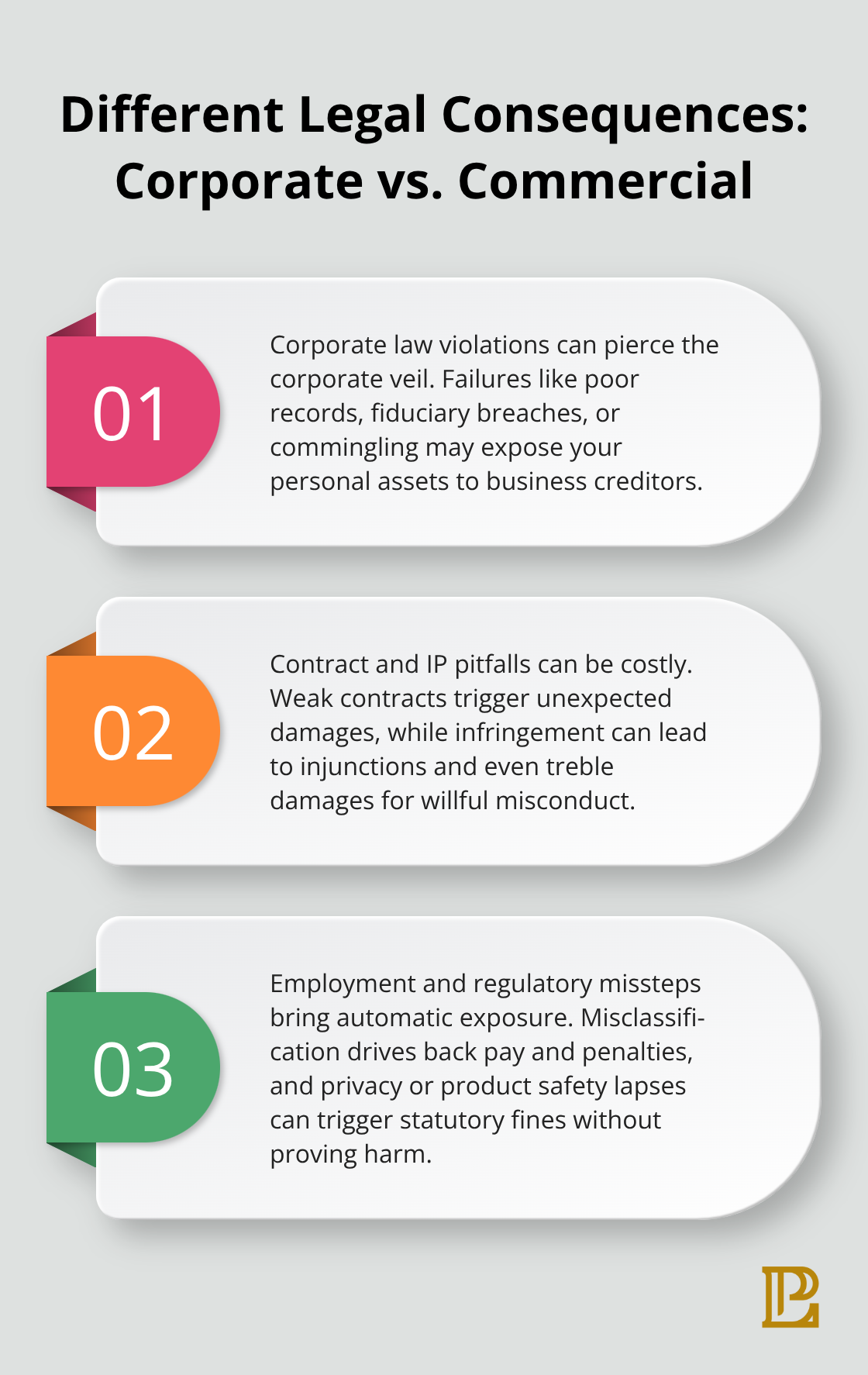
Commercial law violations carry different consequences. A poorly drafted contract might leave you liable for damages you didn’t anticipate. Intellectual property infringement can result in injunctions stopping your use of a brand or technology, plus damages ranging from actual losses to treble damages in willful infringement cases. Employment law violations under commercial law expose you to back pay claims, liquidated damages, and penalties from California’s Department of Industrial Relations. A single misclassified worker can trigger wage claims affecting multiple employees. Regulatory violations in areas like data privacy or product safety carry statutory penalties that don’t require proving actual harm-they’re automatic.
Understanding Your Legal Needs
When you need corporate guidance, the stakes involve your business structure, liability protection, and how ownership transfers or changes hands. When you need commercial guidance, the stakes involve your day-to-day operations, your contractual obligations, and your compliance with transaction-specific laws. Pierview Law handles both areas, which means we can advise you when these fields overlap and help you understand which type of guidance applies to your specific situation.
Final Thoughts
Corporate law and commercial law address fundamentally different aspects of running a business, yet both matter for your success. Corporate law establishes your business structure, defines governance rules, and protects your personal assets through liability shields. Commercial law governs the transactions, contracts, and day-to-day operations that generate revenue and create obligations. Understanding corporate law vs commercial law helps you recognize which legal issues require immediate attention and which ones shape your long-term business foundation.
You need corporate guidance when you form your business, restructure ownership, prepare for a merger or acquisition, or navigate dissolution. You need commercial guidance constantly whenever you sign a contract, hire an employee, protect intellectual property, or comply with regulations affecting your transactions. Most Hermosa Beach business owners encounter commercial law issues far more frequently than corporate law issues because commercial law touches every external interaction your company has. The two fields intersect at significant moments-a merger requires both corporate lawyers to structure the deal and commercial lawyers to draft transaction documents, while raising capital involves corporate law questions about ownership and governance alongside commercial law questions about loan terms or investment agreements.
We at Pierview Law provide comprehensive legal services covering both corporate and commercial matters through our business law services. When disputes arise from commercial transactions or governance issues, our civil litigation team prepares pleadings, manages discovery, and represents you at trial or alternative resolution forums. Contact us to discuss how we can help you navigate the legal issues affecting your business.