
Intellectual property strategy isn’t just for large corporations anymore. Small and mid-sized businesses in Hermosa Beach and beyond are recognizing that protecting their innovations, brands, and creative work directly impacts their bottom line.
At Pierview Law, we’ve seen firsthand how becoming an intellectual property strategist opens doors to meaningful work across industries. Whether you’re drawn to patent law, trademark protection, or licensing deals, this career path combines technical knowledge with real business impact.
Understanding the Four Types of IP Protection
Patents Protect Your Innovations
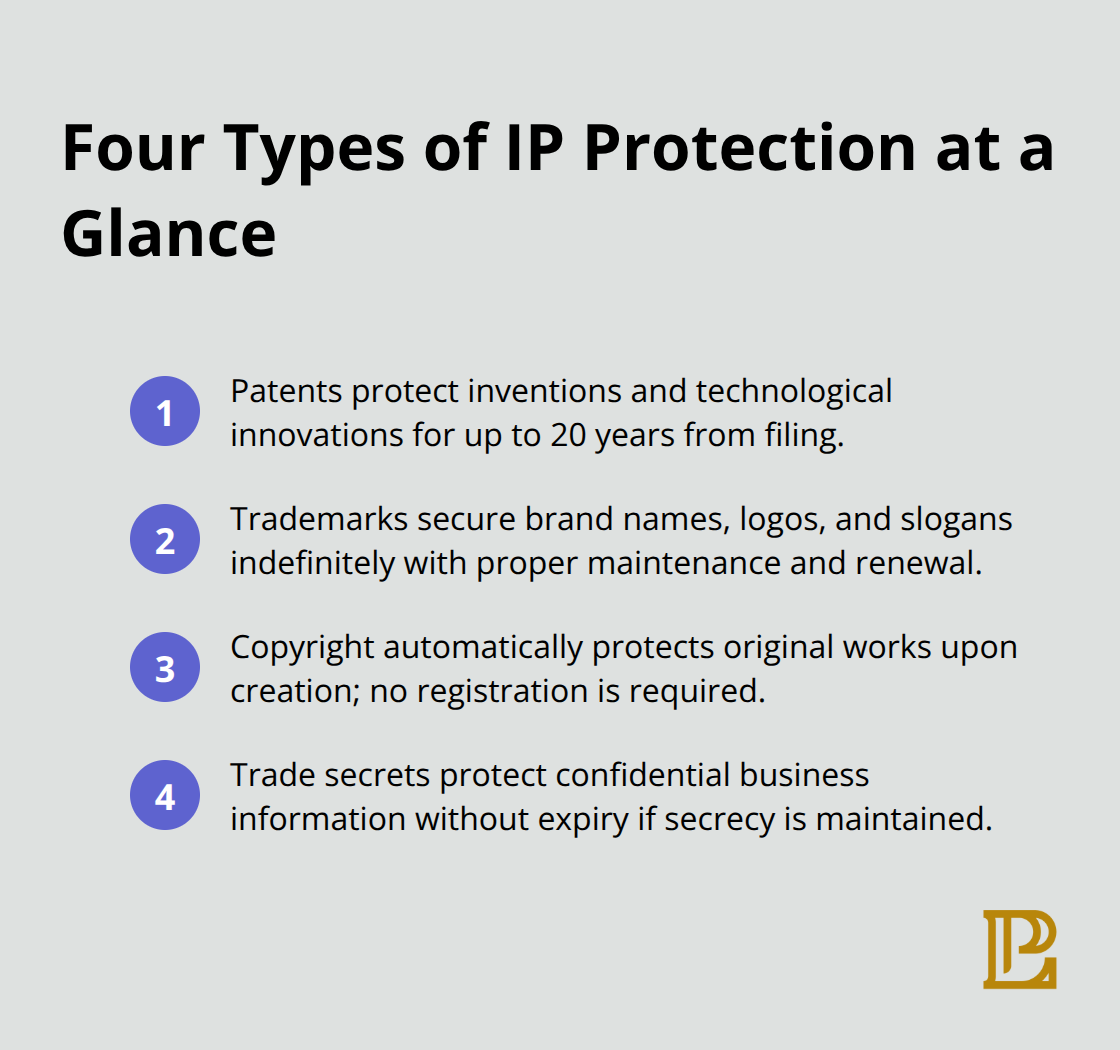
Patent protection safeguards inventions and technological innovations for up to 20 years from filing, making it the strongest form of IP defense for products and processes. This protection applies whether you develop a new manufacturing technique, a software algorithm, or a mechanical device. The patent system grants you the exclusive right to make, use, and sell your invention during that period, preventing competitors from copying your work.
Trademarks Build Your Brand Identity
Trademark protection secures brand names, logos, and slogans indefinitely, as long as you maintain and renew them. Businesses in Hermosa Beach and across Los Angeles County file trademarks before launching products to establish ownership and prevent others from using confusingly similar marks. A strong trademark becomes an asset that grows more valuable over time, especially as customers associate it with quality and reliability.
Copyright and Trade Secrets Round Out Your Arsenal
Copyright automatically protects original works like software code, designs, and written content the moment they’re created, requiring no registration. Trade secrets protect confidential business information-manufacturing processes, customer lists, pricing strategies-through confidentiality agreements and restricted access. Unlike patents, trade secrets don’t expire if you keep them secret, making them arguably the most cost-effective protection since they avoid patent filing fees and prosecution timelines that can stretch 2-4 years.
Align IP Strategy With Your Business Model
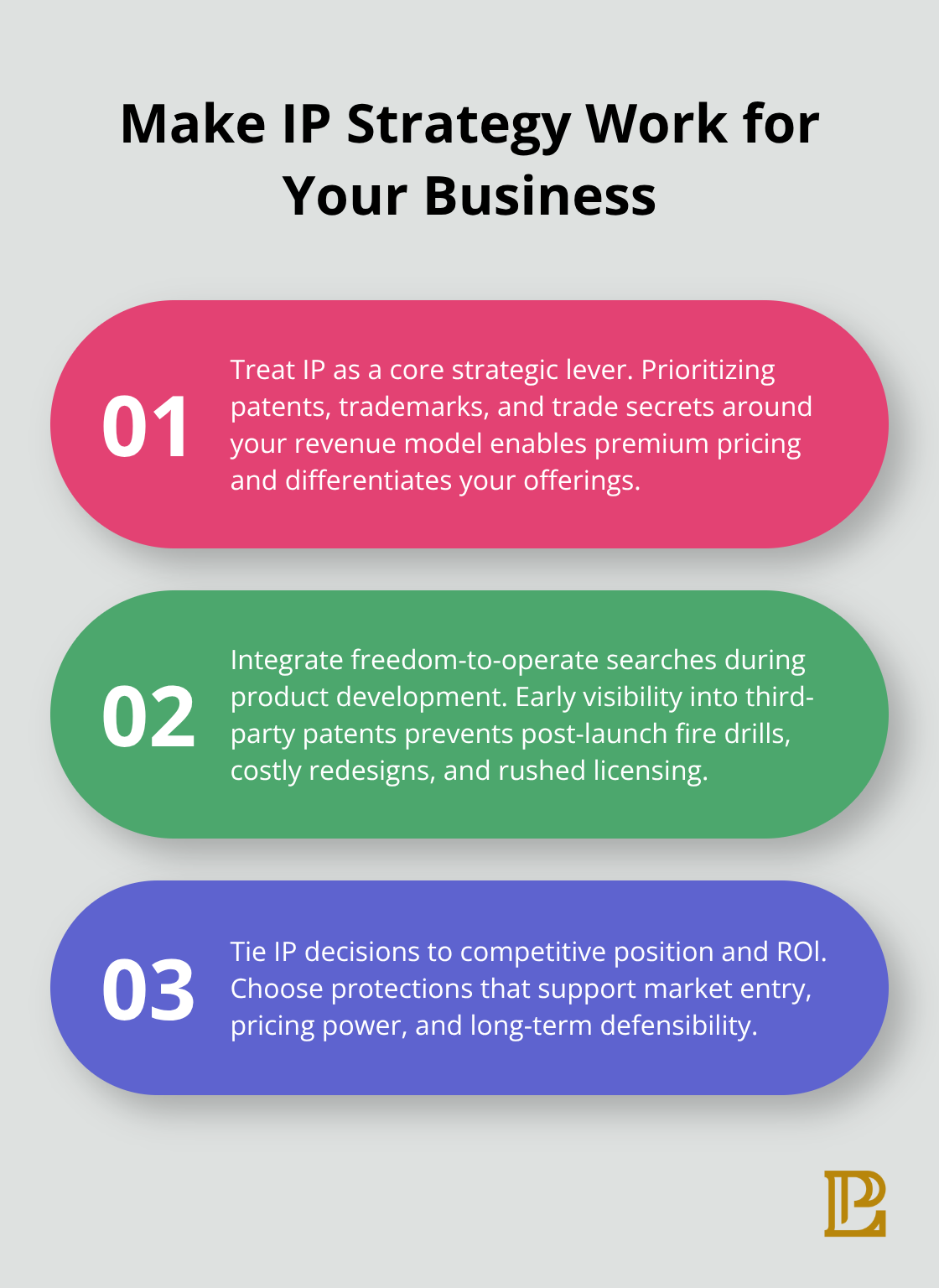
Your IP strategy must align directly with your business model and competitive position, not exist as an afterthought. Companies that treat IP as a core strategic element-not just a legal compliance box-achieve premium pricing and market differentiation. During product development, conduct freedom-to-operate searches to identify third-party patents that could block your market entry, because conflicts discovered after launch force costly redesigns or licensing negotiations.
Monitor and Enforce Your Portfolio
Technology landscaping reveals competitor patent portfolios and licensing opportunities, helping you position your innovations defensively. Once you commercialize your product, ongoing portfolio monitoring and regular IP audits catch ownership gaps, unregistered assets, and enforcement opportunities. Businesses in Hermosa Beach benefit from having counsel evaluate IP alignment with their overall business strategy, ensuring protection investments match revenue potential and competitive threats. The difference between treating IP strategically versus reactively often determines whether a growing company commands market leadership or becomes a licensing target-which is why the next step involves building the skills and knowledge you need to implement these strategies effectively.
Skills That Bridge Law and Business
Patent Prosecution Demands Hands-On Experience
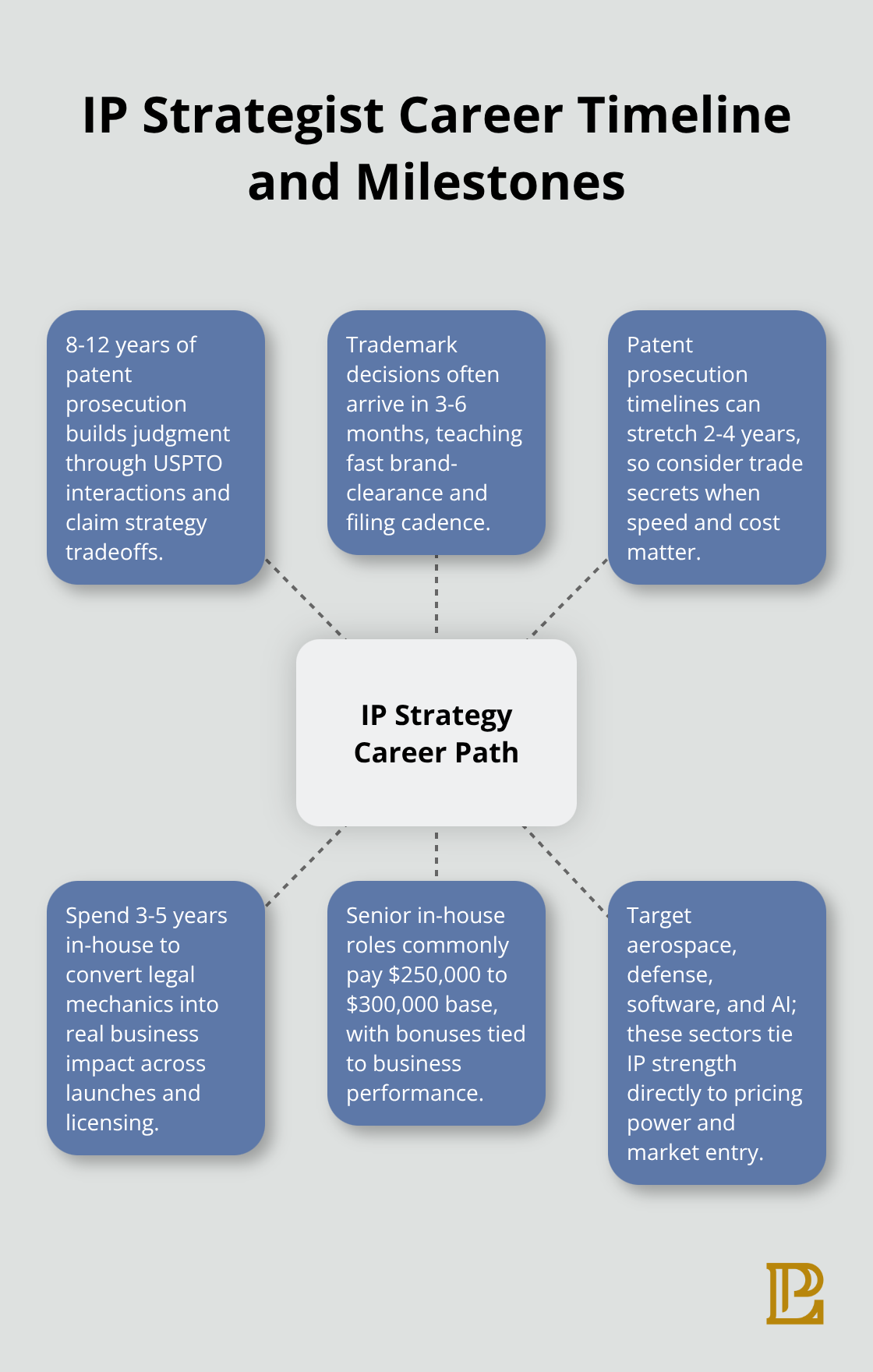
Patent prosecution involves understanding the U.S. Patent and Trademark Office examination process, learning how examiners evaluate claims, and knowing when to narrow your application versus when to push back on rejections. This takes 8-12 years of hands-on prosecution work to develop real judgment, according to typical prerequisites for senior IP strategy roles. Trademark registration follows a different timeline-the USPTO typically issues decisions within 3-6 months-but requires understanding likelihood of confusion standards and international classification systems. The critical skill isn’t memorizing rules; it’s learning to read Office Actions and respond strategically. You’ll benefit from spending time with actual USPTO databases, reviewing thousands of prosecution files, and understanding why some applications succeed while identical-looking ones fail.
Negotiating Licenses Requires Different Skills
Contract negotiation and licensing agreements demand a different skill set entirely. When you negotiate a patent license, you’re not just exchanging money for rights-you’re defining field-of-use restrictions, territorial limits, sublicense permissions, and indemnification obligations that shape the entire relationship. You’ll draft license agreements, negotiate terms with real companies, and understand how a single clause creates risk or opportunity. This practical experience matters far more than theoretical knowledge because you’ll encounter situations where the standard template doesn’t fit the deal structure.
In-House Roles Teach Real Business Impact
Building genuine IP strategy ability requires working on actual business problems inside companies, not law firms. Law firm work teaches you legal mechanics; in-house roles teach you business impact. At companies, you’ll conduct freedom-to-operate searches before product launch, manage invention disclosures from engineers, and evaluate whether a third-party patent threatens your revenue. You’ll support M&A due diligence by identifying IP assets and liabilities that affect valuation. You’ll coordinate with outside counsel on litigation strategy when competitors infringe your patents. These experiences-handling real products, real competitors, and real financial consequences-cannot be replicated in a law firm or classroom.
Target Industries Where IP Drives Competitive Position
Try roles at companies in aerospace, defense, software, or AI sectors where IP strategy directly influences competitive position and pricing power. Look for positions managing substantial patent portfolios, supporting commercial contracts with IP provisions, and educating engineers on trade secret protection. The first 3-5 years of in-house work will teach you more about strategy than the previous 8-12 years of law firm experience combined.
Technical Background Strengthens Your Foundation
Your technical foundation also matters significantly. If you’re pursuing high-tech IP roles, a degree in physics, mechanical engineering, electrical engineering, or computer science strengthens your ability to understand complex inventions and communicate with technical teams. This background helps you evaluate patentability, spot freedom-to-operate risks, and translate business problems into IP solutions that actually work. With these foundational skills and real-world experience in place, you’re ready to explore the specific career pathways where IP strategists create the most value.
Where IP Strategists Create Real Value
In-House Roles Teach Business Impact Over Legal Mechanics
In-house positions at growing companies offer the fastest path to real IP strategy skills, though they demand patience with lower starting pay than law firm roles. Most companies hire IP strategists after they’ve built a foundation through 8-12 years of patent prosecution or legal work, then move you into roles managing substantial patent portfolios, educating engineers on trade secret protection, and coordinating with outside counsel on litigation. At aerospace and defense firms, you’ll handle technologies like flight controls, electric engines, and AI systems where patent strength directly determines whether the company commands premium pricing or becomes a licensing target. Software and AI companies value IP strategists who conduct freedom-to-operate searches before product launch, spot third-party patents that block market entry, and negotiate licensing deals that don’t strangle profitability. The compensation for senior in-house roles runs $250,000 to $300,000 base pay plus bonuses tied to business performance, according to typical market rates for roles requiring both law credentials and 3+ years of operating company experience. In-house work teaches you how IP strategy actually connects to revenue, market share, and competitive position in ways law firm practice never can.
Private Practice Builds Client Relationships Across Industries
Private practice offers a different career arc if you want to build a client base and maintain flexibility across industries. Patent litigation and IP licensing work in private firms typically involves supporting M&A due diligence, drafting license agreements, and representing clients in Patent Trial and Appeal Board proceedings, which adds enforcement experience that strengthens your strategic judgment. However, private practice rarely teaches you business impact because you solve legal problems for multiple clients rather than owning outcomes for one company. Try firms handling IP matters for tech startups or manufacturing companies in Los Angeles County rather than large corporate groups, because smaller clients force you to wear multiple hats and understand how IP decisions affect cash flow, hiring, and product roadmaps.
The Hybrid Path Combines Both Worlds
The emerging path most strategists follow combines both: you spend your first 8-12 years in law firm prosecution work, then move in-house for 3-5 years to learn real strategy, then either stay in-house or return to private practice as counsel with proven business judgment. Companies increasingly need strategists who’ve lived through product launches, competitive threats, and licensing negotiations (not just lawyers who know IP law). This combination of law firm rigor and in-house business experience creates strategists who understand both the legal mechanics and the financial consequences of IP decisions. When you’ve managed invention disclosures from engineers, evaluated whether a third-party patent threatens revenue, and supported M&A due diligence by identifying IP assets and liabilities that affect valuation, you bring judgment that clients and employers value far more than credentials alone.
Final Thoughts
Building a career as an intellectual property strategist requires combining legal knowledge with real business judgment, and that combination takes years to develop. You’ll spend time in patent prosecution learning how the USPTO works, then move into licensing negotiations where you understand deal structure and risk allocation, then transition into an in-house role where you see how IP decisions affect revenue and competitive position. Each phase teaches you something law school cannot.
The most valuable strategists are those who’ve managed actual patent portfolios, conducted freedom-to-operate searches before product launch, and negotiated licensing agreements where a single clause determines whether the deal works or fails. You need exposure to real products, real competitors, and real financial consequences-which is why the hybrid path of law firm work followed by in-house experience produces strategists that companies actually want to hire. Aerospace, defense, software, and AI companies value intellectual property strategists who understand both the legal mechanics and the business impact.
If you’re in Hermosa Beach or Los Angeles County and need guidance on protecting your business innovations or building an IP strategy aligned with your company’s goals, Pierview Law provides sophisticated legal services in intellectual property and business law.