
LA landlord tenant rights can be confusing, especially when disputes arise. Whether you own rental property or rent in Hermosa Beach, understanding your legal rights and responsibilities protects you from costly mistakes.
At Pierview Law, we help property owners and tenants navigate these complex regulations. This guide covers the key rights and protections you need to know.
What Rights Do Landlords Actually Have in California
The Right to Collect Rent and Enforce Late Fees
California law grants landlords the right to collect rent on time, but this right comes with strict procedural requirements. Late fees are permissible only if your lease explicitly states the amount before the tenancy begins. Many landlords add arbitrary fees without proper lease language and then lose in court when tenants dispute the charges. State law does not allow you to impose fees that lack clear advance notice in the lease agreement.
Property Access: When and How Landlords Can Enter
Entering a property requires written notice at least 24 hours in advance, except in genuine emergencies. Landlords cannot use entry as a pretext to harass tenants or force them out through intimidation. California courts take entry violations seriously, and tenants can sue for damages if you violate these rules. The 24-hour notice requirement applies to inspections, repairs, and showings to prospective tenants or buyers.
Eviction Rights and Strict Procedural Requirements
The eviction process demands strict compliance with statutory timelines and notice requirements. If you want to evict for nonpayment, you must serve a three-day notice to pay or quit with proper formatting and delivery method. If the tenant does not comply, you file in court, and the tenant has the right to answer your complaint. Many landlords skip the court process entirely and attempt lockouts or utility shutoffs, which are illegal under California law and expose them to significant damages and attorney fees.
For lease violations, you cannot simply remove a tenant for a minor breach; the violation must be material and the tenant must receive a cure-or-quit notice allowing reasonable time to fix the problem. Nonpayment is the exception-the three-day notice applies there. For other violations like unauthorized occupants or damage to the unit, you typically give three days to cure, and if they do not, you proceed to court. Owner move-in evictions, which became stricter under recent amendments effective April 1, 2024, require you to disclose the moving relative’s identity and relationship, move in within 90 days after the tenant vacates, occupy the unit for 12 consecutive months, and reimburse reasonable moving expenses. If you fail any of these steps, the eviction is invalid.
Substantial remodel evictions demand a bona fide permit-requiring renovation plan, not cosmetic work, and the tenant must vacate for at least 30 consecutive days. The notice must describe the work and include permit information.
Local Hermosa Beach Health and Safety Standards
Property owners in Hermosa Beach must comply with Title 8 of the municipal code, which covers health and safety standards including habitability, waste disposal, and nuisance control. Violations of these standards give tenants grounds to withhold rent or break their lease without penalty. Landlords who ignore these requirements face tenant claims and potential code enforcement actions from the city.
Understanding the Limits of Landlord Authority
Landlord rights exist, but they operate within a framework that requires precise execution. Cutting corners on notice, entry, or eviction procedures invites litigation you will lose. The next section examines what tenants can expect from their landlords and what protections California law provides when landlords overstep their authority.
What Protections Do Tenants Have Against Landlord Abuse
Tenants in Hermosa Beach have substantial protections under California law, and landlords who ignore these rights face serious financial consequences. Understanding what the law guarantees you prevents costly mistakes and protects your housing stability.
The Right to Habitable Housing
California law requires landlords to maintain rental units with functioning plumbing, heating, electrical systems, waterproofing, working locks, and pest control. If your landlord refuses repairs after written requests, you have multiple remedies available. You can contact the city’s building and safety department for code enforcement, request repairs through the Los Angeles County Department of Consumer & Business Affairs, or withhold rent in an escrow account while documenting violations with photos and dated messages. The 2024 addition of AB 628 now requires landlords to provide a working refrigerator and stove in all rental units, so verify compliance if yours are missing.
Submit repair requests in writing by email or certified mail, not verbally, because written documentation becomes evidence if you need legal help. Keep detailed repair logs with dates and descriptions of each issue. If repairs remain unaddressed after 30 days, contact Stay Housed LA at 888-694-0040 for free legal referrals or access the California Tenant Power Toolkit for structured guidance on next steps.
Protection Against Discrimination and Retaliation
Landlords cannot treat you differently based on race, national origin, religion, sex, gender identity, sexual orientation, disability, familial status, source of income, or veteran status. Section 8 voucher holders receive equal protection under AB 1482, meaning landlords cannot reject applications solely because of Section 8 participation. Retaliation carries particularly steep penalties for landlords who attempt it.
Landlords cannot evict, reduce services, increase rent, or threaten tenants for requesting repairs, reporting code violations, or exercising legal rights. California law presumes retaliation if a landlord acts against you within 180 days of protected activity. You can file complaints with the California Civil Rights Department at no cost, and the Housing Rights Center offers free counseling and referrals for discrimination cases.
Your Right to Privacy and Protection from Illegal Entry
Landlords must provide 24 hours’ written notice before entering your unit except for genuine emergencies like fires or gas leaks. Entry for showings, inspections, or repairs without proper notice violates your rights and gives you grounds for damages. Document any unauthorized entries with dates, times, and witness names.
If your landlord locks you out, removes your belongings, or shuts off utilities, those actions constitute illegal self-help evictions regardless of what the lease states. You can sue for actual damages plus statutory penalties. These tactics expose landlords to significant liability, and courts consistently rule against property owners who attempt them.
Understanding Security Deposits and Lease Violations
California law limits security deposits to one month’s rent and restricts their use to unpaid rent, damages beyond normal wear and tear, cleaning, or returning the property to its original condition. Landlords must return deposits within 21 days after move-out with an itemized deduction list. If your landlord fails to return your deposit or provides an incomplete accounting, you can recover the full deposit amount plus damages.
Lease violations give landlords grounds for eviction only when the breach is material and the tenant receives notice to cure. The tenant must have reasonable time to fix the problem before eviction proceedings begin. Landlords who skip this step and attempt self-help remedies expose themselves to counterclaims and attorney fee awards.
Taking Action When Landlords Overstep
When landlords violate these protections, you have legal remedies that range from administrative complaints to civil lawsuits. The key is documenting everything in writing and acting promptly. Waiting months to report violations weakens your position, while immediate written notice (via email or certified mail) creates a clear record. These protections exist because California recognizes the power imbalance between landlords and tenants, and the law shifts that balance back toward fairness. Understanding your rights transforms you from a passive tenant into an informed advocate for your own housing stability. The next section examines common disputes that arise between landlords and tenants, and the practical steps you can take to resolve them without litigation.
How to Handle the Three Most Common Landlord-Tenant Conflicts
Security Deposit Disputes and Return Timelines
Security deposit disputes consume more time and money than they should, yet proper documentation prevents most of them. California law caps deposits at one month’s rent and mandates return within 21 days of move-out with an itemized deduction list. The Los Angeles County Department of Consumer & Business Affairs reports that thousands of tenants file complaints annually over missing refunds or unexplained deductions. Landlords who itemize deductions imprecisely, claim damage that constitutes normal wear and tear, or fail to provide written accounting lose these cases consistently.
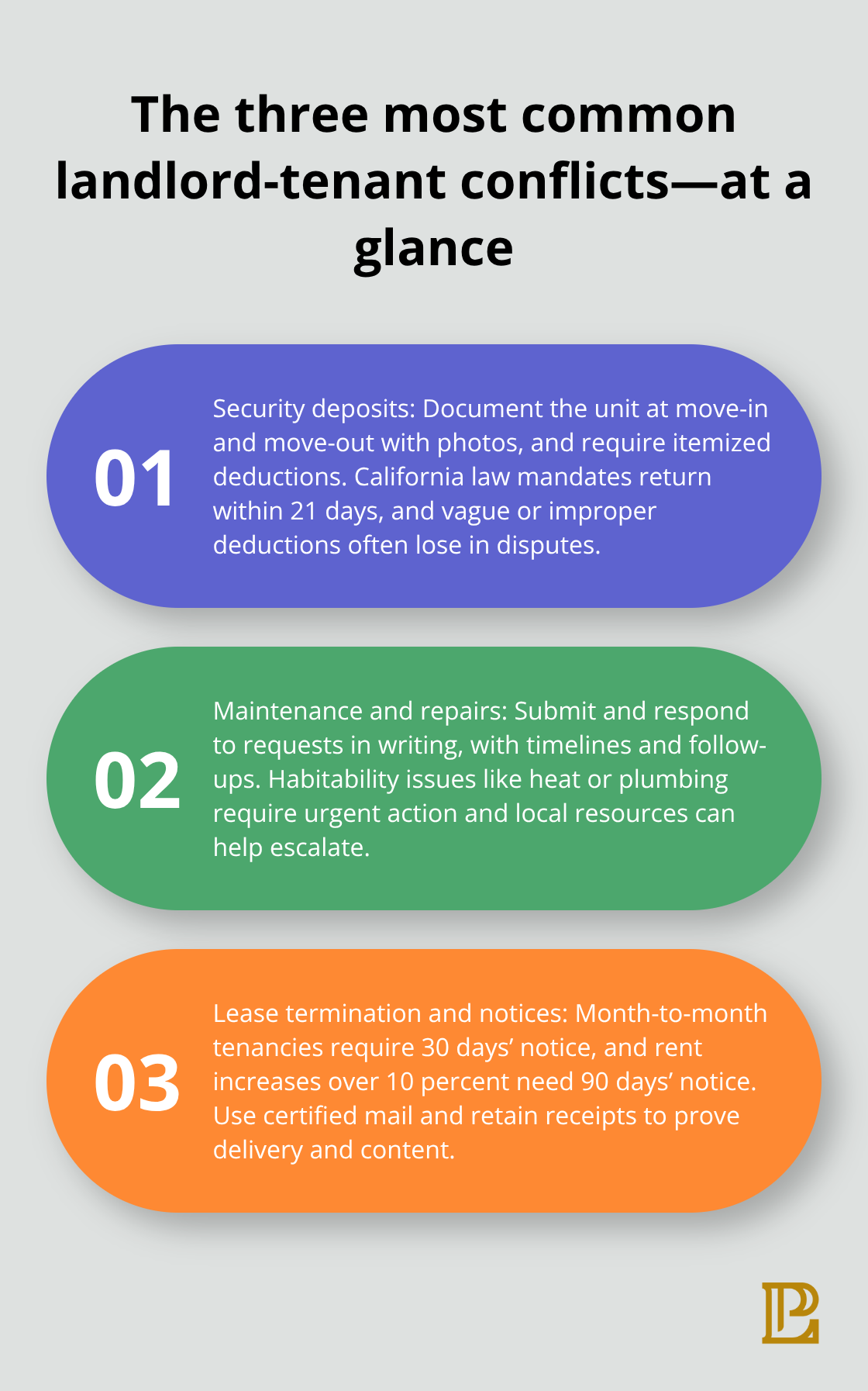
Landlords should photograph the unit before the tenant moves in and again after move-out, document all deductions with receipts, and mail the refund with the itemized list via certified mail. Tenants should request refunds in writing, save all correspondence, and file complaints with the LA County Department of Consumer & Business Affairs if refunds do not arrive within 21 days. If a landlord withholds deposits without legitimate deductions, California law allows tenants to recover the full deposit amount plus damages, which often means double or treble recovery depending on circumstances.
Maintenance and Repair Disagreements
Maintenance and repair disagreements escalate quickly because both parties operate from incomplete information. When a tenant reports a problem verbally, landlords often question whether the issue exists or how serious it is, while tenants assume silence means refusal. Written communication from day one solves this problem.
Tenants must submit repair requests via email or certified mail describing the problem, its location, and when it started, then follow up in writing if the landlord does not respond within five business days. Landlords must respond in writing within the same timeframe and schedule repairs promptly, documenting completion with photos. For habitability violations like broken heating in winter or non-functioning plumbing, California law requires urgent response. Stay Housed LA at 888-694-0040 provides free legal guidance when repairs stall, and the California Tenant Power Toolkit offers structured resources for escalating unresolved issues.
Lease Termination and Notice Requirements
Lease termination and notice requirements present similar documentation challenges. California law requires 30 days’ written notice for month-to-month tenancies and compliance with the specific lease termination date for fixed-term leases. For rent increases, landlords must provide 30 days’ notice for increases of 10 percent or less and 90 days’ notice for increases exceeding 10 percent. Tenants must provide equivalent notice before vacating.
Both parties should send notices via certified mail, retain copies, and verify receipt. Disputes arise when one party claims notice was inadequate or delivered improperly, so certified mail with return receipt creates irrefutable proof of delivery date and content. The Housing Rights Center offers free counseling on notice requirements and timeline compliance, helping both landlords and tenants avoid costly disputes rooted in miscommunication rather than substantive disagreement.
Final Thoughts
LA landlord tenant rights operate within a framework that demands precision from both property owners and tenants. Landlords who collect rent, enter properties, and evict without following statutory procedures face litigation losses and damage awards. Tenants who document violations in writing and pursue remedies through proper channels protect their housing stability and hold landlords accountable.
Understanding these rights matters because violations carry real financial consequences. A landlord who skips court procedures in an eviction loses the case and owes attorney fees. A tenant who fails to document repair requests in writing loses leverage when disputes escalate. Local ordinances in Hermosa Beach and Los Angeles County provide stronger protections than state law alone, so property owners and tenants must verify what applies to their specific situation.
When disputes arise or you need guidance on lease terms, entry procedures, or eviction compliance, contact Pierview Law to discuss your situation and get clarity on your rights and responsibilities. Our real estate practice handles lease negotiations, title review, and dispute resolution across Los Angeles County.