
A poorly written contract can cost your business thousands in disputes, lost revenue, or failed enforcement. Corporate contracts in California practice require precision-vague language and missing terms create openings for costly disagreements.
We at Pierview Law help Hermosa Beach business owners draft contracts that actually protect their interests. This post walks through the specific language, California compliance rules, and common mistakes that undermine contract effectiveness.
What Makes a Contract Actually Readable
Plain Language Beats Complexity
Most business owners in Hermosa Beach have signed contracts written by attorneys who seemed determined to make them incomprehensible. Sentences stretch across entire paragraphs. Terms get buried in subsections. Defined words appear without explanation. The result: business owners don’t fully understand what they’re agreeing to, and disputes arise later because both parties interpreted the same language differently. The California State Bar has noted that contract disputes spike when language lacks clarity, and many of these disputes cost businesses 3-5 times more to litigate than they would have cost to prevent through proper drafting.
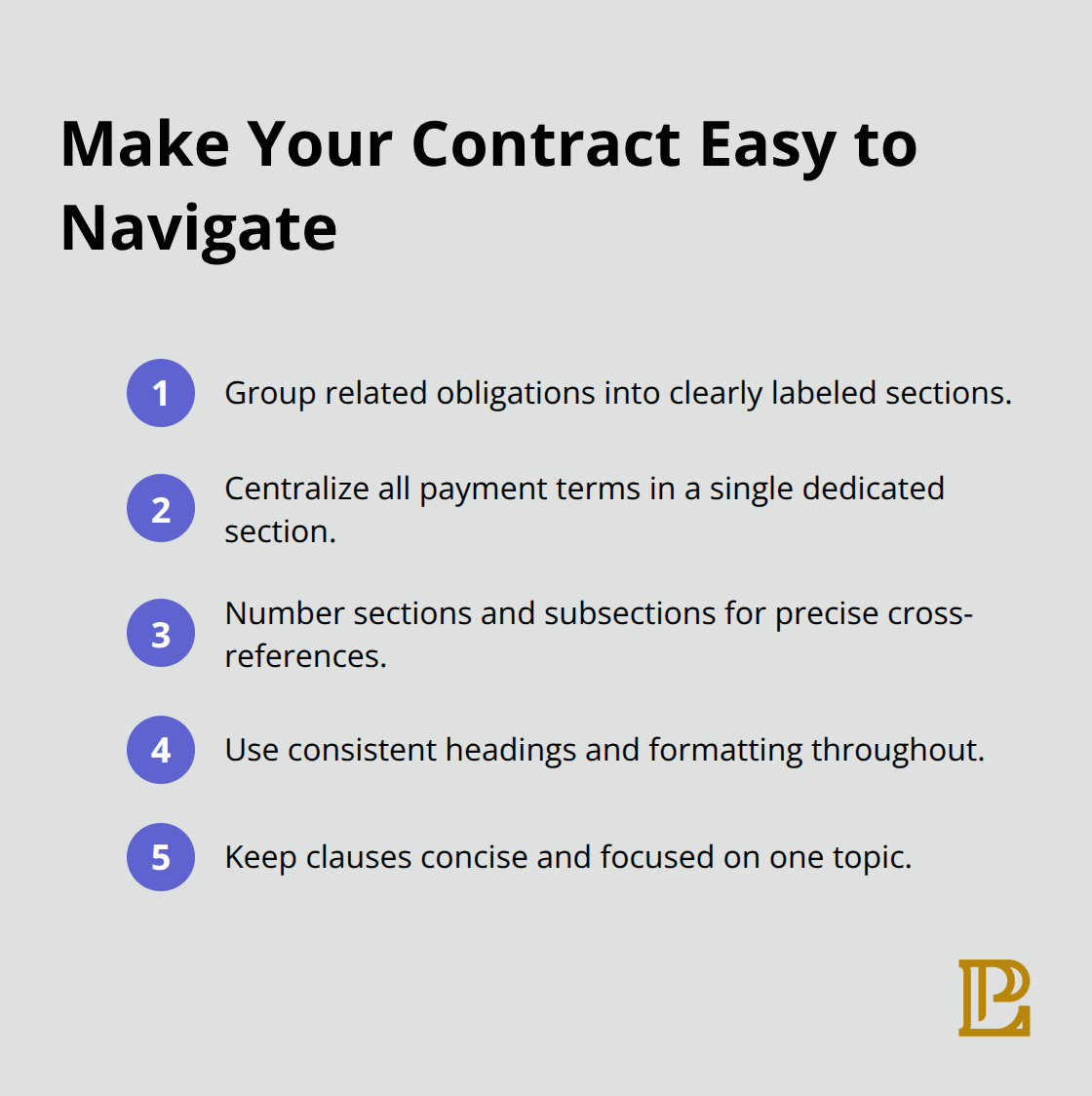
Plain language doesn’t mean oversimplifying your contract-it means saying exactly what you mean without unnecessary complexity. Replace “in the event that the party of the first part fails to remit payment” with “if you don’t pay by the deadline.” This shift transforms a contract from a puzzle into a document that communicates actual obligations.
Define Every Term on First Use
Define every term the first time you use it. If your contract mentions a “delivery date,” spell out what day that is. If it references “standard business hours,” state whether that’s 9 AM to 5 PM Monday through Friday. California courts actually favor clear, straightforward language when interpreting contracts, so precise wording protects you during disputes.
Structure Your Agreement for Easy Reference
Structure your agreement so related obligations stay together. Put payment terms in one section, not scattered across pages three, seven, and twelve. Number every section and subsection so both parties can reference specific provisions without confusion. When your contract has clear structure, people actually read it-and when they read it, they’re less likely to claim they didn’t understand their obligations later.
How Clarity Prevents Future Conflicts
Vague contracts (those with undefined terms or scattered obligations) create openings for disagreement. One party reads a provision one way; the other reads it differently. When disputes land in court, judges must interpret what the parties actually meant, which costs time and money. Clear contracts eliminate this guesswork. Both parties know exactly what they owe, when they owe it, and what happens if someone fails to perform.
The next section covers California-specific rules that your contracts must follow-requirements that go beyond general clarity and directly impact enforceability.
California Contract Law Requirements That Actually Matter
How California Courts Interpret Your Contracts
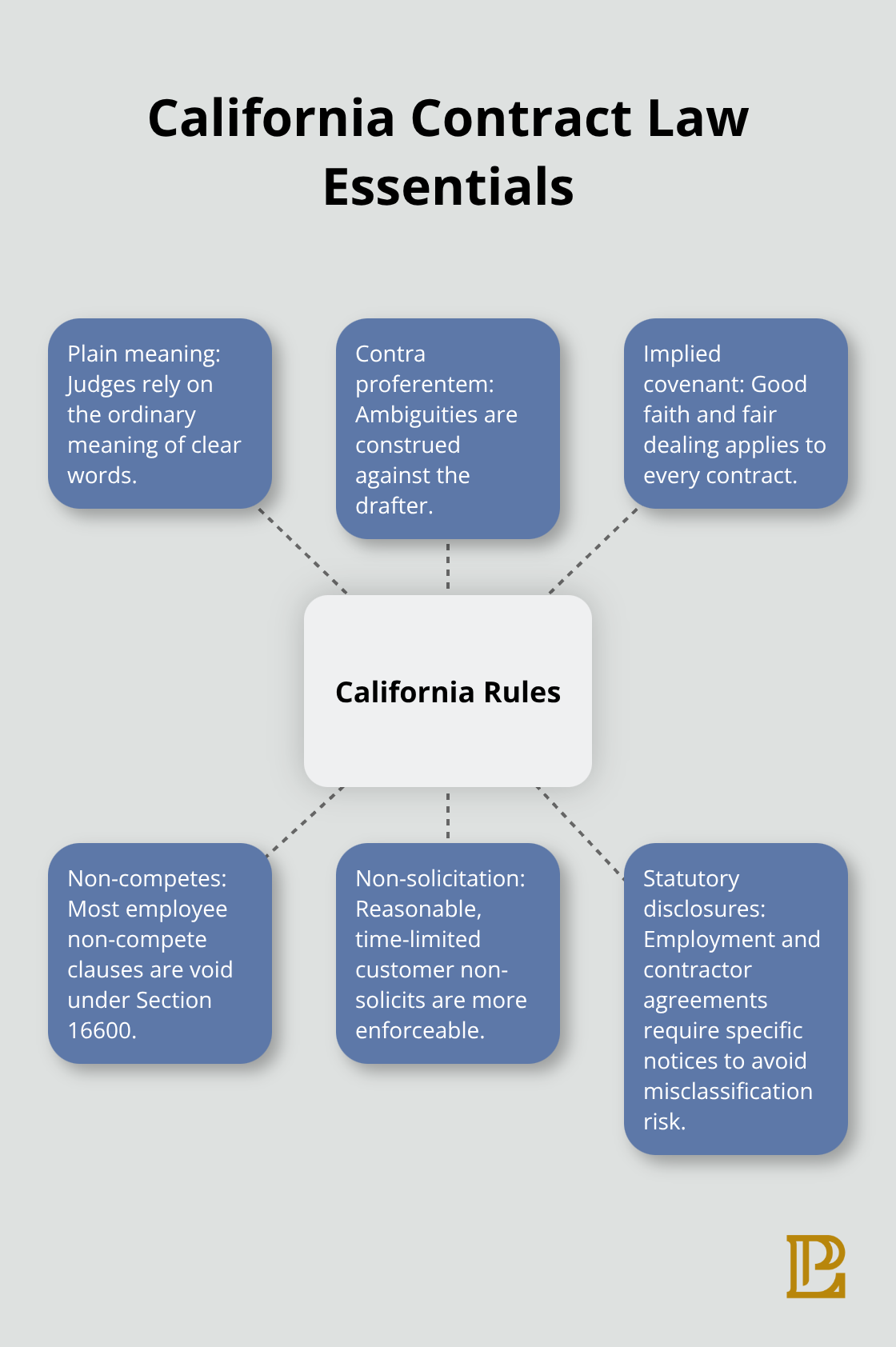
California courts interpret contracts differently than most states, and this distinction affects how you draft agreements in Hermosa Beach. California law presumes that contract language reflects the parties’ actual intent, which means judges examine the plain meaning of words rather than hunting for hidden intent behind legalese. This works in your favor if your contract uses clear language, but it works against you if ambiguity exists.
California applies the contra proferentem rule: when a contract is genuinely ambiguous, courts interpret it against the party who drafted it. If you’re the business owner who wrote the contract, this rule puts you at a disadvantage in disputes. The solution is drafting with such clarity that ambiguity becomes impossible.
The Implied Covenant That Applies Automatically
California recognizes an implied covenant of good faith and fair dealing in every contract, meaning both parties must act honestly and fairly throughout the agreement’s life. This isn’t something you add to a contract; it applies automatically. However, acknowledging it in your contract language prevents disputes over what good faith actually means in your specific business relationship.
Non-Compete and Non-Solicitation Rules in California
California Business and Professions Code Section 16600 makes non-compete agreements void in most situations, which surprises business owners who thought they could restrict former employees from competing. You cannot prevent someone from working for a competitor or starting a competing business, period.
Non-solicitation agreements receive better treatment under California law and are enforceable if they’re reasonable in scope and duration. A non-solicitation clause preventing an employee from contacting customers for two years after departure stands a reasonable chance of enforcement, while a five-year restriction likely fails. If your business relies on customer relationships, non-solicitation language matters.
Statutory Disclosures You Cannot Ignore
California requires specific disclosures in employment agreements, independent contractor arrangements, and certain commercial contracts. If you’re hiring an independent contractor in California, your contract must address workers’ compensation insurance status and tax classification. Missing these provisions doesn’t just create legal exposure; it invites misclassification claims that cost thousands to defend.
These statutory requirements form the foundation of enforceable contracts in California, but they only work when combined with the clear drafting practices covered earlier. The next section examines the specific mistakes that undermine even well-intentioned contracts and shows you how to spot them in your own agreements.
Common Drafting Mistakes That Create Ambiguity
Vague Performance Obligations Cost Money Later
The contracts we review most often contain performance obligations so vague that both parties interpret them completely differently. One party reads “timely delivery” and expects goods within five business days; the other believes 30 days is reasonable. Another contract states “professional quality work” without defining what professional means in that specific industry or context. When disputes arise, courts must interpret what the parties actually agreed to, and that interpretation costs thousands in litigation.
Replace vague language with specific, measurable requirements. Instead of “timely delivery,” write “delivery by 5 PM on Friday, September 27, 2026.” Instead of “professional quality,” specify the exact standards-conforming to industry ISO certifications, passing third-party inspection, or meeting the specifications in Attachment A. This shift transforms obligations from guesswork into enforceable commitments.
Payment Terms Need Exact Numbers and Dates
Payment terms suffer from the same problem constantly. We’ve reviewed contracts that mention payment without stating the amount, the due date, or the consequences of late payment. Some agreements reference payment schedules in attachments that were never actually attached. Others contain contradictory terms-one section says net 30, another says net 60.
California courts will enforce whichever provision appears clearest, which means you might end up with payment terms you never intended. Include detailed payment schedules with specific due dates, late fees, and remedies for non-payment. State the exact dollar amount, the payment method, and what happens if payment arrives late. These details feel tedious while drafting, but they prevent the expensive ambiguity that destroys enforceability later.
Dispute Resolution Clauses Must Specify Everything
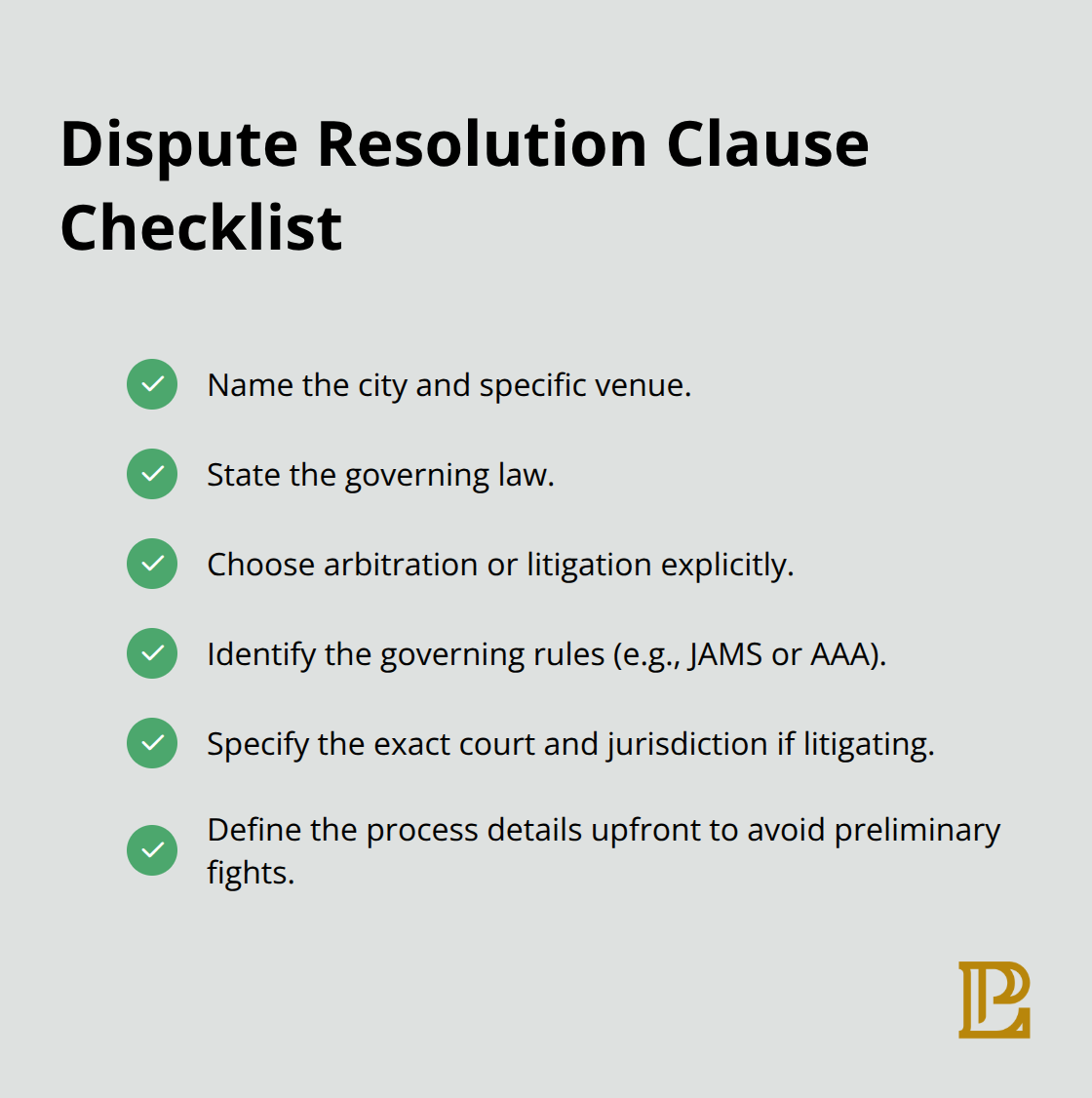
Dispute resolution clauses create another trap. A contract might state that disputes go to arbitration in California but remain silent on which city, which arbitrator, or which arbitration rules apply. Another might specify that disputes go to court in Los Angeles County but fail to mention whether that means state court or federal court. These ambiguities turn a simple contract disagreement into a preliminary fight about where and how to fight, wasting months and thousands of dollars before the actual dispute even begins.
Name the specific venue, the governing law, whether arbitration or litigation applies, and which rules govern the process. If you choose arbitration, specify the arbitration organization (JAMS, AAA, or another provider) and the rules that apply. If you choose litigation, state the exact court and jurisdiction. These details prevent the expensive preliminary battles that drain resources before substantive disputes even reach resolution.
How to Spot These Gaps in Your Agreements
Search your existing contracts for any obligation stated in general terms rather than specific requirements. Look for any financial term that lacks a due date or amount. Examine every dispute clause to confirm it specifies exactly where and how conflicts get resolved. When you find these gaps, you’ve found your litigation risk. The fix requires the same discipline across all three problems: write with the assumption that someone will read your contract in three years during a dispute and won’t remember what you meant.
Final Thoughts
Precision in contract drafting protects your bottom line directly. A contract written with clarity and specificity prevents the disputes that drain thousands in legal fees and lost business time. When your agreements define obligations, payment terms, and dispute resolution with exactness, both parties know what they’re signing.
California-specific rules add another layer of complexity to corporate contracts California practice. Non-compete restrictions fail automatically under state law, but non-solicitation agreements hold up when drafted properly. Statutory disclosures in employment and contractor agreements aren’t optional, and missing these elements invites claims that cost far more to defend than they would have cost to prevent through proper drafting.
We at Pierview Law help Hermosa Beach business owners draft contracts that actually protect their interests while remaining clear enough that both parties understand their obligations. Start by reviewing your current agreements and searching for vague performance obligations, missing payment details, and dispute resolution clauses that don’t specify venue or process. The cost of fixing contracts now is far lower than the cost of fighting over them later.