
Your patent filing strategy in California directly impacts whether your innovations stay protected or become vulnerable to competitors. At Pierview Law, we’ve seen businesses lose significant value because they filed patents reactively instead of strategically.
This guide walks you through building a deliberate roadmap that aligns your patent filings with your business goals, manages costs effectively, and keeps your intellectual property secure.
Why a Strategic Patent Approach Protects Your Bottom Line
Reactive Filing Drains Resources and Creates Gaps
Without a deliberate patent filing strategy, California businesses hemorrhage money on redundant filings, miss critical deadlines, and watch competitors exploit gaps in their protection. The U.S. Patent and Trademark Office received over 645,000 patent applications in 2023, yet many small and mid-sized businesses file reactively, treating patents as legal checkboxes rather than business assets. A strategic approach changes this entirely.
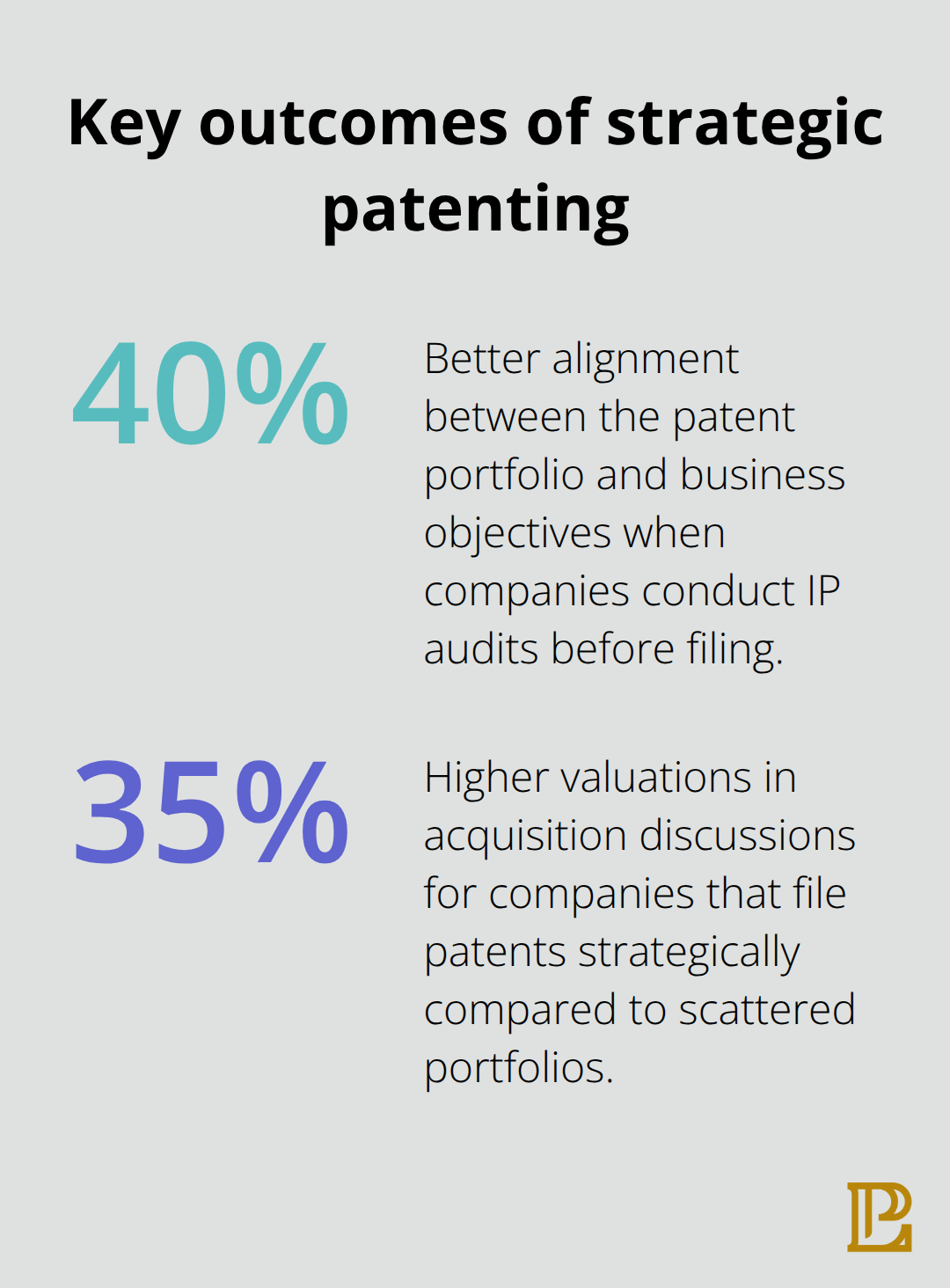
When you map your patent filings to your actual market position and revenue streams, you avoid wasting resources on low-value inventions while securing rock-solid protection for your competitive advantages. Companies that conduct IP audits before filing report 40% better alignment between their patent portfolio and business objectives, according to the American Intellectual Property Law Association.
California’s Competitive Landscape Demands Intentional Protection
This matters in California because the state’s tech-heavy economy means competitors are aggressive and well-funded. Filing strategically also positions you to negotiate from strength in licensing deals, acquisition discussions, or partnership conversations. Your competitors are already doing this, and delay puts you behind.
Unprotected innovations have zero market value. The moment a competitor reverse-engineers your product or process, your advantage evaporates unless you hold a patent. Companies that file patents strategically report 35% higher valuations in acquisition discussions compared to those with scattered or incomplete patent portfolios, per the National Association of Manufacturers. In California’s crowded business landscape, this difference translates directly to deal terms and investment potential.
Litigation Costs Spike When Protection Fails
A patent filing strategy also prevents costly disputes. Litigation over intellectual property violations costs an average of $2.7 million per case, according to the American Intellectual Property Law Association’s 2023 report. Many of these disputes stem from unclear ownership, overlapping claims, or failure to document inventions properly at the time of creation (a problem that structured filing processes eliminate entirely).
A structured approach captures invention details immediately, establishes clear ownership, and prevents the kind of murky situations that land businesses in courtrooms. This foundation matters when you move forward with building your actual roadmap-which requires understanding what you already own and what truly deserves protection.
Building Your California Patent Filing Roadmap
Catalog Your Innovations First
Start by listing everything your business created in the past three to five years. Sit down with your engineering team, product developers, and founders to document every process improvement, software feature, product design, and business method that gives you a competitive edge. Most California businesses skip this step and jump straight to filing, which costs them thousands in wasted applications. You need to know what you actually own before you can protect it strategically.
Create a simple spreadsheet listing each invention, when it was created, who developed it, what problem it solves, and how it generates revenue. The goal is brutal honesty about which innovations matter to your bottom line and which ones don’t. A company that manufactures industrial equipment might have twenty different design tweaks, but only three or four actually differentiate it from competitors. Those three or four deserve patents.
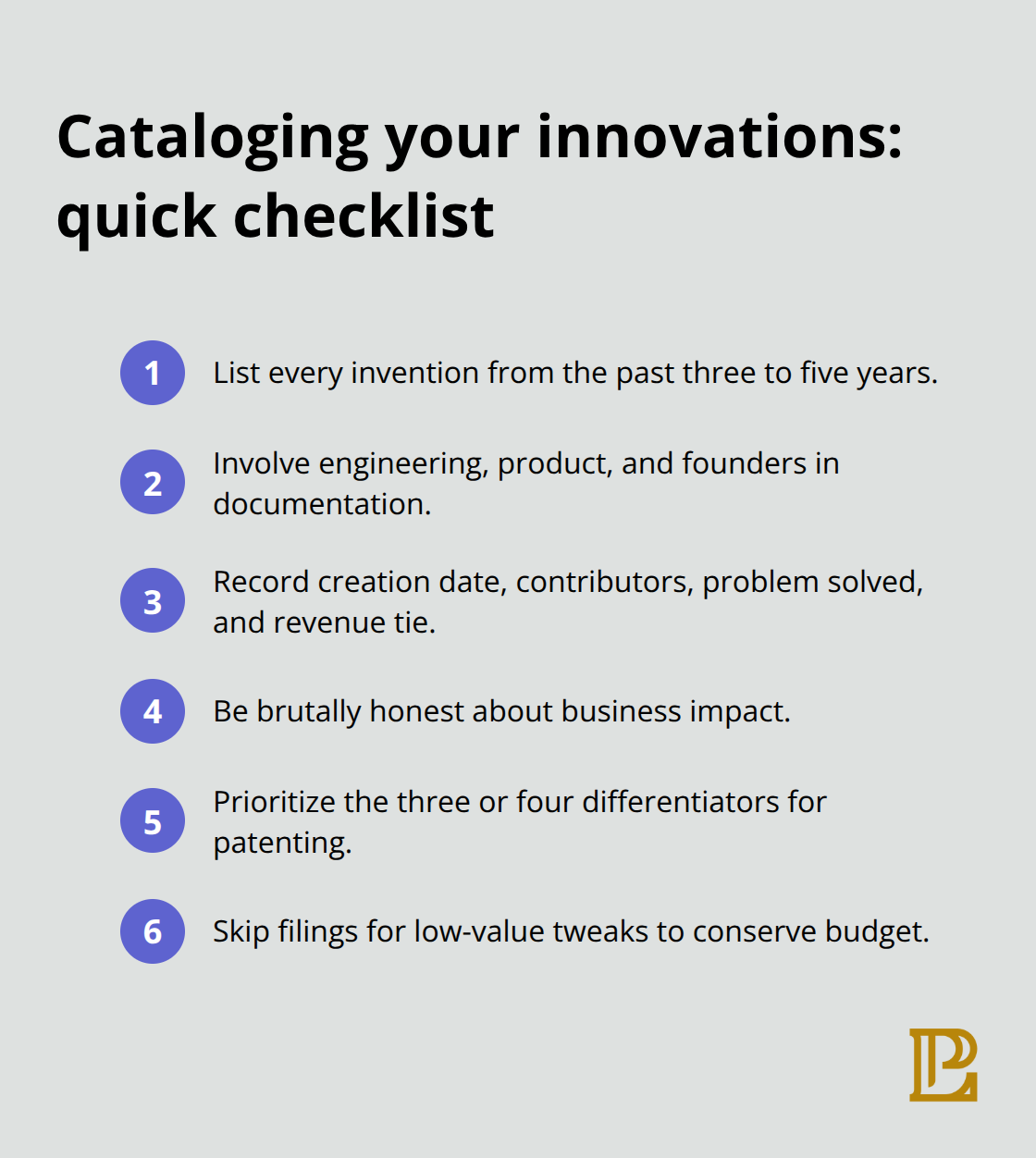
The other seventeen don’t, and filing for them wastes money that could protect what actually matters.
According to the American Intellectual Property Law Association, businesses that conduct this audit before filing reduce their overall patent costs by 30 to 40 percent because they stop pursuing low-value protection and concentrate resources where it counts.
Rank Your Inventions by Business Impact
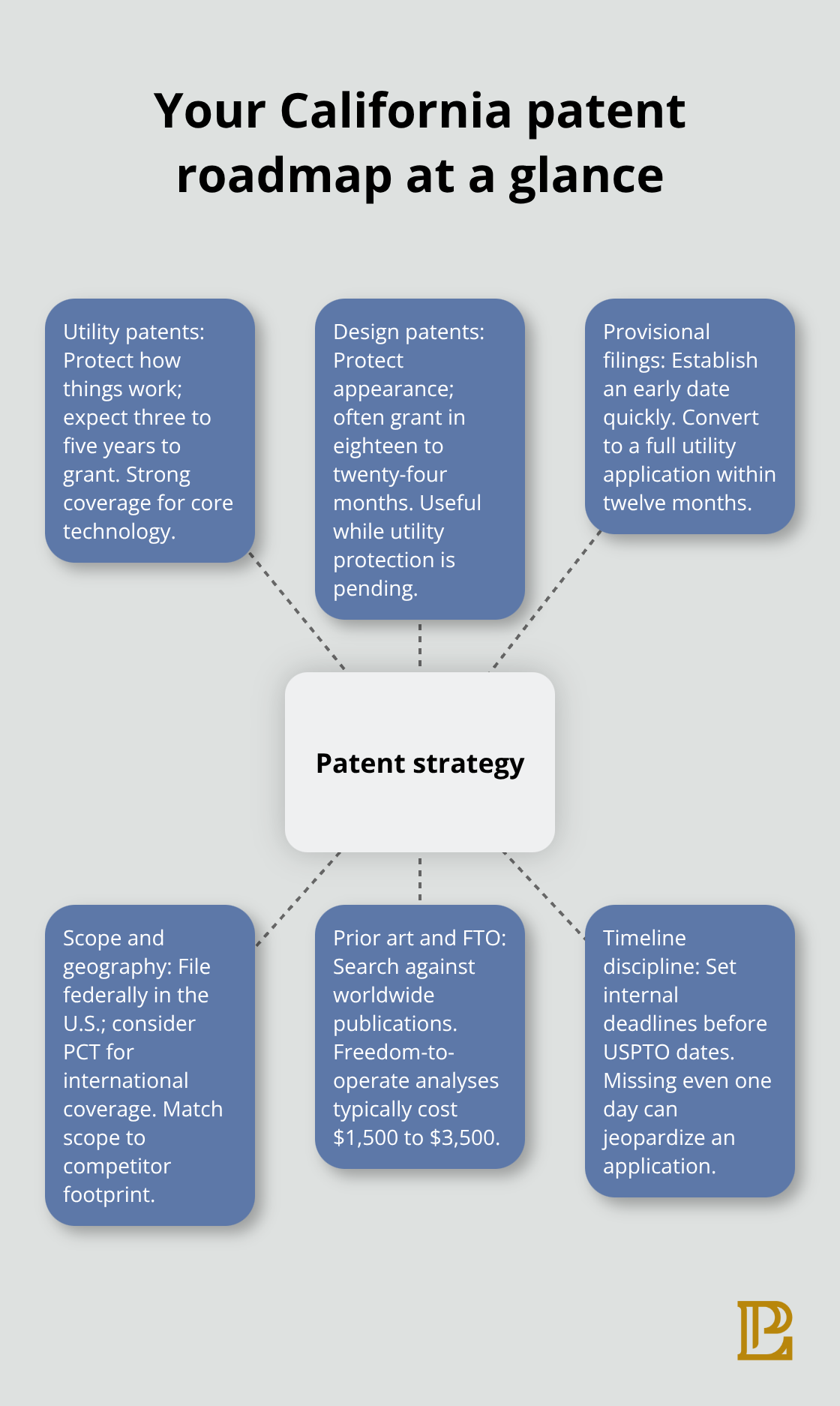
Once you’ve cataloged your innovations, rank them by revenue impact and competitive vulnerability. Ask yourself which inventions would damage your business most if a competitor copied them, and which ones generate the highest margins or market differentiation. File for utility patents on those first, since they protect how something works and typically take three to five years to grant.
Design patents, which protect the visual appearance of a product, cost significantly less and grant faster-usually within eighteen to twenty-four months according to the U.S. Patent and Trademark Office. If you have proprietary software or algorithms, file provisional patent applications immediately to establish your filing date while you continue development, then convert them to full utility applications within twelve months.
Determine Your Filing Scope and Timeline
The timeline matters because California’s business environment moves quickly. A competitor filing first on a similar invention can block your protection, so don’t delay once you’ve identified what deserves coverage. Work with patent counsel to determine whether filing in California alone makes sense or whether you need federal protection across the United States or international coverage through the Patent Cooperation Treaty.
Most growing businesses in Los Angeles County benefit from at least U.S. federal filing, since that’s where their serious competitors operate. The cost difference between filing one patent application and filing three or four strategic ones is often smaller than most business owners think, especially when you factor in the revenue protection those patents deliver. Once you’ve mapped your filing strategy and timeline, you’ll need to navigate the actual application process-which involves understanding federal requirements and working with the right legal guidance to move forward.
Navigating California’s Patent Filing Process
Federal Rules Apply Everywhere, But Prior Art Searches Matter Most
Federal patent law governs all U.S. filings, which means state lines matter far less than most California business owners assume. The U.S. Patent and Trademark Office handles every application regardless of where your company operates, so filing in California versus Los Angeles County versus anywhere else in the country follows identical federal rules and timelines. What matters is understanding that the USPTO examines your application against all existing patents and published materials worldwide, not just what exists in California. This is why the application process takes so long-the USPTO received over 645,000 applications in 2023 and each one requires a thorough search against decades of prior art.
Your patent attorney needs to conduct a freedom-to-operate analysis before filing to confirm your invention doesn’t infringe existing patents, which typically costs between $1,500 and $3,500 depending on complexity. This upfront investment prevents you from filing applications that examiners will reject or, worse, that could expose you to infringement claims later.
Documentation Must Be Specific and Detailed
The actual filing process involves submitting detailed drawings, specifications, and claims that describe exactly what your invention does and what makes it different from everything else out there. Most business owners underestimate how specific this documentation needs to be-vague descriptions lead to rejections that cost time and money to overcome. The USPTO’s examination process typically takes eighteen to twenty-four months for utility patents, during which an examiner will likely reject your claims at least once, requiring you to respond with amendments or arguments.
Provisional applications cost less to file and establish your filing date immediately, but you must convert them to full utility applications within twelve months or lose that early date. Design patents move faster, usually granting within eighteen to twenty-four months according to the USPTO, making them ideal for protecting product appearance while you pursue utility patent protection for functionality.
Timeline Management and Cost Structure
Managing the timeline means setting internal deadlines well before USPTO deadlines-missing a response deadline by even one day can kill your application. The total cost for a single utility patent typically ranges from $5,000 to $15,000 in attorney fees plus USPTO filing fees, with international filings through the Patent Cooperation Treaty adding $3,000 to $8,000 more depending on how many countries you target.
Companies that file multiple patents strategically often negotiate flat fees with their patent counsel, reducing per-application costs significantly compared to hourly billing. Treat your patent attorney as a strategic partner from the start, not just a vendor who files paperwork after decisions are already made.
Final Thoughts
Your patent filing strategy in California succeeds when it aligns with your actual business priorities, not when it chases every possible invention. The companies that build real competitive advantage file strategically, document their innovations immediately, and protect what truly matters to your revenue and market position. Reactive filing wastes resources, while intentional filing builds value.
The path forward starts with cataloging what you’ve created, ranking those innovations by business impact, and determining which patents deserve your investment. A utility patent protecting your core technology matters far more than design patents on minor product variations. Federal filing timelines are long, but that’s exactly why you need to start now rather than waiting until a competitor files first, since the eighteen to twenty-four month examination process means decisions you make today determine your protection status two years from now.
Your next step involves working with legal counsel who understands both patent law and your business model. We at Pierview Law help California businesses build intellectual property strategies that protect innovations while managing costs effectively, handling everything from conducting your initial IP audit through managing the entire filing process with the USPTO (ensuring your applications are detailed, specific, and positioned for approval). Contact us to discuss your patent filing strategy in California and start protecting what you’ve built.