
Buying property in California involves more than just finding the right home or investment. A title search California reveals whether you actually own what you think you’re buying, and it protects you from hidden legal problems that could cost thousands down the road.
At Pierview Law, we’ve seen deals fall apart because buyers skipped this step or didn’t understand what they were looking at. This guide walks you through everything you need to know about title searches, title insurance, and how to protect your investment before you close.
What a Title Search Actually Reveals
A title search is a systematic review of public records that confirms who legally owns a property and what claims or restrictions attach to it. When conducting title searches for clients throughout Los Angeles County, we examine deeds, mortgage filings, tax records, court judgments, and HOA documentation to build a complete picture of the property’s ownership history. California uses a race-notice recording system, which means the first person to record a document properly has priority-but only if they had no notice of competing claims. This creates real urgency: if a title defect exists and isn’t caught before closing, it clouds your ownership and creates legal headaches that cost far more than the search itself. The National Association of Realtors reports that title issues affect roughly one in four residential transactions, so this isn’t a theoretical concern. In Hermosa Beach’s competitive market, where properties routinely sell for over $1 million, skipping or rushing a title search is a financial risk most buyers cannot afford.
Why California Law Makes Title Searches Essential
California law doesn’t mandate a title search for all-cash purchases, but lenders require one as a condition of financing-and that requirement protects you as much as it protects them. The State Bar of California emphasizes that improper recording jeopardizes your title priority, which is why professional title companies and real estate attorneys handle searches rather than leaving it to individuals. Most California closings run 30 to 45 days, according to the California Association of Realtors, and a substantial portion of that timeline goes toward identifying and resolving title defects discovered during the search. Starting the search early in escrow isn’t optional; it’s the only way to surface problems with enough time to fix them before closing. Transactions delayed or derailed because defects were discovered late force buyers to choose between extending escrow, accepting title insurance exceptions, or walking away entirely.
Common Title Defects in Hermosa Beach Transactions
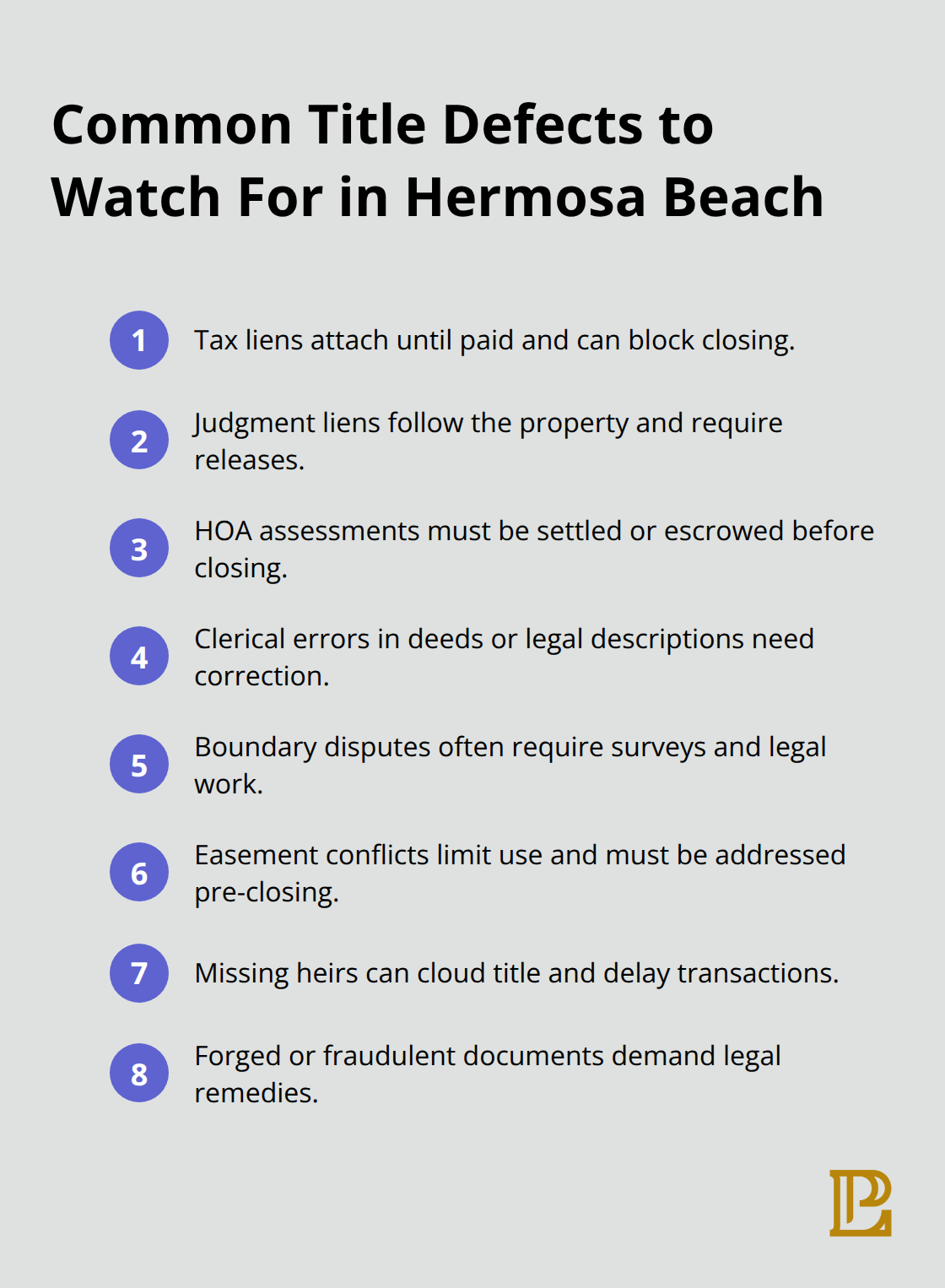
Tax liens, judgment liens, and HOA assessments represent the most common defects encountered in Hermosa Beach transactions. A property owner who owes back taxes or has an unpaid judgment creates a lien that travels with the property until paid, and title insurance won’t cover it. In Los Angeles County residential markets, clerical errors in deeds and legal descriptions also appear frequently-misindexed documents, misspelled names, or incorrect property descriptions that require correction before closing. Boundary disputes and easement conflicts are equally serious; a neighbor’s easement to cross your property or a survey that reveals the fence sits three feet on the neighbor’s land requires resolution before you take ownership. Missing heirs from prior transfers occasionally surface, particularly in older properties, and forged or fraudulent documents-though rare-do happen and require legal remedies that take time and coordination with the title company and escrow officer.
How Title Defects Affect Your Timeline and Closing
Each defect type carries different resolution timelines and complexity levels. Simple clerical errors can be corrected within days through affidavits or corrective deeds, while boundary disputes may require surveys and legal action that stretch weeks or months. Tax liens and judgments demand proof of payment or lien release from the creditor, a process that depends entirely on the creditor’s responsiveness. HOA assessments must be settled or escrowed before closing, and the HOA’s cooperation determines how quickly this happens. Missing heirs claims and forged document issues represent the most serious obstacles, as they often require court involvement and careful coordination among all parties.
Understanding what a title search reveals positions you to work effectively with your title company and real estate attorney to resolve defects before closing. The next section walks through the actual steps involved in conducting a title search and what documents professionals review to uncover these issues.
How Title Searches Work in California
A title search begins the moment you place a property under contract, though starting earlier during your initial offer phase gives you a head start. The title company needs roughly 10 to 14 days to complete a thorough review, according to industry standards tracked by the American Land Title Association. During this window, the title company’s researchers access public records housed at the Los Angeles County Recorder’s Office and other county repositories, pulling deeds, mortgage documents, tax assessments, court judgments, lien filings, and HOA records. They reconstruct the chain of title-essentially tracing ownership backwards through time to confirm no breaks or gaps exist in the recorded transfers. In Hermosa Beach transactions, where properties often involve multiple owners and decades of recorded history, this reconstruction work is not perfunctory; it forms the foundation preventing you from discovering after closing that someone else holds a legitimate claim to your property. The title company also cross-references the legal description on each deed against surveys and county assessor records to catch indexing errors or description inconsistencies that could cloud your ownership. California’s race-notice recording system means the first person to record properly wins priority, so if a defect exists and wasn’t caught during the search, you lose that race and inherit the problem.
What Records Reveal Hidden Problems
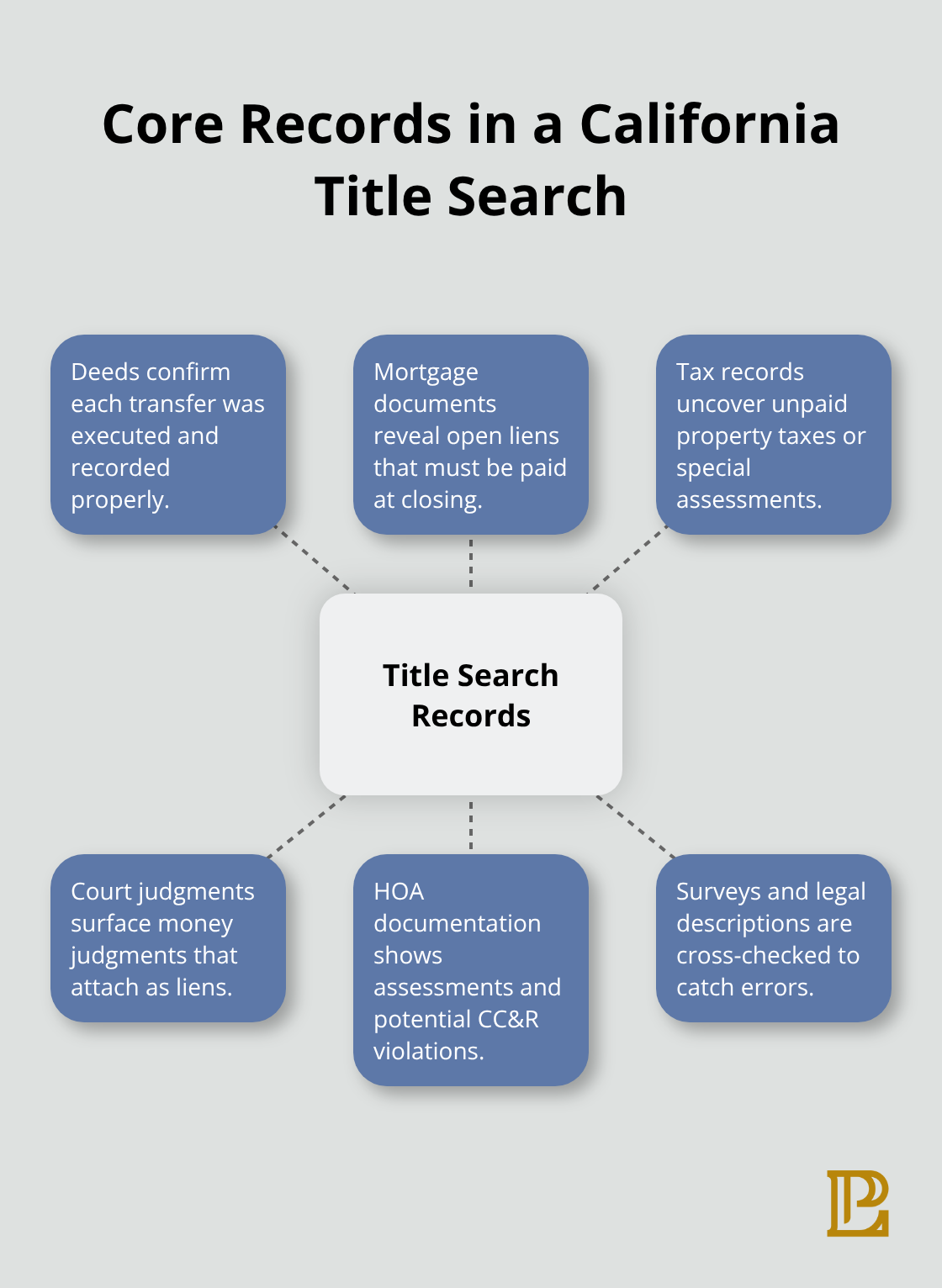
The title search examines deeds to verify each transfer was properly executed and recorded, mortgage documents to identify existing liens that must be paid off at closing, tax records to uncover unpaid property taxes or special assessments, court judgments to surface money judgments that attach as liens, and HOA documentation to reveal pending assessments or CC&R violations. A preliminary title report then summarizes these findings, with Schedule A listing the policy basics and Schedule B listing exceptions-items that won’t be covered by insurance and must be resolved before closing or accepted in writing.
Clerical errors appear constantly: a misspelled owner name, an incorrect lot number, or a misdescribed boundary. These aren’t minor; they create gaps in the chain of title that require corrective deeds or affidavits to fix. Missing heirs from prior transfers, forged documents, and boundary discrepancies discovered through survey comparisons represent more serious obstacles requiring legal intervention. The title company coordinates with sellers’ attorneys and escrow officers to develop resolution strategies, but attorneys handle the legal heavy lifting when issues demand it.
Timing and Investment Reality
Title search costs typically range from $75 to $400 for residential properties in California, though Hermosa Beach transactions often fall toward the higher end given property values and complexity. These fees bundle the search itself with title insurance premiums and closing coordination services. The California Association of Realtors reports most closings take 30 to 45 days; a substantial chunk of that timeline accommodates title defect resolution. Simple issues like correcting a misspelled name resolve within days, while boundary disputes requiring surveys or missing heirs claims requiring legal action consume weeks. Start with the title review immediately after your offer is accepted, because title issues take the longest to resolve and can derail closing dates. Late-discovered defects force buyers to choose between renegotiating price, accepting title insurance exceptions, or walking away entirely. Starting the search on day one of escrow eliminates this pressure and gives you the time needed to resolve problems methodically.
Moving Forward With Your Title Results
Once the title company completes its search and issues the preliminary title report, your next step involves understanding what Schedule B exceptions mean for your transaction and working with a real estate attorney to address any defects that surface. The specific exceptions listed-whether they involve easements, liens, or boundary issues-determine how much negotiation and coordination happens before closing. Some exceptions clear quickly through lien releases or corrective documents, while others require more substantial legal work. Understanding title insurance coverage and how it protects you against issues the search may have missed becomes critical at this stage, which is where the next section takes you.
How Title Insurance Protects You After Closing
Title insurance works differently from every other insurance product you own. Rather than protecting against future events, it defends your ownership against claims that existed before you bought the property but were not discovered during the title search. The American Land Title Association reports that title insurance has paid out over $37.7 billion in claims since 1957, covering everything from forged documents to missing heirs to boundary disputes that surface years after closing. In Hermosa Beach, where property values exceed $1 million routinely, a single unresolved title claim can trigger litigation costs that dwarf the original insurance premium.
Two Types of Title Policies
California title policies come in two forms: an Owner’s Title Policy protects your ownership interest and equity in the property, while a Lender’s Title Policy protects only the lender’s mortgage interest. If you finance your purchase, your lender requires a Lender’s Title Policy as a condition of the loan, but that policy vanishes the moment you pay off the mortgage. Many buyers mistakenly believe the lender’s coverage extends to them; it does not.
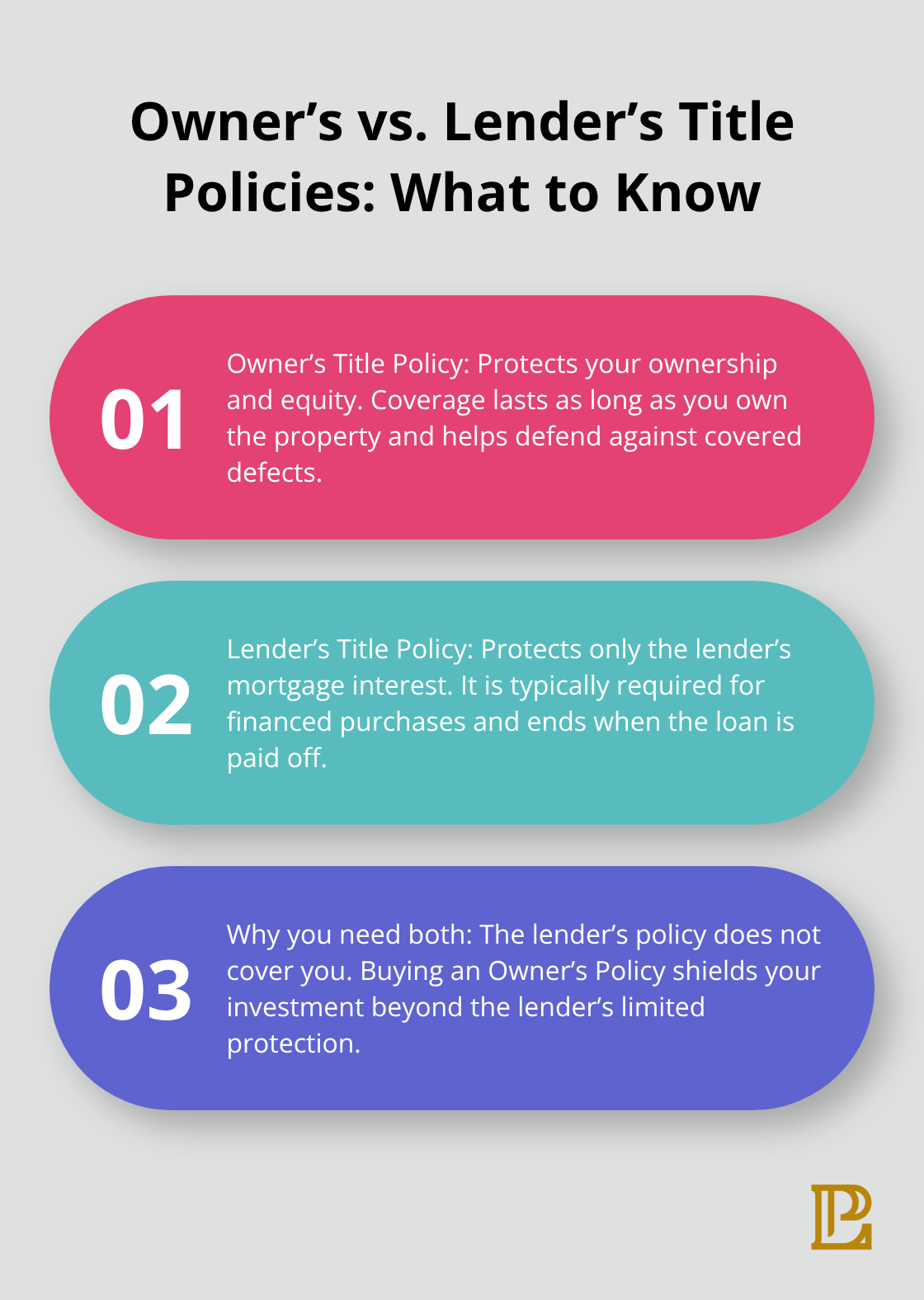
Buyers should purchase an Owner’s Title Policy in addition to the lender’s policy, because the owner’s coverage remains in force for as long as you own the property and protects against title defects the lender’s policy explicitly excludes.
What Title Insurance Actually Costs
Title insurance premiums in California typically represent a small percentage of the purchase price for owner’s coverage, calculated based on the loan amount for lender’s coverage, with rates varying by insurer according to the California Department of Insurance. The cost is paid once at closing and covers you indefinitely, making it perhaps the best insurance bargain available in real estate transactions. This one-time payment protects your ownership for the entire period you hold the property, with no annual renewals or additional fees.
Understanding Schedule B Exceptions
Understanding what title insurance actually covers is essential, because Schedule B exceptions listed in your preliminary title report are not insured by your policy. If your title search reveals an easement allowing a neighbor to cross your property, that easement appears on Schedule B and remains uninsured even after you buy; title insurance will not defend you if that neighbor exercises the easement. Similarly, HOA restrictions, boundary line disputes that were not resolved before closing, and certain tax liens may appear as exceptions that fall outside coverage.
The Real Consequences of Unresolved Exceptions
This distinction between what title insurance covers and what it excludes creates real consequences. A buyer who closes without resolving a boundary dispute shown in the preliminary report cannot later claim title insurance will handle it; the policy specifically excludes items listed on Schedule B. The title company and your real estate attorney work together to negotiate removal of exceptions before closing, but some exceptions persist because they are either unresolvable or the buyer accepts them in exchange for a price reduction or other concession. Once you close, title insurance provides your only defense if a claim emerges, so understanding exactly what your policy covers and what it excludes before signing closing documents matters significantly.
Final Thoughts
A title search California protects you from ownership problems that cost far more than the search itself. Start your title review immediately after your offer receives acceptance, understand what Schedule B exceptions mean for your transaction, and work with a real estate attorney to resolve defects before closing. For sellers, proactive disclosure of known title issues and early coordination with your attorney prevents last-minute surprises that delay closing or force price renegotiations.
After your title search results arrive, your next move depends on what the preliminary title report reveals. If Schedule B lists only minor exceptions like standard easements or HOA restrictions, your closing timeline remains on track. If the report surfaces liens, boundary disputes, or missing heirs claims, your attorney coordinates with the title company and escrow officer to develop a resolution strategy immediately (delaying this coordination guarantees closing delays and forces you into difficult choices between extending escrow, accepting unresolved exceptions, or walking away).
In Hermosa Beach’s competitive real estate market, where properties routinely exceed $1 million in value, working with a real estate attorney who understands title issues and California recording law matters significantly. Contact Pierview Law to handle your title review and real estate transaction throughout Los Angeles County, coordinating with title companies to resolve defects efficiently and protecting your interests from contract through closing.