
Hermosa Beach operating agreements decide who controls a California LLC, who gets paid, and what happens when an owner wants out. Most owners form the company in an afternoon and never put those rules in writing, which leaves the business under default statutes they never chose.
At Pierview Law, we help business owners, real estate investors, and startup founders throughout Los Angeles County put operating agreements in place that match how their companies really run. This guide walks through what the agreement does, how to build one that holds up, and the mistakes that cause the most damage so you can move forward with confidence.
What an LLC Operating Agreement Actually Controls
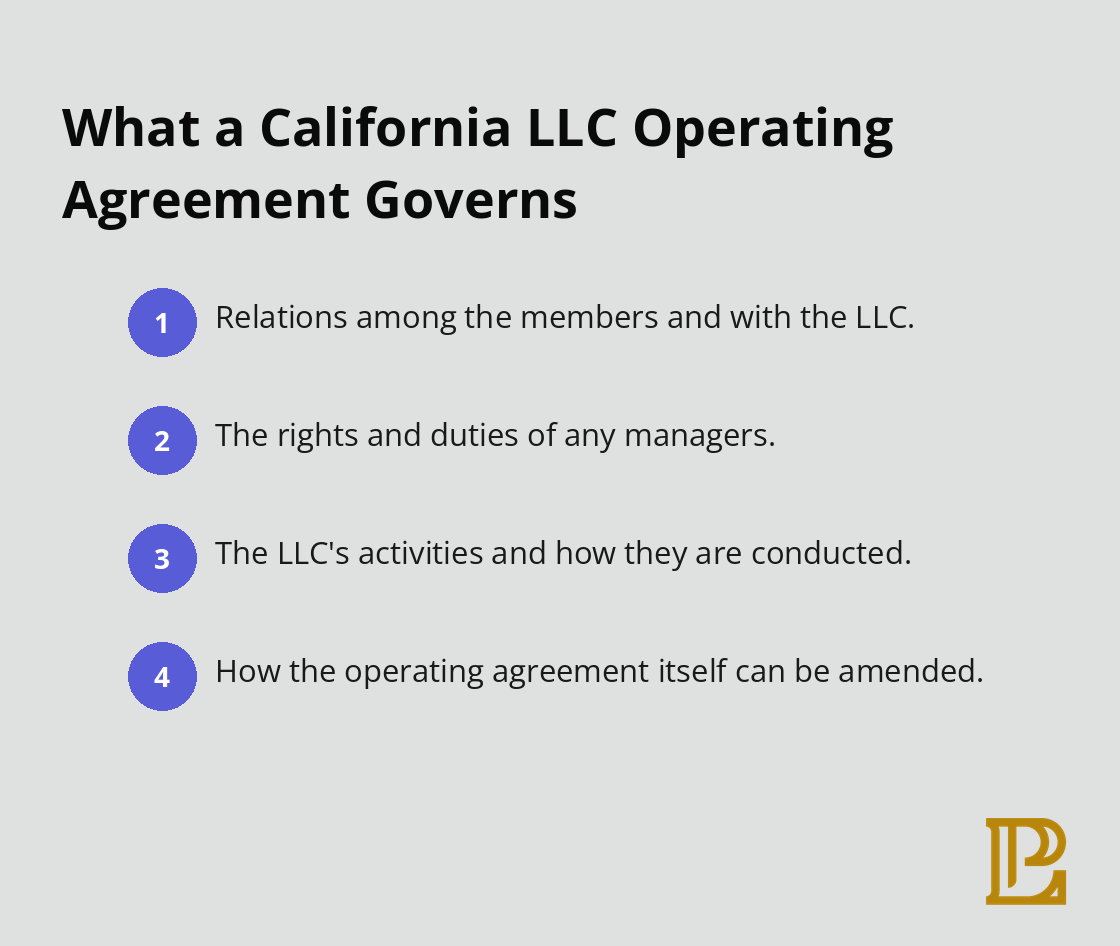
An operating agreement is the internal rulebook for your limited liability company. The articles of organization you file with the California Secretary of State create the entity, but they say almost nothing about how the owners relate to each other. Under California Corporations Code Section 17701.10, the operating agreement governs relations among the members and between the members and the company, the rights and duties of any managers, the activities of the company and how those activities are conducted, and the means for amending the agreement itself. That covers nearly every decision that matters once money starts moving through the business.
Oral and Implied Agreements Still Count
Many owners assume that if they never signed an operating agreement, they simply do not have one. California law sees it differently. Section 17701.02 defines an operating agreement as the agreement of all the members, whether oral, in a record, implied, or in any combination of those forms, and it expressly applies to a company with only one member. That means a handshake understanding between two Hermosa Beach partners can be treated as their operating agreement, and proving what that understanding was becomes a fight over memory and emails. A written agreement replaces that uncertainty with terms everyone signed. It also matters because the Code allows certain provisions to be varied only by a written operating agreement, so an oral deal cannot reach everything a written one can.
The Default Rules That Apply Without One
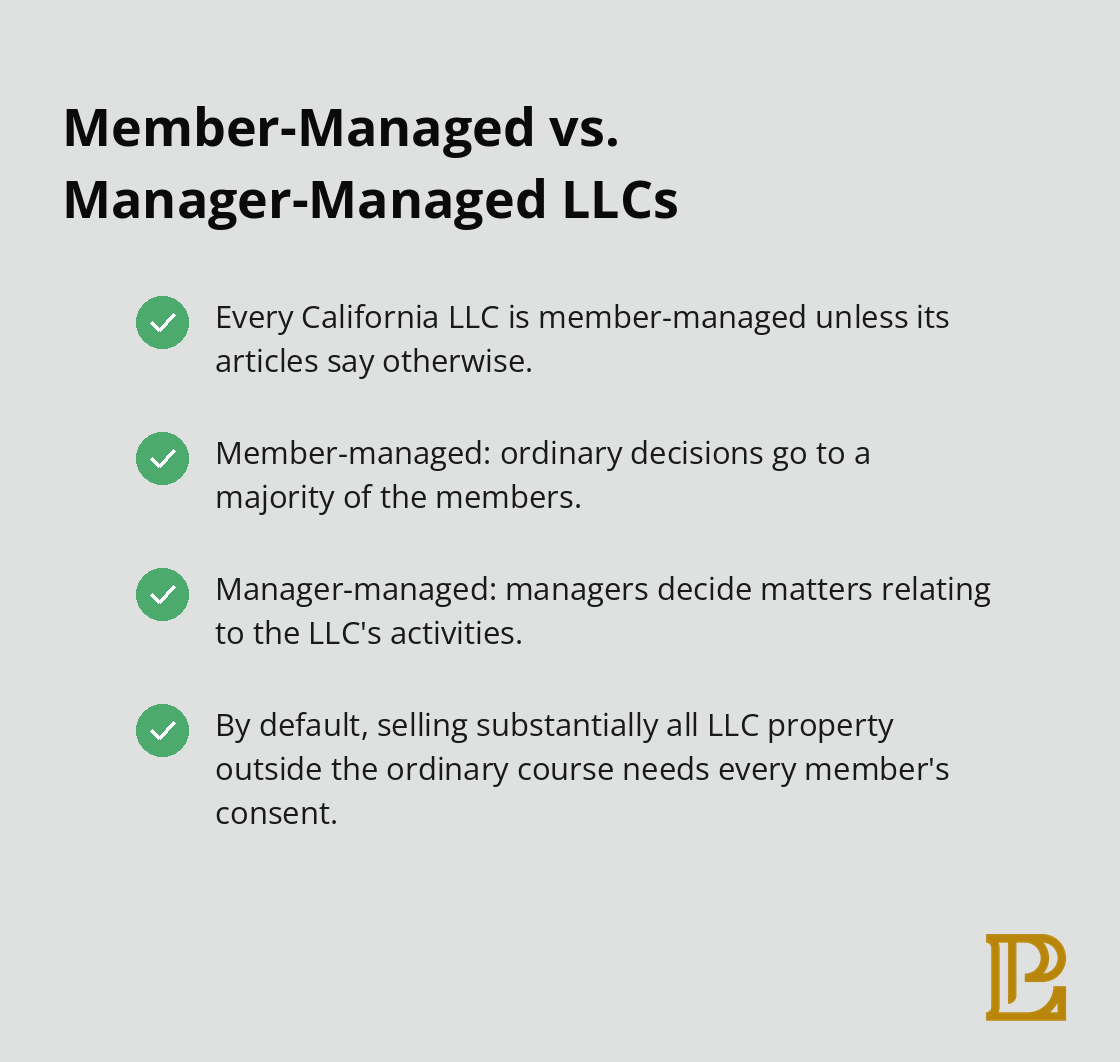
When your agreement is silent, the California Revised Uniform Limited Liability Company Act fills the gap, and those default rules rarely match what owners expect. Section 17704.07 makes every LLC member-managed unless the articles of organization state that it is manager-managed. In a member-managed company, ordinary business decisions go to a majority of the members, which the Code measures by interests in current profits, while any act outside the ordinary course requires the consent of all members, and the operating agreement can be amended only with unanimous consent. Section 17704.04 provides that if the agreement does not say otherwise, distributions and the allocation of profits and losses follow the value of the contributions each member made, as stated in the company’s required records. An owner who contributed sweat equity instead of cash can find that the default formula leaves very little for them.
Why Single-Member LLCs Need One Too
Solo owners often skip the operating agreement because there is nobody to disagree with. That reasoning misses the bigger picture. A written agreement documents that the company is a separate entity with its own rules, which supports the liability protection you formed the LLC to get in the first place. Lenders, title companies, and commercial landlords in Los Angeles County regularly ask to see the agreement before they close a loan, insure a transaction, or sign a lease with your company. A written agreement also lets you plan for what happens to the business if you become incapacitated or pass away, so a family member is not left trying to run a company with no roadmap. You can read more about setting up the entity itself in our guide to entity formation in California.
Once you understand what the agreement controls, the next step is building one that fits the way your company actually operates.
How to Build an Operating Agreement That Holds Up
A strong operating agreement starts with a candid conversation among the owners about money, control, and the future. Templates downloaded online tend to be written for no business in particular, and they often conflict with the default rules or with each other. We at Pierview Law draft agreements around the real deal the owners have made, which means asking the uncomfortable questions before anyone signs. The sections below cover the provisions that do the most work.
Choosing Member-Managed or Manager-Managed
The first structural decision is who runs the company day to day. In a member-managed LLC, the members share management authority. In a manager-managed LLC, the managers decide matters relating to the company’s activities, and members step in only for major actions. Under Section 17704.07, the default rules for a manager-managed company still require the consent of all members to sell, lease, or otherwise dispose of all or substantially all of the company’s property outside the ordinary course, and a manager may be removed at any time by a majority of the members without cause. A Hermosa Beach real estate holding company with passive investors usually benefits from a manager-managed structure, while a two-founder startup may prefer member management. Whatever you choose, the articles of organization and the agreement need to say the same thing.
Capital, Profits, and Distributions
Money provisions cause more disputes than any other part of the agreement. Your agreement should record what each member contributed, whether that was cash, property, or services, and how those contributions are valued. It should state how profits and losses are allocated and when the company makes distributions, because Section 17704.04 says a member has a right to a distribution before dissolution only if the company decides to make one. Owners who expect regular payouts need that expectation written down. The agreement should also address what happens if the company needs more capital later, including whether members must contribute and what happens to the ownership percentages of anyone who does not.
Voting, Meetings, and Officer Authority
The agreement should spell out which decisions require a simple majority, which require a supermajority, and which require every member to agree. Without a voting provision in the articles or a written operating agreement, Section 17704.07 has members vote in proportion to their interests in current profits and requires a unanimous vote for any amendment to the articles or the operating agreement. A written operating agreement may also provide for officers such as a president or chief financial officer, which gives your team clear signing authority when dealing with banks and vendors. Clear voting rules keep a single disagreement from freezing the company, and they pair well with the contract practices we cover in our article on drafting corporate contracts in California.
Even a carefully drafted agreement can fail if owners fall into a few predictable traps, which is where most of the expensive disputes begin.
Mistakes That Actually Derail California LLC Agreements
The operating agreement problems we see most often in Los Angeles County are not exotic. They come from documents that were never updated, provisions that ignore what California law allows, and exit terms that nobody discussed until an owner wanted to leave. Each of these mistakes is preventable when you address it early.
Ignoring Transfer and Exit Provisions
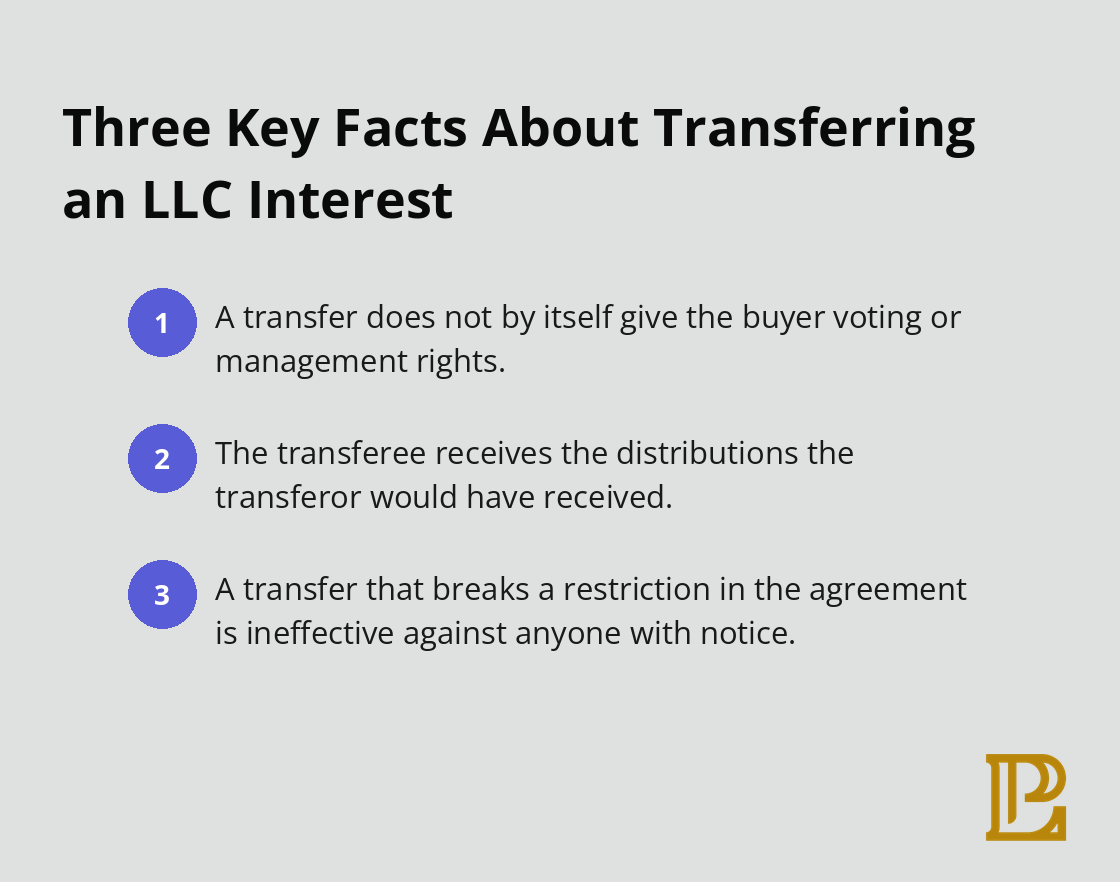
An owner who wants to sell, a member who passes away, or a partner going through a divorce can each put an ownership interest in play. California law separates the economic rights in an LLC from the management rights. Under Section 17705.02, a member may transfer a transferable interest, but the transfer does not by itself entitle the transferee to vote or participate in management, and the transferee instead receives the distributions the transferor would otherwise have received. A transfer that violates a restriction in the operating agreement is ineffective as to a person who had notice of that restriction. That is why buy-sell provisions matter so much. Your agreement should set out rights of first refusal, how a departing member’s interest is valued, how the buyout is funded, and what events trigger the process.
Trying to Waive Duties the Law Protects
Some owners try to write fiduciary duties out of the agreement entirely so that managers can do whatever they want. California does not allow that. Section 17701.10 prohibits an operating agreement from eliminating the duty of loyalty, the duty of care, or the contractual obligation of good faith and fair dealing, although the agreement may identify specific types of activities that do not violate the duty of loyalty if that is not manifestly unreasonable. Any modification of fiduciary duties must appear in a written operating agreement with the informed consent of the members. A provision that overreaches can be unenforceable, which leaves owners with less protection than a carefully drafted limit would have provided.
Letting the Agreement and Records Go Stale
Businesses change, and operating agreements often do not keep up. New members join, ownership percentages shift, and a company that started as a single property investment grows into several holdings. Section 17701.13 requires every California LLC to maintain specific records at its designated office, including a current list of members with their contributions and shares of profits and losses and a copy of any written operating agreement and its amendments. The company must also file a statement of information with the Secretary of State within 90 days after filing its original articles and every two years after that under Section 17702.09. Reviewing your operating agreement whenever you file that statement is a simple habit that keeps your documents aligned with reality. Our team also works with growing companies on startup corporate structuring as they add investors and new lines of business.
Final Thoughts
An LLC operating agreement in California is far more than a formality. It decides who controls your company, how money flows to the owners, and what happens when someone wants to leave, and if you do not write those rules yourself, the default provisions of the Corporations Code will write them for you. A written agreement that reflects your actual deal protects your investment, supports your liability protection, and gives lenders and partners the clarity they look for.
The best time to put a strong agreement in place is before a disagreement starts, and the second best time is now. Reviewing an existing agreement against how your company operates today often reveals gaps that are simple to fix while everyone is still on good terms.
If you own or are forming an LLC in Hermosa Beach or anywhere in Los Angeles County, contact Pierview Law to speak with our business law team. We’ll review your current structure, draft or update your operating agreement, and help you build a company that is ready for growth.