
Hermosa Beach trade secret protection starts long before anyone walks out the door with a customer list. The supplier relationships, client data, formulas, source code, and internal methods that make your company run better than the competition can lose their legal protection quietly, simply because no one took the steps California law expects an owner to take.
At Pierview Law, we help business owners, startup founders, and growing companies throughout Hermosa Beach and Los Angeles County identify what is worth protecting and put practical safeguards in place. This guide explains what California treats as a trade secret, how to build a protection program that holds up, and the mistakes that most often leave confidential information exposed, so you can move forward with confidence.
What a Trade Secret Actually Is Under California Law
California adopted the Uniform Trade Secrets Act, which appears in the Civil Code beginning at Section 3426. The Act gives a business a civil claim when someone acquires, discloses, or uses its confidential information in ways the law does not allow. Unlike a patent or a registered trademark, a trade secret is not filed with any government office. Its protection exists only as long as the information stays secret and the owner keeps treating it that way. That makes the owner’s own habits the foundation of every trade secret case.
The Two-Part Legal Test
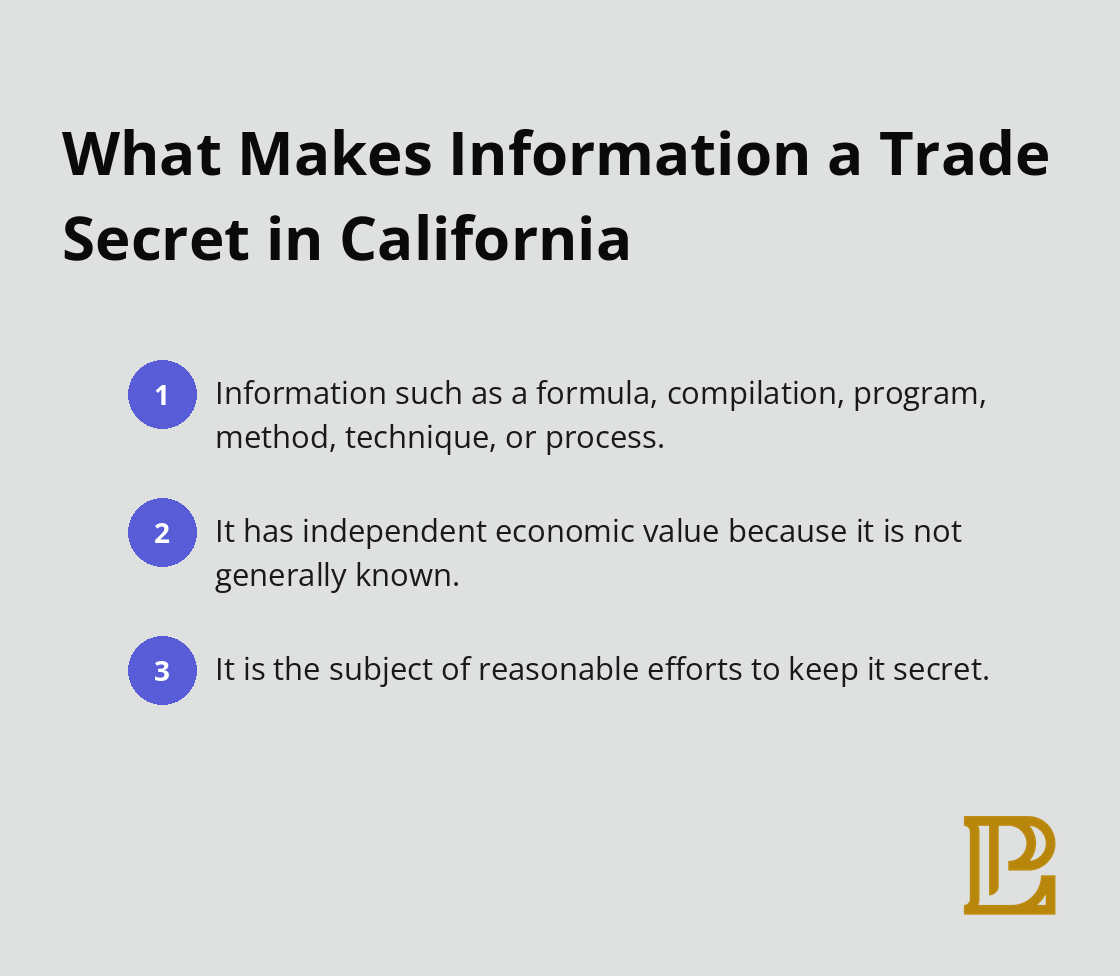
Civil Code Section 3426.1 defines a trade secret as information, including a formula, pattern, compilation, program, device, method, technique, or process, that meets two conditions. First, it must derive independent economic value, actual or potential, from not being generally known to the public or to others who could obtain economic value from its disclosure or use. Second, it must be the subject of efforts that are reasonable under the circumstances to maintain its secrecy. Both parts matter. A brilliant process that you post on your website fails the first part, and a valuable customer database that every employee can download to a personal device may fail the second.
Common Examples in Local Businesses
For a Hermosa Beach company, trade secrets are often less glamorous than a secret recipe. They include compiled customer and prospect lists with contact history and buying preferences, vendor terms, unreleased product designs, marketing plans, software code, and internal playbooks that took years to refine. A property management firm may hold tenant and owner data. A consumer brand may hold supplier specifications and launch calendars. A technology startup may hold algorithms and research data. The statute’s reference to compilations is especially important here, because a collection of individually public facts can still qualify when the effort of assembling and organizing it gives your business an edge.
What Counts as Misappropriation
The Act targets misappropriation, which Section 3426.1 defines in several ways. It includes acquiring a trade secret when the person knows or has reason to know it was obtained by improper means. It also includes disclosing or using a trade secret without consent when the person used improper means, or knew the information came to them under a duty to keep it secret or limit its use. Improper means include theft, bribery, misrepresentation, breach or inducement of a breach of a duty to maintain secrecy, and espionage through electronic or other means. The statute is equally clear about what is not improper: reverse engineering or independent derivation alone does not count. If a competitor builds the same thing on its own, trade secret law will not stop it.
How to Build Trade Secret Protection That Holds Up
Because the second part of the legal test turns on reasonable efforts, the strength of any future claim is decided by what you do today. Courts look at the whole picture of how a business treats its information, from written agreements to everyday access controls. You do not need to lock everything in a vault, but you do need a deliberate, consistent approach that matches the value of what you are protecting.
Start With an Information Inventory
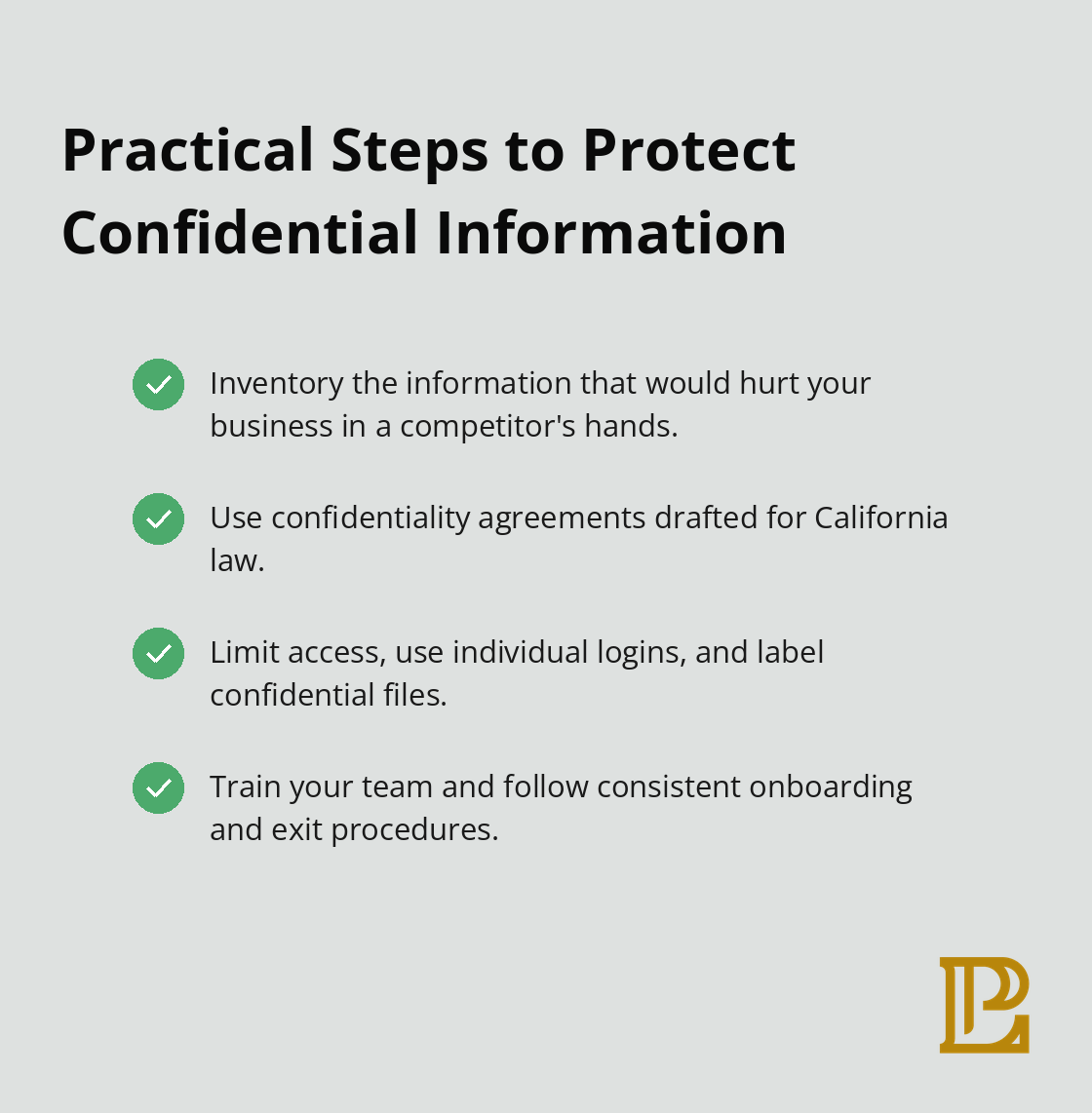
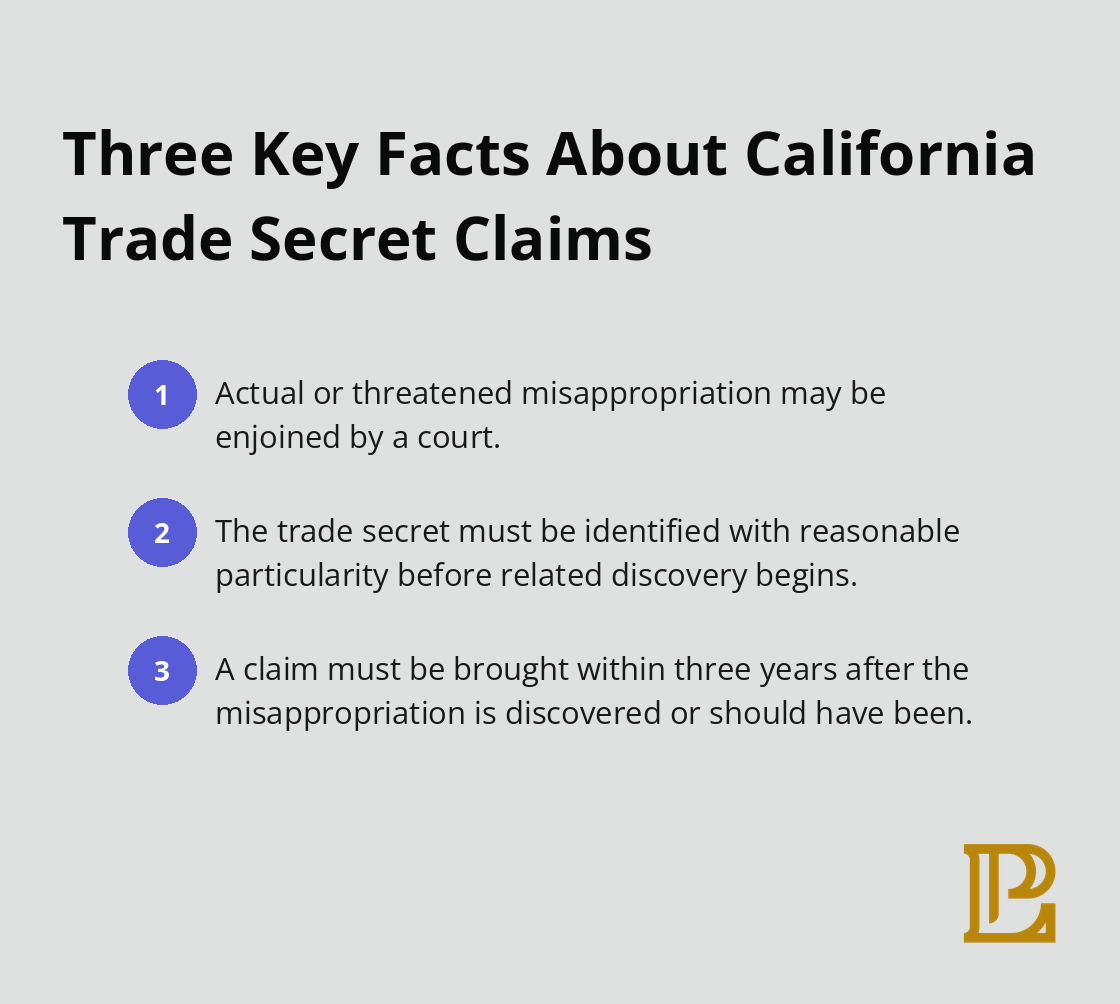
You cannot protect what you have not identified. Sit down with your leadership team and list the categories of information that would hurt your business if a competitor had them. Note where each category lives, who can reach it, and how it moves inside and outside the company. This inventory pays off twice. It shows you where your safeguards are thin, and it gives you a head start if you ever have to prove what your secrets are. Under Code of Civil Procedure Section 2019.210, a party alleging misappropriation under the Act must identify the trade secret with reasonable particularity before beginning discovery related to it, so vague descriptions like everything in our files will not get a case very far.
Use Written Agreements That Fit California Law
Confidentiality and nondisclosure agreements with employees, contractors, vendors, and potential deal partners are central to showing reasonable efforts. They define what is confidential, how it can be used, and what must be returned when the relationship ends. Section 3426.7 confirms that the Act does not displace contractual remedies, so a well-drafted agreement gives you a second path to relief. Be careful, though, about borrowing forms from other states. Business and Professions Code Section 16600 provides that every contract restraining anyone from engaging in a lawful profession, trade, or business is void to that extent, except as the statute itself allows, and the Legislature has directed that it be read broadly to void noncompete clauses in the employment context. In California, your protection has to come from confidentiality obligations and trade secret law, not from trying to keep former employees out of the industry.
Limit Access and Train Your Team
Practical controls often carry as much weight as paperwork. Restrict sensitive files to the people who need them, use individual logins rather than shared passwords, and keep access logs where your systems allow it. Label confidential documents so no one can claim they did not know. Build onboarding and exit procedures that remind people of their obligations, collect company devices, and shut off access promptly. Short, regular training helps employees understand that customer lists and internal plans belong to the company. These steps take little time, yet they show a court that secrecy was a real priority rather than an afterthought.
Common Mistakes That Put Confidential Information at Risk
Most trade secret problems do not begin with corporate espionage. They begin with ordinary shortcuts that seemed harmless at the time. Knowing the usual weak points helps you fix them before they become the centerpiece of a dispute you cannot win.
Treating Everything as Secret
When every document in the company is stamped confidential, the label loses meaning. Courts and opposing parties notice when a business claims that routine, publicly available material deserves protection. Over-designating also makes it harder for employees to know what truly matters, which leads to careless handling of the information that does. Focus your strongest safeguards on the categories from your inventory, and be honest about information that is already generally known in your industry.
Waiting Too Long to Act
Speed matters once you suspect a problem. Section 3426.2 allows a court to enjoin actual or threatened misappropriation, and in appropriate circumstances it may compel affirmative acts to protect a trade secret, but those remedies are most useful before information spreads. Delay also creates a deadline risk. Under Section 3426.6, an action for misappropriation must be brought within three years after the misappropriation is discovered or, by the exercise of reasonable diligence, should have been discovered, and a continuing misappropriation counts as a single claim. Ignoring warning signs, such as an unusual download before a resignation, can start that clock without your noticing.
Assuming a Lawsuit Will Expose Your Secrets
Some owners hesitate to enforce their rights because they fear that litigation will put their confidential information in the public record. California law addresses this directly. Section 3426.5 requires the court to preserve the secrecy of an alleged trade secret by reasonable means, which may include protective orders in discovery, in-camera hearings, sealing records, and orders that participants not disclose the information without court approval. The Act also allows a complainant to recover damages for the actual loss caused by misappropriation and for unjust enrichment not already taken into account. Understanding these protections lets you make enforcement decisions based on the facts rather than on fear.
Forgetting About Departing Owners and Partners
Employees are not the only source of risk. Co-founders, partners, and minority owners often have the broadest access of anyone in the company, and their exits can be the most contentious. Your operating agreement, shareholder agreement, or partnership documents should address confidentiality, the return of company information, and what happens to client relationships when an owner leaves. Reviewing those provisions while relationships are friendly is far easier than negotiating them in the middle of a breakup.
Final Thoughts
Hermosa Beach trade secret protection comes down to a simple idea: California protects confidential business information when the owner can show it has value because it is secret and that real effort went into keeping it that way. An information inventory, agreements drafted for California law, sensible access controls, and quick action when something looks wrong will put your business in a far stronger position than any single document could.
Every company’s information is different, and the right program for a two-person startup will look different from the right program for an established firm with dozens of employees. The goal is not perfection but consistency that you can demonstrate if you ever need to.
If you are ready to review how your business protects its confidential information, contact Pierview Law to speak with our team in Hermosa Beach. We will help you identify what matters most, strengthen your agreements and safeguards, and respond decisively if your information is ever at risk.