
Cross-border mergers and acquisitions are becoming increasingly common in Hermosa Beach, California. As businesses expand globally, they face unique challenges and opportunities in these complex transactions.
At Pierview Law, we understand the intricacies of international deals and their impact on local companies. This blog post explores the key considerations, challenges, and strategies for successful cross-border M&A in our vibrant coastal community.
What Legal Hurdles Face Cross-Border M&A in Hermosa Beach?
Cross-border mergers and acquisitions in Hermosa Beach present a unique set of legal challenges. These complexities can significantly impact local businesses looking to expand internationally.
Navigating Regulatory Frameworks
One of the biggest hurdles in cross-border M&A involves understanding and complying with multiple regulatory frameworks. Hermosa Beach companies must adhere to California state laws, U.S. federal regulations, and the laws of the foreign country involved in the transaction. This creates a complex web of compliance requirements.
A Hermosa Beach tech startup acquiring a European company, for instance, must comply with the EU’s General Data Protection Regulation (GDPR). This regulation imposes strict rules about data transfer and privacy. Non-compliance can result in hefty fines (up to €20 million or 4% of global annual turnover, whichever is higher).
Overcoming Foreign Investment Restrictions
Many countries restrict foreign ownership in certain industries. These restrictions can significantly impact the structure and feasibility of cross-border deals. China, for example, limits foreign investment in sectors like telecommunications and education. A Hermosa Beach company looking to acquire a Chinese firm in these industries might face ownership caps or need to form a joint venture with a local partner.
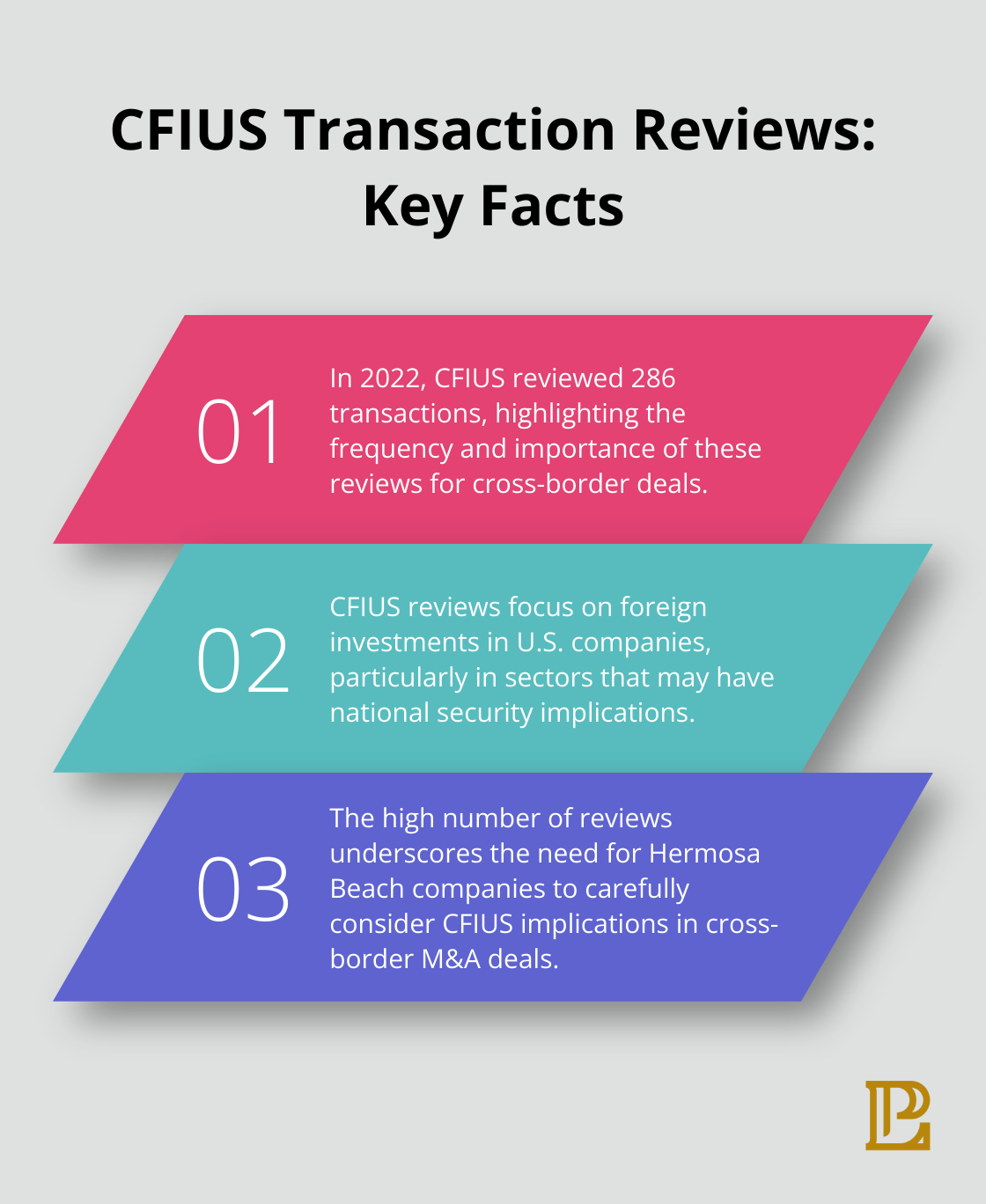
In the U.S., the Committee on Foreign Investment in the United States (CFIUS) reviews foreign investments for national security concerns. In 2022, CFIUS reviewed 286 transactions, highlighting the frequency and importance of these reviews for cross-border deals.
Tackling Tax Implications
The tax implications of cross-border M&A can be substantial and complex. Different countries have varying tax rates, treaties, and regulations that can significantly impact a deal’s structure and overall value.
A Hermosa Beach company acquiring a Canadian firm might benefit from the U.S.-Canada tax treaty, which can help avoid double taxation. However, they’ll need to navigate complex issues like transfer pricing and profit repatriation.
The global minimum corporate tax rate agreement, signed by over 130 countries in 2021, set a 15% minimum tax rate for multinational enterprises. This agreement will have far-reaching implications for cross-border M&A tax planning.
Addressing Cultural and Language Barriers
Cultural and language differences can pose significant challenges in cross-border M&A. These barriers can lead to misunderstandings, miscommunications, and potential deal-breakers if not properly addressed.
For example, negotiation styles can vary greatly between cultures. A direct approach common in American business culture might be perceived as aggressive or rude in some Asian cultures, potentially jeopardizing the deal.
Language barriers can also complicate the due diligence process, contract negotiations, and post-merger integration. Accurate translations of legal documents and financial statements are critical to avoid costly mistakes.
As we move forward to explore due diligence challenges in cross-border transactions, it’s important to recognize how these legal hurdles intertwine with the broader M&A process. The complexities of regulatory compliance, foreign investment restrictions, and tax implications all play crucial roles in shaping the due diligence landscape for international deals.
How to Tackle Due Diligence in Cross-Border Deals
Cross-border due diligence requires careful navigation for businesses in Hermosa Beach engaging in international M&A. This process presents unique challenges that demand thorough investigation and expert guidance.
Overcoming Language and Cultural Hurdles
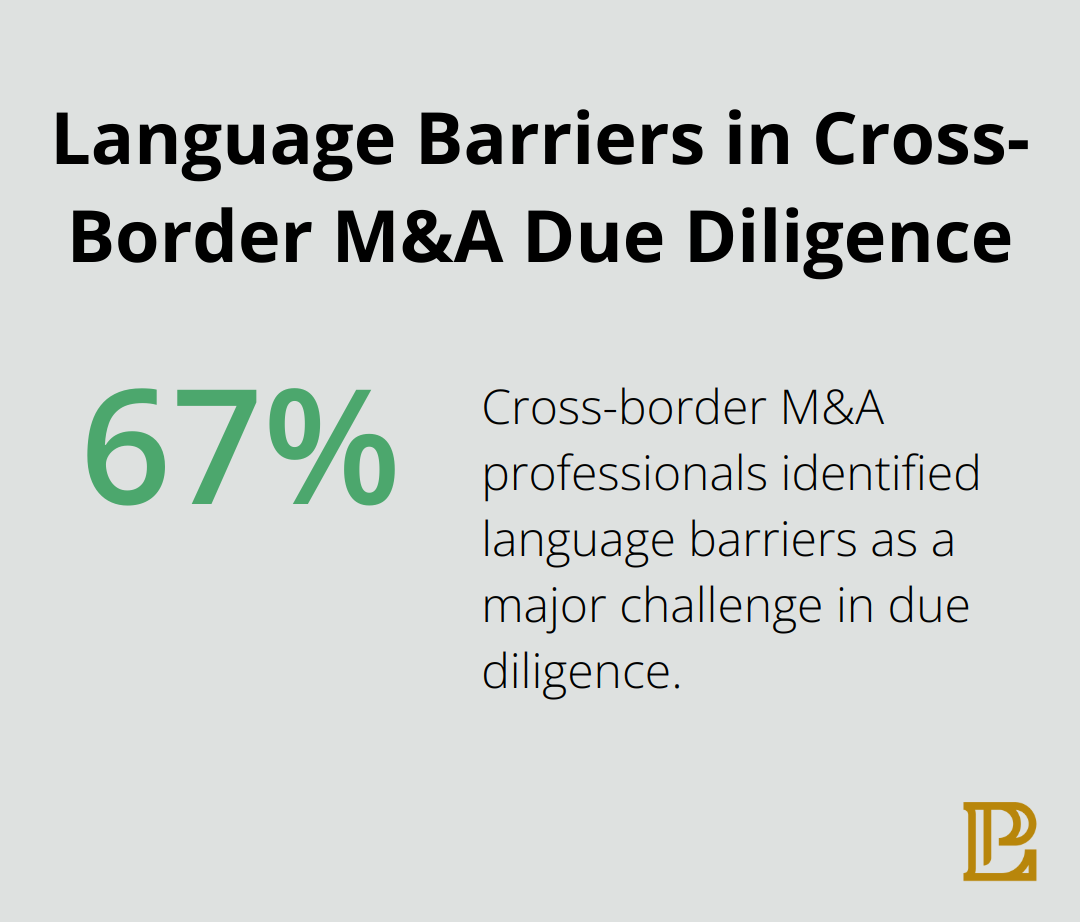
Language differences complicate due diligence significantly. Financial reports, legal documents, and corporate records often require accurate translation from a foreign language. This process consumes time and incurs substantial costs. A 2023 survey by Mergermarket revealed that 67% of cross-border M&A professionals identified language barriers as a major challenge in due diligence.
Cultural differences also play a pivotal role. Business practices, negotiation styles, and communication norms vary widely across countries. The concept of “guanxi” in Chinese business culture (which emphasizes personal relationships and mutual obligations) can perplex Western companies during due diligence.
To address these challenges, forming a diverse due diligence team that includes local experts familiar with the target company’s culture and business environment proves beneficial. This approach helps uncover hidden risks and opportunities that a team lacking cultural insight might miss.
Scrutinizing Foreign Financial Statements
Evaluating financial statements from foreign companies adds another layer of complexity. Different countries adhere to varying accounting standards, which makes direct comparison of financial data challenging.
While the U.S. uses Generally Accepted Accounting Principles (GAAP), many other countries follow International Financial Reporting Standards (IFRS). These differences can lead to significant discrepancies in reported earnings, asset valuations, and other key financial metrics.
A 2022 study by the Financial Executives Research Foundation found that companies spent an average of 3,622 hours on financial reporting for cross-border transactions, compared to 2,167 hours for domestic deals.
To navigate these differences, engaging financial experts well-versed in both local accounting standards and international reporting frameworks proves essential. These professionals can help reconcile financial statements and provide a clear picture of the target company’s financial health.
Ensuring Compliance with Local Laws
Assessing compliance with local laws and regulations stands as perhaps the most critical aspect of cross-border due diligence. Each country has its own set of rules governing business operations, labor practices, environmental standards, and more.
For instance, a Hermosa Beach company acquiring a business in Brazil would need to navigate complex labor laws, including mandatory profit-sharing schemes and strict rules on overtime. Failure to understand and comply with these regulations could result in significant liabilities post-acquisition.
Moreover, anti-corruption laws like the U.S. Foreign Corrupt Practices Act (FCPA) and the UK Bribery Act have extraterritorial reach, meaning companies can face liability for the actions of their foreign subsidiaries. In 2022, the U.S. Department of Justice imposed $2.7 billion in penalties for FCPA violations, highlighting the importance of thorough compliance checks.
To mitigate these risks, conducting a comprehensive compliance audit as part of the due diligence process proves invaluable. This should include reviewing the target company’s policies, procedures, and past compliance records. Engaging local legal counsel also ensures a thorough understanding of all applicable laws and regulations.
As we move forward to explore strategies for successful cross-border M&A deals, it becomes clear that thorough due diligence lays the foundation for these complex transactions. The insights gained from this process inform critical decisions and shape the overall approach to international acquisitions.
How to Win at Cross-Border M&A
Build a Dream Team
The cornerstone of any successful cross-border M&A is the assembly of the right team. This involves more than hiring top lawyers and accountants; it requires the creation of a diverse group with complementary skills and international experience.
A 2024 study by Deloitte found that companies with diverse M&A teams were 33% more likely to see above-average financial returns on their cross-border deals. This diversity should span cultures, languages, and professional backgrounds.

For a Hermosa Beach company acquiring a firm in Japan, the ideal team might include:
- A U.S.-based M&A attorney with experience in cross-border deals
- A Japanese lawyer familiar with local regulations and business practices
- Financial advisors well-versed in both U.S. GAAP and Japanese accounting standards
- Cultural consultants to bridge communication gaps
- Industry experts who understand the nuances of the target market
Master Cross-Cultural Communication
Effective communication forms the lifeblood of successful cross-border M&A. It extends beyond speaking the same language; it involves understanding cultural nuances, negotiation styles, and decision-making processes.
A survey by EY revealed that 50% of cross-border M&A deals fail due to cultural misunderstandings. To avoid this pitfall, consider these practical steps:
- Invest in professional interpreters for all key meetings and document translations
- Conduct cultural training for your team before engaging with foreign counterparts
- Be mindful of communication styles (some cultures prefer direct communication, while others value indirect approaches)
- Allow extra time for decision-making, as consensus-building processes vary across cultures
Craft a Bulletproof Integration Plan
The real work in cross-border M&A often starts after the deal closes. A comprehensive integration plan is essential for realizing the full value of the acquisition.
According to a McKinsey study, companies that invest in thorough integration planning are 2.6 times more likely to achieve their synergy targets. Your integration plan should address:
- Organizational structure and reporting lines
- Technology systems integration
- Human resources policies and practices
- Brand and marketing strategies
- Supply chain and operational processes
Start the integration planning early in the M&A process. Involve key stakeholders from both companies to ensure buy-in and identify potential roadblocks.
Navigate Regulatory Minefields
Cross-border deals often face intense regulatory scrutiny. In 2023, CFIUS reviews of foreign investments in U.S. companies increased by 20% (with a focus on technology and critical infrastructure sectors).
To navigate this complex landscape:
- Conduct a thorough regulatory assessment early in the deal process
- Engage with regulators proactively to address potential concerns
- Prepare to make concessions or structural changes to secure approval
- Consider the impact of geopolitical tensions on deal approval prospects
Regulatory approval processes can significantly impact deal timelines. Factor this into your planning and communication with stakeholders.
Final Thoughts
Cross-border mergers and acquisitions present unique challenges and opportunities for Hermosa Beach businesses expanding globally. Success in these complex transactions requires a thorough understanding of international and local regulatory frameworks, as well as the ability to navigate foreign investment restrictions and address tax implications. Companies must build strong, diverse teams with international expertise to overcome cultural and language barriers during due diligence, evaluate foreign financial statements, and ensure compliance with local laws.
The complexities of cross-border transactions underscore the importance of expert legal guidance. Businesses in Hermosa Beach embarking on international M&A journeys should not underestimate the value of professional assistance. Navigating the intricate web of regulations, cultural nuances, and financial considerations requires specialized knowledge and experience.
At Pierview Law, we understand the intricacies of cross-border mergers and acquisitions. Our team provides sophisticated legal services tailored to the unique needs of businesses in Hermosa Beach (from entity formation and contract drafting to real estate transactions and dispute resolution). For businesses seeking guidance in navigating the complexities of international deals, Pierview Law stands ready to provide legal support.