
Hermosa Beach businesses face intense competition in today’s dynamic market. Strategic mergers and acquisitions advantages can transform local companies by expanding market reach and boosting profitability.
We at Pierview Law understand how M&A transactions create powerful growth opportunities for California businesses. The right deal can position your company for long-term success in this competitive coastal market.
How Strategic M&A Moves Transform Local Business Performance
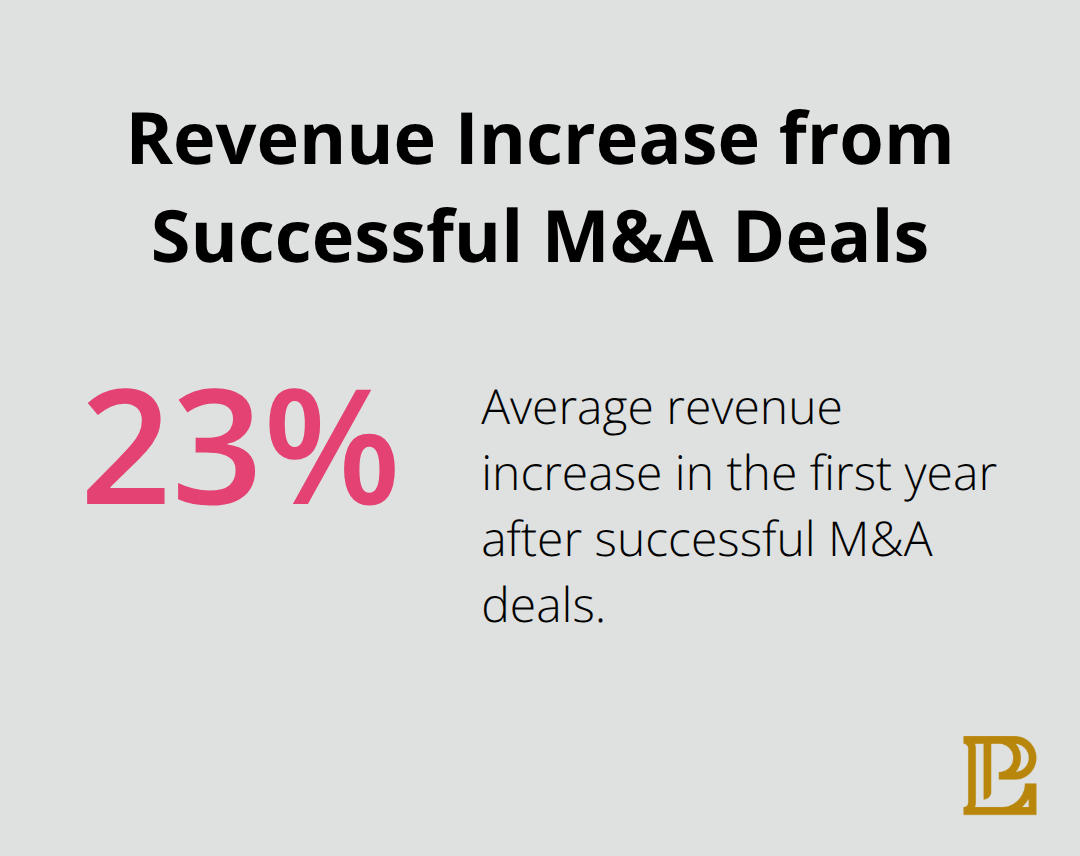
Hermosa Beach companies that execute well-planned mergers and acquisitions see dramatic revenue growth within 12 months. The National Association of Small Businesses reports that successful M&A deals generate an average 23% revenue increase in the first year. Local beachfront restaurants that merge with complementary concepts immediately access broader customer segments while they reduce marketing costs. Surf shops that acquire gear manufacturers eliminate middleman expenses and control their entire supply chain. These strategic moves create immediate market advantages that standalone businesses cannot match.
Market Reach Expansion Through Customer Base Integration
Companies with diverse offerings maintain 15% higher customer retention rates compared to single-focus businesses, according to Harvard Business Review research. When two Hermosa Beach fitness studios merge, they instantly double their membership potential and can offer comprehensive wellness packages. Hotel chains that acquire local beach rental companies capture both short-term visitors and extended-stay guests. This customer base expansion generates cross-selling opportunities worth thousands in additional annual revenue per client. Smart acquirers target businesses with complementary customer demographics to maximize this growth potential.
Technology Acquisition Accelerates Innovation Cycles
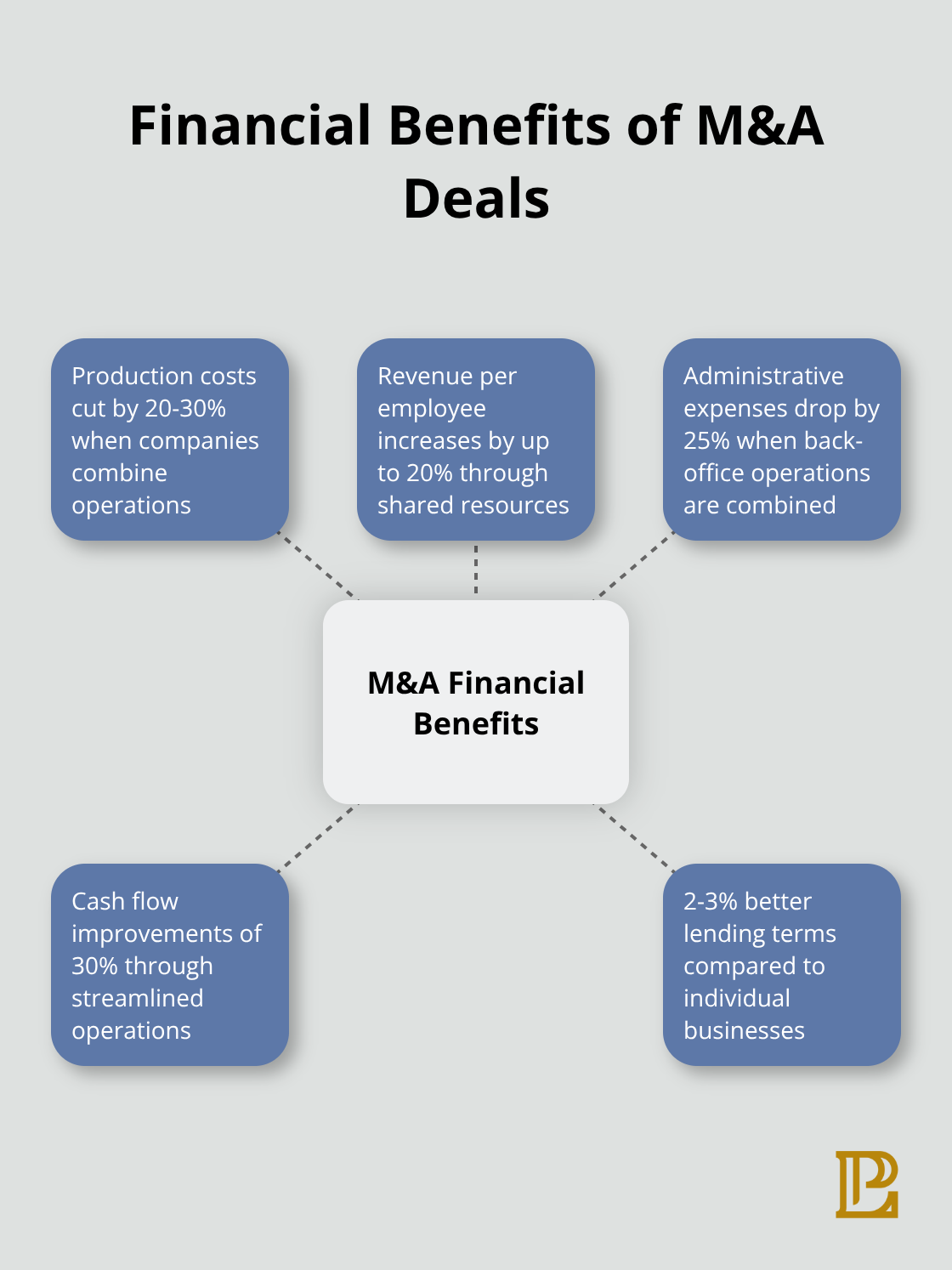
Companies that acquire technology-forward businesses eliminate years of development time and massive research costs. Beach hospitality businesses that purchase reservation software companies gain proprietary systems without the need to build from scratch. Restaurant chains that acquire food delivery platforms control their entire customer experience while they capture delivery fees. These technology integrations often reduce operational costs by 20-30% while they improve service quality. MIT Sloan School of Management studies show that shared technology resources improve productivity by 10-15% within merged organizations.
Consolidation Creates Unbeatable Competitive Positions
Merged entities achieve economies of scale that small competitors cannot replicate. The National Restaurant Association found that combined purchasing power reduces food costs by up to 15% through bulk agreements (with suppliers often offering better terms to larger buyers). Two beach equipment rental companies that merge can eliminate duplicate inventory costs and dominate prime beach locations. Administrative cost reductions of 25% become standard when redundant back-office operations combine, according to National Association of Realtors data. This consolidated strength makes merged companies 25% more likely to secure favorable terms from lenders (giving them capital advantages over smaller competitors). These financial advantages set the foundation for even greater benefits that M&A transactions deliver to local businesses.
How M&A Deals Generate Immediate Financial Returns
Merged companies in Hermosa Beach cut production costs by 20-30% when they combine operations, according to industry analysts. The Small Business Administration reports that merged businesses achieve 30% higher survival rates during economic downturns through increased market share. Local hotel operators that acquire beach rental properties access diverse revenue streams immediately while they eliminate duplicate administrative functions. Restaurant groups that merge with catering companies capture wedding and corporate event markets worth $50,000+ per contract.
Cost Reduction Through Operational Synergies
Revenue per employee jumps by up to 20% when businesses share resources more effectively, as the California Hotel & Lodging Association highlights. Cash flow improvements of 30% become standard as streamlined operations reduce overhead costs significantly. Merged entities eliminate redundant positions and consolidate purchasing power to negotiate better supplier terms. Administrative expenses drop by 25% when companies combine back-office operations (removing duplicate accounting, HR, and management functions).
Enhanced Revenue Streams Create Market Dominance
Companies that complete strategic acquisitions access new customer segments without the time and cost of organic development. Beach equipment rental businesses that acquire complementary services immediately offer comprehensive packages to tourists. Hospitality companies that merge with event planning services capture high-value corporate contracts and wedding bookings. These diversified revenue streams protect businesses from seasonal fluctuations that affect single-service companies.
Capital Access Advantages Transform Growth Potential
Companies with strong cash flow are 70% more likely to survive their first five years, according to Small Business Administration data. Merged entities secure lending terms 2-3% better than individual businesses can obtain, based on National Small Business Association surveys. Banks view consolidated companies as lower-risk borrowers because they have diversified revenue sources and stronger balance sheets. The Federal Reserve Bank of San Francisco found that companies completing successful M&A deals are 25% more likely to receive favorable lending terms compared to smaller competitors.
Tax advantages also emerge when profitable companies acquire businesses with accumulated losses (potentially reducing effective tax rates by up to 10% according to Tax Policy Center research). These financial benefits require careful legal navigation to maximize value while maintaining compliance with California regulations.
What Legal Steps Must California M&A Deals Follow
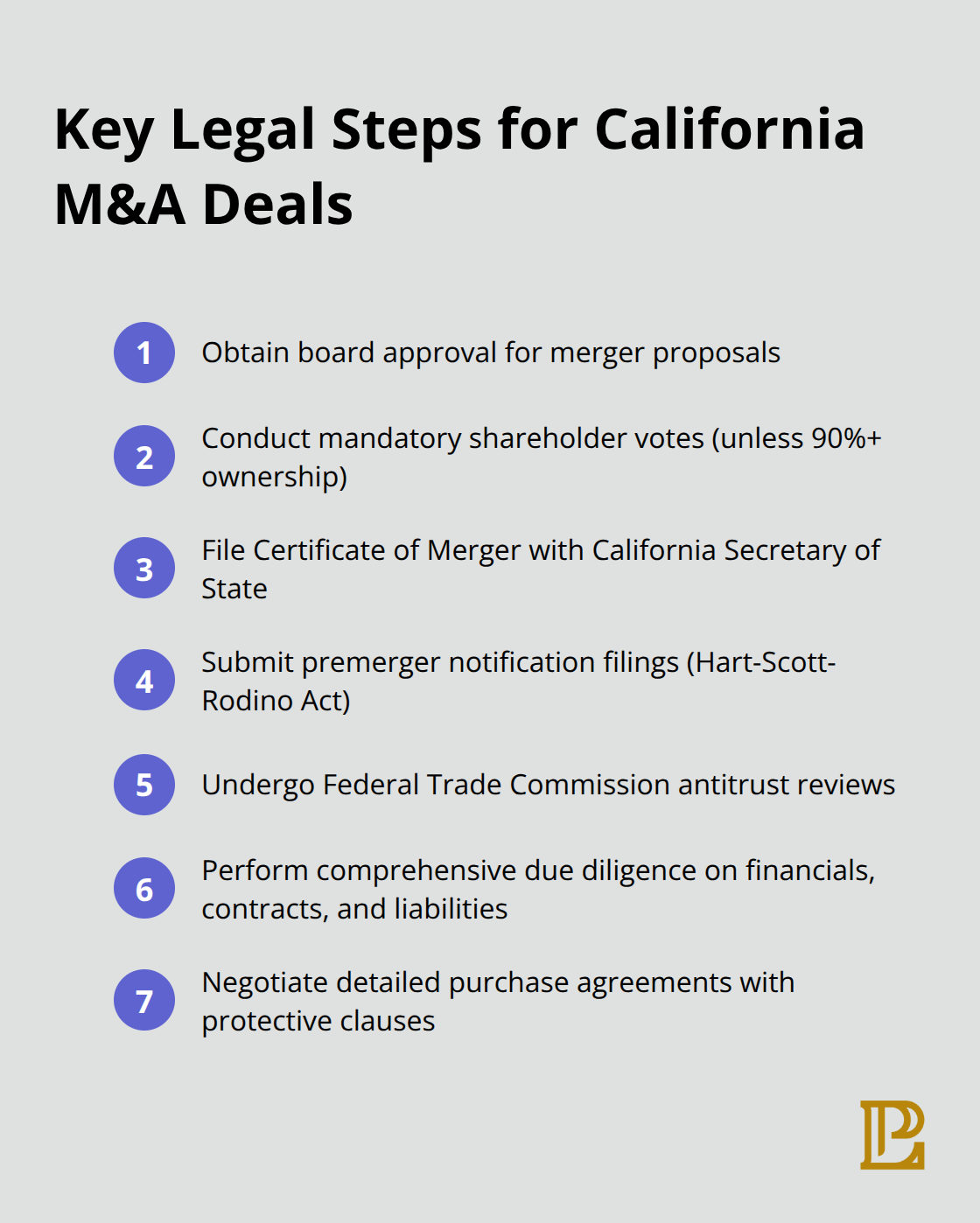
California M&A transactions require rigorous legal compliance that begins months before closing. The California Corporations Code mandates board approval for merger proposals, followed by mandatory shareholder votes unless one company owns 90% or more of the target. Companies must file a Certificate of Merger with the California Secretary of State to establish the new entity legally. The Hart-Scott-Rodino Act requires premerger notification filings for transactions that exceed specific thresholds, with fees that range from $30,000 to $2,390,000 based on deal size. Federal Trade Commission antitrust reviews can delay closings by 30-60 days, which makes early regulatory assessment critical for timeline management.
Due Diligence Reveals Hidden Deal Killers
Financial record examination must include three years of audited statements, tax returns, and accounts receivable reports to verify revenue accuracy. Employment agreement reviews identify potential integration challenges, golden parachute obligations, and benefit program liabilities that can cost millions after closing. Intellectual property audits reveal trademark disputes, patent expirations, and license agreements that affect future operations. Environmental compliance investigations protect buyers from cleanup costs that average $2.8 million for contaminated commercial properties in California.
Contract analysis identifies change-of-control provisions that could terminate key supplier relationships or customer agreements worth hundreds of thousands annually.
Negotiation Strategies Protect Long-Term Value
Asset Purchase Agreements should include specific purchase price adjustments based on capital changes and detailed liability allocation schedules. Stock Purchase Agreements require comprehensive representations and warranties with indemnification periods that extend 12-24 months for unknown liabilities. Escrow arrangements typically hold 10-15% of purchase price for 18 months to cover potential breaches (with most disputes resolved within this timeframe). Employment transition plans must address benefit program changes, severance obligations, and key employee retention bonuses that prevent talent flight. Attorneys structure these agreements to minimize tax consequences while they protect clients from post-closing disputes that derail integration success.
Final Thoughts
Mergers and acquisitions advantages transform Hermosa Beach businesses through immediate revenue growth, cost reductions, and market expansion. Companies that execute strategic M&A deals achieve 23% revenue increases within the first year while they reduce operational costs by up to 30%. These transactions provide access to new technologies, diverse customer bases, and enhanced capital opportunities that standalone businesses cannot match.
California M&A transactions require professional legal guidance to navigate regulatory requirements, due diligence processes, and contract negotiations. Proper legal structure protects your investment and maximizes deal value while it avoids costly compliance issues. The complexity of these deals demands attorneys who understand both state regulations and federal antitrust requirements (which can delay closings by months without proper preparation).
We at Pierview Law guide Hermosa Beach businesses through M&A transactions from initial strategy development through post-closing integration. Our team handles entity formation, contract drafts, and regulatory compliance to position your company for successful growth through strategic acquisitions. Contact us to explore how M&A opportunities can accelerate your business growth in this competitive coastal market.