
Commercial lease negotiations in California require careful attention to detail. Most business owners either miss critical protections or accept unfavorable terms simply because they don’t know what to push back on.
At Pierview Law, we’ve seen how the right negotiation strategy protects your interests and saves thousands in unexpected costs. This guide walks you through the key terms worth fighting for, common mistakes to avoid, and how to approach these conversations with confidence.
What Terms Actually Matter in a California Commercial Lease
Lease Duration and Renewal Options
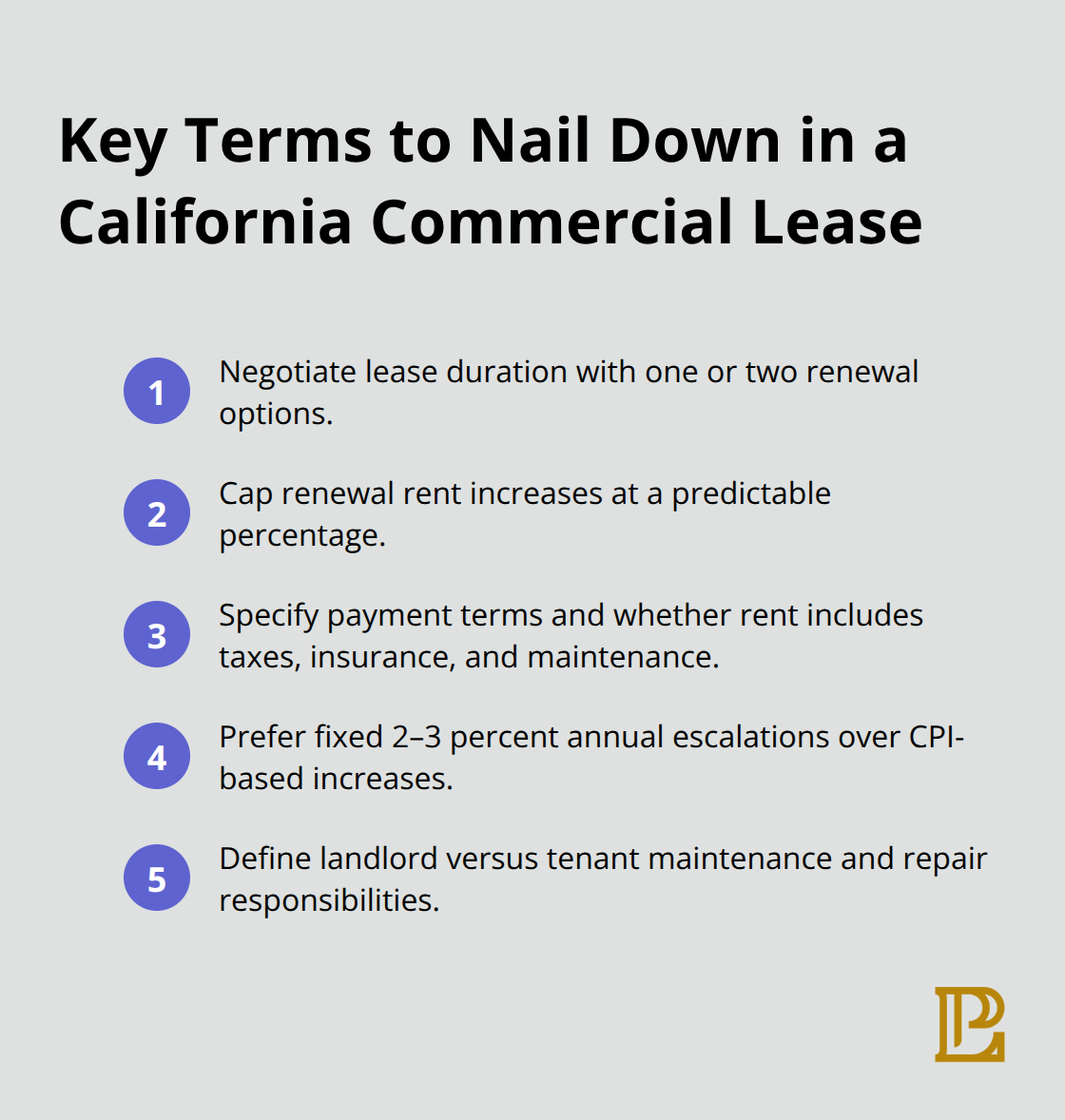
Lease duration shapes your entire business planning window and deserves your immediate attention. A five-year lease with no renewal option leaves you vulnerable when your current space no longer fits your needs. California commercial leases typically run three to ten years, and tenants who negotiate renewal options at predetermined rates gain significant leverage.
Try for at least one renewal option, ideally two, with rent increases capped at a percentage you can live with rather than market rate redetermination. Without this protection, your landlord can demand 20 to 40 percent increases when renewal time arrives, forcing you to relocate or accept unfavorable terms. Specify whether renewals are automatic or require written notice, and set clear deadlines-missing a renewal deadline by one day should not cost you the option.
Rent Escalation Clauses and Payment Terms
Rent escalation clauses separate manageable leases from budget killers. Fixed increases of 2 to 3 percent annually beat percentage-based escalations tied to inflation or market conditions every time. The Consumer Price Index rose 3.4 percent in 2023 and 2.4 percent in 2024 according to the Bureau of Labor Statistics, but landlords often use this as justification for larger jumps.
Negotiate caps on escalations regardless of the trigger mechanism, and push back hard against clauses allowing unlimited increases based on property reappraisals. Payment terms matter equally-require 30-day payment windows instead of 15, and specify whether rent covers property taxes, insurance, and maintenance or if these are separate line items. Hidden costs buried in triple net leases can double your actual occupancy expense.
Maintenance Responsibilities and Repair Obligations
Maintenance responsibilities represent another financial minefield that most tenants overlook. California commercial leases often shift repair obligations to tenants for everything beyond structural elements, but definitions vary wildly. Clarify which systems the landlord maintains (roof, foundation, HVAC, plumbing, electrical) and which fall to you.
Request that major repairs exceeding a set dollar amount remain the landlord’s responsibility. Without this boundary, a failing HVAC system could cost you thousands in repairs that a clearer lease would have assigned to the property owner. These three negotiation areas form your foundation-but California commercial leases hide additional traps that catch unprepared tenants off guard.
Common Pitfalls in California Commercial Leases
Tenant Improvement Clauses Create Financial Traps
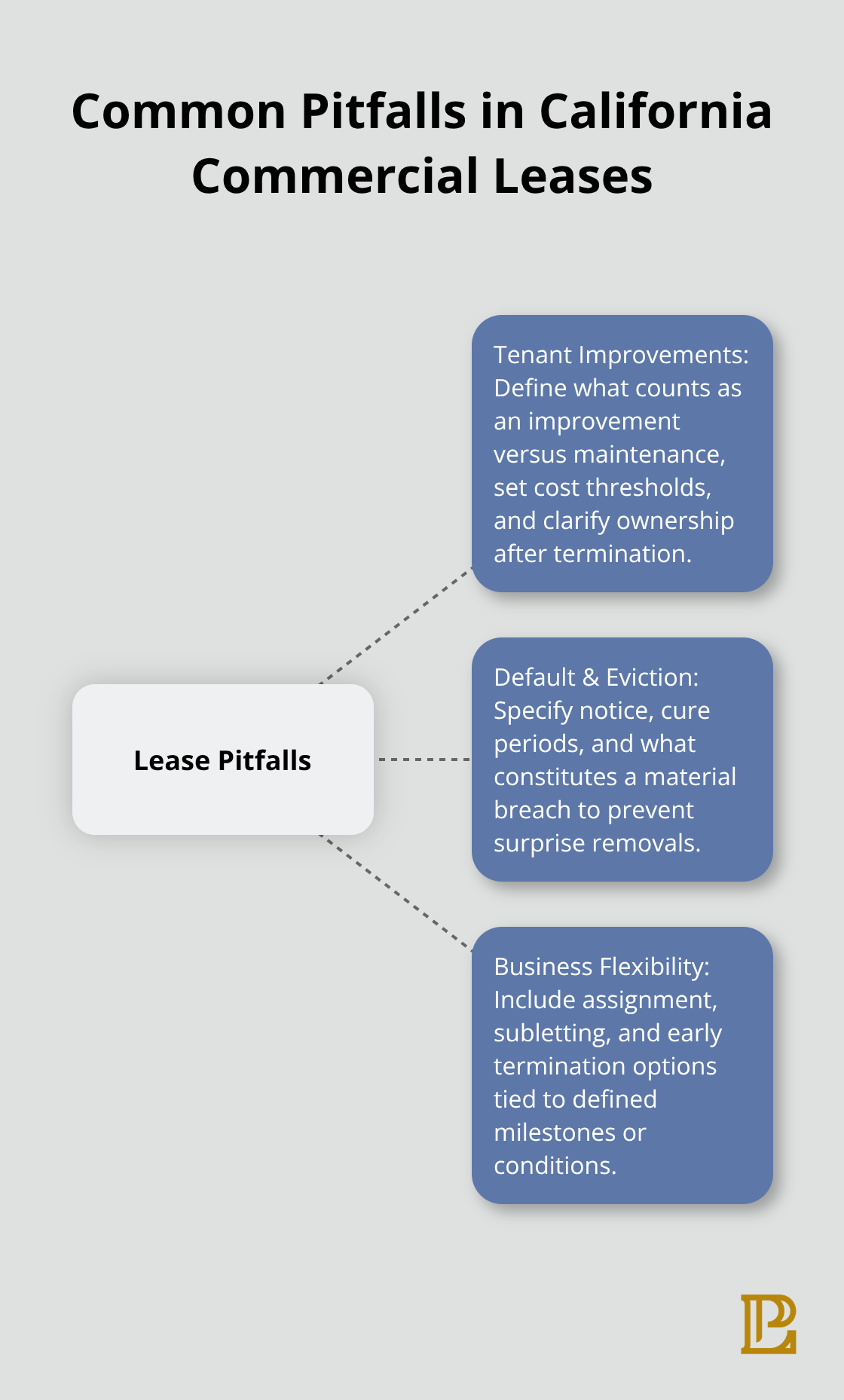
Tenant improvement clauses represent one of the costliest mistakes in California commercial leases, and vague language here can trap you into thousands of dollars in unexpected expenses. Most leases fail to define what counts as a tenant improvement versus a standard repair, leaving landlords free to demand you pay for work that should fall under their maintenance obligations. The distinction matters enormously: a tenant improvement is a permanent alteration that increases property value and remains after you leave, while maintenance keeps existing systems functional. Without precise definitions, your landlord can classify routine HVAC maintenance as a tenant improvement and bill you accordingly.
Specify exactly which improvements require landlord approval, establish a dollar threshold above which the landlord covers costs, and clarify who owns improvements after lease termination. California courts have sided with tenants in disputes where lease language remained ambiguous about these boundaries, but litigation costs far exceed negotiation costs upfront.
Default and Eviction Procedures Demand Clarity
Default and eviction procedures deserve equal attention because California’s commercial eviction process differs significantly from residential rules, and most tenants underestimate how quickly landlords can remove them from the space. Many leases contain vague default language stating that missing rent or breaching the lease triggers eviction rights without specifying notice periods, cure windows, or what actually constitutes a material breach. California law requires landlords to provide three days’ notice before filing for eviction in commercial cases, but your lease might waive this protection entirely if you don’t negotiate carefully.
Define exactly what actions trigger default, require written notice specifying the exact violation, and demand a reasonable cure period of at least ten to fifteen business days before eviction proceedings begin. Some breaches deserve immediate action while others warrant cure opportunities-distinguish between material breaches like nonpayment versus technical violations like minor signage disputes.
Business Changes Require Flexibility Provisions
Missing provisions for business changes leave you locked into unfavorable terms when circumstances shift unexpectedly, and California’s unpredictable economy makes this protection genuinely valuable. Leases rarely address what happens if your business pivots, if you need to relocate, if market conditions force downsizing, or if regulatory changes affect your operations. Include an assignment clause allowing you to transfer the lease to another qualified tenant, a subletting provision permitting temporary space sharing, and an early termination option tied to specific business milestones or market conditions.
Landlords resist these provisions because they limit control, but you negotiate from weakness later if you don’t secure flexibility now. These three areas-tenant improvements, default procedures, and business flexibility-represent the difference between a lease that protects your interests and one that creates unnecessary financial exposure. Understanding these pitfalls positions you to recognize problematic language when you encounter it, but identifying problems and negotiating solutions require different skill sets entirely.
How to Negotiate Like You Have Leverage
Document Every Agreement in Writing
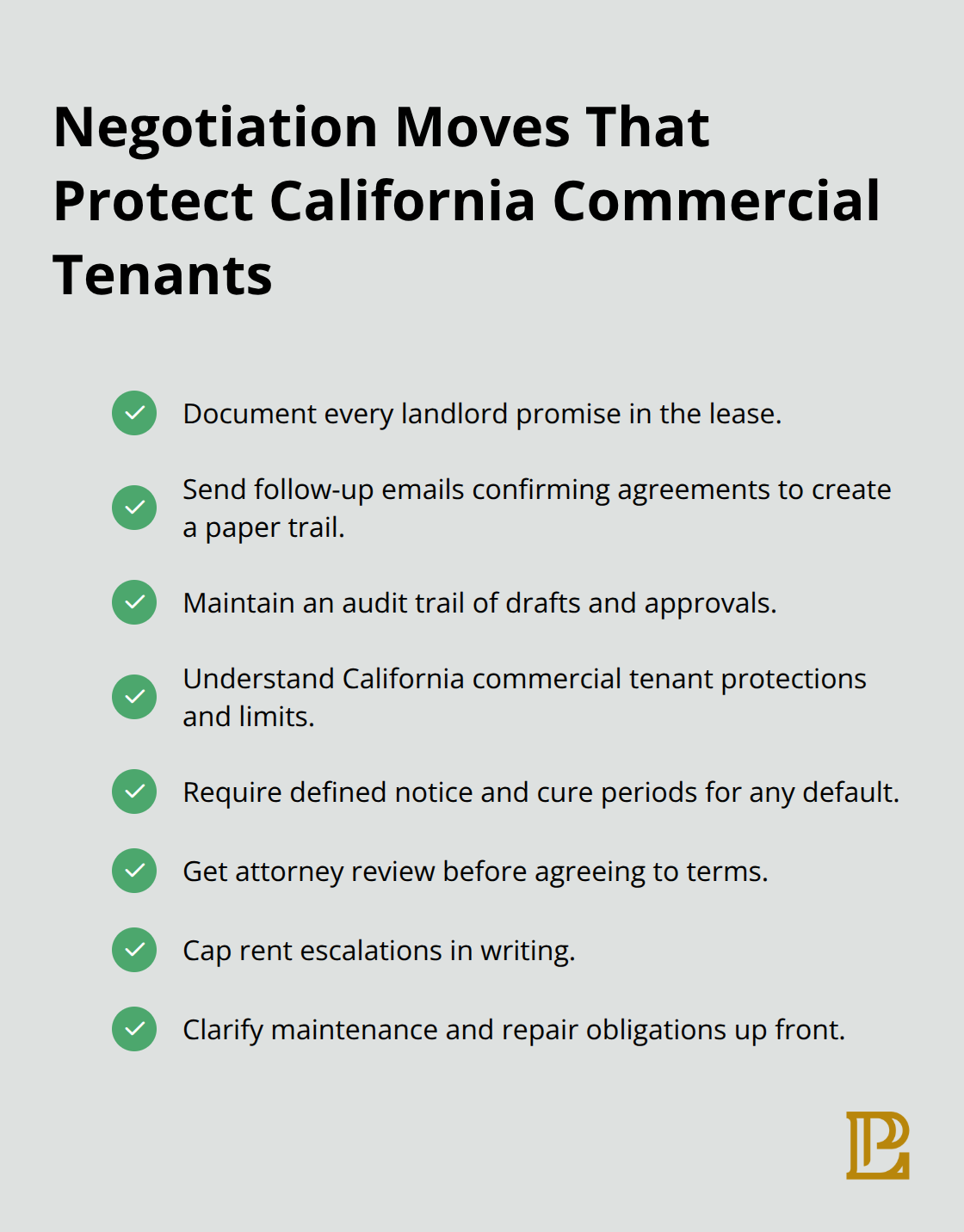
Written agreements separate intentions from actual protections, and most tenants discover this distinction far too late in the negotiation process. Every verbal promise your landlord makes disappears the moment disputes arise unless you capture it in the lease document itself. California courts will not enforce oral modifications to commercial leases, which means handshake deals and email assurances carry zero legal weight.
Start documenting positions immediately when the landlord agrees to cap rent increases at 3 percent or promises to cover HVAC repairs. Send a follow-up email summarizing that agreement and request written confirmation. This creates an audit trail that protects you if interpretation disputes emerge later.
Many landlords count on tenants accepting vague lease language because most people avoid confrontation, but written clarity costs nothing upfront and prevents thousands in litigation expenses.
Insist on reviewing every clause before signing, and do not accept “we’ll handle that later” responses. That later moment never arrives in ways favorable to tenants.
Understand California’s Commercial Tenant Protections
California commercial tenants operate under different legal protections than residential renters, and misunderstanding these distinctions costs money. The California Commercial Tenancy Law provides fewer automatic protections for business tenants than residential law provides for residential renters, which means your lease language becomes your primary defense against landlord overreach.
Unlike residential leases where certain terms are automatically unenforceable regardless of what the contract states, commercial leases generally enforce whatever both parties signed. This reality demands that you understand specific provisions before agreeing to them. Three-day notice periods, cure windows, and default definitions vary wildly between leases, and accepting standard landlord forms means accepting terms written to benefit property owners exclusively.
Read the lease section on default procedures with particular attention-California landlord-tenant law does not automatically grant you cure rights in commercial disputes, so your lease must explicitly provide them or you lose this protection entirely.
Secure Legal Review Before You Negotiate
A real estate attorney should review your lease during negotiations, not after you’ve already agreed to terms. Most tenants approach attorneys as a final step, but this timing severely limits negotiating leverage. When an attorney reviews your lease during negotiations, they identify problematic language while you still have bargaining power to demand changes.
Waiting until after you’ve verbally agreed to terms means your attorney can only point out mistakes you’ve already made. Early legal review costs far less than fixing problems buried in a lease you’ve already signed, and it positions you to identify which battles deserve your focus during negotiations.
Final Thoughts
Commercial lease negotiations in California demand attention that most business owners fail to provide until problems emerge. A real estate attorney identifies problematic language while you still hold negotiating power and spots ambiguous tenant improvement definitions, inadequate default procedures, and missing flexibility provisions that would otherwise trap you for years. They understand how California courts interpret commercial lease disputes and position your agreement to favor your position if conflicts arise.
Proper commercial lease negotiations save substantial money over the lease term. Capping rent escalations at 2 to 3 percent instead of accepting market-rate redetermination could save tens of thousands across a five-year lease, while clarifying maintenance responsibilities prevents surprise repair bills that could reach thousands of dollars. Securing renewal options with predetermined rates gives you stability and eliminates the threat of sudden displacement when your lease expires.
Before you sign any commercial lease, have a real estate attorney review the document and guide your negotiations. We at Pierview Law handle lease negotiations for business tenants and landlords throughout Los Angeles County, including Hermosa Beach, and we identify the specific terms worth fighting for in your situation. Contact Pierview Law to discuss your lease before you commit to terms that could cost you thousands.