
Corporate governance and law requirements in California have become increasingly complex for businesses operating in Hermosa Beach. Companies face mounting pressure to maintain compliance while managing growth and stakeholder expectations.
We at Pierview Law understand the unique challenges local businesses encounter when implementing effective governance structures. This guide outlines proven practices to help your corporation thrive while meeting all legal obligations.
Understanding Corporate Governance Requirements in California
California corporations operate under a comprehensive legal framework that begins with the California Corporations Code, which governs formation, operation, and dissolution procedures. This state law requires specific governance structures including mandatory board meetings, proper record-keeping, and shareholder notification protocols. The Secretary of State enforces annual filing requirements, with penalties reaching $250 for late submissions and potential administrative dissolution for non-compliance.
Federal Laws Add Complex Requirements
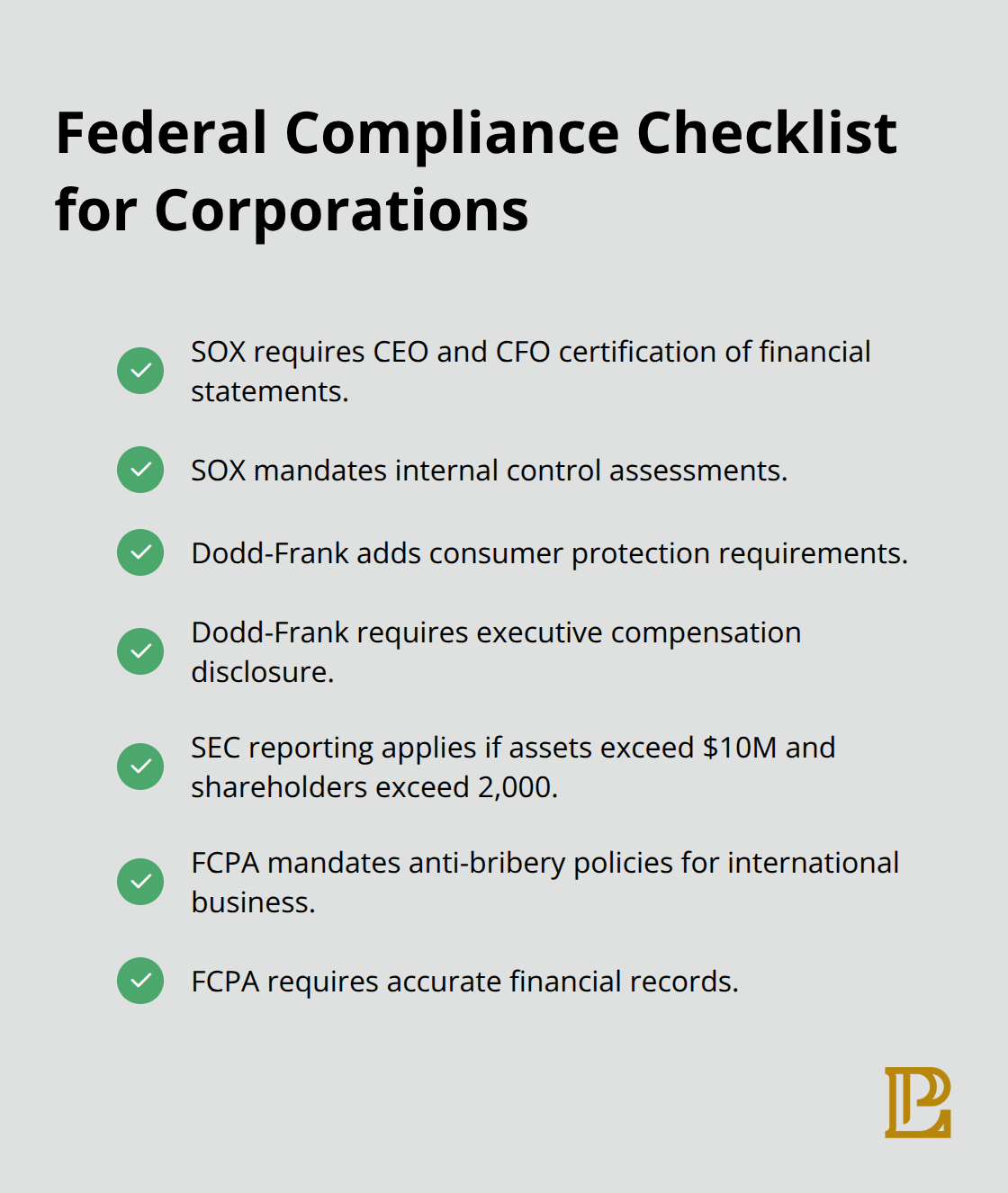
Public companies face additional federal mandates under the Sarbanes-Oxley Act, which requires CEO and CFO certification of financial statements and internal control assessments. The Dodd-Frank Act adds consumer protection requirements and executive compensation disclosure rules. Private companies with over $10 million in assets must comply with Securities and Exchange Commission reporting if they have more than 2,000 shareholders. The Foreign Corrupt Practices Act applies to any California corporation that conducts international business (mandating anti-bribery policies and accurate financial records).
Essential Documents Protect Your Corporation
Corporate bylaws must outline voting procedures, board composition, and officer responsibilities to prevent governance disputes. Shareholder agreements become essential when multiple owners exist, as they define buy-sell provisions and transfer restrictions that protect minority interests. Board resolutions that document major decisions provide legal protection and demonstrate proper authorization for significant transactions. Minutes from all board and shareholder meetings serve as evidence of compliance and decision-making processes during potential legal challenges.
Compliance Failures Create Serious Consequences
California corporations that fail to maintain proper governance face severe penalties beyond simple fines. The state can administratively dissolve corporations that don’t file required documents (leaving owners personally liable for business debts). Federal violations under Sarbanes-Oxley can result in criminal charges, with executives facing up to 20 years in prison for securities fraud. These harsh realities make proper board management and fiduciary duty compliance absolutely essential for business survival.
Best Practices for Board Management and Fiduciary Duties
Board Composition Prevents Deadlock and Liability Issues
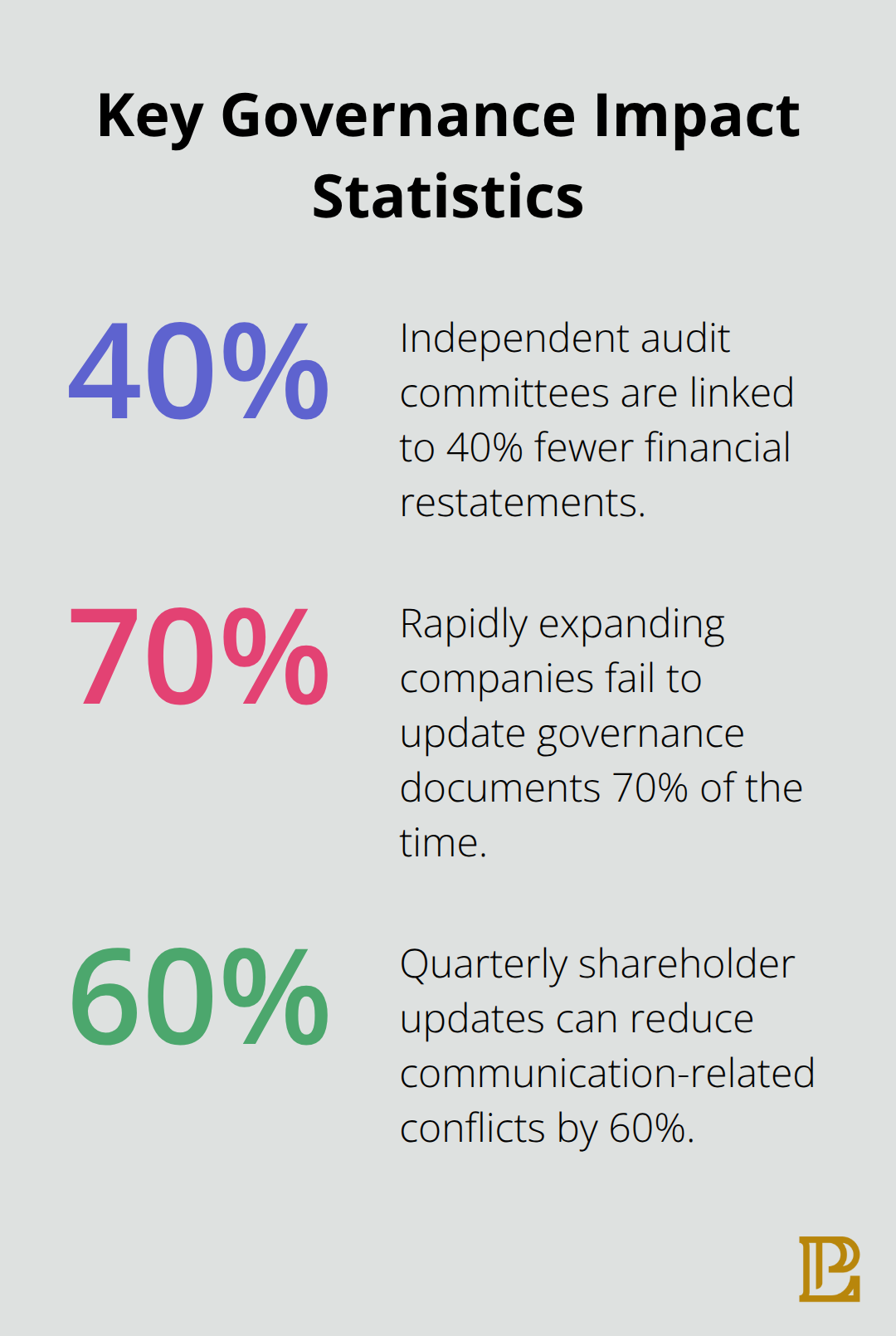
Board composition directly impacts liability exposure and decision-making effectiveness. California corporations need odd-numbered boards of five to seven directors to prevent deadlock situations, with at least two independent directors who have no financial ties to the company. The National Association of Corporate Directors reports that companies with independent audit committees experience 40% fewer financial restatements compared to those without proper independence. Audit committees must include at least one financial professional who can read complex financial statements and identify red flags before they become legal problems.
Director Insurance Protects Against Personal Financial Risk
Directors and officers insurance becomes non-negotiable when board members face personal liability for corporate decisions. Standard D&O policies cost between $3,000 and $7,000 annually for small corporations but can save millions in legal defense costs. Corporate bylaws must include indemnification clauses that protect directors from personal liability when they act in good faith within their authority. California Corporations Code Section 317 allows corporations to advance legal fees for directors who face lawsuits (but companies must establish clear procedures for approval and repayment if directors are found liable for misconduct).
Meeting Documentation Creates Legal Protection
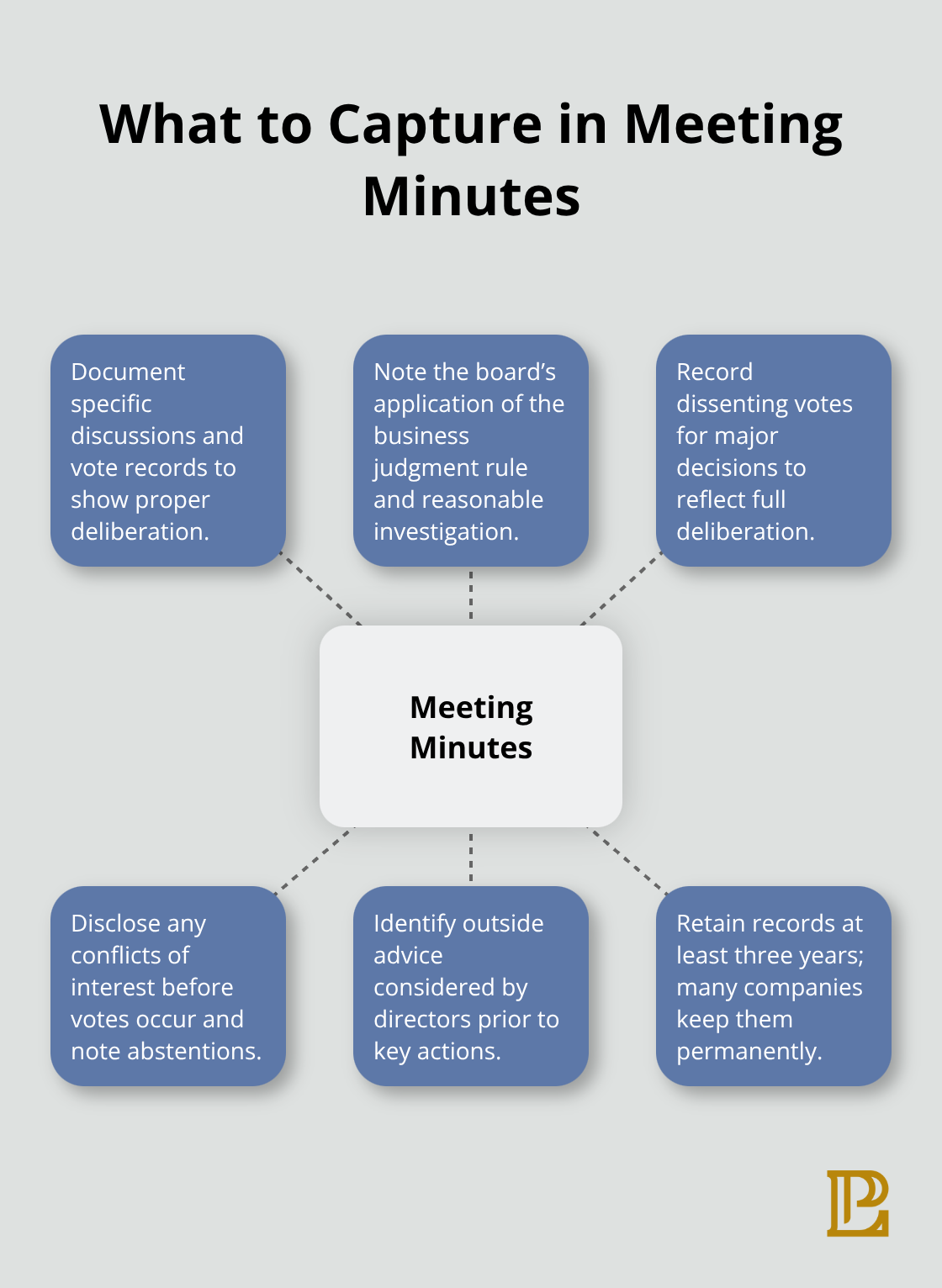
Board meeting minutes must document specific discussions and vote records to demonstrate proper deliberation during legal challenges. Courts scrutinize whether boards followed the business judgment rule, which protects directors who make informed decisions through reasonable investigation. Meeting minutes should record dissenting votes, conflicts of interest disclosed, and outside advice considered before major decisions. California law requires corporations to maintain meeting records for three years, but smart companies keep them permanently since statute of limitations for some claims extends to four years after discovery.
Committee Structure Enhances Oversight and Compliance
Specialized committees handle complex governance areas more effectively than full boards. Compensation committees (comprised entirely of independent directors) set executive pay and prevent conflicts of interest that could trigger shareholder lawsuits. Nominating committees identify qualified board candidates and establish succession plans that maintain continuity during leadership transitions. These focused committees allow boards to address specific governance challenges while maintaining proper oversight of management decisions and corporate strategy implementation.
Common Corporate Governance Challenges in Hermosa Beach Businesses
Conflicts of Interest Create Legal Vulnerabilities
Conflicts of interest plague Hermosa Beach businesses when founders serve as directors, officers, and major shareholders simultaneously. California Corporations Code Section 310 requires board approval for related party transactions, but many small companies skip proper documentation procedures. McKinsey & Company research shows that companies with robust conflict management policies experience 25% fewer shareholder disputes.
Smart businesses establish clear policies that require directors to disclose financial interests before votes occur. Companies must maintain detailed records of abstentions during related party decisions to protect against future legal challenges.
Business Growth Exposes Compliance Gaps
Business growth creates compliance gaps that expose companies to serious legal risks. The International Corporate Governance Network found that 70% of rapidly expanding companies fail to update their governance documents as they add operations or shareholders. California corporations must amend bylaws when ownership structures change and update board composition requirements accordingly.
Companies must file amended articles when business activities expand beyond their original scope. This requirement catches many entrepreneurs off guard during periods of rapid growth.
Shareholder Communication Becomes Complex
Shareholder communication becomes complex when ownership exceeds ten people. Companies must provide formal meeting notices, proxy statements, and proper vote procedures that many entrepreneurs ignore until disputes arise. California law mandates specific notification timelines and documentation requirements that small businesses often overlook.
Companies that establish quarterly shareholder updates and maintain current contact information reduce communication-related conflicts by 60% (according to Harvard Law School Forum on Corporate Governance data). Regular communication prevents misunderstandings that lead to expensive legal disputes.
Documentation Failures Lead to Personal Liability
Documentation failures expose directors and officers to personal liability when corporate formalities break down. Courts pierce the corporate veil when companies fail to maintain separate records, hold required meetings, or document major decisions properly. California judges scrutinize whether corporations followed proper procedures when shareholders or creditors challenge business decisions.
Proper documentation protects the corporate shield that separates personal assets from business liabilities. Companies that maintain consistent records demonstrate legitimate business operations to courts and regulatory agencies. Partnership disputes can halt business operations when documentation proves inadequate during legal challenges.
Final Thoughts
Corporate governance and law compliance forms the foundation of successful business operations in Hermosa Beach. California corporations must navigate complex state regulations, federal requirements, and proper documentation procedures to protect against personal liability and legal disputes. Companies that establish independent boards, maintain proper meeting records, and address conflicts of interest proactively reduce their risk exposure by significant margins.
Professional legal guidance becomes essential when governance structures grow complex or compliance gaps emerge during business expansion. We at Pierview Law provide comprehensive business law services that include entity formation, contract drafting, and corporate governance support for Hermosa Beach companies. Our team handles everything from board documentation requirements to shareholder agreement negotiations.
Hermosa Beach business owners should conduct immediate governance audits to identify compliance gaps and update corporate documents to reflect current operations. Companies must establish clear policies for conflict management and schedule regular legal reviews. These proactive steps prevent small oversights from becoming expensive disputes that threaten business continuity and personal assets (while maintaining the corporate protection that separates business liabilities from personal wealth).