
Mergers and acquisitions move fast, and the companies that win are the ones making smarter decisions with better data. AI in mergers and acquisitions has shifted from a nice-to-have tool to a competitive necessity.
At Pierview Law, we’ve seen how AI transforms the M&A process-from spotting hidden risks in documents to calculating fair valuations in hours instead of weeks. This guide walks you through the practical applications that matter most to your deal.
How AI Screens Through Thousands of Pages in Hours
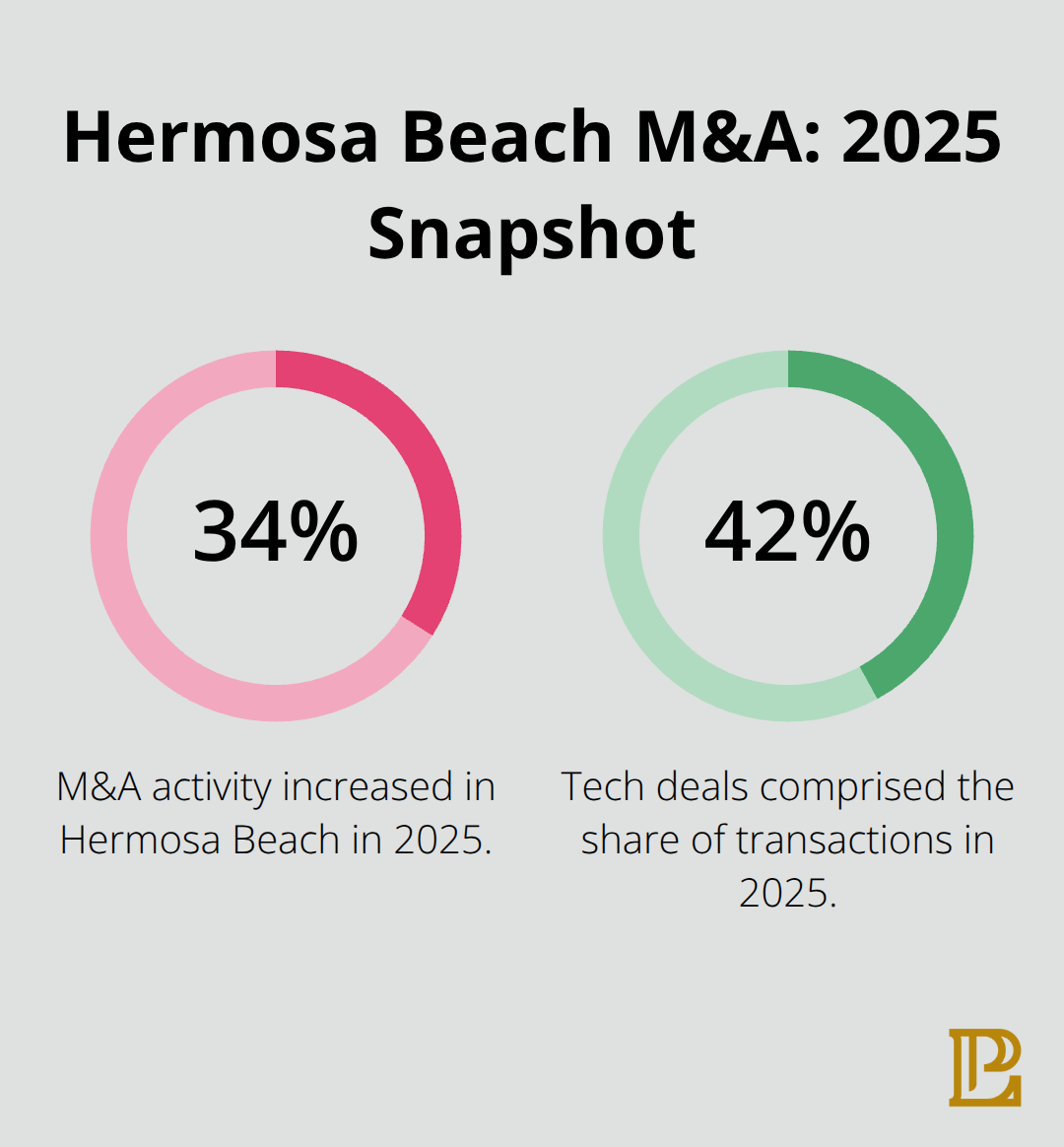
Due diligence in Hermosa Beach M&A deals demands speed without sacrificing accuracy. Traditional document review consumes weeks and ties up expensive legal resources. AI changes that equation by processing contracts, financial statements, and regulatory filings in a fraction of the time. In 2025, Hermosa Beach saw M&A activity jump 34%, with tech deals comprising 42% of transactions. That volume means the firms moving fastest with better risk visibility win the deal.
AI doesn’t replace human judgment-it amplifies it by handling the mechanical work so lawyers focus on strategy and risk interpretation.
What AI Actually Catches That Humans Miss
Document review AI identifies patterns across hundreds of agreements that manual review would overlook. The technology flags change-of-control clauses buried in supplier contracts, spots inconsistent liability caps across customer agreements, and highlights assignment restrictions that could block a transaction. In Hermosa Beach hospitality mergers, beachfront properties require 60 to 90 days of environmental and coastal-regulation due diligence, including title searches and zoning verification. AI accelerates this screening by cross-referencing environmental reports against regulatory databases and extracting key compliance gaps in hours rather than days. Financial irregularities surface faster too. AI models detect unusual transaction patterns, revenue timing inconsistencies, and expense classifications that warrant deeper investigation. For deals above $50 million facing FTC scrutiny, preliminary reviews average 120 days. AI-powered market impact modeling and regulatory threshold tracking help you prepare HSR filings and California state approvals upfront, compressing timelines substantially.
How AI Reduces Deal Economics
Hermosa Beach beachfront deals average $4.2 million in transaction value. Representations and warranties insurance costs climbed 25% in 2025, making risk identification upfront critical to controlling post-close liabilities. AI reduces due diligence spend by automating contract extraction, financial document analysis, and compliance screening. A typical mid-market M&A engagement burns 1,500 to 2,000 billable hours on document review alone. AI cuts that to 300 to 400 hours, translating to $75,000 to $150,000 in legal fees saved. That efficiency compounds when deals involve multiple jurisdictions or complex real estate components.
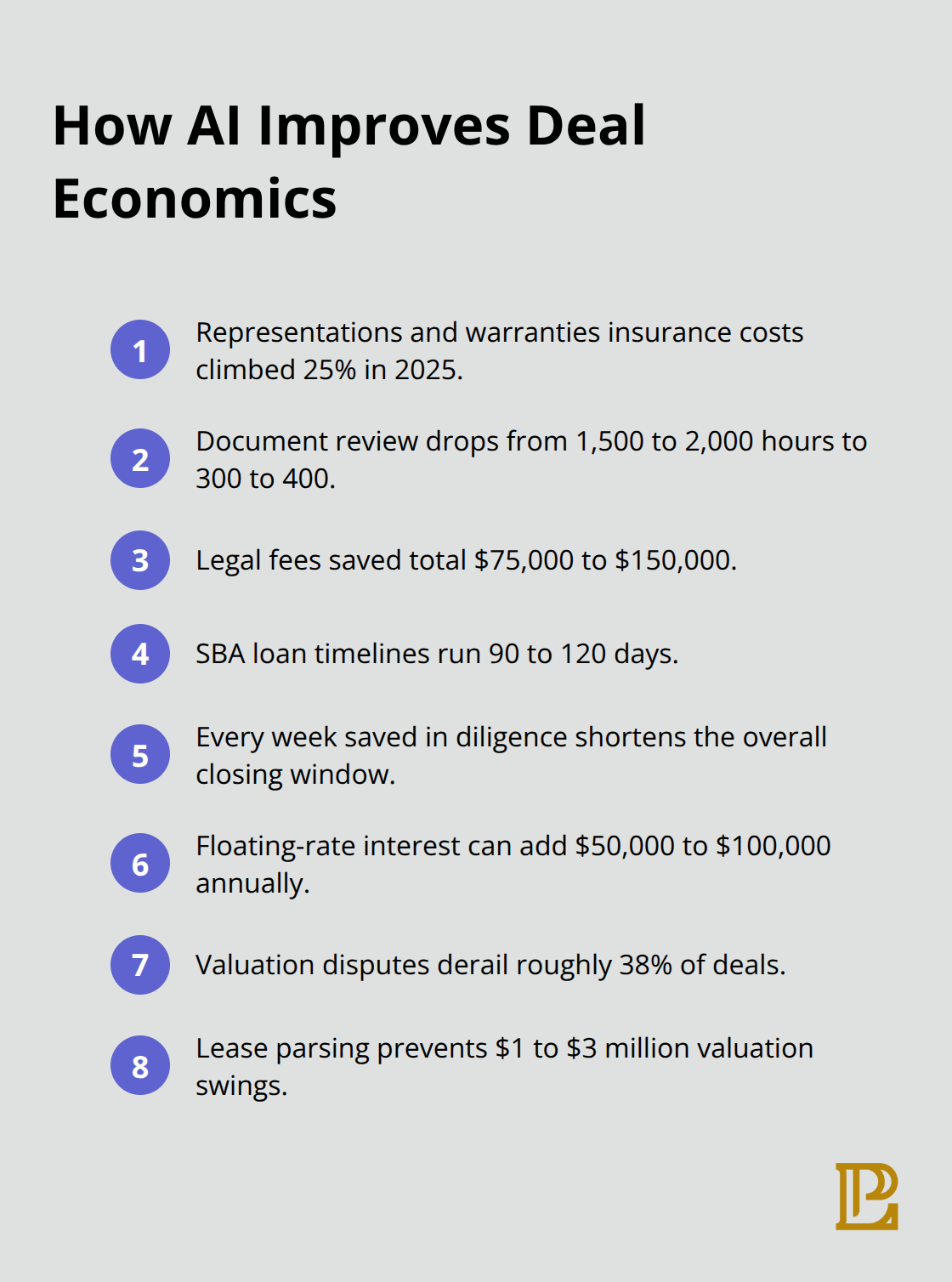
Valuation disputes derail roughly 38% of Hermosa Beach deals, often because environmental reports or lease terms weren’t fully understood during negotiation. AI-driven lease parsing extracts rent escalations, renewal options, and occupancy cost forecasts automatically, preventing the $1 to $3 million valuation swings that surface late in the process. When you close faster, you also reduce carrying costs and financing expenses. SBA loan timelines run 90 to 120 days; every week saved in diligence shortens your overall closing window and reduces floating-rate interest exposure, which can add $50,000 to $100,000 annually for larger deals.
Moving Forward With Valuation and Deal Structure
Speed in due diligence sets the foundation, but accurate valuation determines whether your deal creates value or destroys it. AI transforms how you model company worth and structure terms that protect your interests.
AI Valuation and Deal Structure: Building Economics That Hold
Hermosa Beach Valuations Demand Precision
Hermosa Beach M&A valuations swing wildly. Beachfront properties fluctuate $1 to $3 million in assessed worth depending on environmental reports, lease terms, and coastal regulatory exposure. Tech deals command 8-12x revenue multiples at premium rates, while hospitality consolidations average $4.2 million per transaction. AI builds valuation models grounded in comparable transactions, market conditions, and deal-specific risk factors rather than relying on spreadsheets and assumptions.
AI systems analyze historical Hermosa Beach M&A pricing data to identify what similar properties and businesses actually sold for, adjusting for property condition, lease terms, regulatory compliance status, and market timing. For tech startups driving 42% of 2025 Hermosa Beach deal volume, AI quantifies tech synergies by modeling integration costs, data-security vulnerabilities, and revenue cross-sell opportunities that manual valuation overlooks entirely. Pattern-based pricing informed by hundreds of closed transactions replaces gut feel.
Why Valuation Disputes Derail Deals
Valuation disputes derail roughly 38% of Hermosa Beach deals. When buyer and seller disagree on price, the gap often stems from incomplete lease analysis, hidden environmental liabilities, or underestimated integration costs. AI parses commercial leases to extract rent escalations, renewal options, and occupancy cost forecasts, feeding those figures directly into valuation models so both sides work from the same operational assumptions.
Environmental due diligence on beachfront properties typically runs 60 to 90 days and costs thousands in consultant fees. AI accelerates this by cross-referencing property records against coastal hazard databases, tsunami risk maps, and regulatory change histories, flagging material risks weeks earlier than traditional review. This intelligence prevents the $1 to $3 million valuation swings that surface late in negotiation.
Structuring Deals to Protect Your Returns
Deal structure determines who bears risk post-close, and that allocation directly impacts your returns. AI models different entity consolidation scenarios-whether to merge as an LLC, C-Corporation, or holding structure-and simulates the tax and liability outcomes for each approach. Private equity buyers targeting 15-20% returns on Hermosa Beach deals cannot afford structural mistakes; earnouts of 30-50% of purchase price paid over 24-36 months are common, meaning deal terms must protect against integration failure and post-close underperformance.
AI analyzes your historical earnout outcomes to calibrate realistic performance hurdles and holdback percentages that reflect actual integration risk rather than optimistic projections. Financing terms amplify the importance of accurate deal structure. SBA loans require 90-120 days to close and impose debt-to-equity constraints around 60-40. Seller financing notes covering 20-30% of purchase price over 5-7 years shift risk allocation significantly.
Managing Risk Through Insurance and Indemnities
AI models cash flow scenarios under different financing mixes, showing you how debt service obligations interact with post-merger integration costs and identifying which structure minimizes your vulnerability to revenue shortfalls. For deals involving multiple properties or complex real estate holdings, representations and warranties insurance has become standard risk management-costs climbed 25% in 2025.
AI identifies coverage gaps by flagging representations most likely to trigger claims based on environmental, employment, and contract risk patterns observed in comparable transactions. This intelligence helps you negotiate insurance terms upfront and allocate indemnities more efficiently, reducing post-close dispute risk. Once you lock in deal structure and financing, the real work begins: integrating the two organizations and capturing the synergies that justified the purchase price in the first place.
AI-Powered Integration: From Data Chaos to Execution
Post-merger integration fails in 42 percent of deals during year one, according to research on mid-market transactions. The culprit is rarely strategy; it’s execution. Two companies with incompatible systems, conflicting workflows, and teams working at cross purposes waste months and millions in synergy value before anyone admits the integration is derailing. AI doesn’t fix broken leadership or cultural misalignment, but it exposes integration problems weeks earlier and gives you concrete data to make faster decisions about which systems to keep, which people to retain, and where cost reductions actually stick without destroying revenue. In Hermosa Beach, where 60 percent of recent M&A deals are driven by operational necessity or survival, integration speed directly determines whether you survive the first year post-close. Restaurant integrations see 23 percent key-staff attrition within months. Tech integrations cost 40 percent more and take 6 to 8 months longer than planned, often burning $200,000 to $500,000 in unexpected consulting spend. AI changes this math by automating the work of mapping workflows, consolidating vendor contracts, and identifying redundancies so your team focuses on decisions that matter.
Data Consolidation Determines Your Foundation
Data consolidation sits at the foundation, and this is where most deals stumble. You inherit two separate accounting systems, customer databases, vendor contracts, and employee records spread across incompatible platforms. Manual reconciliation of this data takes months and introduces errors that surface in financial reporting, customer billing, and payroll processing. AI extracts data from legacy systems, normalizes formats across databases, and flags duplicate or conflicting records automatically. For a $4.2 million Hermosa Beach beachfront acquisition, this automation collapses a 12-week manual reconciliation into 2 to 3 weeks, letting your finance team focus on revenue recognition and tax implications rather than data entry. System integration demands the same ruthless honesty. You cannot keep both legacy platforms running indefinitely; the costs compound and teams stay fragmented. AI analyzes which system holds better data quality, which integrations will break with migration, and which workflows depend on custom configurations that will fail post-cutover. This intelligence lets you decide early whether to migrate to one platform, build a hybrid approach, or retire systems entirely.
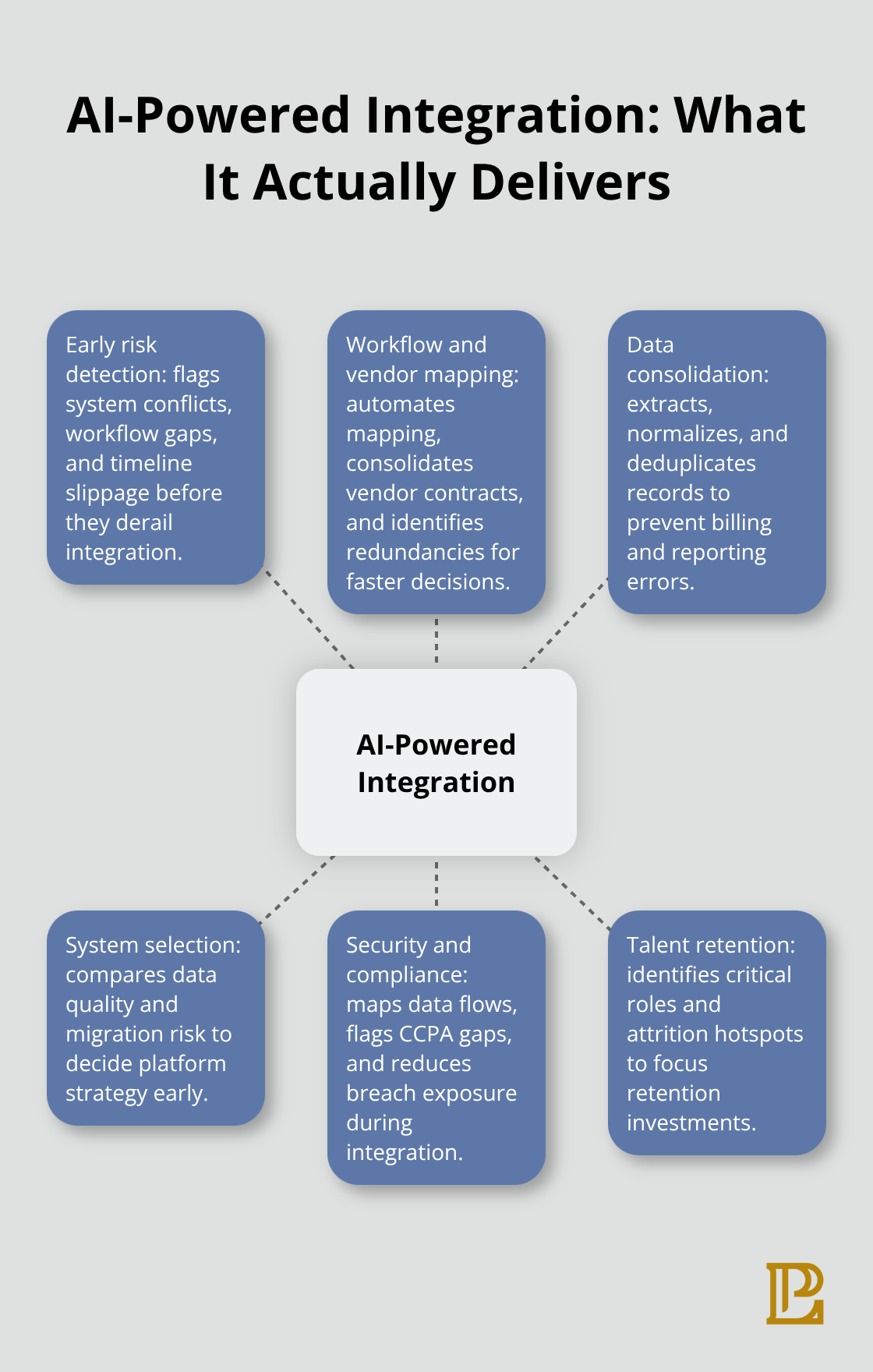
Tech-heavy M&A, where 42 percent of Hermosa Beach 2025 deals involved technology, introduces data-security complexity that manual integration ignores entirely. AI maps data flows across both companies, identifies where sensitive customer information lives, and flags CCPA compliance gaps that could expose you to $2,500 to $7,500 per violation. Addressing these vulnerabilities during integration, not after a breach, saves far more than the cost of the analysis.
Synergies Require Concrete Roadmaps to Materialize
Most deals assume synergies that never materialize. Private equity buyers targeting 15 to 20 percent returns on Hermosa Beach acquisitions build those return assumptions into purchase price, meaning integration failure directly erodes equity value. AI models cost reductions by analyzing vendor contracts, headcount overlaps, and facility consolidation opportunities across both companies simultaneously. For hospitality consolidations, economies of scale typically deliver 20 to 30 percent cost reductions in year one, but only if you actually consolidate purchasing, eliminate duplicate management positions, and renegotiate supplier terms with increased volume. AI identifies which vendors serve both companies, calculates volume discounts available through consolidated purchasing, and quantifies the revenue uplift from cross-selling that Bain & Company research shows can boost results when grounded in actual customer data. Restaurant integrations see revenue uplift of 15 to 25 percent in year one when integration teams actually execute menu consolidation, cross-location promotions, and shared supply chains. Without AI-driven workflow mapping, these opportunities get lost in the chaos of managing two separate P&Ls. AI also prevents the false synergies that kill deals. If you assume you can cut 30 percent of headcount and maintain revenue, AI shows you which roles are truly redundant versus which ones drive customer relationships or operational continuity. This distinction separates deals that create value from deals that destroy it.
Cultural Misalignment Destroys Value After You Close
Valuation disputes derail roughly 38 percent of Hermosa Beach deals, but cultural misalignment derails integration and destroys synergies after you’ve already written the check. AI analyzes employee sentiment data from Glassdoor, Indeed, and internal surveys to identify where the two companies actually differ in how they operate. For tech integrations, where key-staff attrition runs high and specialized talent is irreplaceable, AI helps you map complementary skill sets and structure teams that retain critical knowledge while eliminating duplicate overhead. This isn’t about forcing cultural uniformity; it’s about identifying where real friction exists and addressing it before your best people leave. Restaurant and hospitality integrations face similar talent risks. AI flags which locations or departments have the strongest employee retention and which ones typically see turnover post-acquisition, letting you invest retention dollars where they matter most rather than spreading efforts too thin across the entire organization.
Final Thoughts
AI in mergers and acquisitions transforms how you close deals faster and capture real value. The firms winning in Hermosa Beach’s 34% jump in M&A activity compress due diligence from months to weeks, prevent the $1 to $3 million valuation swings that derail 38% of deals, and execute the 20 to 30% cost reductions that integration teams actually achieve when workflows map to concrete synergies rather than spreadsheet hopes. You reduce legal fees by $75,000 to $150,000 per deal and cut document review from 1,500 hours to 400 hours-these gains separate transactions that create value from those that destroy it.
Implementation demands discipline, not complexity. Identify your highest-friction tasks (contract review, lease analysis, financial screening) and deploy AI tools that handle those specific workflows rather than chasing platforms that do nothing particularly well. Maintain human oversight throughout; AI surfaces risks and patterns, but your judgment determines strategy and risk tolerance. Build a data room that feeds AI systems clean, organized information so outputs stay accurate.
We at Pierview Law help Hermosa Beach business owners navigate M&A from initial strategy through closing and integration. Our team handles entity formation, contract drafting, real estate due diligence, and dispute resolution for buyers, sellers, and companies managing transaction complexities. Reach out to discuss how we can support your next deal.