
Los Angeles cross border deals have become a cornerstone of global commerce. Companies across industries are expanding internationally, and the opportunities are substantial-but so are the complexities.
At Pierview Law, we help businesses navigate the intricate landscape of international mergers and acquisitions. This guide walks you through the regulatory requirements, financial strategies, and operational challenges you’ll face when pursuing cross-border transactions in Los Angeles.
Why Los Angeles Dominates Cross-Border M&A
Los Angeles processes more international transactions than any other U.S. city outside New York. The region handled approximately 287 cross-border M&A deals valued at $89 billion in 2024, according to Dealogic data. This volume stems from Los Angeles’s geographic position on the Pacific Rim, its massive entertainment and technology sectors, and its deep connections to Asian markets. Companies in Los Angeles already operate globally, making the city a natural launchpad for acquisition strategies that span continents. The infrastructure exists here-international banks, foreign law firms, and seasoned dealmakers operate on every major block in downtown and Santa Monica.
Trading Partners Shape Deal Structures
Your cross-border acquisition strategy depends entirely on which markets you target. Canada represents the largest source of inbound investment into Los Angeles, followed by the United Kingdom, Japan, Germany, and Mexico. Chinese investment in Los Angeles M&A has fluctuated significantly since 2016 when it peaked at $11.9 billion annually, but it remains substantial for technology and real estate transactions.
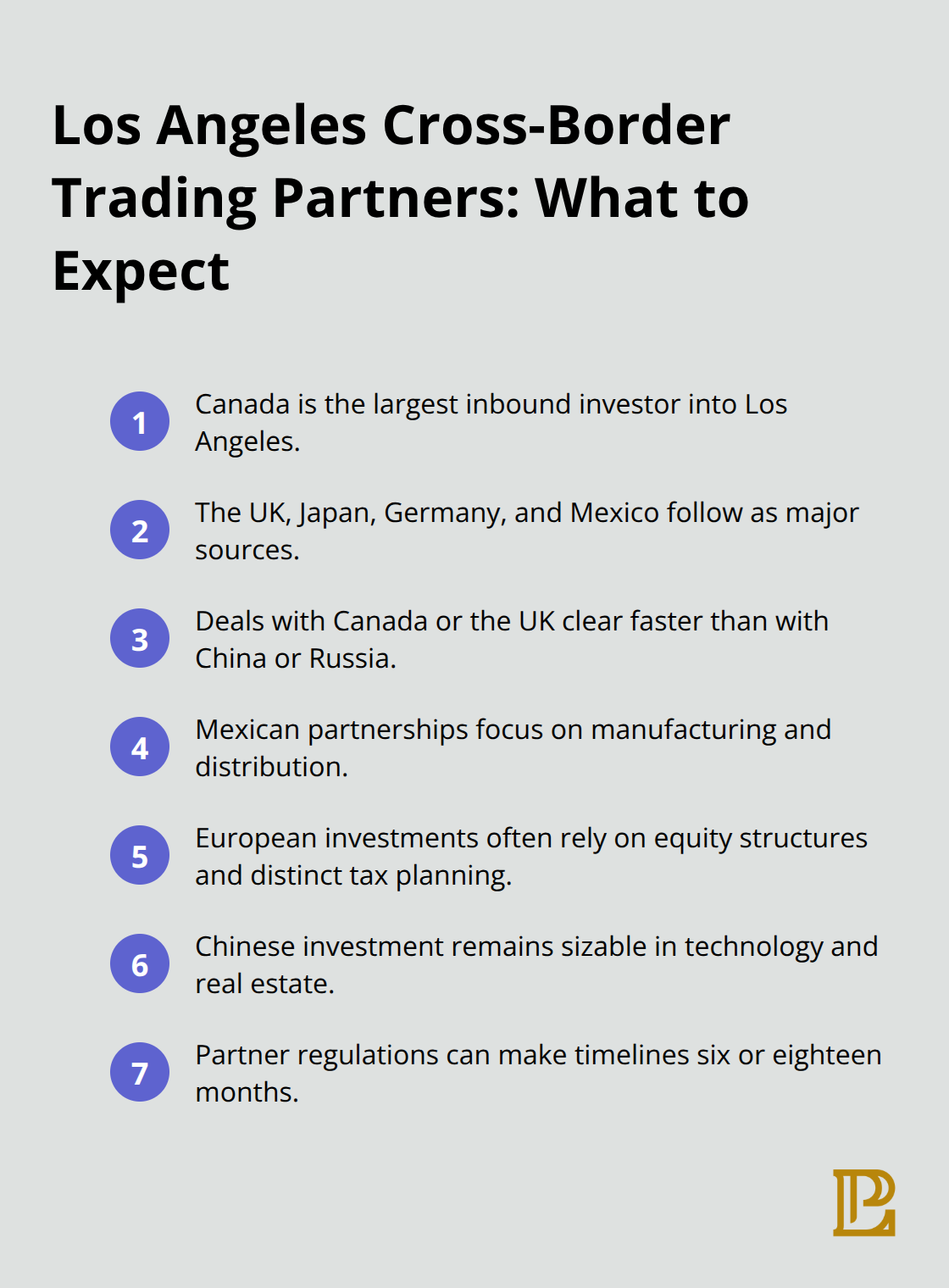
Deals involving Canada or the UK move faster through regulatory approval than transactions with China or Russia. Mexican partnerships tend to focus on manufacturing and distribution, requiring different tax planning than European equity investments. Your specific trading partner’s regulatory environment determines whether your deal closes in six months or eighteen.
Regulatory Complexity Multiplies with Each Border
Federal regulations create the foundation, but they’re only the beginning. The Committee on Foreign Investment in the United States reviews transactions involving foreign buyers of American assets, particularly in sensitive sectors like defense, telecommunications, and energy. This CFIUS process alone can add 30 to 90 days to your timeline. California state law then layers on additional requirements for real estate transactions and certain corporate activities. Add your target country’s regulations on top of that, and you’re managing three separate legal systems simultaneously. Many deals collapse not because the economics fail, but because parties underestimated the compliance burden.
Structuring Transactions Across Jurisdictions
Identifying regulatory obstacles before they derail negotiations separates successful deals from failed ones. Transaction structures that satisfy requirements across all jurisdictions involved demand careful planning from the outset. Foreign investment restrictions, tax treaties, and sector-specific rules all interact in ways that create unexpected complications. The timing of CFIUS filings, state-level approvals, and foreign government clearances must align precisely. Missteps in sequencing these approvals can cost months and millions in deal value.
Understanding these regulatory layers prepares you for the financial and tax strategies that actually make cross-border mergers and acquisitions work.
Structuring Cross-Border Deals for Tax Efficiency
How Tax Structure Determines Deal Profitability
The tax bill from a cross-border acquisition can exceed the purchase price if you structure the transaction incorrectly. Most companies in Los Angeles focus on deal economics and regulatory approval, then discover months later that tax liability destroys the deal’s profitability. The IRS taxes cross-border transactions differently depending on whether you acquire stock or assets, whether the seller is foreign or domestic, and which country’s tax treaty applies to your transaction.
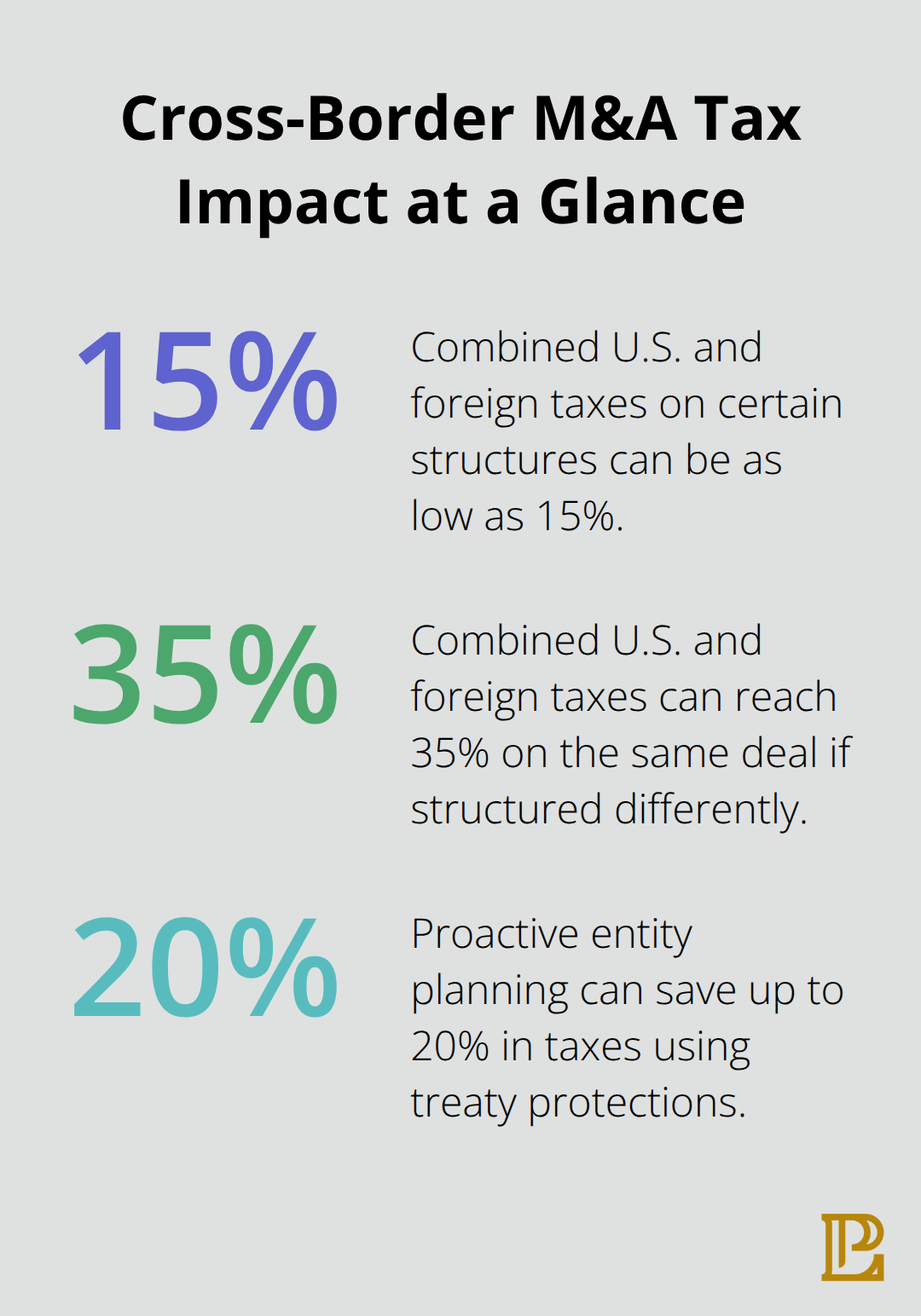
A stock purchase of a Canadian company triggers different withholding requirements than an asset purchase of a Mexican manufacturer. The difference between these structures can mean paying 15% or 35% in combined U.S. and foreign taxes on the same transaction.
Your deal structure must account for tax treaties between the United States and your target country.
Leveraging Tax Treaties and Entity Structures
The U.S. maintains favorable tax treaties with Canada, the UK, Germany, France, Japan, and Mexico that significantly reduce withholding rates on dividends and capital gains. Without treaty benefits, you pay ordinary income tax rates on repatriated earnings. Establishing the right entity structure before closing allows you to claim treaty benefits that won’t be available after the acquisition completes.
Many deals structured as direct foreign acquisitions could have saved 10-20% in taxes through an intermediate holding company or partnership structure that qualifies for treaty protections. This planning happens before you sign the purchase agreement, not after. The cost of restructuring post-closing far exceeds the cost of proper structuring upfront.
Uncovering Hidden Liabilities Through Thorough Due Diligence
Due diligence in cross-border transactions must extend far beyond financial statements and customer contracts. Foreign targets often operate under different accounting standards, labor laws, and regulatory compliance frameworks that create hidden liabilities. A German manufacturer might have pension obligations that don’t appear on U.S. financial statements but represent 15-30% of the company’s annual payroll costs.
Mexican operations frequently involve informal supplier relationships and cash-based transactions that won’t surface in standard financial audits. You need local counsel in the target country conducting parallel due diligence simultaneously with your U.S. team. This dual-track approach identifies problems that single-jurisdiction reviews miss entirely.
Managing Foreign Investment Restrictions by Sector and Buyer Origin
Foreign investment restrictions vary dramatically by sector and buyer nationality. Canadian and UK buyers face minimal restrictions purchasing U.S. companies, while Chinese and Russian investors encounter detailed CFIUS scrutiny even in non-sensitive sectors. Technology acquisitions involving encryption, artificial intelligence, or semiconductors trigger mandatory CFIUS filings regardless of buyer origin.
Real estate acquisitions by foreign nationals in California require separate state-level compliance beyond federal requirements. Companies underestimate how long CFIUS reviews take-30 days is the minimum, but sensitive transactions routinely extend to 90 days or longer. Filing early and providing complete information upfront prevents unexpected delays that derail closing timelines and deal financing.
These structural and regulatory decisions set the foundation for managing the operational and cultural challenges that emerge once you move toward closing.
Common Challenges in Cross-Border M&A
Currency Fluctuations Erode Deal Margins
Currency swings can wipe out deal margins faster than most acquirers anticipate. When you commit to acquiring a Canadian manufacturer for $50 million CAD, currency fluctuations between signing and closing can shift your actual cost by $3–5 million depending on how long the transaction takes. The Bank for International Settlements reported that currency volatility increased 40% between 2020 and 2024 across major trading pairs involving the dollar.
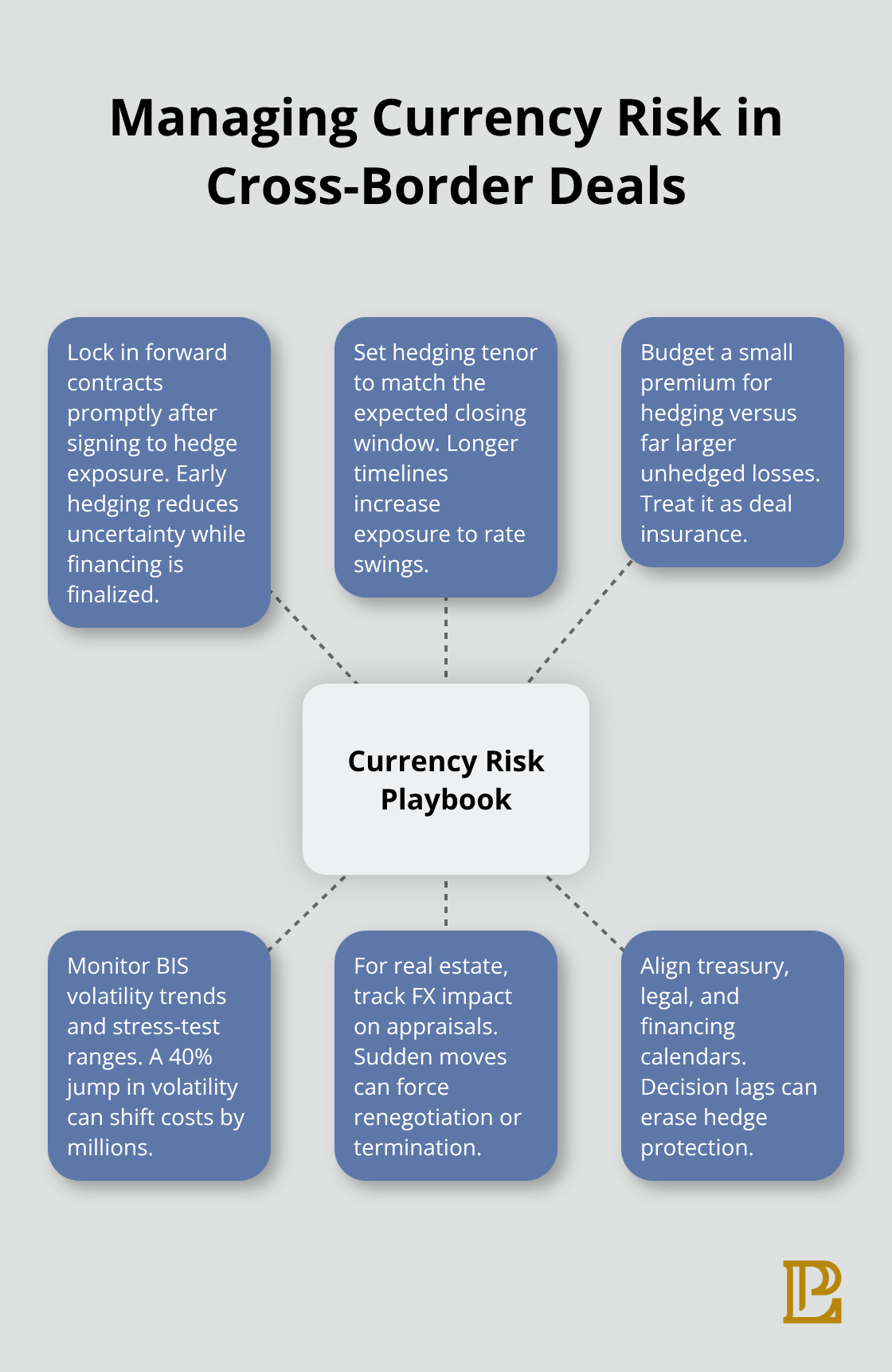
Most Los Angeles companies hedge currency exposure through forward contracts, but many wait too long to implement these protections. The optimal time to lock in exchange rates is immediately after signing the purchase agreement, not weeks before closing when deal financing might fall through anyway. You’ll pay a small premium for early hedging, but that cost is trivial compared to absorbing unexpected currency losses.
Real estate acquisitions involving foreign buyers face additional complexity because property valuations shift with currency movements, potentially triggering renegotiations or deal terminations if exchange rates move dramatically during due diligence.
Integration Failures Destroy More Value Than Regulatory Obstacles
Integration failures after closing destroy more cross-border deals than regulatory obstacles ever will. A 2023 Harvard Business Review study tracking 1,200 major acquisitions found that 70% failed to create intended shareholder value, with integration challenges accounting for roughly half these failures in cross-border transactions.
German manufacturing companies operate under works councils that give employees formal roles in management decisions-a structure that doesn’t exist in U.S. companies and creates immediate friction when you impose American management practices post-closing. Mexican operations frequently rely on relationship-based supplier networks and informal agreements that evaporate when new ownership arrives. Japanese subsidiaries often maintain separate accounting systems and reporting structures that don’t integrate smoothly with consolidated U.S. operations.
Assign Integration Leadership Before Closing
The solution requires assigning dedicated integration leadership before closing, not after. This person should spend time in the target country’s operations during due diligence, understanding how decisions actually get made versus how org charts suggest they should get made.
Navigate Parallel Compliance Tracks Simultaneously
Compliance obligations multiply across jurisdictions-labor law requirements differ dramatically, tax reporting deadlines don’t align, and environmental regulations in California impose standards that don’t exist in your target country. You’ll need local counsel maintaining ongoing presence in each jurisdiction for at least 18 months post-closing to navigate these parallel compliance tracks simultaneously. The cost of maintaining this presence pales in comparison to the expenses that arise when compliance failures trigger audits, penalties, or operational disruptions across multiple countries.
Final Thoughts
Los Angeles cross-border deals succeed when you treat regulatory compliance, tax planning, and integration as interconnected challenges rather than separate problems. The businesses that close transactions efficiently understand that CFIUS timelines, currency hedging, and post-closing integration all demand attention from day one, not after signing. Your competitive advantage comes from planning backward from closing and identifying which regulatory approvals you need, which tax structures minimize your liability, and which integration obstacles will emerge in your target country’s operating environment.
The volume of Los Angeles cross-border deals reflects real opportunity, and companies that execute these transactions well gain access to markets, talent, and revenue streams that domestic acquisitions cannot provide. The complexity is real, but it’s manageable when you approach it systematically. Sequence your due diligence and deal structuring to address obstacles before they become expensive surprises.
Contact Pierview Law to discuss your cross-border transaction strategy. The earlier you involve counsel in your planning process, the more value you’ll preserve through closing and beyond.