
A single unclear word in a real estate contract can cost you thousands of dollars or derail a deal entirely. We at Pierview Law have seen countless transactions in Hermosa Beach complicated by ambiguous language that both parties interpreted differently.
Real estate contract drafting requires precision at every step. The difference between a solid agreement and a problematic one often comes down to how carefully you define terms, conditions, and responsibilities.
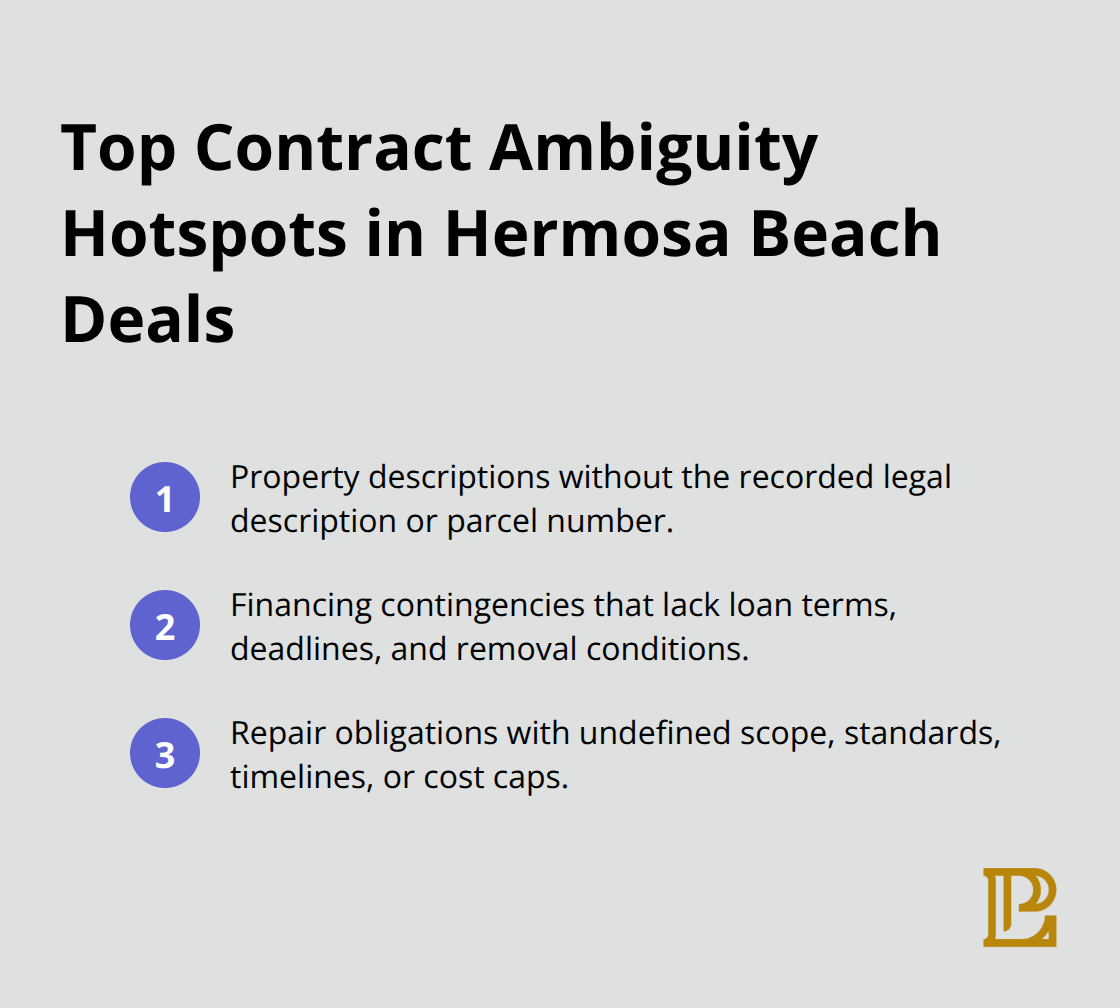
Where Ambiguity Hides in Real Estate Contracts
Property Descriptions That Fall Short
Property descriptions fail more often than you’d think. A street address alone is not enough-you need the legal description, parcel number, and exact boundaries. Buyers and sellers frequently interpret property lines differently when contracts lack precision. One Hermosa Beach transaction involved a buyer who thought they were purchasing a lot with specific square footage, only to discover the legal description included different parcels than expected. The contract stated “the property at 123 Main Street” without referencing the recorded legal description or assessor’s parcel number. When the title report arrived, it revealed the actual boundaries differed from what the buyer assumed. This single omission created weeks of delays and renegotiation.
Always attach the recorded legal description and parcel identifier directly to the contract. Do not rely on street addresses or informal property descriptions. The legal description must match exactly what the title company and county assessor have on file.
Financing Contingencies Without Teeth
Payment terms and contingencies create the second major trap. Many contracts use phrases like “financing contingency” without specifying the loan amount, interest rate cap, approval timeline, or what happens if the lender denies the application. One Hermosa Beach transaction included a contingency that simply stated “subject to buyer obtaining financing”-no deadline, no loan terms, no definition of what constituted a good-faith effort. The buyer dragged out the approval process for two months while the seller grew frustrated. The contract did not specify when the buyer had to remove the contingency or lose the property.
Vague financing language leaves both parties exposed. The seller cannot plan their next move, and the buyer faces uncertainty about their obligations. State the exact loan amount, the maximum interest rate the buyer will accept, the required down payment, and the specific date by which the buyer must obtain written loan approval or remove the contingency.
Repair Obligations That Invite Conflict
Responsibility for repairs and maintenance also gets buried in unclear language. Phrases like “seller to repair any defects” sound straightforward but fail when you need specifics. Which defects? Cosmetic or structural? Who determines the repair standard-the buyer, the inspector, or an independent contractor? One contract assigned “all necessary repairs” to the seller without defining the scope, timeline, or cost ceiling. The buyer later demanded $15,000 in foundation work; the seller claimed it was maintenance, not a defect requiring repair. The contract language was too vague to resolve the dispute.
Clear real estate contracts specify exactly which party handles which repairs, establish cost limits, and define what qualifies as a defect versus normal wear and tear. Set these terms before signing, not after discovery. Include a repair schedule that lists specific items, assigns responsibility, and caps costs so neither party faces unexpected financial exposure.
These three areas-property description, financing terms, and repair obligations-account for the majority of contract disputes in Hermosa Beach transactions. The next section covers the key elements that must appear in every contract to prevent these problems from taking root.
What Must Be Crystal Clear Before You Sign
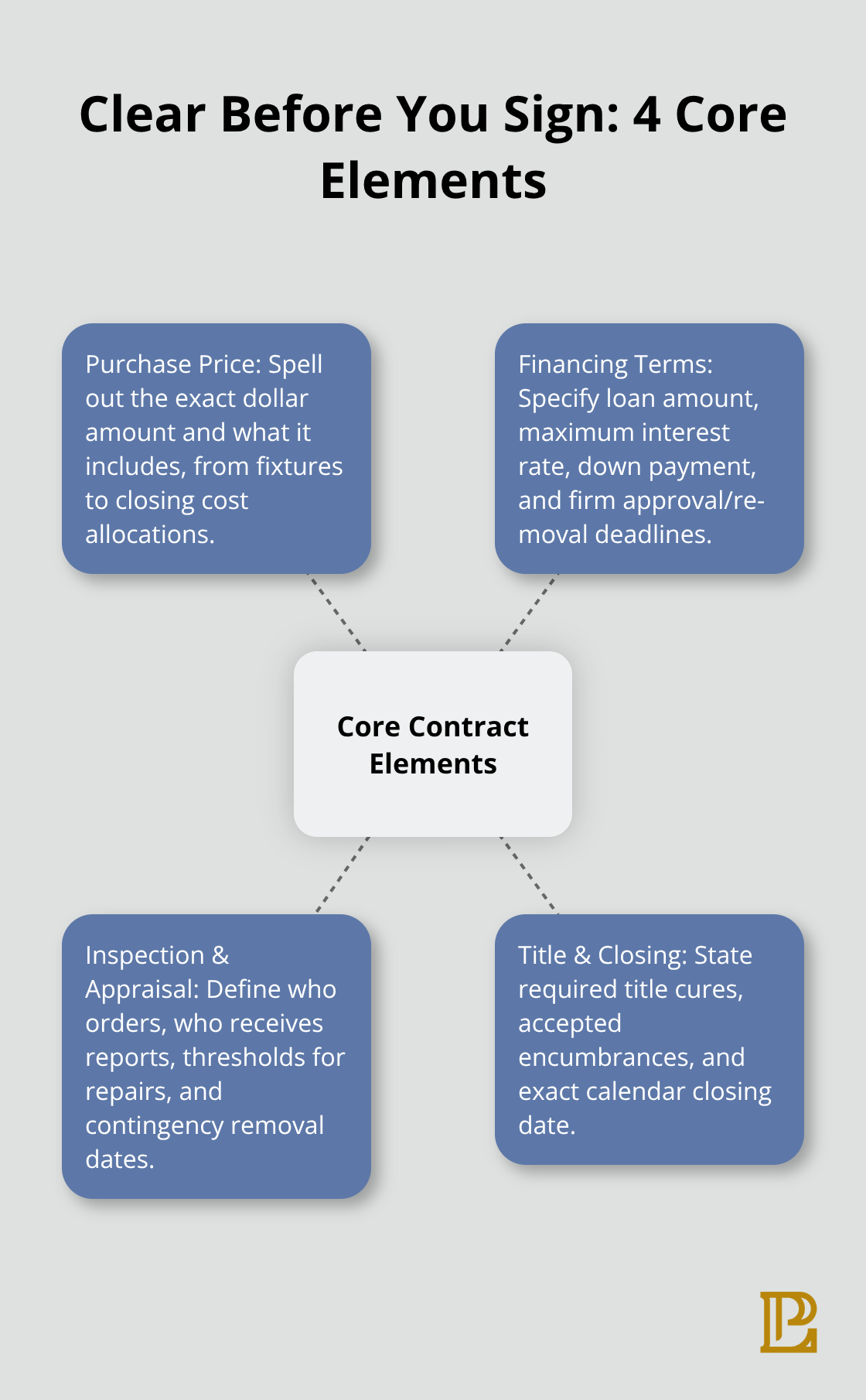
Every real estate contract in Hermosa Beach needs four non-negotiable elements locked down before signatures go on paper. Vague language in any of them will haunt you at closing.
Purchase Price and What It Covers
The purchase price seems obvious, but contracts fail when they do not specify exactly what that price includes. State whether it covers closing costs, who pays transfer taxes, and what happens if appraisals come in low. You must list the precise dollar amount, identify every cost allocation, and define what the buyer receives for that price down to fixtures, appliances, and any items staying in the property. One Hermosa Beach transaction created conflict because the contract stated a purchase price but left unclear whether the seller’s appliances transferred with the sale. The buyer assumed they did; the seller removed them before closing. A single sentence specifying “refrigerator, dishwasher, and range remain with the property” would have prevented the dispute entirely.
Financing Terms That Leave No Room for Delay
Financing terms demand equal clarity. Specify the loan amount, the maximum interest rate acceptable to the buyer, the required down payment percentage, and the exact date the buyer must obtain written loan approval or lose the property. Many Hermosa Beach transactions stall because contracts say “subject to financing” without stating when that contingency expires or what the buyer must do to satisfy the lender. One local transaction delayed six weeks because the contract contained no deadline for loan approval; the seller could not plan their move, and the buyer faced no pressure to finalize their application. The contract should require the buyer to submit a pre-qualification letter within five business days and written loan approval within 21 days, with specific consequences if those dates pass.
Inspection and Appraisal Conditions
Inspection and appraisal conditions must specify which party orders inspections, who receives reports, and what happens if problems surface. State whether inspections are contingent on the buyer’s satisfaction or limited to specific items, establish a dollar threshold for repair requests, and set a deadline for the buyer to remove the inspection contingency. This prevents the buyer from holding the property hostage with endless inspection demands while the seller waits in limbo.
Title Issues and Closing Timelines
Title issues require explicit treatment. Define what title defects the seller must cure, what encumbrances the buyer accepts, and whether liens or easements must be removed before closing. Many buyers discover after signing that a lien or easement exists and the contract language does not require the seller to clear it. Closing timelines must state the exact date funds transfer, documents are signed, and title changes hands; avoid phrases like “30 days after ratification” and instead write the specific calendar date. A 45-day timeline for Hermosa Beach residential transactions allows adequate time for title review, financing approval, inspections, and escrow coordination.
Each of these four elements should appear as separate, numbered sections in your contract with precise language and defined deadlines rather than buried in general terms that invite interpretation. Once you lock down these core terms, the next step involves the drafting practices that transform clear intent into enforceable language.
How to Draft Contracts That Courts Will Enforce
Replace Vague Language with Specific Terms
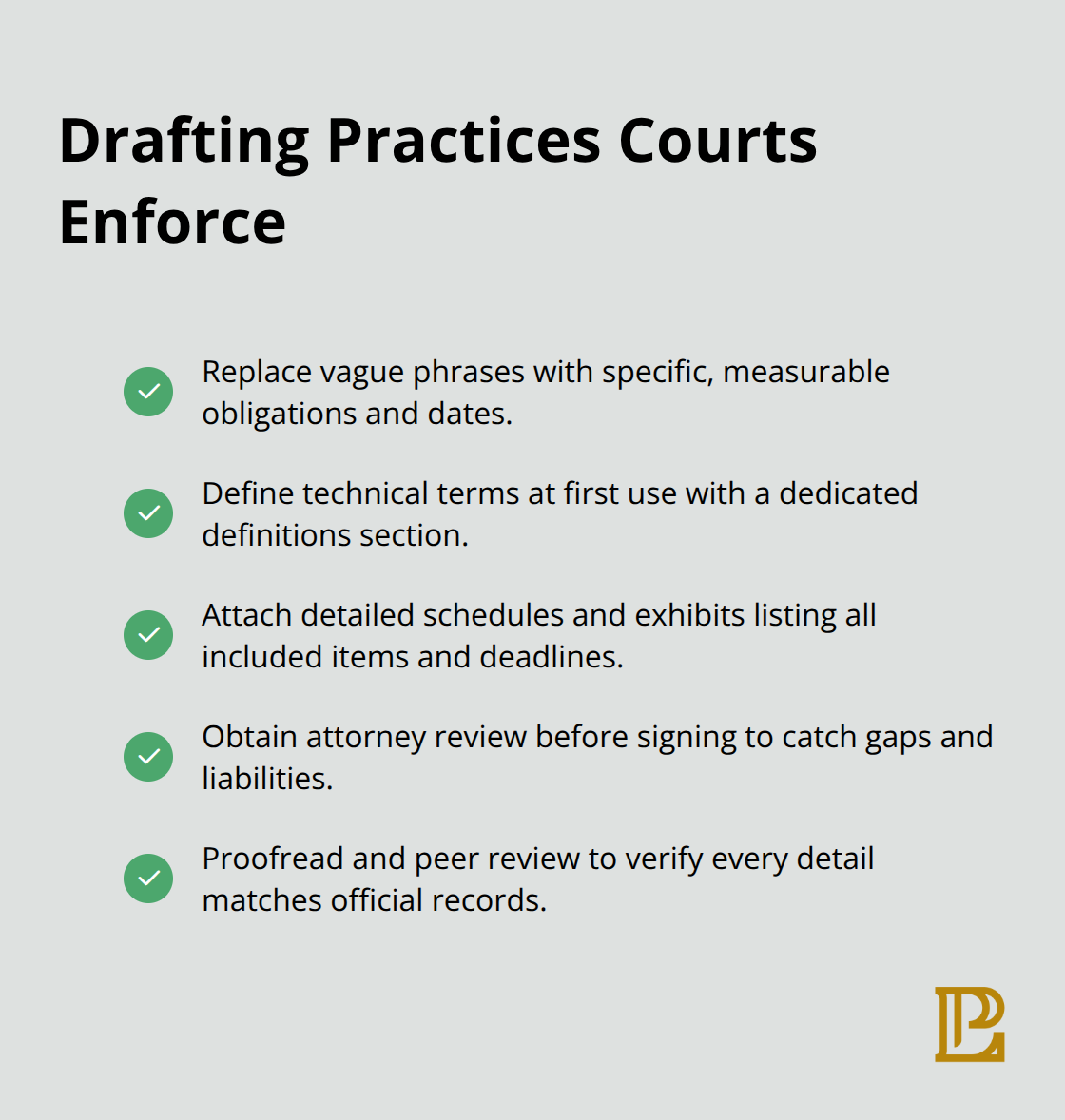
Precise language separates enforceable contracts from ones that dissolve into disputes. The difference lies not in how long your contract is but in how specifically you define every obligation, date, and condition. Hermosa Beach real estate transactions demand this precision because ambiguous language invites litigation, and litigation costs money neither party anticipated. Instead of stating “seller shall make repairs in a timely manner,” write “seller shall complete all repairs identified in the inspection report within 14 calendar days of receiving the report, using licensed contractors, at no cost exceeding $8,500 to the buyer.” The first phrase creates conflict; the second eliminates it.
Define Technical Terms Upfront
Define technical terms the moment they appear in your contract rather than assuming both parties understand them identically. If your contract references an appraisal, specify whether it means a full appraisal under FNMA standards or a broker price opinion. If you use the term easement, state which easement, for what purpose, and what rights it grants. Include a definitions section at the start of your contract that establishes what each key term means in the context of your specific transaction. This approach aligns with California Civil Code sections 1635-1656, which courts use to interpret contracts when disputes arise.
Attach Detailed Schedules and Exhibits
Attach detailed schedules and exhibits to your contract that itemize exactly what the buyer receives and what the seller retains. One Hermosa Beach transaction created conflict because the contract stated the seller would leave “personal property items” without listing them. The buyer expected furniture; the seller left only light fixtures. A simple attached schedule listing every item staying in the property-refrigerator, dining table, bedroom furniture, light fixtures-would have prevented the dispute entirely. Every abbreviation, technical specification, and conditional deadline must appear in writing with no room for interpretation.
Obtain Legal Review Before Signing
Have a real estate attorney review your contract before you sign, not after problems emerge. Courts have consistently held that written contract language controls over oral agreements or later explanations. This means what appears on paper at signing determines enforceability, not what either party claims they intended. A thorough legal review identifies vague terms, missing contingencies, and unprotected liability before you commit to the deal. In Hermosa Beach transactions, this review typically costs $500 to $1,500 and prevents disputes that cost 10 to 50 times that amount.
Verify Every Detail Through Proofreading
Proofreading matters more than most parties realize. Verify the legal description matches the county assessor’s records exactly, confirm all dates are calendar dates rather than relative timelines, and ensure every reference to an attached document actually appears in your file. A single typo in a property description or a missing exhibit can create enforceability questions that derail closing. Request peer review of your contract language, particularly if you drafted it yourself or used a template. Have someone unfamiliar with your transaction read it and confirm they understand every obligation, date, and condition identically to how you understand it.
If they interpret a term differently, that clause needs clarification before both parties sign.
Final Thoughts
Ambiguity in real estate contract drafting stems from three recurring mistakes: vague property descriptions that omit legal details, financing terms without defined deadlines or loan specifications, and repair obligations that lack scope or cost limits. These oversights create disputes that delay closings, drain both parties’ resources, and sometimes kill deals entirely. The cost of fixing ambiguous language after signing far exceeds the cost of drafting it correctly upfront.
Precise language protects your interests by eliminating interpretation disputes before they start. When you specify exact purchase prices, attach detailed schedules of included items, define technical terms, and set calendar dates rather than relative timelines, both parties operate from the same understanding. Courts enforce written contract language as written, not as either party later claims they intended, which means what appears on paper at signing determines your rights and obligations.
Working with a real estate attorney reduces risk by identifying ambiguous terms, missing contingencies, and unprotected liability before you commit to the transaction. In Hermosa Beach, a thorough legal review typically costs $500 to $1,500 and prevents disputes that cost exponentially more. We at Pierview Law handle real estate transactions throughout Los Angeles County, including title review, contract drafting, and closing representation for Hermosa Beach clients-contact us for a consultation on how clear contract language protects your transaction at pierviewlaw.com.