
Your business in Hermosa Beach has valuable assets that need protection. Patents, trademarks, copyrights, and trade secrets form the four types of intellectual property that safeguard what makes your company unique.
At Pierview Law, we help business owners understand how each type of IP protection works and why it matters for your bottom line. Without the right legal framework, your innovations and brand identity remain vulnerable to competitors.
1. Patents and How They Protect Inventions
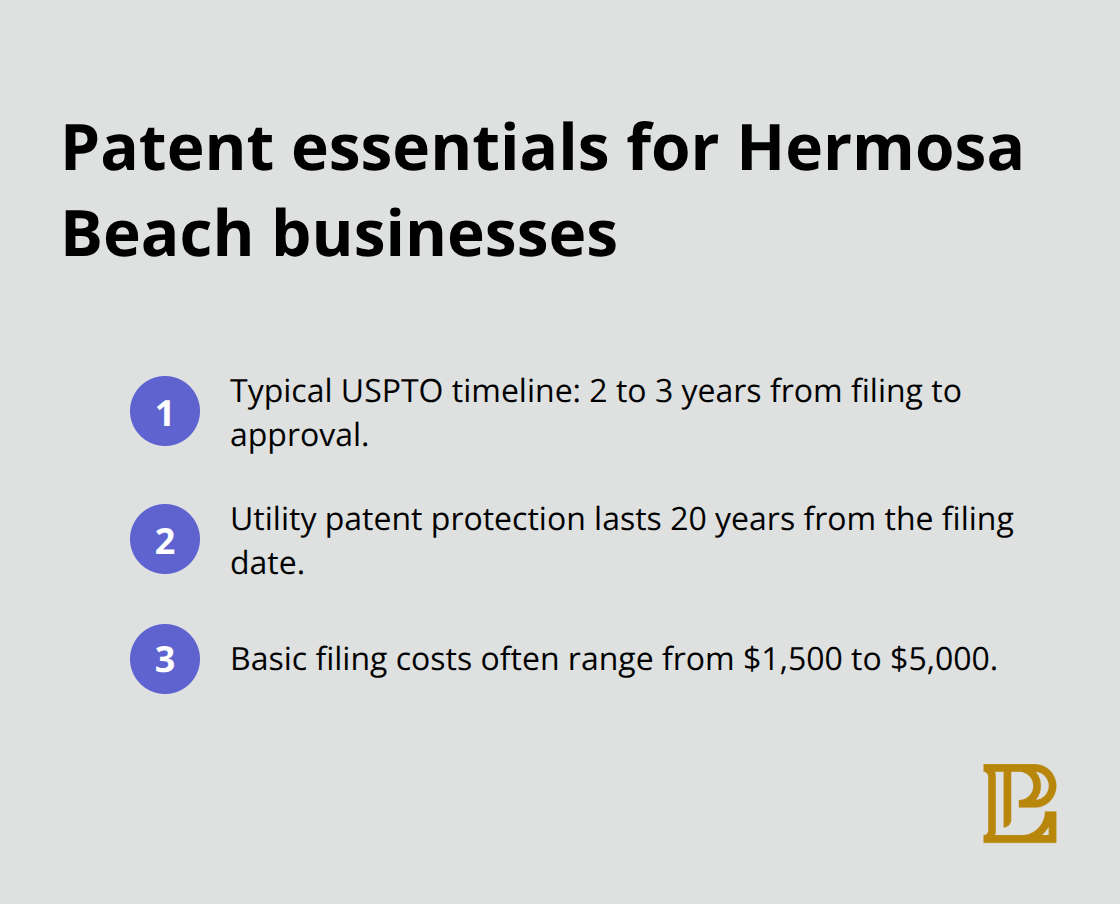
A patent grants you the exclusive right to make, use, and sell your invention for a limited time. The U.S. Patent and Trademark Office handles all patent applications, and the process typically takes between two to three years from filing to approval. Patents cover tangible inventions like mechanical devices, chemical compounds, software, and manufacturing processes, but not abstract ideas or naturally occurring phenomena. The protection period lasts 20 years from your filing date for utility patents, which is the most common type for business innovations. This means competitors cannot legally copy your invention during this window, giving you a genuine competitive advantage in your market.
The patent application process requires detailed technical documentation and claims that define exactly what your invention does and how it works. You must conduct a prior art search to confirm your invention is genuinely novel, as the Patent Office will reject applications for inventions that already exist or are obvious improvements on existing technology. Filing costs typically range from $1,500 to $5,000 for a basic patent application, though complex inventions can exceed this significantly.
Many Hermosa Beach business owners skip patent protection because they underestimate how quickly competitors can reverse-engineer their products. If your business relies on a unique process or product innovation, protecting that IP through patents becomes essential before you launch or share details publicly-and discussing your options with counsel experienced in intellectual property matters helps ensure you take the right protective steps for your specific situation.
2. Trademarks and Brand Protection
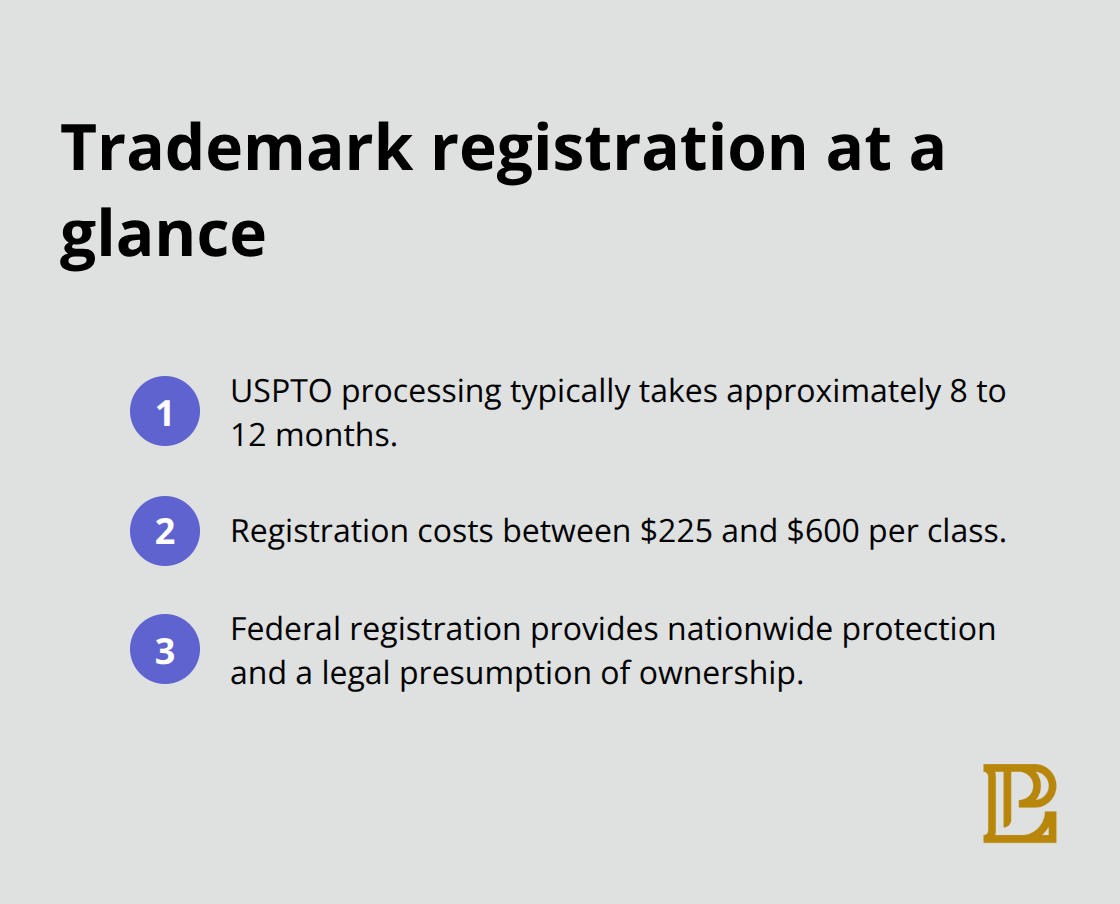
Your Hermosa Beach business name, logo, and visual identity are assets worth protecting through trademark registration. A trademark prevents competitors from using confusingly similar marks that could divert your customers or damage your reputation. The U.S. Patent and Trademark Office reports that trademark applications take approximately 8 to 12 months to process, though office actions requesting clarification can extend this timeline. Unregistered trademarks receive limited protection under common law, meaning you can claim rights only in geographic areas where you actively use the mark and have built brand recognition. Registered trademarks, by contrast, provide nationwide protection and create a legal presumption of ownership that makes enforcement significantly easier if someone infringes.
Registration costs between $225 and $600 per class through the USPTO, depending on how many product or service categories your business operates in. Many Hermosa Beach business owners delay trademark registration because they assume their business name alone provides automatic protection, but this misconception leaves them vulnerable when competitors register similar marks in adjacent markets or online. State trademark registration adds another layer of protection for purely local operations, though federal registration covers all 50 states and territories.
If you operate multiple business lines or plan to expand your product offerings, registering each distinct mark prevents costly rebranding later. Understanding which marks matter most for your business sets the foundation for protecting your brand identity across Los Angeles County and beyond-and copyright protection works similarly to safeguard the creative content your business produces.
3. Copyrights and Creative Works
Copyright protection attaches automatically the moment you fix your creative work in a tangible medium, whether that’s a website, marketing video, product design document, or software code. You own the copyright immediately upon creation without needing to register, publish, or include a copyright notice, though registration with the U.S. Copyright Office strengthens your legal position considerably. The Copyright Office reports that registered works receive statutory damages of $750 to $30,000 per infringement, or up to $150,000 for willful infringement, compared to actual damages alone for unregistered works. Registration costs only $65 per work and takes approximately four to six weeks for approval, making it one of the cheapest IP protections available. Most Hermosa Beach business owners mistakenly believe their creative content receives automatic protection without registration, leaving them unable to recover meaningful damages if someone steals their designs, copy, or software.
Registration becomes critical if you plan to enforce your rights in court, since federal courts require registration before you can sue for infringement of U.S. works. If a competitor copies your website layout, product photography, or marketing materials, you need proof of registration to pursue damages rather than merely stopping the infringing activity. Copyright covers only the specific expression of an idea, not the underlying concept itself, meaning someone can create a competing product but cannot copy your exact designs or written descriptions. Registering your copyrights before infringement occurs positions you to recover legal fees and statutory damages that make enforcement financially worthwhile. If your business produces content regularly or relies on proprietary designs, registration protects your creative investment and provides leverage when disputes arise with competitors or contractors in Los Angeles County-and trade secrets offer another layer of protection for information you keep confidential within your organization.
4. Trade Secrets and Confidential Information
California law defines trade secrets as information that derives independent economic value from not being generally known and is subject to reasonable efforts to maintain its secrecy. Under the California Uniform Trade Secrets Act, trade secrets encompass customer lists, pricing strategies, manufacturing processes, software algorithms, supplier relationships, and business methods that give you a competitive edge. The key distinction from patents and copyrights is that trade secrets require no registration and no public disclosure, meaning your protection depends entirely on how well you keep the information hidden. Courts in California have recognized that trade secret status applies to information ranging from specific vendor contacts to proprietary formulas, provided you take measurable steps to restrict access. Many Hermosa Beach business owners mistakenly believe that keeping information private automatically qualifies it as a trade secret, but California courts require you to demonstrate active protective measures.
Protecting trade secrets within your organization demands concrete action, not passive assumptions about confidentiality. You should implement written confidentiality agreements with all employees, contractors, and vendors who access sensitive information, specifying what constitutes a trade secret and the consequences of disclosure. Restrict physical and digital access through password protection, encryption, file permissions, and locked storage for documents containing proprietary information.
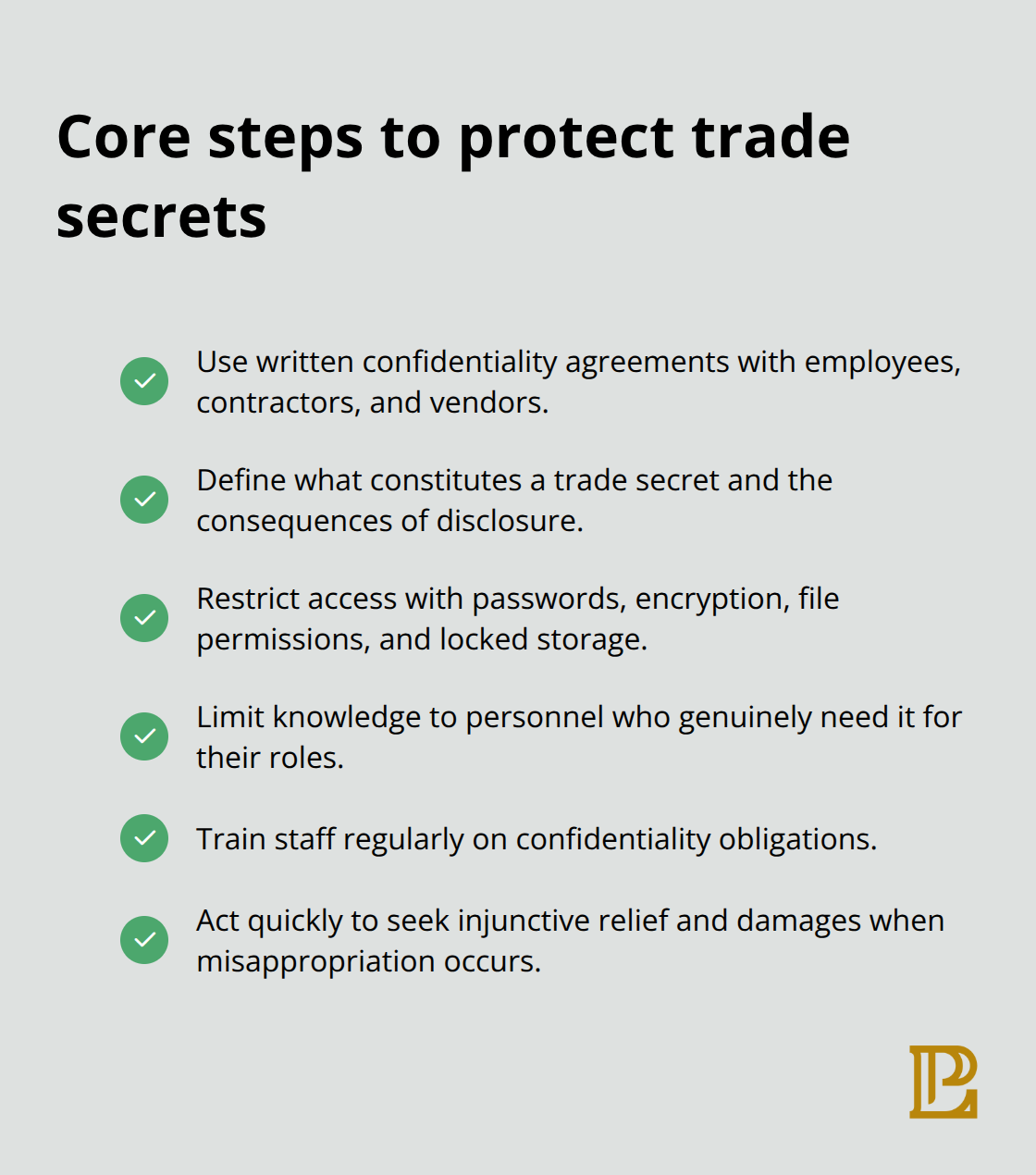
You should limit knowledge of your trade secrets to only those employees who genuinely need it for their job functions and train staff regularly on confidentiality obligations. When a former employee or business partner steals or misuses your trade secrets, California law allows you to seek injunctive relief to stop ongoing misuse, recover actual damages and profits gained through theft, and in cases of willful and malicious conduct, recover punitive damages up to twice the actual damages-making enforcement financially viable for businesses of any size operating in Los Angeles County.
Final Thoughts
Identifying your intellectual property starts with a straightforward inventory of what your business creates and owns. Walk through your operations and list every patent-eligible invention, branded asset, creative work, and confidential process that gives you a competitive advantage. Document when you created each item, who developed it, and what steps you’ve already taken to protect it. For the four types of intellectual property protection, gather technical specifications for patents, compile logos and slogans for trademarks, identify website content and designs for copyrights, and document customer lists and pricing formulas for trade secrets.
Knowing when to seek legal guidance prevents costly mistakes that could undermine your IP protection. You should consult with counsel before publicly launching a product with novel features, before registering trademarks across multiple categories, or before sharing sensitive business information with employees and contractors. If a competitor launches a suspiciously similar product or uses your brand name online, waiting too long to address the infringement weakens your legal position. When a former employee joins a competitor and you suspect they’re using your trade secrets, immediate legal action stops ongoing damage.
Enforcing your intellectual property rights in Los Angeles County requires understanding the practical steps available to you. Cease-and-desist letters often resolve trademark and copyright disputes without litigation, saving time and legal costs, while patent disputes typically require federal court involvement but frequently motivate settlement negotiations. Documenting infringement thoroughly-screenshots of copied content, product comparisons, customer complaints-strengthens your enforcement position regardless of which IP type you’re protecting. We at Pierview Law handle the civil litigation process from initial pleadings through trial or settlement, protecting your intellectual property rights when disputes escalate beyond negotiation.