
Intellectual property prosecution protects your business innovations through strategic legal processes. This involves securing patents, trademarks, and copyrights by navigating complex federal and state requirements.
We at Pierview Law understand how Hermosa Beach businesses need strong IP protection to compete in California’s dynamic market. The prosecution process requires precise timing and thorough documentation to maximize your intellectual property rights.
What Exactly Does IP Prosecution Cover
Intellectual property prosecution secures legal rights for your business innovations through formal registration processes. This proactive approach protects patents for inventions, trademarks for brand elements, and copyrights for creative works before problems arise. Patent prosecution requires technical applications that meet USPTO standards, while trademark prosecution establishes brand protection through federal registration. Copyright prosecution, though often automatic, benefits from formal registration to strengthen legal positions.
Three Core IP Types Worth Protection
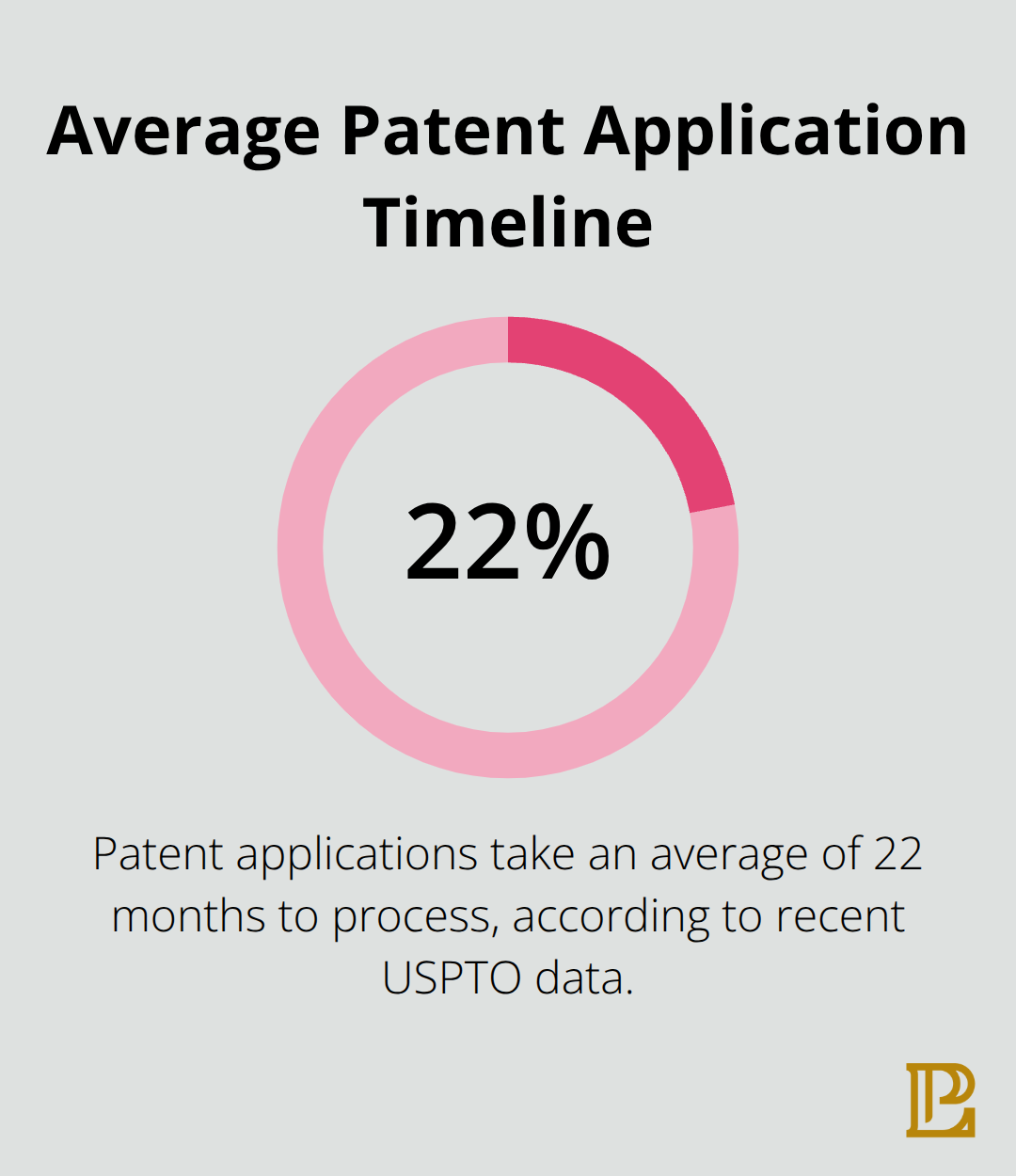
Patents protect functional innovations and demand detailed technical documentation within one year of public disclosure. The USPTO grants patents for 20 years, but the application process averages 22 months according to recent USPTO data.
Trademarks safeguard business names, logos, and slogans through federal registration that lasts indefinitely with proper maintenance. Copyright prosecution covers written materials, software code, and creative content (protection extends for the author’s lifetime plus 70 years). Trade secrets require different protection strategies through confidentiality agreements and internal security measures.
Prosecution vs Litigation Strategy
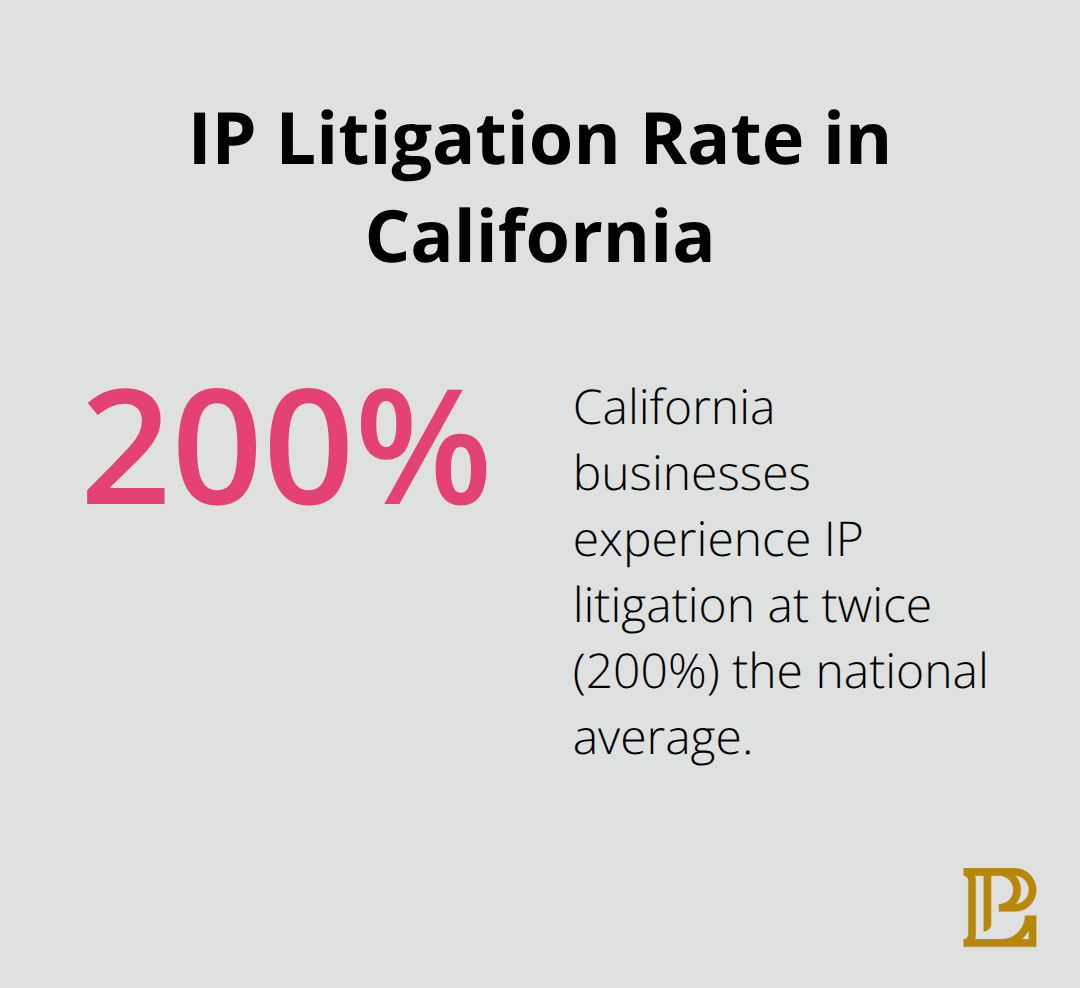
IP prosecution builds your legal foundation before conflicts occur, while litigation responds to infringement after disputes arise. Prosecution costs typically range from $5,000 to $15,000 per patent application, but litigation expenses often exceed $300,000 according to the American Intellectual Property Law Association. Smart businesses invest in prosecution early because defending unregistered IP rights proves significantly more expensive and less reliable in court. California businesses face IP litigation at twice the national average (making proactive prosecution particularly valuable for Hermosa Beach companies in competitive markets).
The California Filing Advantage
California offers additional state-level protections beyond federal registrations that many businesses overlook. State trademark registration provides extra legal remedies and can establish priority over later federal applicants. The filing process varies significantly between federal and state agencies, each with distinct requirements and timelines that affect your protection strategy.
How Does the IP Prosecution Process Work in California
Federal Filing Requirements and Deadlines
The USPTO demands specific documentation and fees that vary dramatically by IP type. Patent applications require technical drawings, detailed specifications, and claims that define your invention’s scope, with filing fees starting at $1,600 for small entities. Trademark applications need specimens that show actual commercial use, with federal registration costing $350 per class through the USPTO’s TEAS Plus system. Filing deadlines prove unforgiving: patent applications must be submitted within one year of public disclosure, while trademark applications require filing within six months of first commercial use according to USPTO regulations.
State Agency Procedures and Benefits
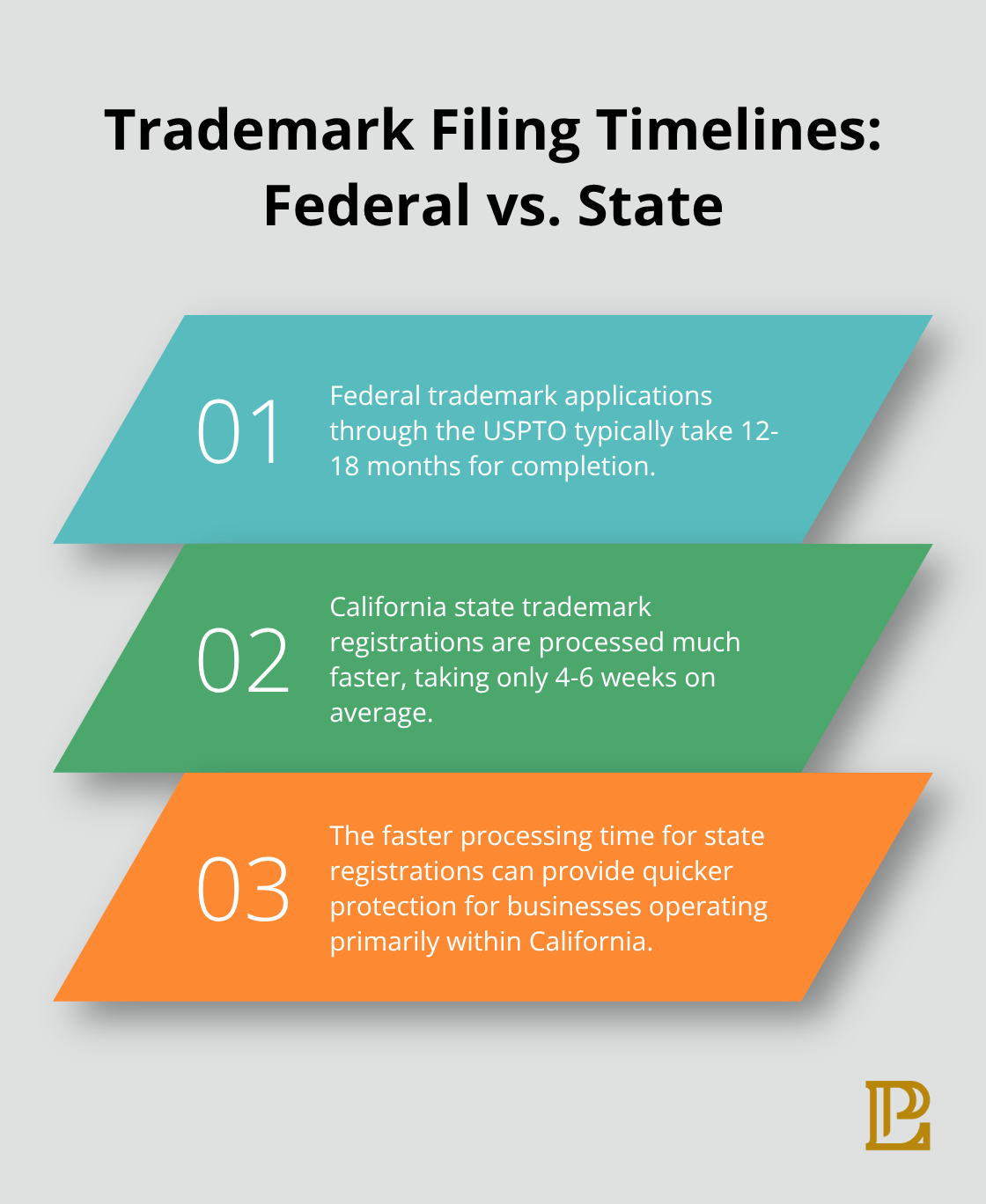
California’s Secretary of State handles state trademark registrations for $70 per application and offers faster processing than federal applications. State filings take 4-6 weeks compared to federal trademark applications that average 12-18 months for completion. California registration provides additional legal remedies beyond federal protections and can establish priority over later federal applicants. The state requires detailed descriptions of goods or services and proof of California use (making local business documentation essential for approval).
Response Strategies During Examination
USPTO examiners issue office actions within 6-8 months of filing and require responses within six months to avoid abandonment. Patent office actions typically challenge claim scope or cite prior art and demand technical arguments with claim amendments. Trademark office actions often involve likelihood of confusion rejections or specimen issues, with success rates dropping 40% when applicants respond without legal guidance according to USPTO statistics. California state examiners focus on compliance with state-specific requirements and may request additional documentation for trademark distinctiveness or geographic limitations within California markets.
Timeline Expectations and Processing Speed
Federal patent prosecution averages 22 months from application to final decision (though complex applications can extend beyond three years). Trademark prosecution through the USPTO typically requires 12-18 months when no complications arise. California state trademark applications process within 4-6 weeks but offer limited geographic protection compared to federal registration. These timelines directly impact your business strategy and competitive positioning in Hermosa Beach’s dynamic market environment where experienced legal guidance proves essential for navigating complex IP procedures.
Why Choose Hermosa Beach IP Attorneys
Local Market Knowledge Drives Better Results
Hermosa Beach attorneys understand the unique challenges that face local tech startups and creative businesses (challenges that generic downtown Los Angeles firms often miss). Local attorneys know that Hermosa Beach companies frequently develop mobile apps, digital marketing tools, and beach lifestyle products that require specific trademark strategies for California’s competitive market. We see firsthand how businesses in Manhattan Beach, Redondo Beach, and El Segundo face similar IP challenges, which gives us targeted experience that remote attorneys cannot match. California businesses experience IP litigation at twice the national average, which makes local knowledge about state-specific procedures and enforcement strategies absolutely essential for protection.
Direct Access Accelerates Protection Timeline
Face-to-face meetings eliminate communication delays that cost businesses valuable deadlines and market opportunities. Patent applications must be submitted within one year of public disclosure, and trademark applications require submission within six months of first commercial use according to USPTO regulations. Remote attorneys often miss critical details during phone consultations that could strengthen your application or identify potential conflicts. Local attorneys can review physical prototypes, visit your business location, and understand your market position in ways that distant firms cannot replicate. The USPTO reports that applications with incomplete documentation face 40% higher rejection rates (which makes thorough initial consultations absolutely essential for success).
California State Law Mastery Saves Money
California’s Secretary of State handles state trademark registrations for $70 per application with 4-6 week processing times, but most out-of-state attorneys focus exclusively on federal applications that cost $350 per class and take 12-18 months. California Civil Code Section 2778 requires specific language in indemnification agreements that many generic contracts miss, which leads to unenforceable protection clauses. The California Uniform Trade Secrets Act offers unique remedies for businesses that properly document confidential information, but these protections require precise contract language that varies significantly from other states. Local attorneys understand that California Labor Code Section 2870 limits employee invention assignments to work-related creations, which affects how businesses structure employment agreements and IP ownership transfers in ways that can dramatically impact your competitive position.
Final Thoughts
Intellectual property prosecution forms the foundation of business protection in Hermosa Beach’s competitive market. Companies that invest in proper prosecution early avoid the costly litigation that affects California businesses at twice the national average. The process demands precise timing, technical knowledge, and understanding of both federal USPTO requirements and California state regulations.
The right attorney requires local market knowledge, direct accessibility, and mastery of California-specific IP laws. Attorneys who understand Hermosa Beach’s tech startups and creative businesses provide targeted strategies that generic firms cannot match. Face-to-face consultations eliminate communication delays that often cause missed deadlines and weaken applications.
Your next step involves an IP audit to identify unprotected assets and potential vulnerabilities (document your innovations, brand elements, and creative works before competitors enter your market space). Pierview Law provides comprehensive intellectual property services alongside business law and real estate support for Hermosa Beach companies. Schedule a consultation to develop a prosecution strategy that protects your competitive advantages and positions your business for long-term success in California’s dynamic marketplace.