
Mergers and acquisitions integration determines whether deals create value or destroy it. Statistics show that 70% of M&A transactions fail to achieve their intended synergies due to poor integration planning.
We at Pierview Law have guided Hermosa Beach businesses through complex M&A processes. The legal framework and strategic execution must align perfectly to avoid costly mistakes that can derail entire transactions.
Legal Framework for Mergers and Acquisitions
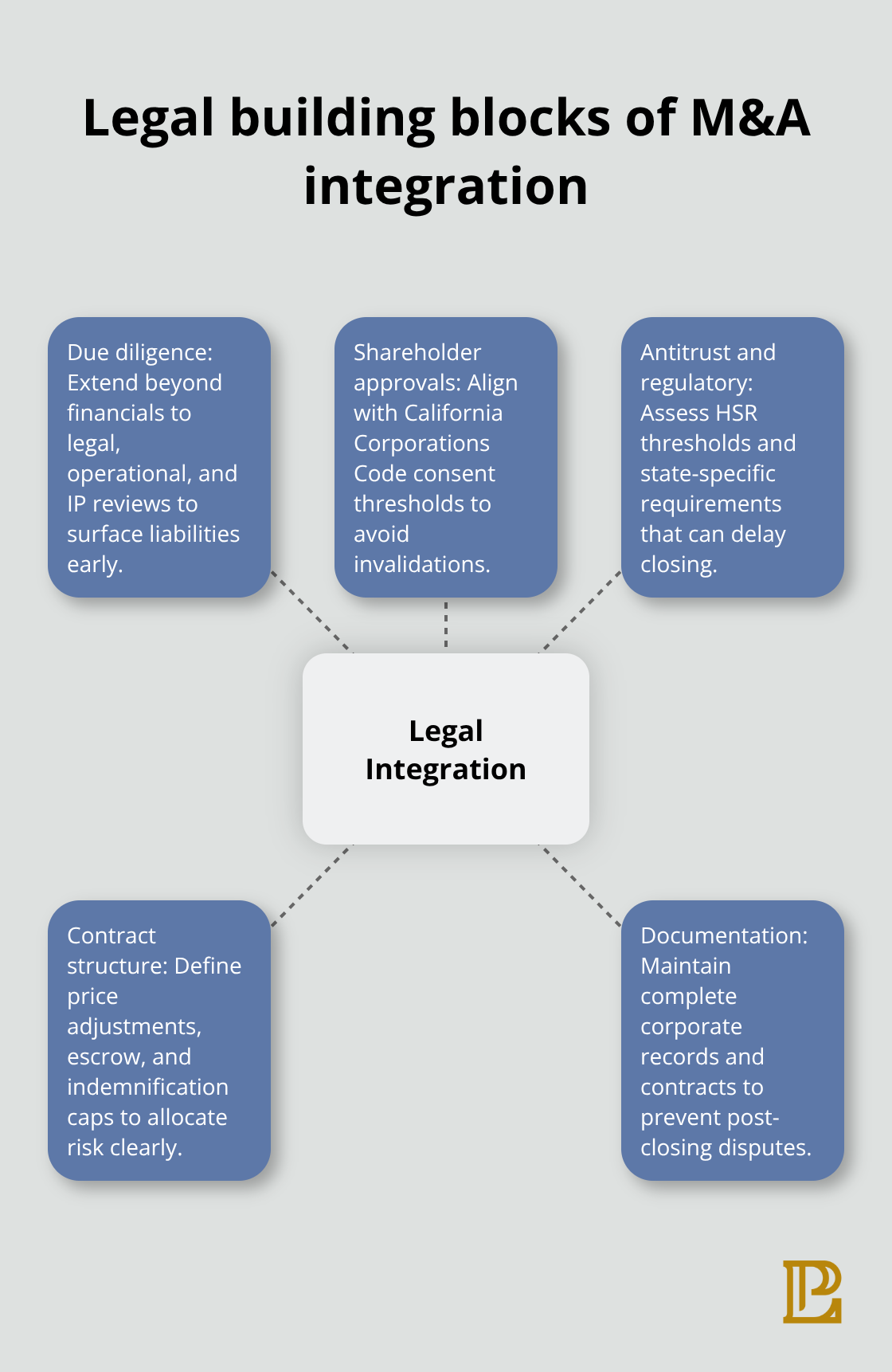
The legal foundation of M&A integration begins with comprehensive due diligence that extends beyond basic financial reviews. California businesses must provide detailed documentation including corporate governance records, material contracts, employment agreements, and intellectual property portfolios. The California Corporations Code mandates shareholder approval for major transactions, with specific consent thresholds that vary based on transaction structure. Asset purchases typically face fewer regulatory hurdles than stock acquisitions, but both demand meticulous documentation to prevent post-closing disputes.
Due Diligence Requirements and Documentation
Companies must compile extensive records that demonstrate corporate compliance and operational integrity. Financial statements require audited versions spanning three years, while legal documentation must include all material agreements exceeding $50,000 in value. Employment records need complete personnel files, benefit plan documents, and any pending litigation or regulatory investigations. Intellectual property portfolios demand current registrations, licensing agreements, and freedom-to-operate analyses that protect against infringement claims.
Regulatory Compliance and Antitrust Considerations
Antitrust review applies to transactions that meet specific thresholds under the Hart-Scott-Rodino Act. Deals exceeding $101 million in value trigger mandatory federal filing requirements, with review periods that extend 30 days for initial submissions. California imposes additional regulatory layers including state-specific labor law compliance, particularly for companies that relocate operations post-merger. The California Revised Uniform Limited Liability Company Act creates complex ownership transfer requirements that can delay closings by months without proper preparation.
Contract Negotiation and Transaction Structure
Stock sales versus asset purchases create dramatically different legal obligations and risk profiles. Stock transactions transfer all corporate liabilities (including unknown contingent obligations), while asset purchases allow selective liability assumption. Contract terms must address purchase price adjustments, escrow arrangements, and indemnification caps that typically range from 10-20% of transaction value. These structural decisions directly impact how teams approach the integration process and operational alignment that follows the legal closing.
Key Steps in the M&A Integration Process
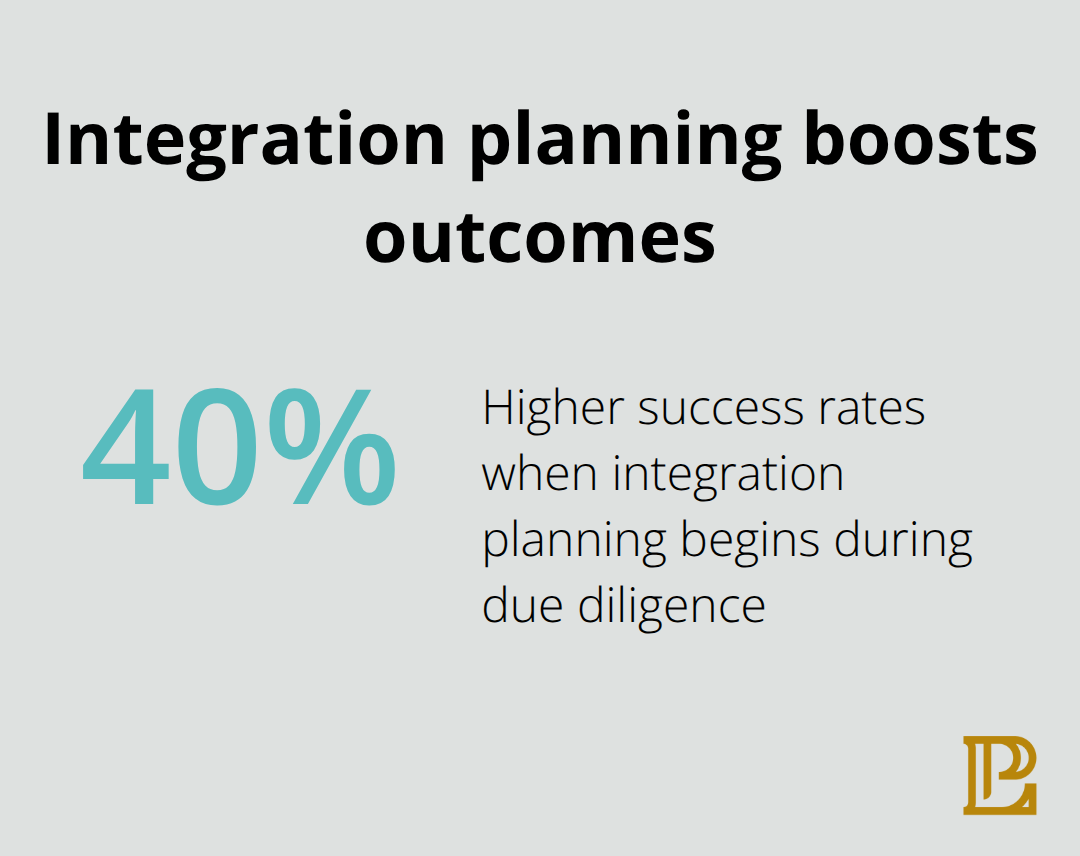
Integration success depends on decisions made months before closing occurs. Companies that begin integration planning during due diligence achieve 40% higher success rates than those that wait until post-closing. The three-month period leading to closing presents the most critical window for establishing operational frameworks that will govern the combined entity.
Pre-Closing Planning and Timeline Development
Successful acquirers create detailed 100-day integration plans that map specific milestones and accountability structures. Dell’s acquisition of EMC demonstrates this approach – they established cross-functional integration teams 90 days before closing and achieved $1.7 billion in cost synergies within 18 months. Integration plans must address IT system consolidation schedules, employee retention programs, and customer communication strategies.
California labor laws require 60-day advance notice for plant closures or mass layoffs, which makes timeline precision mandatory for Hermosa Beach businesses. The integration team should include representatives from legal, HR, IT, and operations departments with weekly progress reviews and escalation protocols for roadblocks.
Cultural Assessment and Employee Communication
Cultural misalignment destroys more deals than financial miscalculations. Research from Bain shows that 83% of failed integrations stem from unresolved cultural conflicts between merging organizations. Companies must conduct formal cultural assessments that examine communication styles, decision-making processes, and performance management systems.
The assessment should identify specific fault lines where cultures clash and develop bridging strategies before employees from both organizations interact. Employee retention rates drop 25% during the first year post-merger without proactive cultural integration efforts. Communication plans must address employee concerns directly through town halls, one-on-one meetings with key personnel, and transparent updates about role changes and reporting structures.
Systems Integration and Operational Alignment
Systems integration failures cost companies an average of $10 million in lost productivity and customer defections. The most successful integrations prioritize sales and customer data consolidation first, followed by financial reporting systems and HR platforms with dedicated project management teams overseeing each phase.
Companies should establish data warehouses that centralize information from both organizations within 60 days of closing. This approach prevents decision-making delays and maintains customer service levels during the transition period. IT integration requires defined rollback procedures for critical system failures and continuous monitoring of system performance metrics.
These operational foundations set the stage for addressing the complex legal challenges that inevitably arise during the integration process.
Common Legal Challenges During M&A Integration
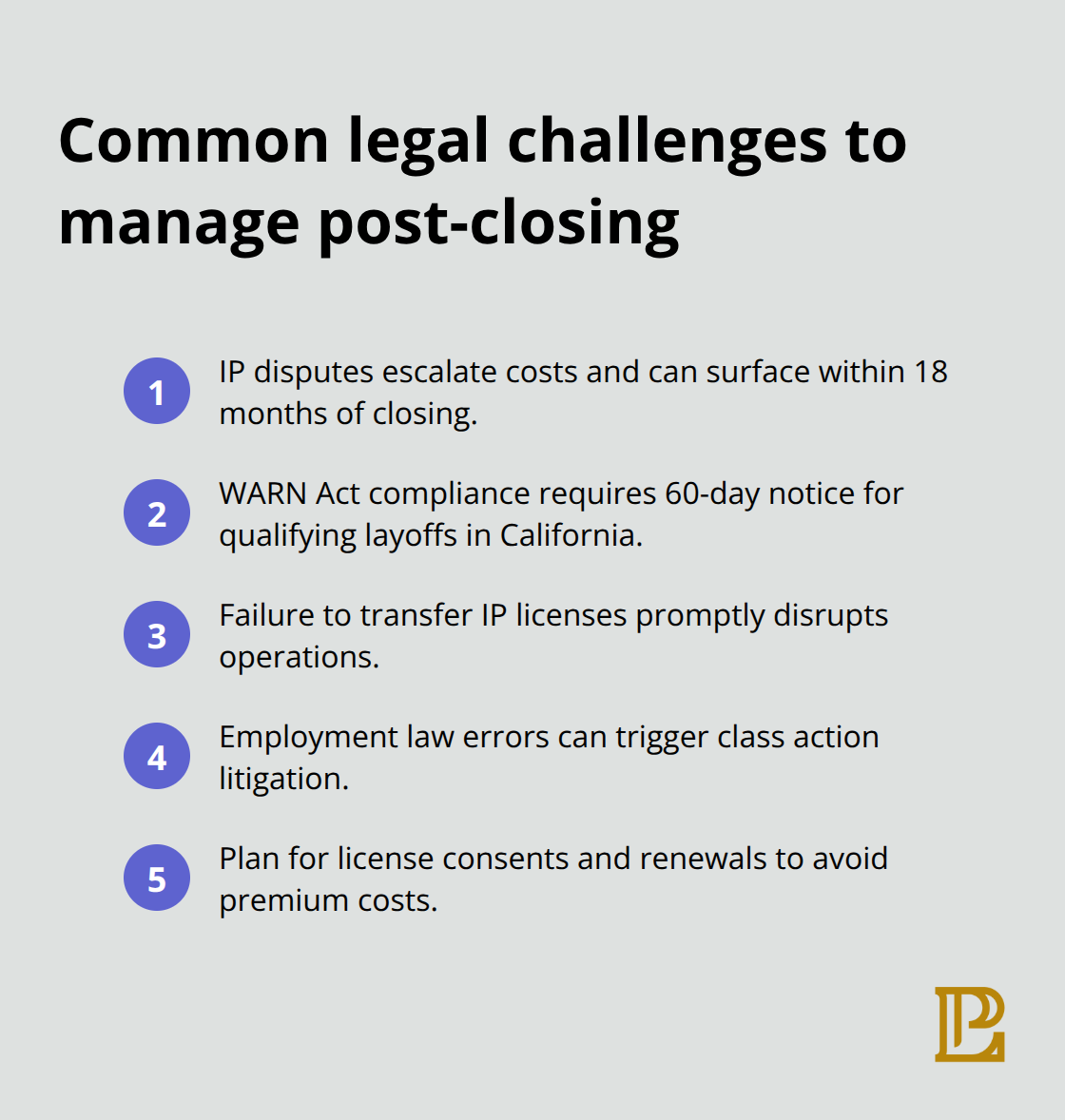
Legal challenges during M&A integration create hidden costs that average $15 million per transaction according to Deloitte research. Intellectual property disputes emerge as the most expensive problem, with patent infringement claims filed within 18 months of closing in 23% of technology acquisitions. Employment law violations follow closely, particularly in California where the WARN Act requires 60-day advance notice for layoffs that affect 50 or more employees. Companies that fail to properly transfer IP licenses face immediate operational disruptions, while employment law missteps trigger class action lawsuits that can exceed the original transaction value.
Intellectual Property Transfer and Protection
IP transfer failures shut down product lines and trigger customer defections within weeks of closing. Software licenses present the biggest risk because most enterprise agreements prohibit assignment without vendor consent, which costs companies an average of 15% premium on renewal terms. Patent portfolios require formal assignment documents filed with the USPTO within 90 days, while trade secrets need new confidentiality protocols that prevent knowledge leakage during employee transitions. The acquiring company must audit all IP assets during due diligence and secure written transfer agreements before closing, because post-closing IP disputes take an average of 24 months to resolve and cost $3.2 million in legal fees.
Employment Law Compliance and Benefits Integration
Benefits integration creates immediate legal exposure when companies fail to maintain COBRA continuation coverage during system transitions. California’s strict labor laws require separate analysis for each employee classification, with different rules for exempt versus non-exempt workers that affect overtime calculations and meal break requirements. The integration team must harmonize vacation accrual policies within 30 days because conflicting policies create wage and hour liability under California Labor Code Section 227.3. Companies should consolidate benefits platforms before the first payroll cycle to prevent compliance gaps that trigger Department of Labor investigations.
Liability Management and Risk Allocation
Stock purchases transfer all corporate liabilities (including unknown environmental claims and product liability exposure), while asset deals allow selective liability assumption through specific contract provisions. Indemnification agreements must include survival periods that match statute of limitations for different claim types – typically 3 years for general representations and 6 years for tax matters. The buyer should demand escrow amounts equal to 15-20% of purchase price to secure indemnification obligations, because collecting damages from former shareholders proves difficult once funds disperse. Purchase price adjustment mechanisms need defined calculation methods and dispute resolution procedures that prevent post-closing litigation over earnout payments and working capital adjustments.
Final Thoughts
Successful mergers and acquisitions integration demands early preparation that starts during due diligence, complete legal compliance that covers IP transfers and employment law requirements, and systematic operational alignment that focuses on data consolidation and cultural integration. Companies that implement these strategies achieve 40% higher success rates and realize intended synergies within 18 months. The long-term benefits extend beyond cost savings to include expanded market reach, enhanced technological capabilities, and strengthened competitive positions.
Properly executed integrations create sustainable revenue growth through cross-selling opportunities and operational efficiencies that compound over time. Complex M&A transactions require legal guidance from the initial due diligence phase through post-closing integration challenges. California businesses face additional regulatory hurdles that demand careful navigation to avoid costly compliance failures.
We at Pierview Law provide comprehensive business law services for Hermosa Beach companies that navigate M&A processes. Our team understands the regulatory requirements specific to California businesses and delivers practical solutions that protect your interests throughout the transaction lifecycle (including contract drafting, entity formation, and civil litigation support). Contact Pierview Law today to discuss your M&A integration needs.