
Corporate restructuring law affects thousands of business owners in Hermosa Beach and beyond. Whether you’re merging with another company, spinning off a division, or navigating bankruptcy, the legal landscape is complex and unforgiving.
At Pierview Law, we’ve guided countless businesses through these transitions. This guide walks you through the essential steps, legal requirements, and pitfalls to avoid.
The Three Main Paths to Restructuring
Mergers and Acquisitions Drive Rapid Integration
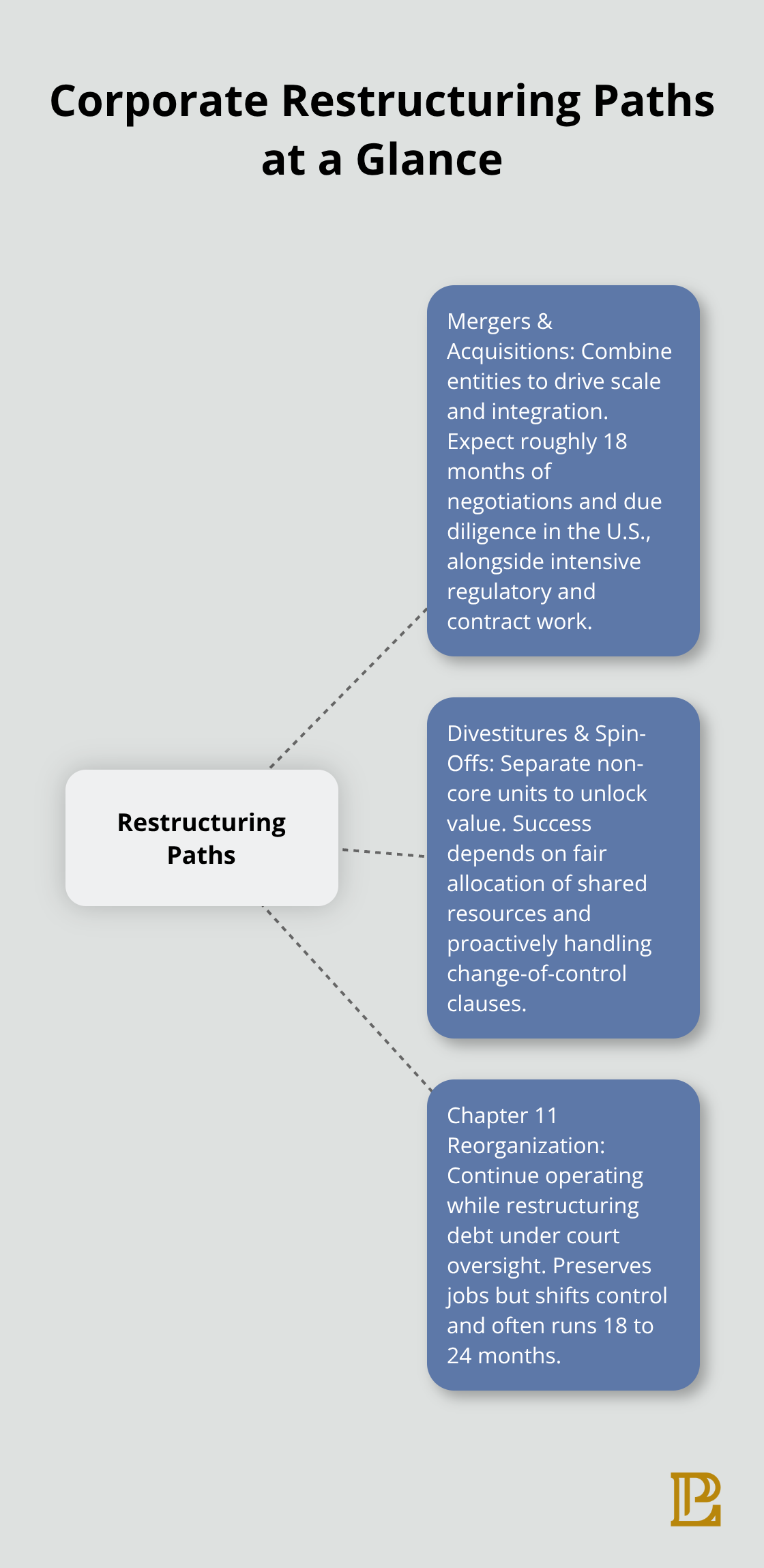
Mergers and acquisitions represent the most aggressive form of restructuring. When two companies combine or one acquires another, the legal complexity multiplies instantly. According to data from Refinitiv, the average M&A deal in the United States involves 18 months of negotiations and due diligence before closing. During this period, you’ll face regulatory filings, shareholder approvals, and contract assignments that can derail the entire process if mishandled.
The acquiring company assumes the target’s liabilities-both known and unknown-which is why indemnification clauses matter more than most business owners realize. Deals collapse when the acquiring party discovers undisclosed environmental liabilities or pending litigation after signing. You cannot skip due diligence. Have your legal team conduct exhaustive searches of public records, litigation databases, and regulatory filings before committing capital.
Divestitures and Spin-Offs Unlock Value Through Separation
Divestitures and spin-offs take the opposite approach. Instead of combining businesses, you separate them. A spin-off creates an independent company from a division or subsidiary, while a divestiture simply sells off the asset or unit. This strategy works when a business unit no longer aligns with your core operations or when separating it unlocks shareholder value.
Private equity firms use this tactic constantly-they acquire a conglomerate, spin off underperforming divisions, and sell them separately for higher multiples. The challenge lies in allocating shared resources, contracts, and employee benefits fairly between the separating entities. Contracts often contain change-of-control clauses that trigger termination or renegotiation when ownership shifts. Identifying these provisions early prevents operational disruptions.
Chapter 11 Reorganization Preserves Operating Businesses
Bankruptcy and reorganization represent the final option when financial distress becomes unavoidable. Chapter 11 reorganization allows a business to continue operating while restructuring debts under court supervision, whereas Chapter 7 leads to liquidation. The choice depends entirely on whether the business has viable operations worth preserving.
Chapter 11 is expensive-legal fees alone typically run between $500,000 and $2 million for mid-sized companies, according to the American Bankruptcy Institute-but it preserves jobs and maintains customer relationships. The automatic stay that comes with filing halts creditor collection efforts immediately, giving you breathing room to negotiate payment plans. However, Chapter 11 also means surrendering significant control to the court and creditors’ committee, and the process typically takes 18 to 24 months.
Evaluating Viability and Stakeholder Cooperation
If your business cannot generate positive cash flow even with debt relief, Chapter 11 becomes a prolonged death spiral. Hermosa Beach businesses facing restructuring decisions need clarity on which path actually fits their situation. The decision hinges on three factors: whether the business generates positive cash flow, whether key contracts can survive the transition, and whether stakeholders will cooperate with the plan.
Getting this wrong costs money and time you don’t have. Once you’ve identified which restructuring path makes sense for your company, the next challenge emerges: understanding the legal requirements that govern each option and protecting your interests throughout the process.
Legal Protections You Cannot Afford to Ignore
Regulatory Filings Create Your First Deadline
Regulatory approvals create the first bottleneck in most restructurings. If you’re merging two companies in California, you’ll face Hart-Scott-Rodino Act filings with the Federal Trade Commission if the deal exceeds $111 million in value as of 2025. Missing this filing deadline can void the entire transaction or trigger criminal penalties.
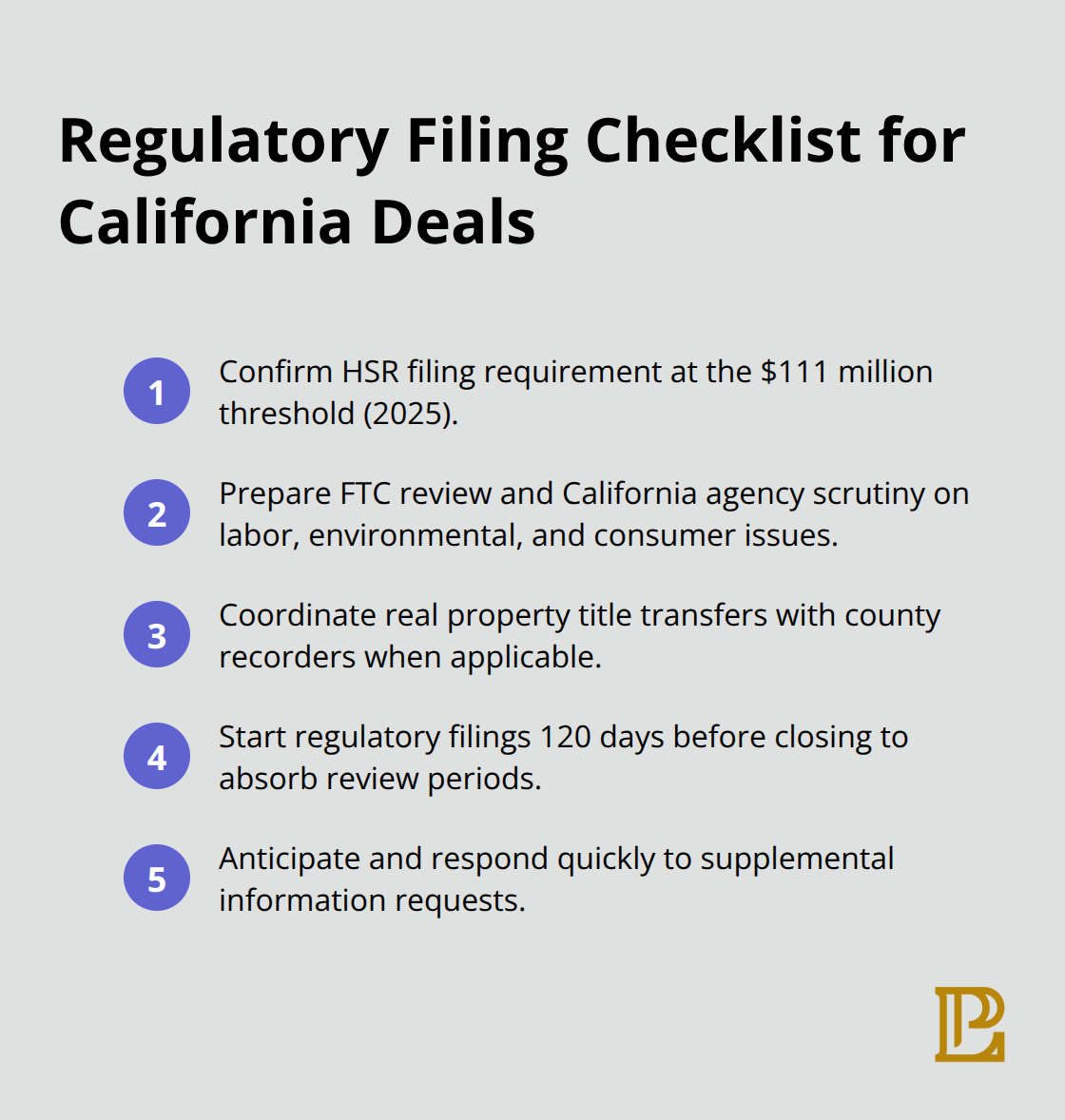
Beyond federal requirements, California imposes additional scrutiny on deals affecting labor, environmental compliance, and consumer protection. The California Department of Justice reviews certain transactions, and if your restructuring involves real property, title transfers require careful coordination with county recorders. Start regulatory filings 120 days before your intended closing date-this timeline accounts for FTC review periods, state agency responses, and unexpected requests for additional documentation.
Creditors and Secured Lenders Hold Blocking Power
Stakeholder rights create the second major vulnerability. Creditors, secured lenders, employees, and shareholders all maintain legal claims that survive restructuring unless you explicitly address them in your plan. Secured creditors hold collateral and can block Chapter 11 plans if their interests aren’t protected, while unsecured creditors vote on reorganization plans and can derail deals if they feel shortchanged. Employment contracts often contain change-of-control provisions that automatically terminate when ownership shifts, triggering severance obligations and potential litigation from departing executives. Customer contracts frequently include similar clauses-losing a major customer during restructuring can collapse your financial projections entirely.
Contract Assignments Require Written Consent
Contract assignments demand explicit consent from the other party in most cases; you cannot simply transfer obligations to a new entity without triggering breach claims. Identify every material contract, review its change-of-control language, and obtain written consent from counterparties before closing. This step prevents costly disputes after the transaction closes and protects your ability to maintain critical business relationships.
Hidden Liabilities Can Destroy Deal Economics
Liability transfers create another critical vulnerability. When you acquire another company, you inherit its environmental liabilities, product liability claims, and tax disputes unless the purchase agreement explicitly carves these out through representations and warranties. Indemnification clauses protect the buyer if unknown liabilities surface later, but they only work if the seller remains solvent and willing to pay. Many restructuring deals fail because buyers discover asbestos contamination, pending OSHA violations, or wage-and-hour class actions after signing.
Conduct Phase I and Phase II environmental assessments before acquiring real property or manufacturing facilities. Review litigation databases and regulatory agency records for all pending claims. Obtain title insurance and environmental liability insurance to cover gaps your due diligence misses. These protections cost between $25,000 and $150,000 depending on deal size, but they prevent catastrophic losses that could exceed your entire purchase price.
Once you’ve locked down these legal protections and identified your stakeholders’ rights, the actual restructuring process begins-and that’s where execution separates successful deals from those that collapse under their own complexity.
Executing Restructuring Without Derailing Operations
Assemble the Right Legal Team Before Day One
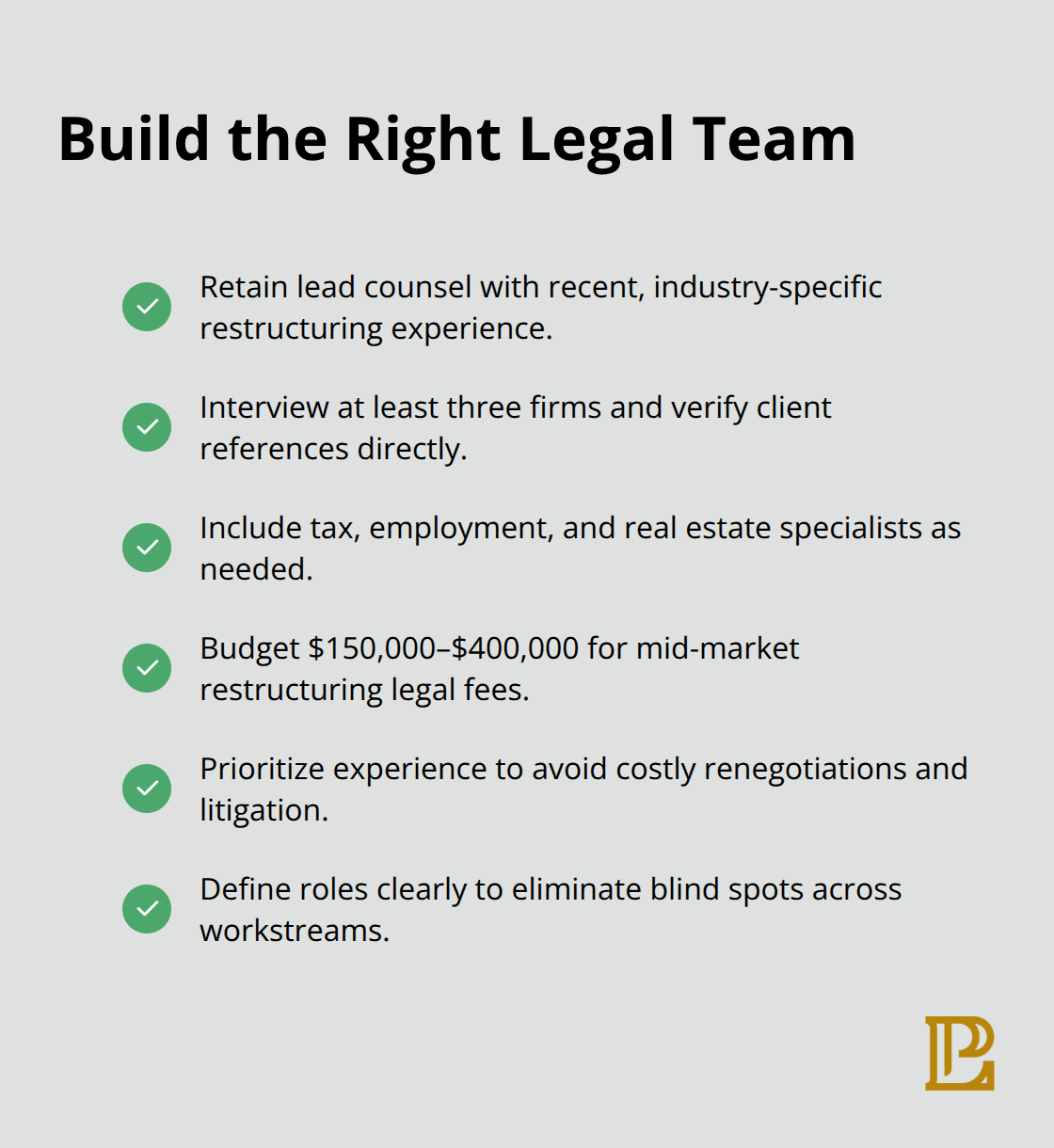
Restructuring fails when execution stumbles, not when strategy is wrong. The legal team you assemble determines whether your restructuring closes on time and within budget, or whether it spirals into years of litigation and renegotiation. You need a lead counsel who has closed restructurings before, not someone learning on your dime.
Your lead attorney should have closed at least five deals in your industry within the last three years, because industry-specific knowledge matters enormously. Environmental liabilities mean something different in manufacturing than in retail; employment obligations differ between tech startups and established industrial companies. Interview at least three law firms before selecting counsel, and ask each one for references from previous clients who completed restructurings. Call the CFO or general counsel directly and ask whether the firm delivered on timeline and budget.
Your legal team should also include specialists in tax law, employment law, and real estate if your deal involves property transfers. A restructuring attorney cannot competently handle all these areas alone, and trying to do so creates blind spots. Budget $150,000 to $400,000 in legal fees for a mid-market restructuring, depending on complexity and deal size. This sounds expensive until you realize that inadequate legal work costs ten times more in renegotiation, litigation, and operational disruption.
Organize Due Diligence Systematically From the Start
Due diligence documentation must be systematic and complete before you sign anything. Create a data room-either physical or virtual-that contains every contract, financial statement, regulatory filing, litigation record, and environmental report relevant to the deal. Use a platform like Intralinks or Citrix ShareFile to organize this material and track which counterparties have reviewed which documents.
Assign one person on your team to manage the data room; this person becomes the single source of truth for document versions and access logs. During due diligence, you will discover issues. Some are deal-killers; most are manageable if identified early. When issues surface, document them in a due diligence report and flag them for legal review before proceeding. Do not assume you can fix problems later or negotiate around them after closing. Closing deadlines create pressure that destroys deal economics if you defer critical issues.
Communicate With Employees and Creditors Early
Creditor and employee communications must start before any public announcement, not after. Employees learn about restructuring from rumors and social media faster than from official channels if you wait too long. Within 48 hours of signing a letter of intent, brief your senior leadership team and key department heads on what is happening, why it is happening, and what their role will be during the transition. Explain that layoffs may occur, but that you are committed to providing severance and transition support for affected staff.
Creditors need similar clarity. If you are refinancing debt as part of your restructuring, contact lenders early and provide updated financial projections showing how the restructuring improves cash flow. Lenders care about repayment; if your restructuring demonstrates improved ability to service debt, they typically cooperate. Delay this conversation and lenders become adversarial, demanding concessions you should not have to make.
Final Thoughts
Corporate restructuring law demands precision, timing, and stakeholder coordination. The businesses we’ve worked with at Pierview Law that succeeded assembled experienced legal counsel before signing anything, conducted exhaustive due diligence without cutting corners, and communicated openly with employees and creditors throughout the process. These actions separate restructurings that close on schedule from those that collapse under complexity.
Business owners consistently underestimate timeline and cost when planning restructuring. M&A deals typically run 18 months from initial discussions to closing, while Chapter 11 reorganizations take 18 to 24 months minimum. Legal fees for mid-market restructurings range from $150,000 to $400,000 depending on deal complexity (and this investment prevents far costlier mistakes later). Budget conservatively and you avoid the panic that forces bad decisions.
If your Hermosa Beach business is considering restructuring, start by clarifying which path makes sense for your situation. Contact Pierview Law to discuss your specific situation and map out a realistic plan forward that aligns with your business goals.