
Mergers and acquisitions involve significant financial and legal risks. Without proper due diligence in mergers and acquisitions, you could inherit hidden liabilities, regulatory problems, or operational issues that tank your investment.
At Pierview Law, we’ve seen deals fall apart because buyers skipped critical steps or missed red flags during their review. This guide walks you through what to examine, what problems to watch for, and how to protect yourself throughout the process.
What Due Diligence Actually Means
Due diligence in mergers and acquisitions is a systematic investigation of a target company’s financial records, legal standing, operational performance, and market position. It’s not a rubber-stamp exercise-it’s your opportunity to verify that the business is worth what you’re paying for it and to uncover problems before they become your problems. The process typically spans three to five months for mid-market deals, though complexity and data accessibility can extend or compress that timeline. At its core, due diligence answers one question: does this acquisition make financial and operational sense, or are we walking into a minefield?
Breaking Down the Investigation Process
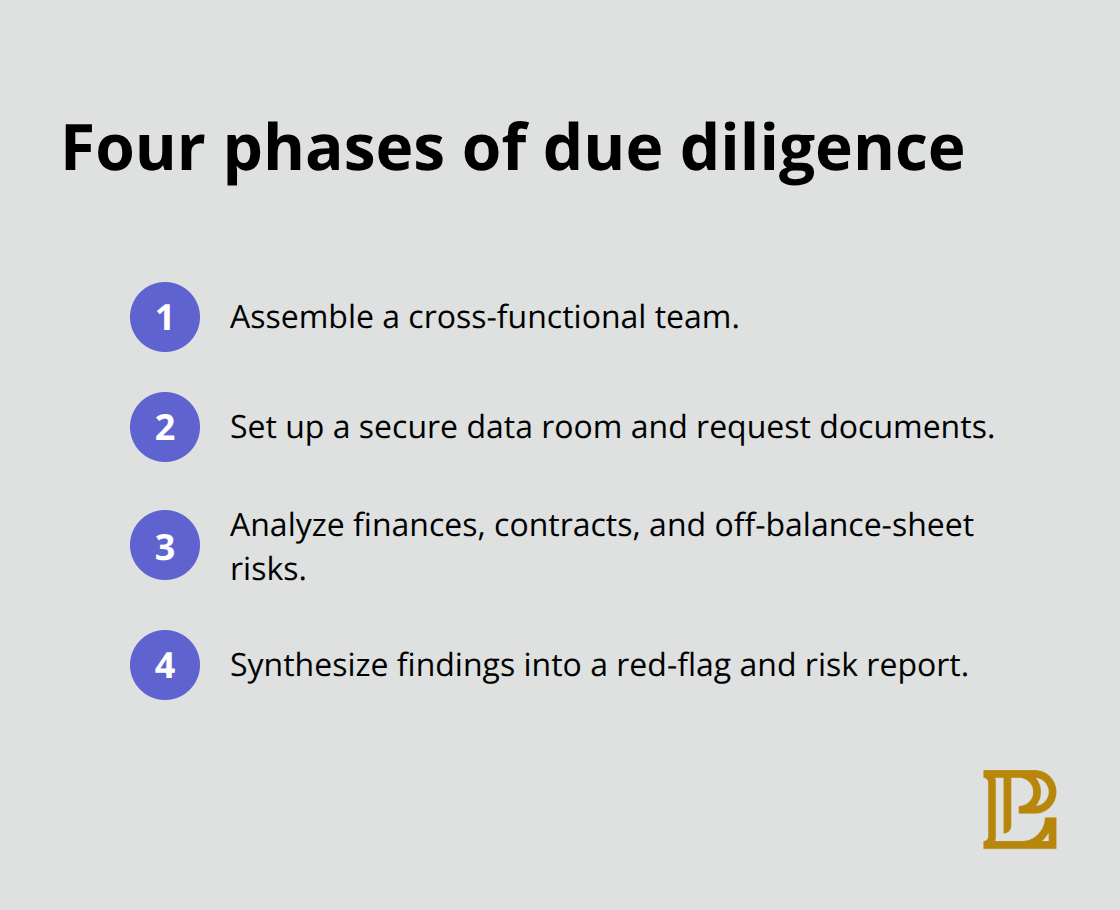
Due diligence unfolds in distinct phases, each targeting specific risks. First, you assemble your team-legal counsel, accountants, and sometimes industry consultants-and define what you’re actually looking for based on the deal structure and your strategic goals. Next, you request documents and organize them in a secure data room, which lets multiple reviewers examine materials simultaneously without exposing sensitive information. Then comes analysis: your team validates financial statements against tax returns, reviews contracts for change-of-control clauses that could derail operations, and identifies liabilities that aren’t on the balance sheet. Finally, you synthesize findings into a report that highlights red flags, quantifies risks, and recommends deal adjustments or contingencies. TE Connectivity cut its document processing time by 25% after automating data classification, showing that modern technology accelerates this phase without sacrificing accuracy.
Why Buyers and Sellers Approach This Differently
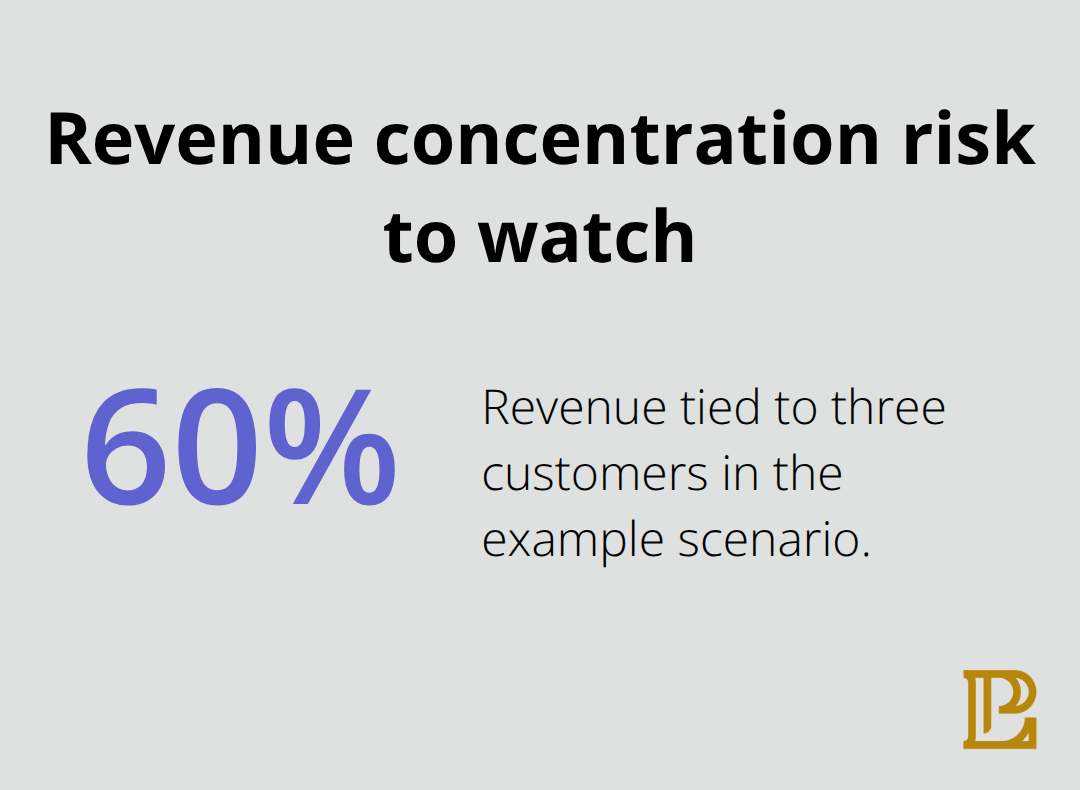
Buyers use due diligence to avoid overpaying and to plan post-close integration. A buyer who discovers that 60% of revenue comes from three customers knows they’re inheriting concentration risk; they’ll either adjust the purchase price downward or build customer retention agreements into the deal structure.
Sellers, by contrast, prepare for due diligence to remove surprises that spook buyers. If your financial records are disorganized, your contracts contain undisclosed termination risks, or your employment agreements lack proper documentation, buyers will demand steep discounts or walk away entirely. The Harvard Business Review reports that mergers and acquisitions fail at rates exceeding 75%, with inadequate due diligence cited as the primary culprit. Sellers who clean up their books, organize contracts, and resolve pending litigation before the process starts close faster and at better valuations. This isn’t theoretical-it’s the difference between a deal that closes smoothly and one that collapses in the final stretch.
What Comes Next in Your Due Diligence Journey
Understanding what due diligence means and how it works sets the foundation for protecting your deal. The next section walks you through the specific types of due diligence you need to conduct-financial, legal, and operational-so you know exactly what to examine and what questions to ask.
Types of Due Diligence You Need to Conduct
Financial Due Diligence Reveals Hidden Problems
Financial due diligence uncovers the true value or exposes hidden problems in a target company. You need three to five years of audited financial statements, tax returns, and current balance sheets to spot inconsistencies between what the company reports and what it actually owes. Compare revenue figures across documents-if the tax return shows lower sales than the financial statements, that signals either aggressive accounting or underreported income. Request detailed schedules of accounts payable, debt obligations, and contingent liabilities so you understand what obligations transfer with the acquisition. Many buyers miss deferred tax liabilities or pension obligations that sit off the balance sheet until closing, then suddenly become their problem. Analyze customer concentration by requesting revenue breakdowns by customer and product line; if three customers represent more than 50% of revenue, you’re buying a business with serious retention risk that justifies a lower price or contractual protections. Validate cash flow forecasts against historical performance and industry benchmarks rather than accepting management projections at face value, since those projections tend to be optimistic.
Legal Due Diligence Protects Against Contractual Surprises
Legal due diligence requires a methodical review of corporate documents, contracts, and litigation history. Obtain the company’s certificate of incorporation, bylaws, and board minutes to verify that major decisions received proper authorization and that the cap table is accurate. Examine all material contracts-customer agreements, supplier arrangements, lease agreements, and financing documents-for change-of-control clauses that could terminate relationships or require third-party consent upon acquisition. For public targets, pull SEC filings through EDGAR to identify restatements, material weaknesses in internal controls, or regulatory inquiries that signal accounting or compliance problems. Review employment agreements, particularly for key executives, to understand severance obligations and whether non-compete or non-solicit provisions will survive the transaction. Investigate pending or threatened litigation, regulatory investigations, and settlement agreements to quantify exposure and determine whether insurance reserves are adequate.
Operational and Commercial Due Diligence Validates Real-World Performance
Operational and commercial due diligence examines whether the business actually runs as described. Conduct on-site inspections of facilities, interview key customers and suppliers about satisfaction and contract terms, and review customer churn rates and pipeline data to validate growth assumptions. Assess the strength of the management team and whether critical personnel will stay post-close, since deals often fail when key people leave. Evaluate technology systems, data security practices, and compliance with privacy laws like GDPR and CCPA to avoid inheriting regulatory violations. For real estate transactions in California, due diligence periods typically extend 30 to 90 days, allowing time for thorough inspections and legal reviews; verify zoning compliance using the Zone Information and Map Access System (ZIMAS) data, review environmental reports for contamination, and confirm that all permits and easements are current and transferable. Skipping these operational steps leaves you vulnerable to discovering after closing that customer relationships are weaker than expected, systems are outdated, or compliance obligations are more onerous than anticipated.
What Red Flags Demand Immediate Attention
The three categories of due diligence work together to surface problems that could derail your deal or tank your investment post-close. Financial inconsistencies, unresolved litigation, weak customer relationships, and outdated technology systems all represent material risks that require negotiation or contingencies. The next section walks you through the specific issues that emerge most frequently during due diligence investigations and how to address them before they become deal-breakers.
Common Issues Found During Due Diligence
Financial Discrepancies Signal Deeper Problems
Financial discrepancies between tax returns and audited statements indicate either careless accounting or deliberate misrepresentation, both of which carry serious consequences. Compare revenue figures, expense classifications, and depreciation schedules across documents; if numbers don’t align, request explanations in writing and have your accountant investigate the source documents. Hidden liabilities often hide in plain sight: deferred tax obligations, pension plan underfunding, warranty reserves, and environmental cleanup costs frequently sit off the balance sheet until someone actually looks for them. Request a detailed schedule of all contingent liabilities and litigation reserves, then validate these numbers against legal counsel’s files and insurance policies.
Many buyers discover post-close that accounts payable were understated or that accrued expenses for employee bonuses and commissions were omitted entirely, shrinking the actual cash available immediately after closing. Analyze three to five years of financial statements to spot trends; if accounts receivable grow faster than revenue, that suggests customers aren’t paying on time or that the company inflates sales through side agreements that won’t survive the acquisition.
Legal Disputes and Regulatory Violations Destroy Deal Value
Legal disputes and regulatory violations destroy deal value faster than almost any other discovery. Request a complete litigation history including settled cases, pending lawsuits, and regulatory investigations or inquiries from agencies like the California Department of Fair Employment and Housing or the EPA. Review employment agreements for severance obligations triggered by change of control, since key executives departing post-close can hollow out the business overnight.
Examine customer and supplier contracts for termination rights that activate upon acquisition; a single customer representing 40% of revenue that can walk away on a change of control transforms your entire risk profile and purchase price calculation. These contractual landmines require careful attention before you commit capital to the deal.
Operational Inefficiencies and Customer Concentration Risk
Operational inefficiencies compound over time and become your responsibility the moment you close. Conduct facility inspections, assess technology infrastructure age and security compliance, and interview customers directly about satisfaction and contract renewal likelihood rather than relying on management representations.
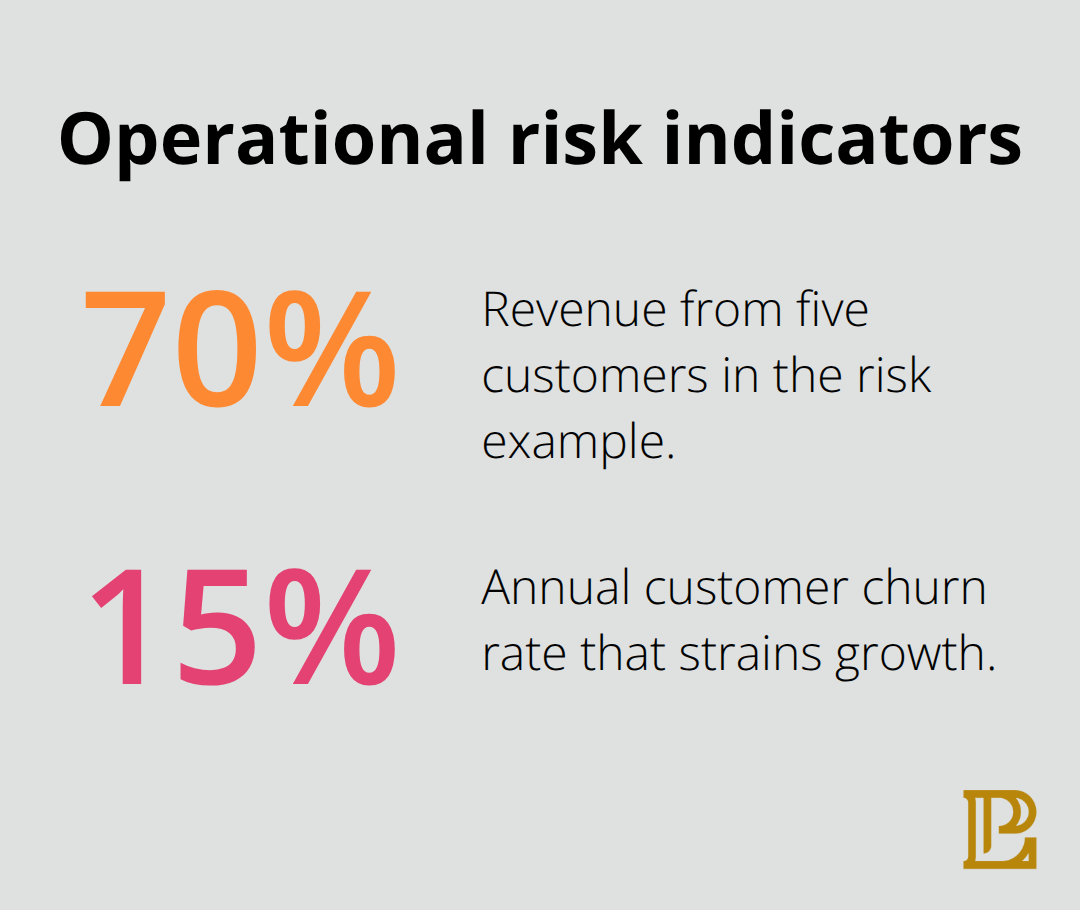
Customer concentration represents the single biggest operational risk in deals: if five customers represent 70% of revenue, you’re buying a business dependent on maintaining those relationships, which means negotiating customer consents, retention agreements, or pricing concessions before closing. Churn rates matter enormously; a company losing 15% of its customer base annually requires aggressive new customer acquisition just to stay flat, making growth projections unrealistic and the purchase price indefensible.
Final Thoughts
Thorough due diligence in mergers and acquisitions protects your investment by surfacing problems before you commit capital and by giving you the information needed to negotiate better terms. A buyer who discovers customer concentration risk, hidden liabilities, or unresolved litigation can adjust the purchase price downward, require seller indemnification, or walk away entirely rather than inheriting problems that destroy value post-close. A seller who addresses these issues proactively closes faster and at a better valuation because buyers see a clean, well-organized business rather than a collection of hidden risks.
Once your due diligence investigation concludes, you’ll have a detailed report identifying red flags, quantifying risks, and recommending deal adjustments or contingencies. This report becomes your roadmap for negotiation: use it to justify price reductions, to structure earn-outs that align seller incentives with post-close performance, or to require seller representations and warranties that protect you if problems emerge later. Deals rarely close on the original terms once due diligence reveals material issues, so build time into your timeline for renegotiation based on findings.
Working with legal counsel throughout this process makes the difference between a deal that protects you and one that leaves you exposed. An attorney guides your investigation, interprets findings, drafts protective language in your purchase agreement, and ensures you understand the risks you’re accepting. Contact us at Pierview Law to discuss your transaction and learn how we can help you close with confidence.