
Your intellectual property is often your business’s most valuable asset, yet many owners in Hermosa Beach don’t have a clear plan to protect it.
At Pierview Law, we’ve seen firsthand how the right intellectual property strategies can make the difference between a thriving business and one vulnerable to competitors. This guide walks you through identifying what you own, building protection around it, and defending it when necessary.
What IP Assets Does Your Business Actually Own
Most business owners in Hermosa Beach have IP scattered across their operations without realizing it. Patents on products or processes, trademarks on your brand name and logos, copyrights on written materials and software, and trade secrets embedded in your operations-these are all assets that need protection. The problem is that many owners treat IP as something to worry about later, when competitors start copying them or when they need to license their brand. That’s backwards. You need to know what you own before anyone else tries to take it.
Start with a Complete Inventory
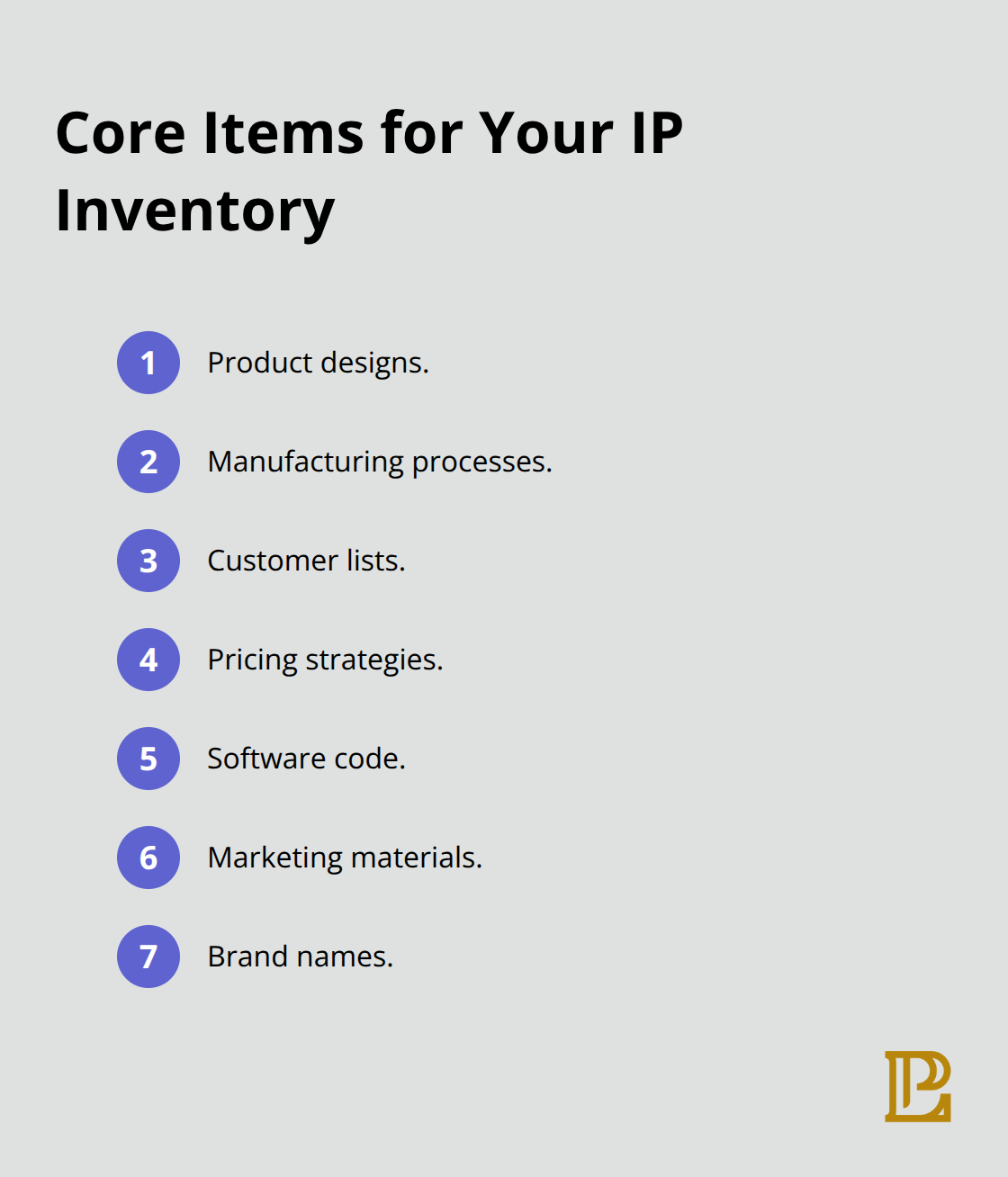
Walk through your business and identify everything that gives you a competitive edge. This includes product designs, manufacturing processes, customer lists, pricing strategies, software code, marketing materials, and brand names. The World Intellectual Property Organization recommends starting with market research to shape your IP strategy by identifying your unique selling points and target markets. Document which elements are truly unique to your business.
If your process or product is something competitors could easily replicate, it probably isn’t worth protecting. But if you have something genuinely different-a specific formula, a distinctive visual design, or a proprietary method-that’s what needs protection.
Write down where each asset sits in your business. Is it in your operations? Your marketing? Your product development? This clarity prevents gaps in protection and helps you understand which assets drive real value. Many Hermosa Beach business owners skip this step and later discover they’ve left valuable IP unprotected while wasting resources protecting things that don’t matter.
Assess Which Assets Actually Matter to Your Bottom Line
Not every IP asset deserves equal protection. According to WIPO guidance, you should protect those elements that add real value to your business and view IP as a strategic investment. A trademark on your company name matters if you’re building brand recognition in your market. A patent on a minor feature probably doesn’t.
Look at what customers actually pay for. If they choose you over competitors because of your brand reputation, that trademark is critical. If they buy because of your technical innovation, patents are worth the investment. Trade secrets protecting your operational efficiency or customer relationships often matter more than patents that take years and significant money to obtain and defend.
Consider your market position. Are you in a crowded industry where competitors constantly copy features? Then patent protection becomes more valuable. Are you in a niche market where your reputation is everything? Then trademark and copyright protection takes priority. The cost of protecting different IP types varies significantly. Patents cost thousands to obtain and maintain annually. Trademark registration is relatively affordable. Copyright registration is inexpensive but often unnecessary since copyright exists automatically upon creation. Map these costs against the actual revenue each asset generates or protects.
Register and Document Everything Properly
Unregistered IP leaves you vulnerable. Copyright exists automatically, but registration with the United States Copyright Office provides legal advantages if you need to enforce your rights. Trademarks don’t require federal registration to exist, but filing with the United States Patent and Trademark Office makes enforcement much stronger and prevents others from registering similar marks. Patents must be filed before you publicly disclose your invention-once disclosed, you typically lose patent rights in most countries.
Document the creation date, creator, and development process for each asset. This matters for copyright claims and for establishing trade secret status. Keep detailed records of who has access to sensitive information and what confidentiality agreements are in place. If someone infringes your IP later, you’ll need proof of ownership and creation.
For trade secrets, implement physical and digital security measures. Restrict access, use confidentiality agreements, and maintain an audit trail of who accesses sensitive information. The stricter your controls, the stronger your legal protection if trade secret theft occurs. Many businesses lose trade secret protection simply because they didn’t treat the information as confidential internally. Once you’ve identified and documented your assets, the next step is to align these protections with your broader business goals-which is where a real IP strategy takes shape.
Building a Comprehensive IP Strategy
Map IP Assets to Revenue Streams
Your IP strategy fails the moment it disconnects from what actually drives your business forward. Business owners in Hermosa Beach often protect IP that doesn’t matter while neglecting assets that generate real income. Start by mapping each IP asset directly to revenue. Which patents or trademarks do customers recognize and pay premium prices for? Which trade secrets give you operational advantages that competitors can’t match?
A distinctive brand name that customers search for online has different strategic value than a patent on a minor product feature. WIPO research shows that effective branding increases long-term business value by differentiating you, building customer trust, reducing free-riding, and creating new revenue and financing opportunities.
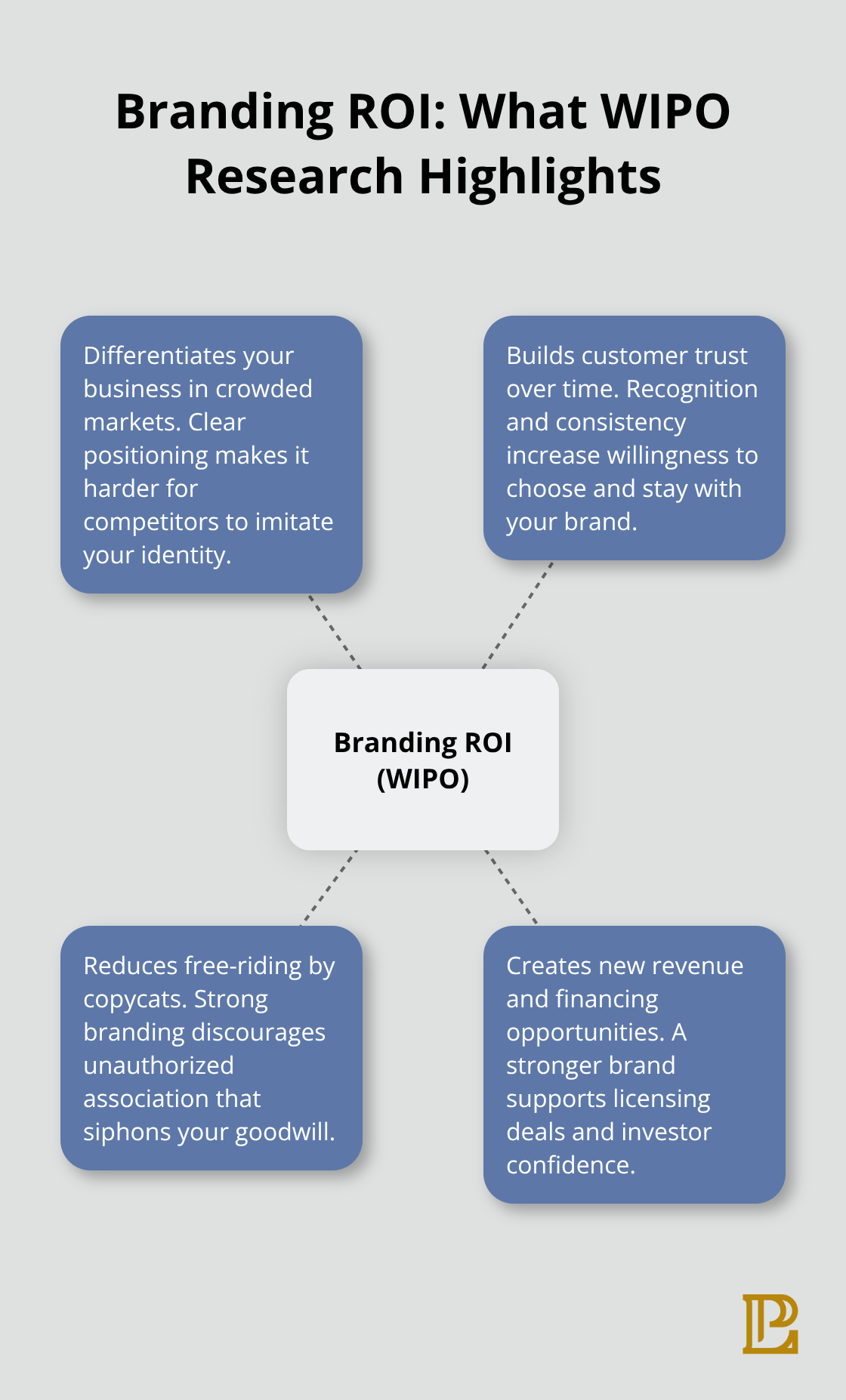
This means your trademark strategy might deserve more resources than your patent strategy, depending on your market position.
Align Protection Spending with Business Impact
Align your protection spending with actual business impact. If you’re a Hermosa Beach manufacturer competing on technical innovation, patents deserve investment. If you’re a service business competing on reputation, trademarks and trade secrets matter more.
Set specific protection goals tied to business milestones: before launching a new product, file patents; before expanding into new markets, register trademarks in those jurisdictions; before bringing on employees with access to sensitive processes, formalize trade secret protections through confidentiality agreements and access controls. This alignment prevents wasting money on IP that won’t defend your competitive position and protects what actually matters to your bottom line.
Monitor Competitor Activity and Market Signals
Competitor monitoring reveals gaps in your own strategy and identifies threats before they become expensive problems. Search the United States Patent and Trademark Office database regularly to see what competitors are filing and what’s coming to market. Track trademark registrations in your industry to spot emerging competitors or new brand launches that might conflict with your marks.
If a competitor files a patent similar to something you’re developing, you may need to adjust your approach or file first. Set calendar reminders to monitor your own IP registrations for maintenance deadlines-trademark renewals, patent maintenance fees, and copyright records require ongoing attention or you lose protection. Many Hermosa Beach business owners let registrations lapse simply because they forgot about renewal dates.
Leverage Professional Portfolio Management
Consider hiring a professional service to monitor your IP portfolio, especially if you have multiple patents or trademarks across different jurisdictions. The cost is modest compared to losing protection accidentally. Watch what your competitors license or protect; this signals where the market is moving.
If multiple competitors suddenly file patents in a specific technology area, that signals a market shift worth paying attention to. This market intelligence shapes whether you double down on certain IP protections or pivot your strategy as competitive threats emerge. Once you understand your assets and align them with business goals, the real test comes when someone infringes your IP or you need to enforce your rights-which requires a different set of decisions and actions.
Protecting Your IP When Others Cross the Line
Catch Infringement Before It Spreads
Identifying infringement early matters far more than most Hermosa Beach business owners realize. The moment someone uses your trademark without permission, copies your patented design, or steals your trade secrets, you face a choice: act immediately or watch your competitive advantage erode. Many owners wait too long, hoping the problem goes away or thinking a cease-and-desist letter isn’t worth the cost. This is a mistake.
Early action stops infringement before it becomes entrenched in the market, before counterfeit products damage your brand reputation, and before competitors build customer relationships around stolen IP. Set up quarterly monitoring of your trademark registrations through the United States Patent and Trademark Office database to catch unauthorized use before it spreads. If you manufacture products, watch for counterfeit versions on e-commerce platforms and in retail channels. If you license your brand to partners, conduct regular audits to confirm they’re using your marks correctly and maintaining quality standards.
The cost of monitoring is minimal compared to the damage of discovering infringement years later when it’s harder to prove and more costly to stop.
Send a Cease-and-Desist Letter Immediately
When you find infringement, send a formal cease-and-desist letter immediately. This creates a documented record that you knew about the violation and took action, which strengthens your legal position if litigation becomes necessary. A well-drafted cease-and-desist letter often stops infringement without court involvement, saving you tens of thousands in legal fees.
Include specific facts about the infringement, cite your registration numbers, demand cessation by a specific date, and warn of legal consequences. Many Hermosa Beach business owners skip this step and jump straight to litigation, which is expensive and time-consuming. The letter costs a fraction of what litigation costs and frequently works.
Control Your IP Through Licensing Agreements
Licensing and partnerships offer powerful ways to monetize IP while maintaining control over how your assets are used. Before entering any licensing agreement, define exactly what the licensee can and cannot do with your IP. Can they sublicense to others? Can they modify your trademark or patent design? What quality standards must they maintain? Vague licensing agreements create disputes and brand damage.
WIPO research shows that when you license your trademark, you must enforce quality control to avoid brand degradation from unauthorized or low-quality licensees. If a partner uses your brand on inferior products, your brand value suffers even though you own the trademark. Set clear minimum quality standards, conduct regular inspections, and include termination rights if the licensee violates the agreement.
For patent licensing, determine upfront whether the licensee receives exclusive or non-exclusive rights, what geographic territories they cover, and what royalty rates apply. Exclusive licenses command higher rates but limit your ability to generate revenue from other licensees in that space. Non-exclusive licenses let you license the same technology to multiple parties, spreading risk and maximizing revenue. Include field-of-use restrictions so a licensee cannot use your patent outside their intended market.
Resolve Disputes Without Expensive Litigation
When disputes arise, you face decisions about settlement, mediation, or litigation. Litigation is expensive and unpredictable. A patent infringement case in federal court costs $1 million to $5 million in legal fees alone, according to the American Intellectual Property Law Association. Trademark disputes typically cost $100,000 to $500,000.
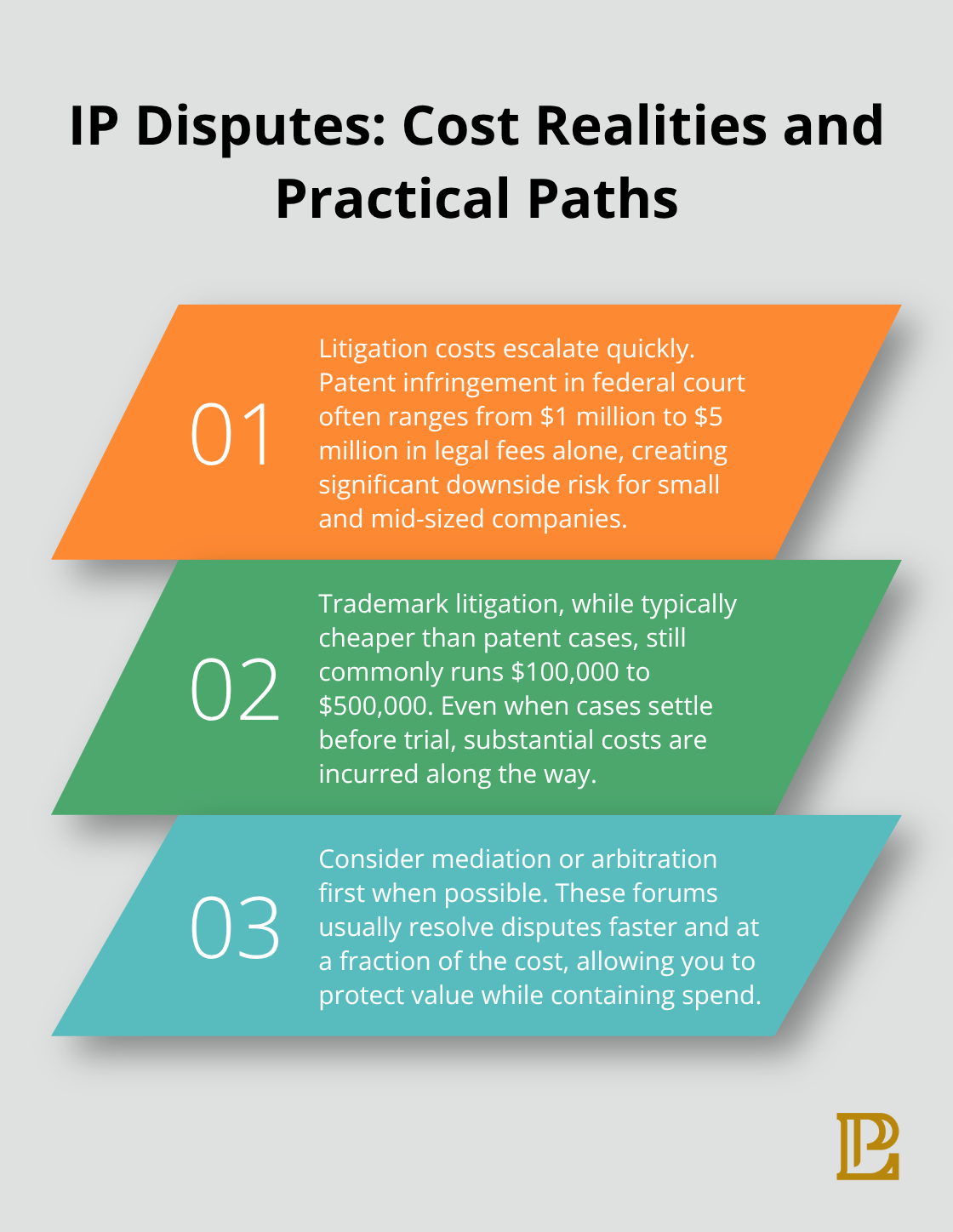
These costs assume the case goes to trial; most cases settle before that point, but you still incur significant expenses.
Consider mediation or arbitration first if the infringer is willing. These processes cost a fraction of litigation and often resolve disputes faster. If litigation becomes necessary, our civil litigation team at Pierview Law prepares you thoroughly for the process, managing discovery, handling pleadings, and representing you at trial or through alternative resolution forums. The key is making informed decisions early about whether to settle, negotiate a license, or fight in court based on the actual value of the IP at stake and your realistic odds of winning.
Final Thoughts
Developing effective intellectual property strategies requires you to identify and document everything your business owns, align these assets directly with revenue streams, and monitor your IP continuously to catch infringement early. A strong IP foundation stops competitors from copying your innovations, allows you to license your assets for additional revenue, and gives you legal standing to defend yourself if disputes arise. Hermosa Beach business owners who treat IP as a strategic asset rather than an afterthought gain measurable advantages in their markets through premium pricing, faster execution, and stronger negotiating positions.
Start by conducting a complete inventory of your IP assets this month and determine which assets generate real value. Register your most valuable trademarks and patents before competitors do, implement confidentiality agreements for trade secrets, and set up quarterly monitoring to catch infringement early. If you’re uncertain about your IP position or need guidance on enforcement, we at Pierview Law help Hermosa Beach business owners develop and execute intellectual property strategies that protect what matters.
Our business law services include contract drafting, entity formation, and outside general counsel support, while our civil litigation team handles disputes when they arise. Contact us to discuss your specific IP situation and build a protection plan aligned with your business goals.