
Intellectual property stocks represent a unique investment category that many business owners overlook. Companies built on patents, trademarks, and proprietary technology often deliver stronger returns than traditional equities.
At Pierview Law, we’ve seen firsthand how understanding IP assets can transform investment decisions. This guide walks you through evaluating, selecting, and building a portfolio centered on intellectual property stocks.
What Makes IP Stocks Different From Regular Companies
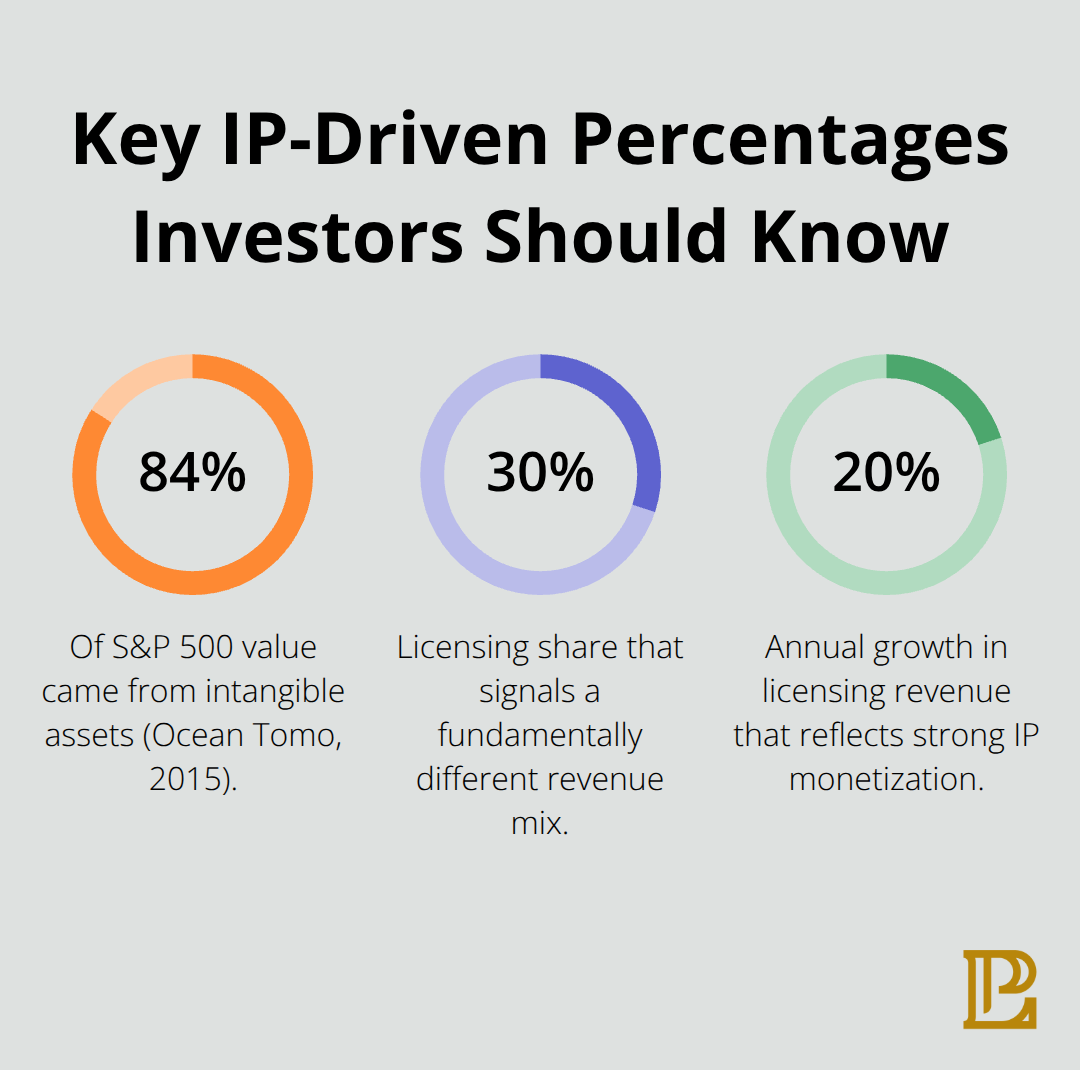
IP stocks differ fundamentally from traditional equities because their value stems from intangible assets rather than physical operations. A company holding valuable patents, trademarks, and proprietary technology generates revenue through licensing agreements without manufacturing a single product. In 2015, Ocean Tomo found that 84% of S&P 500 value came from intangible assets, not physical ones. This shift means investors evaluating IP-heavy companies need different metrics than those used for traditional manufacturers or service providers. Patent quality, licensing breadth, and litigation exposure matter far more than factory capacity or employee count.
How Patents Create Stock Value
Patents create defensible market positions that directly impact stock price. A company with a strong patent portfolio charges premium prices, blocks competitors from entering markets, and generates licensing revenue. Investors recognize this value immediately. The challenge lies in distinguishing between quantity and quality. A startup with 500 patents scattered across irrelevant technologies holds far less value than a competitor with 50 tightly focused patents covering core products.
When you evaluate IP stocks, examine whether patents align with actual revenue streams. Ask whether the company actively licenses its technology or relies on enforcement. A firm licensing patented technology to multiple partners generates predictable revenue, while one pursuing litigation faces uncertain outcomes and legal costs. The strongest IP stocks show clear connections between patent portfolios and commercial products generating real income.
Licensing Revenue Drives Valuation
Licensing agreements provide quantifiable revenue that investors can model and forecast. Unlike speculative patent portfolios, active licensing demonstrates that the IP actually has market value. Companies in tech, pharmaceuticals, and semiconductors structure licensing deals worth millions annually. These revenue streams reduce dependence on product sales and create additional profit margins.
Investors should examine licensing agreements in SEC filings to understand how much revenue comes from IP monetization versus core operations. A company deriving 30% of revenue from licensing is fundamentally different from one with minimal licensing activity. This information directly influences stock valuation and growth potential. Strong IP stocks show consistent licensing activity, expanding partner networks, and growing royalty revenue over time.
What Separates Winners From Losers
Patent litigation history reveals whether a company’s IP portfolio holds real defensive value or invites legal challenges. A firm with multiple infringement victories demonstrates that its patents withstand scrutiny. Conversely, a company losing patent cases signals weakness in its portfolio quality. Litigation costs also matter-expensive, prolonged disputes drain resources and reduce profitability.
Competitive threats and market disruption pose additional risks. A patent portfolio protecting yesterday’s technology loses value quickly as markets shift. The strongest IP stocks hold patents covering emerging technologies and maintain active R&D pipelines. These companies adapt their portfolios as markets evolve, ensuring their IP remains commercially relevant. Understanding these dynamics helps you identify which IP stocks will sustain value and which will fade as industries transform.
What Should You Actually Look For When Evaluating IP Stocks
Connect Patents to Real Revenue
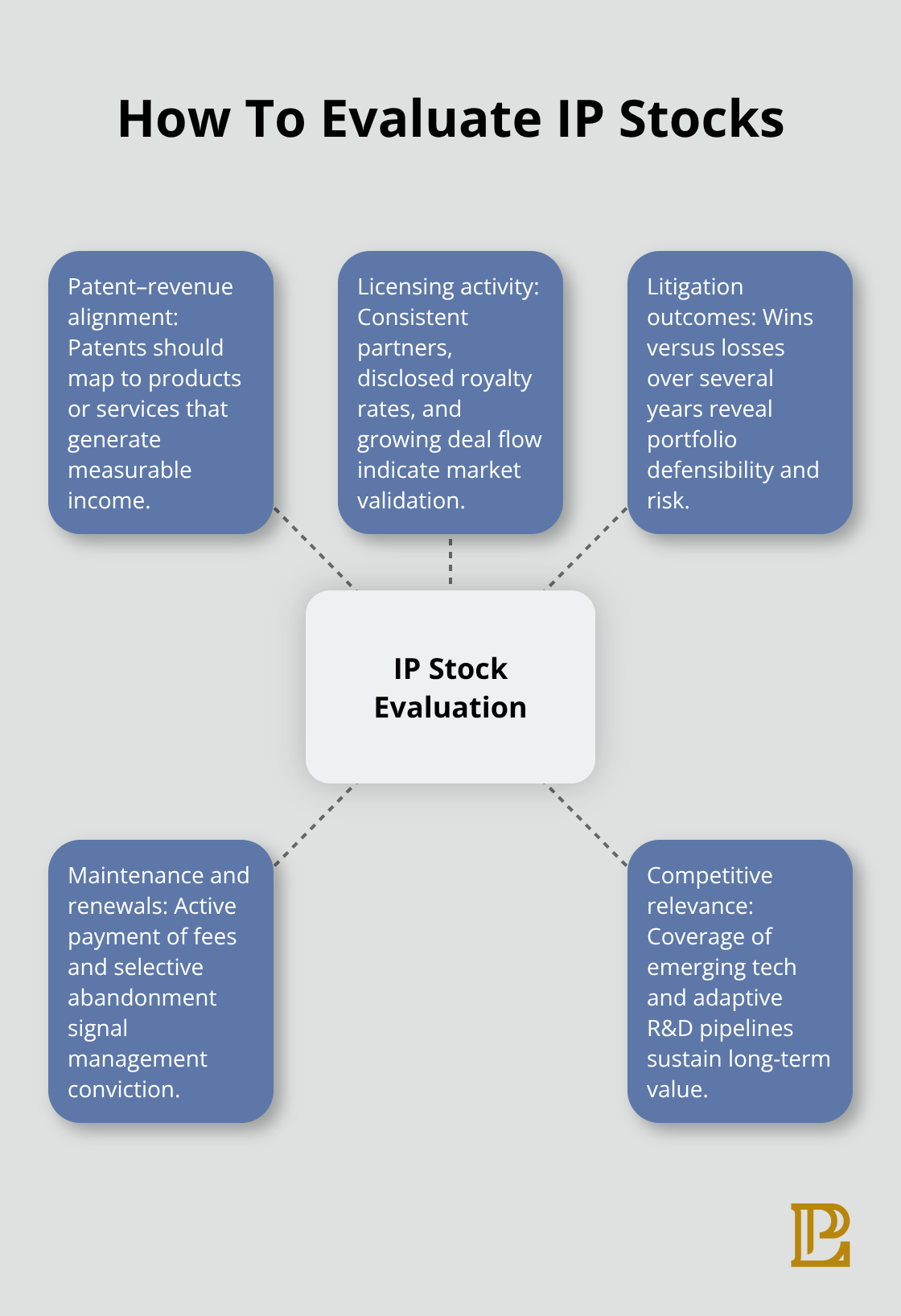
Patent portfolios mean nothing without commercial relevance, and that’s where most investors fail. You need to examine whether patents directly support products generating actual revenue, not just whether a company holds thousands of filings. Start by reviewing SEC filings to identify which patents appear in product descriptions, licensing agreements, and revenue disclosures. If a company’s 10-K mentions 2,000 patents but only three connect to revenue streams, that portfolio is largely decorative.
The strongest IP stocks show tight alignment between patent families and commercial products. Look for patents covering core technology, not peripheral improvements or abandoned experiments. A semiconductor company holding patents on manufacturing processes that reduce costs by 15% creates measurable shareholder value. A biotech firm with patents on a drug formulation that extends shelf life generates licensing opportunities. These patents matter because they connect directly to profitability or competitive advantage.
Demand Transparency on Licensing Revenue
Licensing revenue provides the clearest signal of IP value. Companies generating licensing income must disclose royalty rates, partner names, and contract terms in SEC filings-examine these numbers carefully. If licensing revenue grows 20% annually while core product revenue stagnates, you’re watching a company successfully monetizing its IP portfolio. Conversely, declining licensing revenue signals that partners view the technology as less valuable or are developing alternatives.
Track licensing trends over multiple years rather than focusing on single quarters. A firm showing consistent growth in licensing partnerships demonstrates that its IP maintains market appeal. Companies that struggle to attract new licensees or lose existing partners face headwinds that stock prices will eventually reflect.
Evaluate Litigation Outcomes and Portfolio Strength
Patent litigation history reveals portfolio strength or weakness faster than anything else. A company winning infringement cases against well-funded competitors demonstrates that its patents survive rigorous legal challenge. Losses or settlements suggest portfolio vulnerability. Track litigation outcomes over three to five years rather than focusing on single cases, since one verdict can mislead.
A firm with five infringement victories and two losses shows stronger portfolio quality than one with mixed results spread across dozens of cases. Litigation costs also matter-expensive, prolonged disputes drain resources and reduce profitability. Companies that settle quickly or avoid litigation altogether may signal either strong patents (competitors won’t challenge them) or weak ones (the company avoids costly defense).
Monitor Patent Maintenance and Renewal Activity
Assess whether the company actively maintains and renews its patent portfolio. Patents require maintenance fees, and companies that allow valuable patents to lapse are signaling that those assets lack commercial importance. Review patent maintenance records in USPTO databases to spot patterns of abandonment or renewal-active portfolio maintenance indicates management believes in long-term IP value.
Companies that strategically abandon patents in declining markets while aggressively renewing patents in growth areas show sophisticated portfolio management. This selective approach (rather than blanket renewal or abandonment) suggests leadership understands which IP actually drives competitive advantage. Investors should view active maintenance as a positive signal and widespread abandonment as a red flag.
Assess Competitive Positioning and Market Relevance
Patent portfolios protecting yesterday’s technology lose value quickly as markets shift. The strongest IP stocks hold patents covering emerging technologies and maintain active R&D pipelines. These companies adapt their portfolios as markets evolve, ensuring their IP remains commercially relevant. Understanding these dynamics helps you identify which IP stocks will sustain value and which will fade as industries transform.
Look at whether a company’s patent filings track industry trends or lag behind them. A tech firm filing patents on artificial intelligence and machine learning while competitors focus on legacy systems demonstrates forward-thinking IP strategy. This forward momentum often translates into stock outperformance as markets recognize the company’s positioning in high-growth areas.
Building an IP Stock Portfolio That Survives Market Shifts
Spread Capital Across Different IP Sectors
Diversification across IP sectors reduces exposure to single-industry downturns while capturing growth across different patent landscapes. Rather than concentrating investments in semiconductor patents or pharmaceutical patents alone, spread capital across sectors where IP drives fundamentally different revenue models. A technology company monetizing patents through licensing generates returns differently than a consumer brand protecting trademarks or a biotech firm relying on drug patents.
This sector diversity matters because patent cycles vary dramatically. Semiconductor patents face obsolescence within five to seven years as manufacturing processes advance rapidly, while pharmaceutical patents can generate licensing revenue for fifteen to twenty years. When you evaluate IP stocks across sectors, examine how long each company’s core patents remain commercially relevant and whether management actively refreshes the portfolio.
Identify Forward Momentum in Patent Filings
A firm filing new patents in artificial intelligence while competitors focus on legacy systems will outperform as markets shift. Track patent filing activity in USPTO databases over three-year periods to spot forward momentum. Companies increasing filings in emerging technologies while reducing filings in mature markets demonstrate strategic portfolio management that stock prices eventually reward.
This forward momentum signals that leadership understands which technologies will drive future revenue. A company shifting its patent strategy toward high-growth areas positions itself ahead of market transitions. Investors who recognize this shift early capture gains before stock prices fully reflect the portfolio’s improved positioning.
Time Entry and Exit Based on Patent Lifecycles
Patent lifecycles create predictable windows where valuations shift. When a company’s foundational patents approach expiration, stock prices often decline unless management has filed successor patents covering next-generation technology. Conversely, when newly issued patents receive favorable court rulings or attract major licensing partners, valuations spike.

Monitor patent prosecution timelines through USPTO records to anticipate when key patents will issue and when expiring patents might create valuation pressure. Track competitive threats by reviewing what competitors are filing in the same technology spaces. If a rival files patents covering similar territory, your target company faces market disruption risk that will pressure stock performance.
Watch Licensing Partner Activity and Revenue Trends
The strongest IP stocks demonstrate continuous competitive advantages through patent breadth and quality that prevent rivals from gaining ground. Watch licensing partner announcements and contract disclosures in SEC filings. When a company loses major licensing partners or fails to announce new ones for extended periods, that signals declining portfolio appeal. Conversely, expanding licensing partnerships indicate rising confidence in the IP’s market value.
Exit positions when patent portfolios show signs of obsolescence without adequate successor technology in development, when litigation losses mount against well-capitalized competitors, or when licensing revenue plateaus while core product revenue stagnates. These indicators suggest the IP portfolio has peaked in value and future returns will disappoint.
Final Thoughts
Evaluating intellectual property stocks requires discipline and a clear framework. The strongest candidates show tight alignment between patent portfolios and actual revenue streams, demonstrate consistent licensing activity with expanding partner networks, and maintain litigation records that prove portfolio strength. Patent quality matters far more than quantity, and forward momentum in filing activity signals management’s confidence in future commercial relevance.
Long-term growth in IP markets depends on whether companies adapt their portfolios as industries evolve. A firm holding patents on emerging technologies while competitors focus on legacy systems will outperform as markets shift. Diversification across intellectual property stocks reduces exposure to single-industry downturns and captures growth where patent lifecycles differ dramatically (semiconductor patents face obsolescence within five to seven years, while pharmaceutical patents can generate licensing revenue for fifteen to twenty years).
If you’re building a business or managing investments in Hermosa Beach or Los Angeles County, intellectual property strategy deserves serious attention. Pierview Law provides business law services including entity formation, contract drafting, and intellectual property guidance tailored to your commercial goals.