
Construction disputes in Hermosa Beach and Los Angeles can derail your project timeline and drain your budget. Whether you’re dealing with payment disagreements, schedule delays, or quality issues, knowing your options for construction dispute resolution in California makes a real difference.
At Pierview Law, we help business owners and real estate developers navigate these conflicts through mediation, arbitration, or litigation. This guide walks you through each approach so you can choose the right path forward.
What Disputes Actually Cost You in Hermosa Beach and LA
Payment Disputes Hit Your Cash Flow First
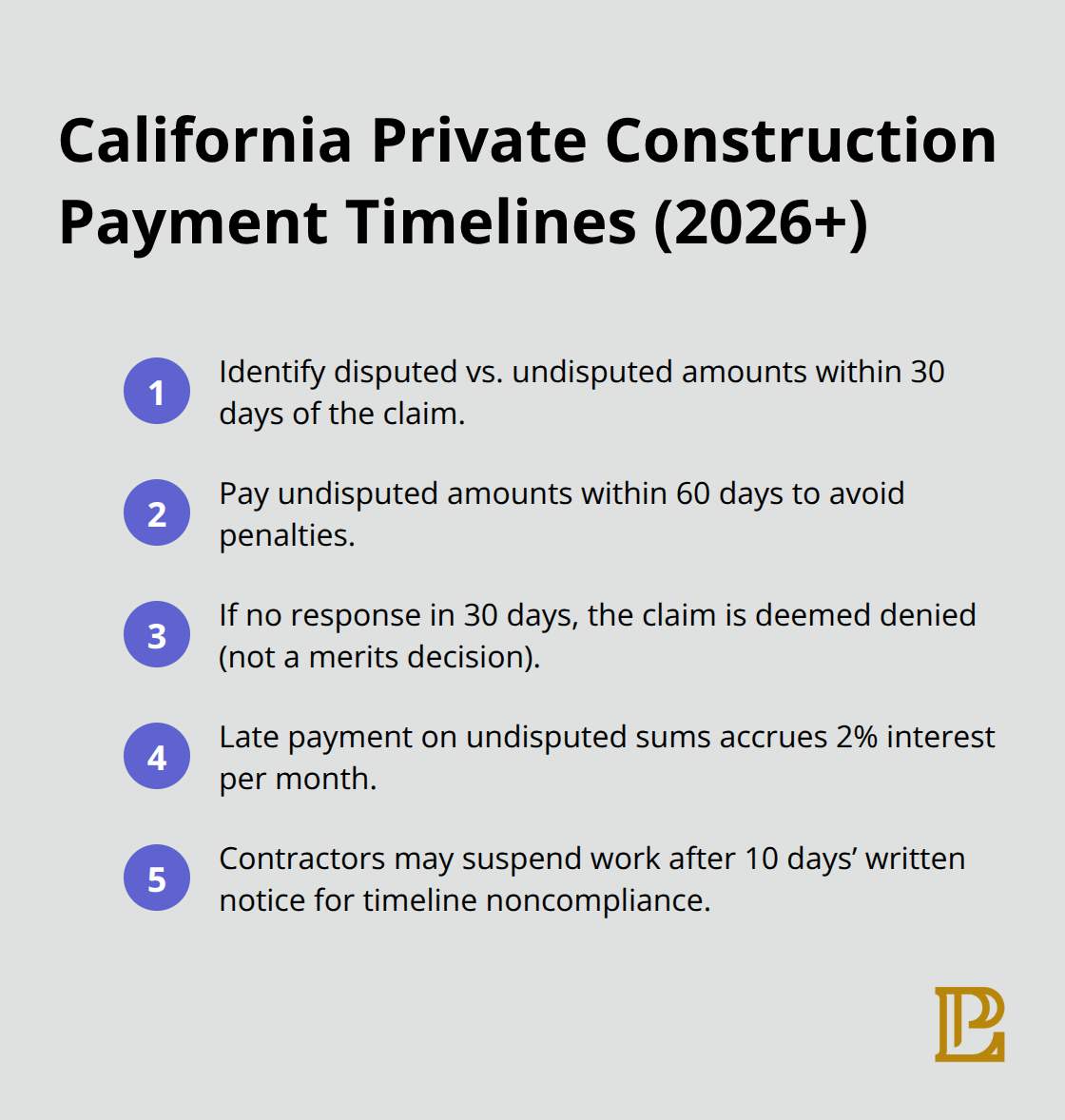
Payment disputes rank as the most common construction conflict in Los Angeles, driven by ambiguous contract terms, scope creep, and disagreement over what work qualifies for payment. When an owner withholds funds or a contractor claims underpayment, the financial impact starts immediately. California Civil Code § 8850, which took effect January 1, 2026, establishes strict timelines that protect contractors. Owners must identify disputed versus undisputed portions within 30 days of receiving a claim; undisputed amounts must be paid within 60 days. If the owner fails to respond within 30 days, the claim is deemed denied (though this is not a merits decision). Late payments on undisputed amounts accrue interest at 2% per month, and contractors can suspend work after 10 days’ written notice if owners don’t comply with payment timelines. The statute applies only to private California construction contracts entered after January 1, 2026, so verify your contract date before relying on these protections.
Delay Claims Ripple Through Your Entire Budget
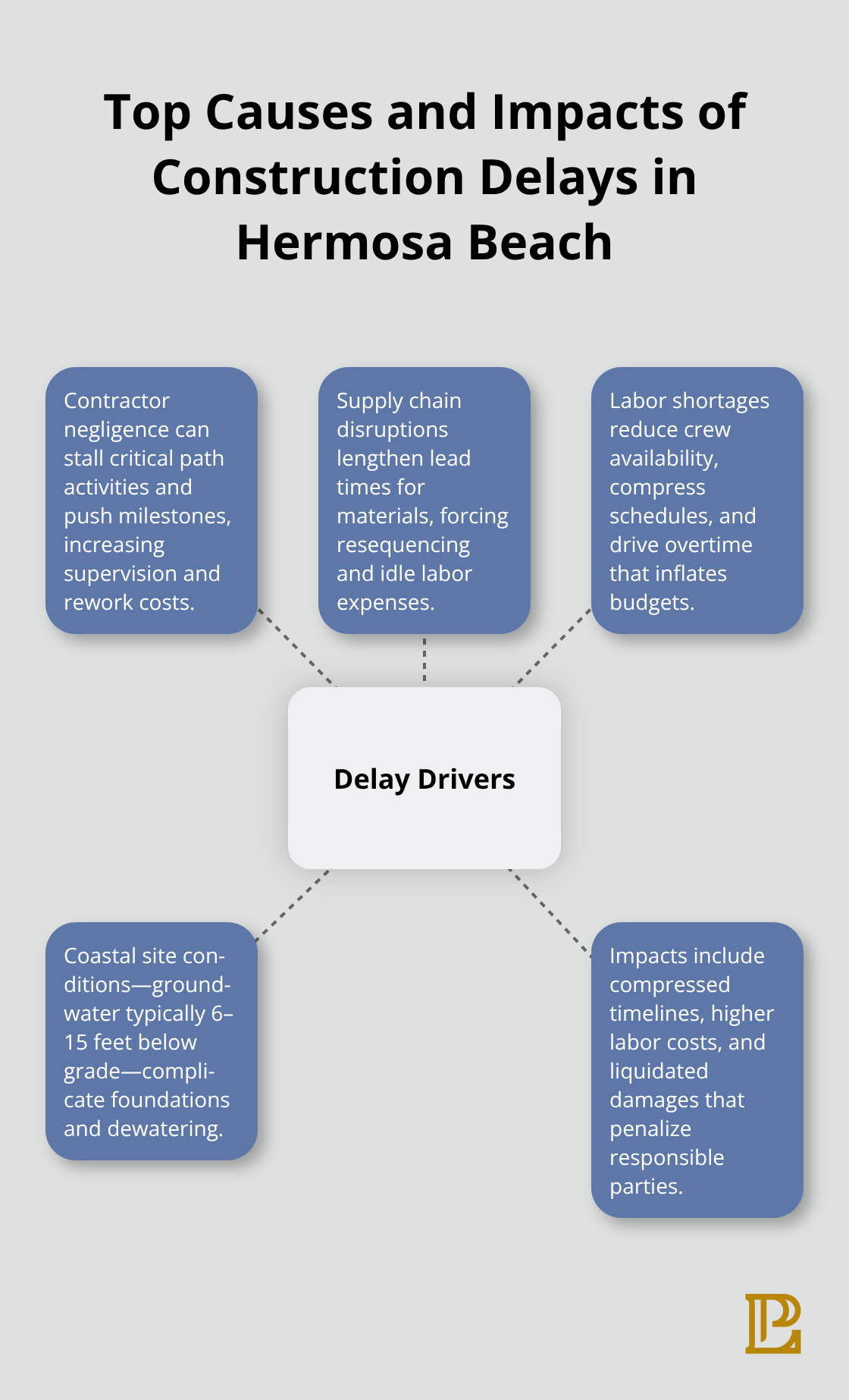
Delay and schedule claims rank second in frequency and represent one of the costliest dispute categories because they ripple through every line item in your budget. Delays stem from contractor negligence, supply chain disruptions, labor shortages, or unforeseen site conditions like the groundwater and geotechnical challenges common in Hermosa Beach’s coastal zone, where groundwater typically sits 6 to 15 feet below ground. These delays compress timelines, inflate labor costs, and often trigger liquidated damages clauses that penalize the responsible party. Documentation becomes your only defense; contractors must maintain detailed project schedules with milestones and daily progress reports to prove when delays occurred and who caused them.
Defective Work Creates Liability Exposure
Defective work and quality issues spark the most heated conflicts because they intersect liability, repair costs, and property value. In Los Angeles projects, construction defects range from cosmetic finishes to structural problems, and disputes center on who bears the repair cost and whether damages extend beyond the defect itself. These disputes prove particularly thorny in Hermosa Beach because the 2025 California Building Standards Codes that took effect January 1, 2026, impose strict seismic safety and energy efficiency requirements; any deviation from code creates liability exposure.
Prevention Starts With Clear Contracts and Documentation
The key to managing all three dispute types is prevention through clear, detailed contracts that define scope, payment terms, and responsibilities, combined with thorough documentation of site conditions, changes, and performance from day one. Contractors and owners who maintain comprehensive records-written agreements, schedules, site condition photos, payment history, and defect logs-establish a factual foundation that resolves disputes faster and more favorably. When conflicts do arise, you’ll have the evidence needed to support your position and move toward resolution.
Understanding these three dispute categories prepares you to recognize problems early and take action before they escalate. The next section explores how mediation and arbitration offer faster, more cost-effective paths to resolution than litigation.
Mediation and Arbitration for Construction Conflicts
How Mediation Resolves Disputes Faster
Mediation offers the fastest practical path to resolution when construction disputes arise in Hermosa Beach and Los Angeles projects. A neutral mediator meets with both parties to guide discussion toward a mutually acceptable settlement, and critically, the parties control the outcome rather than a judge or arbitrator imposing one. In California construction cases, mediators schedule sessions within days, not months, which means your project keeps moving while the dispute gets resolved. The process remains confidential, which protects your business reputation and allows candid conversation without statements being used against you later. Costs run substantially lower than litigation because you avoid months of discovery, depositions, and court proceedings; parties typically split the mediator’s fee, which ranges from a few hundred to a few thousand dollars depending on case complexity.
Why Construction-Focused Mediators Matter
The AAA California Construction Mediation Panel includes over 20 mediators with direct construction industry experience, which matters enormously because a mediator who understands construction timelines, supply chain disruptions, and site conditions identifies practical solutions that a general mediator might miss. These construction-focused mediators move parties toward resolution more efficiently by speaking the language of your industry and recognizing when a dispute stems from miscommunication versus genuine disagreement. For Hermosa Beach projects specifically, selecting a mediator familiar with California coastal geotechnical requirements and the 2025 Building Standards Codes helps address technical disputes around groundwater intrusion, foundation design, or code compliance that often trigger conflicts.
Arbitration: When You Need a Binding Decision
Arbitration provides a faster, private alternative when mediation fails or when parties prefer a binding decision. An arbitrator hears evidence and arguments from both sides, then issues a final decision that is binding and not easily appealed, which creates certainty but removes the collaborative problem-solving that mediation offers. Arbitration typically takes weeks to months rather than the years litigation can consume, and the process avoids public court records, which protects sensitive project information and business details.
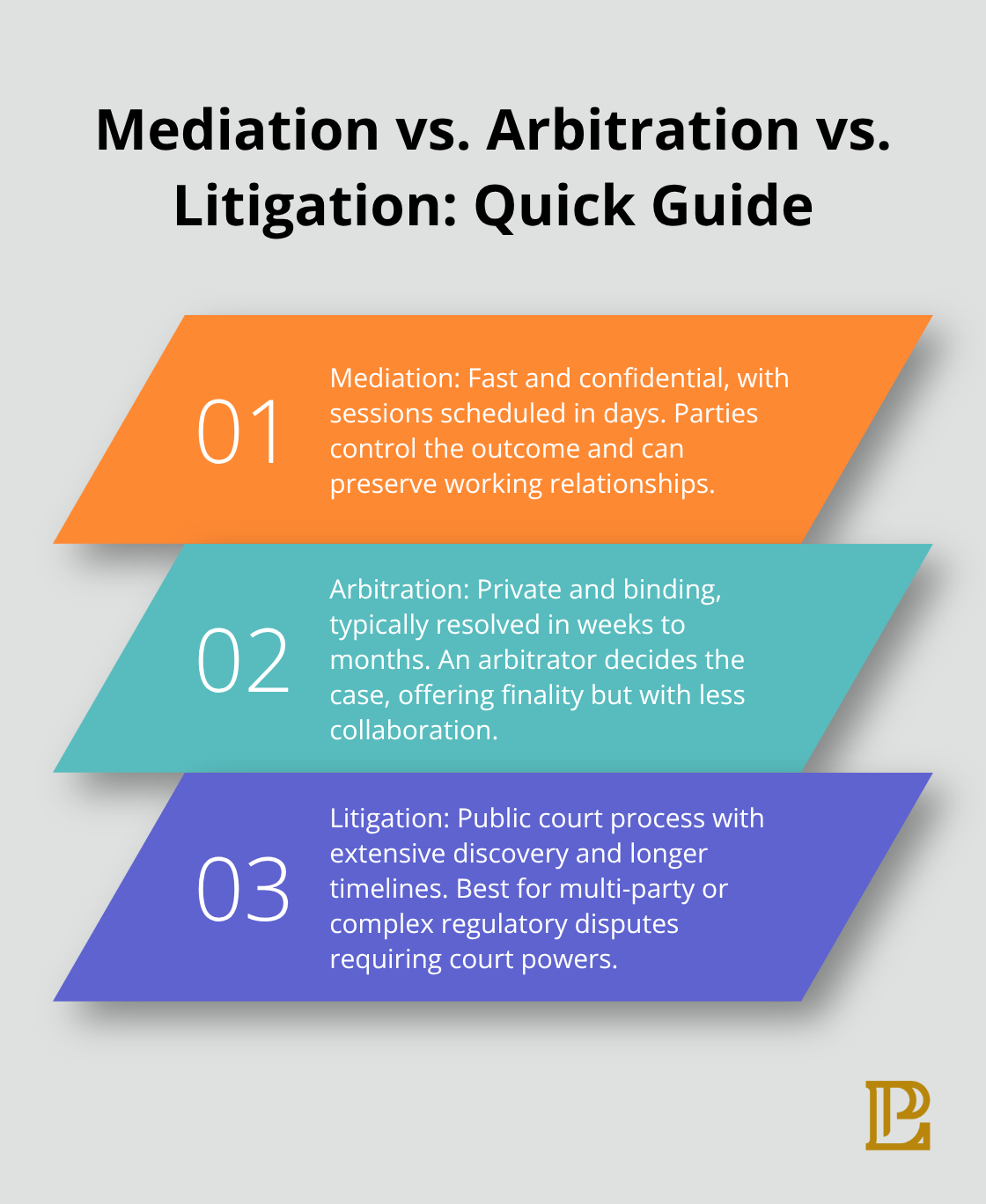
However, arbitration costs more than mediation because the arbitrator charges substantial hourly rates and you still incur attorney fees for preparation and hearing attendance.
When Arbitration Delivers Real Value
The real advantage of arbitration emerges when you need a definitive answer on a technical or legal question; if your Hermosa Beach project hinges on whether a geotechnical report adequately warned of groundwater risks, an arbitrator can evaluate expert testimony and issue a binding ruling that ends the dispute. Litigation remains the final recourse when disputes involve multiple parties, complex regulatory violations, or situations where you need the full investigative power of the courts, but the cost and timeline make it the least attractive option for most construction conflicts.
Moving From Alternative Resolution to Court
When mediation and arbitration fail to resolve your dispute, litigation becomes necessary. Understanding how California courts handle construction claims, manage evidence, and prepare cases for trial helps you prepare for this path and make informed decisions about whether to settle or proceed to judgment.
Filing a Construction Lawsuit in California: Timing, Strategy, and Discovery
Strict Deadlines Control Your Right to Sue
Litigation becomes necessary when mediation and arbitration fail to resolve your construction dispute, but timing and strategy matter enormously in California construction cases. California law imposes strict deadlines for filing claims; construction defect claims generally have a four-year statute of limitations from discovery of the defect, while breach of contract claims typically allow four years from the breach date. Missing these deadlines bars your claim entirely, which means if you’re uncertain about timelines, you must consult with a construction attorney immediately rather than waiting to see if negotiation succeeds. Filing a lawsuit also preserves your right to discovery, which grants access to the other party’s documents, emails, contracts, and financial records-evidence that mediation and arbitration cannot compel.
Discovery Reveals Hidden Evidence in Your Case
The discovery process in California construction litigation consumes substantial time and expense but generates the factual foundation for trial or settlement. Once you file suit, both parties exchange written questions (interrogatories), document requests, and notices for depositions, where witnesses answer questions under oath. For payment disputes, discovery targets contracts, change orders, invoices, payment records, and communications about scope changes; for defect claims, discovery focuses on design plans, specifications, construction reports, photographs, and any pre-construction geotechnical studies.
Hermosa Beach Projects Require Specialized Discovery Strategy
In Hermosa Beach cases involving groundwater or coastal foundation issues, discovery typically includes the geotechnical reports required by the City before construction begins, expert opinions on whether the report’s warnings were heeded, and evidence of mitigation measures actually implemented. A lawsuit also allows you to obtain building permits, plan-check records, and inspection logs from the City through formal discovery, which often reveals whether the other party violated permit requirements or code compliance obligations under the 2025 California Building Standards Codes. This access to municipal records provides factual evidence that settles technical disputes about whether construction met applicable standards.
Trial Preparation Demands Thorough Organization and Expert Support
Trial preparation requires organizing thousands of documents into exhibits, preparing witnesses for testimony, and potentially retaining construction experts to explain technical matters to a judge or jury. Your attorney must manage discovery strategically, prioritizing documents that support your position while protecting privileged communications with your own counsel. Most construction cases settle during or after discovery when both parties understand the strength of the other’s evidence, but you must prepare for trial as if settlement won’t happen, which means your attorney must be ready to present your case persuasively to a judge within weeks of trial date.
Final Thoughts
Construction dispute resolution in California requires matching your conflict to the right process. Mediation works best when both parties want to preserve the working relationship and reach a settlement quickly; it costs less, moves faster, and keeps your project moving forward. Arbitration makes sense when mediation fails and you need a binding decision from someone with construction industry knowledge, delivering finality without the public exposure of litigation. Litigation becomes necessary only when disputes involve multiple parties, regulatory violations, or situations where you need the investigative power of courts to uncover hidden evidence.
Start with negotiation and clear documentation from day one; maintain written agreements, daily progress reports, site condition photos, and payment records that establish facts before disputes escalate. If negotiation stalls, move to mediation within weeks rather than months, because delay compounds costs and project disruption. For Hermosa Beach and Los Angeles projects, selecting a mediator or arbitrator familiar with California coastal geotechnical requirements and the 2025 Building Standards Codes ensures they understand the technical disputes that commonly arise in your area.
We at Pierview Law help business owners and real estate developers navigate construction disputes through mediation, arbitration, and litigation. Whether your dispute involves payment timing, schedule delays, or defective work, we develop a strategy tailored to your project and goals. Contact us to discuss your construction dispute and determine the right path forward for your Hermosa Beach or Los Angeles project.