
Your brand is one of your most valuable business assets in Hermosa Beach and across California. Without proper trademark portfolio management, you risk losing control of what makes your business recognizable to customers.
At Pierview Law, we help business owners protect their brands through strategic trademark registration and ongoing monitoring. The right approach prevents costly disputes and strengthens your market position.
Why Trademark Protection Matters for California Businesses
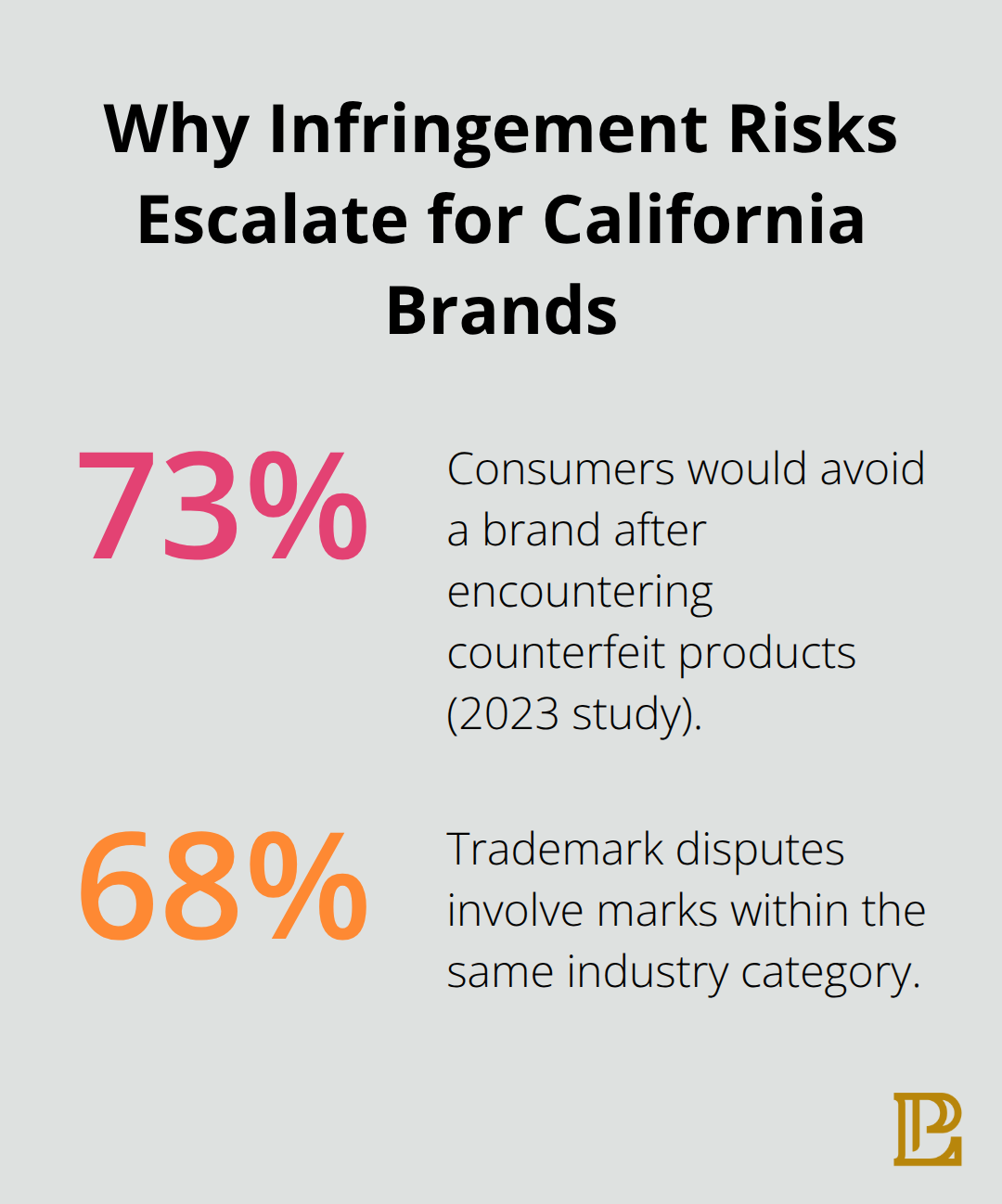
Trademark infringement costs California businesses millions annually. When a competitor uses a mark confusingly similar to yours, customers cannot distinguish between your products and theirs. This confusion directly reduces your sales and damages the reputation you’ve built. A 2023 study from the International Trademark Association found that 73% of consumers would avoid a brand after experiencing counterfeit products, meaning one infringement incident can trigger lasting customer loss. The risk intensifies in competitive business environments, where established brands operate alongside startups eager to capture market share.
Without a registered trademark portfolio, you have minimal legal recourse to stop infringement or recover damages. State registration in California provides additional remedies beyond federal protection, and the California Secretary of State filing fee is only $70 per classification, making dual protection affordable. Filing strategically across both federal and state levels creates overlapping legal shields that deter infringers and give you stronger enforcement options when disputes arise.
Unauthorized Use Erodes Your Market Position
Competitors who adopt similar marks deliberately exploit the goodwill you’ve earned through marketing and customer service. They capture customers who mistake their product for yours, diverting revenue that should flow to your business. The USPTO recognizes this harm through likelihood-of-confusion analysis, which courts apply when determining infringement. A registered trademark gives you legal standing to file cease-and-desist letters, negotiate settlements, or pursue federal litigation without proving you own the mark-registration itself serves as constructive notice nationwide. California law allows you to recover profits earned through infringement and damages up to three times the actual harm, creating financial consequences that discourage bad actors. Unregistered marks receive weaker protection under common law, requiring you to prove first use in commerce and spending substantially more on litigation to establish ownership. Registration also prevents the U.S. Patent and Trademark Office from issuing conflicting registrations to others, giving you priority protection that common law cannot match.
Long-Term Brand Value Requires Active Defense
Your trademark’s value grows as customer recognition increases, but only if you actively defend it. Trademarks that go undefended against infringement risk becoming generic-meaning they lose protection entirely and become available for anyone to use. The USPTO requires trademark owners to monitor renewals and file declarations of use every ten years, or registrations lapse. California businesses operating across multiple product lines or service categories need separate filings for each class of goods or services; a single application covers one classification, so a retail business selling clothing and offering consulting services requires two applications. Portfolio reviews every two to three years identify high-value marks worth defending and gaps where new registrations would strengthen protection. Ongoing watch services monitor the USPTO and state databases for potentially infringing filings, allowing you to object early before infringers establish market presence. This proactive approach costs far less than litigation but delivers significantly stronger outcomes when threats arise.
Next Steps for Your Brand Protection Strategy
The decisions you make today about trademark registration and portfolio structure directly shape your ability to enforce rights tomorrow. California businesses that file both federal and state applications gain access to multiple legal remedies and create stronger deterrents against infringement. Your next step involves conducting thorough trademark searches before filing to identify conflicts early and refine your branding decisions. Business law guidance can help you navigate registration requirements and build a portfolio tailored to your growth strategy.
Building Your Trademark Portfolio in California
Search Before You File
Trademark searches are not optional preliminaries-they form the foundation that prevents costly registration denials and future infringement disputes. Before you file any application, search the USPTO database, California Secretary of State records, and common-law sources to identify existing marks that could conflict with yours. The USPTO’s TESS (Trademark Electronic Search System) is free and searchable by mark name, design, or phonetic similarity. California’s trademark search tool provides free access to state registrations and pending applications.
Many California businesses skip these searches, then discover months later that the federal application faces rejection because a similar mark already exists. This forces them to rebrand or pursue expensive litigation to challenge the prior registration. Searching early costs nothing but prevents this waste.
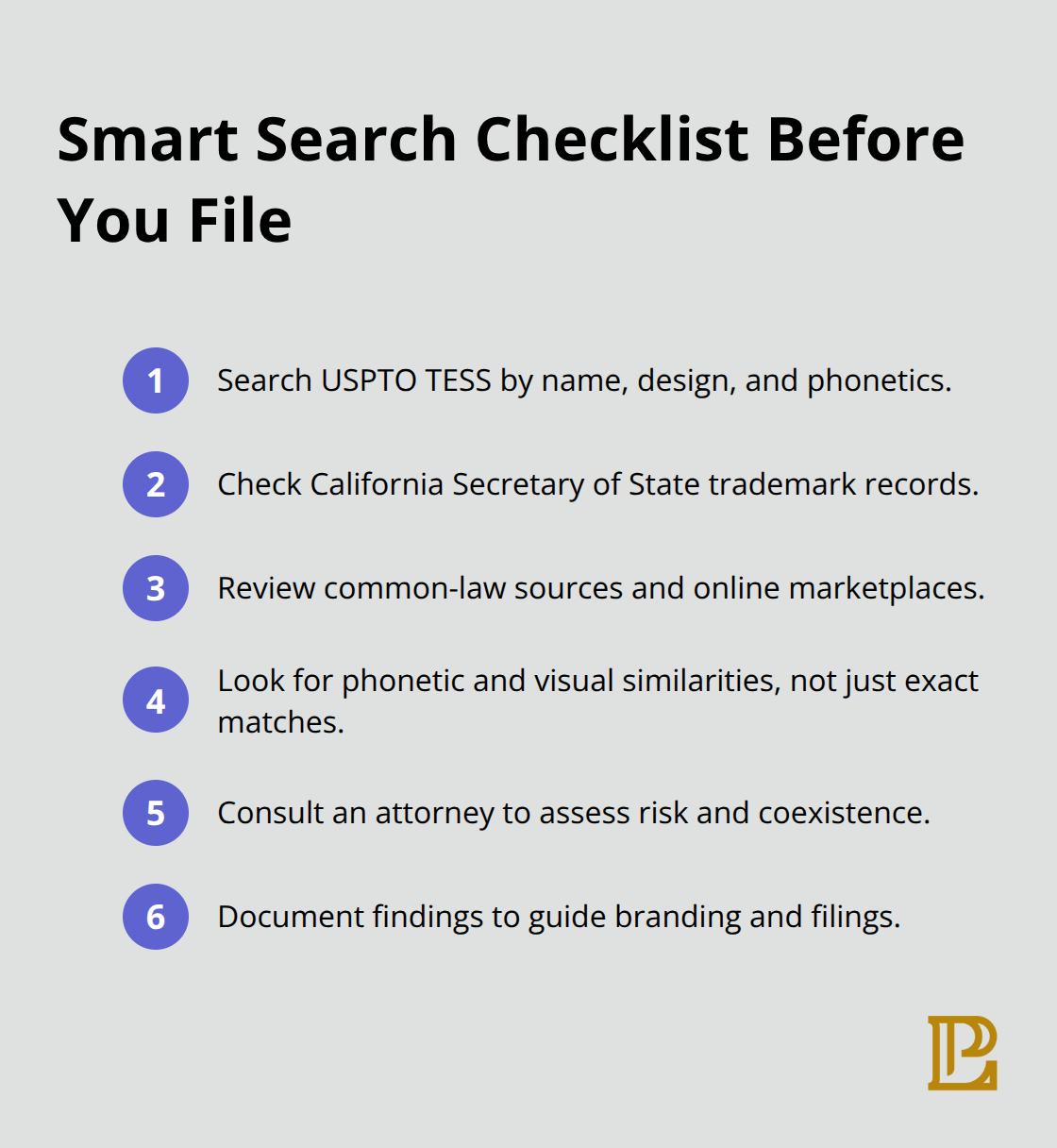
When you conduct searches, look beyond exact matches-courts assess likelihood of confusion based on how marks sound, appear, and function in the marketplace, not just identical spelling. A mark that sounds similar to an existing registration in your industry can trigger rejection or infringement liability even if the spelling differs.
After you identify potential conflicts, consult with an attorney to assess risk and decide whether your mark can coexist or requires modification.
File Federal and State Applications Strategically
Once you clear the search phase, file both federal and state applications to maximize protection. Federal registration through the USPTO provides nationwide priority and access to federal courts for enforcement, while California state filing adds supplementary remedies under state law and costs only $70 per classification. Filing both simultaneously is more cost-effective than filing state alone and then adding federal protection later, because you establish priority from a single filing date.
The USPTO typically processes applications within 4–6 months, though office actions (requests for clarification or amendments) can extend timelines. You must prepare specimens that demonstrate actual use in commerce-product packaging, screenshots of online sales pages, or service advertisements-to support your application. Respond promptly to any office actions to keep momentum and avoid unnecessary delays. Once registrations issue, continuous monitoring becomes your enforcement foundation.
Monitor and Protect Your Registrations
Watch services track the USPTO and California databases for filings that might infringe your mark, alerting you to potential conflicts before competitors establish market presence. Without monitoring, you miss early opportunities to object or send cease-and-desist letters, which weakens your enforcement position later. Calendar renewal deadlines at least 18 months before expiration; California and federal registrations require separate renewal filings, and missing deadlines results in loss of protection.
Portfolio reviews every two to three years identify which marks drive the most business value and where gaps exist in your protection strategy as your product lines expand. This ongoing attention transforms your trademark portfolio from a static collection of registrations into a dynamic asset that grows with your business. The next chapter addresses the specific challenges that arise as your brand operates across California’s competitive markets.
Protecting Your Mark When Competitors Get Too Close
Identifying and Responding to Similar Marks
Similar marks in your industry create immediate enforcement challenges that demand quick action. The USPTO applies a likelihood-of-confusion test that examines how marks sound, look, and function in the marketplace, not just whether they match exactly. Courts have found confusion even when marks differ in spelling if they produce similar phonetic sounds or create visual resemblance on store shelves. The International Trademark Association reports that 68% of trademark disputes involve marks within the same industry category, meaning your competitors operate in familiar territory and understand the customer base you’ve built.
When you spot a potentially infringing mark during your watch service monitoring, send a cease-and-desist letter immediately rather than waiting to gather more evidence. This action establishes your enforcement intent and often resolves disputes through negotiation before litigation becomes necessary. If the infringing party ignores your letter or continues use, you can file a federal lawsuit or pursue opposition proceedings at the USPTO Trademark Trial and Appeal Board. California state courts also provide remedies for state-registered marks, giving you multiple enforcement pathways.
Document everything from the moment you discover the similar mark-screenshots, dates, marketplace locations-because this record strengthens your position if litigation follows. Many California businesses hesitate to enforce early, fearing conflict, but delay weakens your legal standing and signals weakness to competitors who may escalate their infringement.
Managing Renewal Deadlines and Maintenance Obligations
Renewal deadlines and maintenance obligations create a different category of risk that catches many brand owners off guard. Federal registrations require a Declaration of Use filing between years nine and ten after registration, then again every ten years thereafter, with a $125 to $225 filing fee per mark depending on filing method. Miss this deadline and your registration cancels automatically, eliminating federal protection even if you continue using the mark.
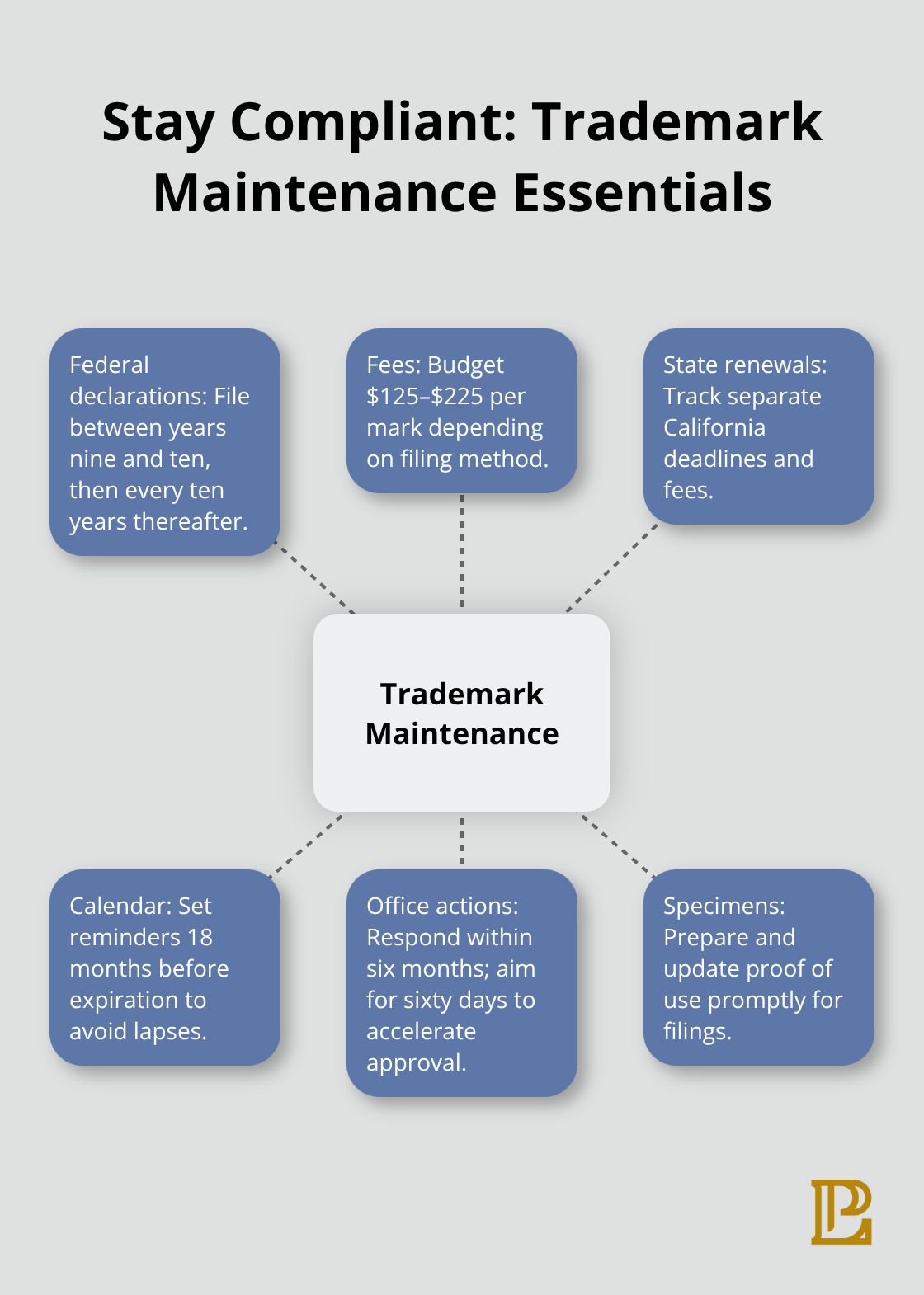
California state registrations require separate renewal filings with their own deadlines and fees, meaning a business with ten registered marks across federal and state systems faces multiple renewal dates spread throughout the year. Set calendar reminders at least eighteen months before each expiration date, not three months before, because office actions or required amendments can consume time and push you past the deadline. Portfolio management software tracks these dates automatically, preventing the administrative oversight that destroys brand protection.
Responding to USPTO office actions demands the same urgency-the agency typically allows six months to respond, but responding within sixty days demonstrates commitment and often accelerates approval. When the USPTO requests specimens or additional information, gather materials immediately rather than waiting until the deadline approaches.
Enforcing Your Rights Against Counterfeiting and Unauthorized Use
Counterfeiting and unauthorized use require a structured enforcement response that escalates based on the infringer’s behavior. First, gather evidence of the infringing use through photographs, online screenshots, purchase receipts, and customer complaints that document confusion. Calculate the scope of infringement-is the competitor using your mark on a single product line or across multiple categories-because broader infringement justifies more aggressive enforcement.
Send a cease-and-desist letter that clearly identifies the infringing conduct, cites your registration numbers, and demands cessation within a specific timeframe, typically ten to thirty days. Many infringers stop at this stage when they realize you possess registered rights and will pursue legal action. If the infringer continues, federal litigation under the Lanham Act allows you to recover profits earned through infringement and damages up to three times the actual harm, plus attorney fees in cases of willful infringement.
California law provides additional state law remedies for state-registered marks, sometimes offering faster resolution in state court than federal proceedings. Throughout enforcement, maintain detailed records of communications, costs, and business impact because these details support damage calculations if litigation proceeds.
Final Thoughts
Trademark portfolio management requires consistent action from the moment you register your first mark through every renewal cycle. You build protection through three core practices: conducting thorough searches before filing, registering both federally and at the state level, and monitoring your portfolio continuously for infringement. Each step strengthens your legal position and creates layers of defense that deter competitors and provide enforcement options when disputes arise.
Professional legal guidance transforms trademark protection into a strategic business asset that supports your growth. An attorney helps you navigate registration requirements, assess infringement risks accurately, and respond to enforcement challenges with the right legal tools. We at Pierview Law work with California business owners to build portfolios aligned with your specific market position and growth trajectory, identifying high-value marks worth defending aggressively and structuring filings that maximize remedies under both federal and state law.
Schedule a consultation with our team to discuss your trademark needs and develop a protection strategy that fits your business. Whether you operate solely in Hermosa Beach or across Los Angeles County, the decisions you make now about registration and enforcement directly determine your ability to protect what you’ve built.