
Buying commercial property in Hermosa Beach requires careful planning and thorough investigation. Most buyers skip critical steps during the purchasing process, only to face expensive problems after closing.
We at Pierview Law have helped numerous business owners navigate commercial property due diligence. This checklist walks you through the essential reviews and inspections that protect your investment.
Title Review and Property Records
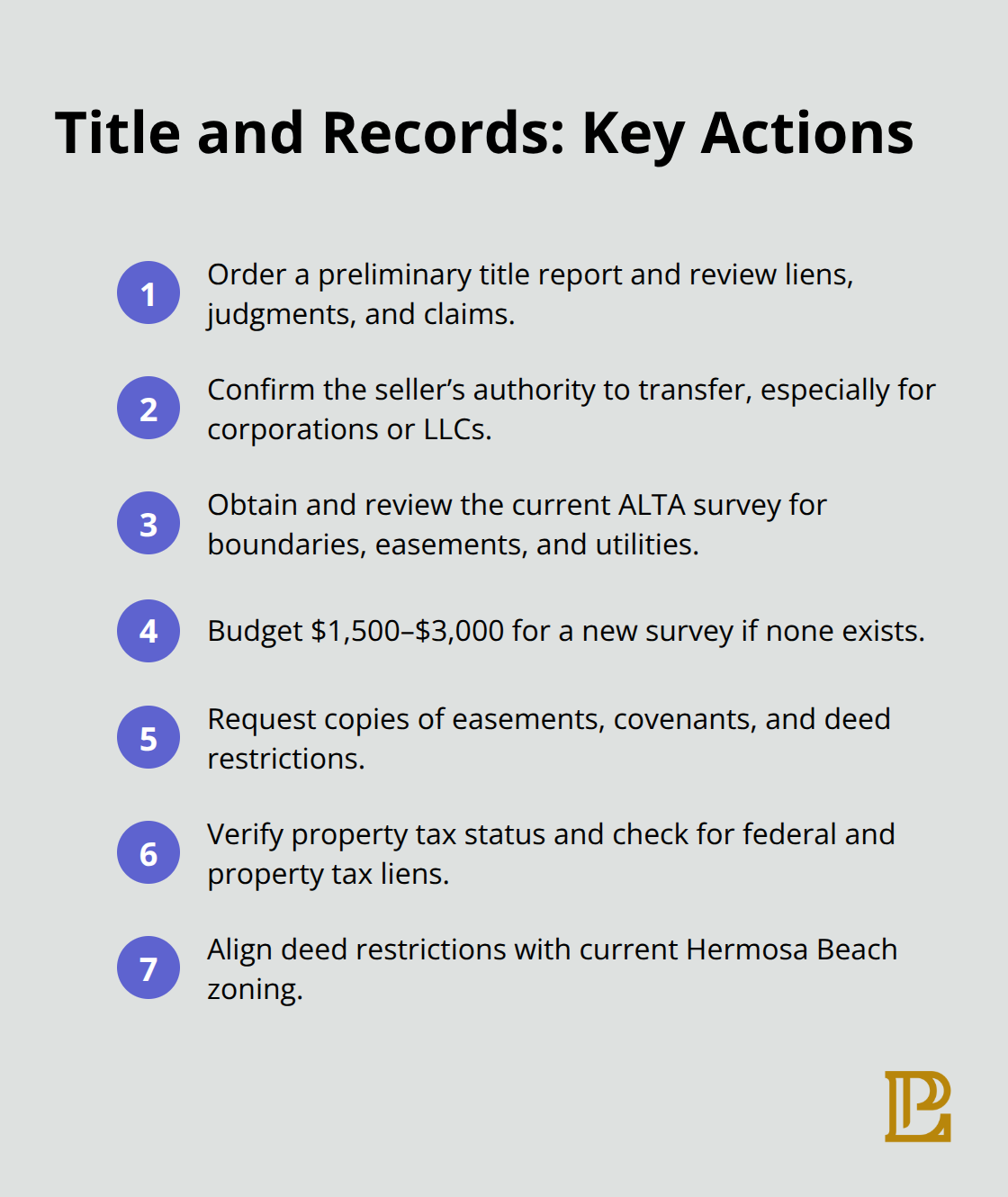
Start with the title report before anything else. Most Hermosa Beach commercial buyers request a preliminary title report from a title company, which costs between $300 and $800 and arrives within 3–5 business days. This report reveals ownership history, existing liens, mortgages, judgments, and any claims against the property. Don’t assume the seller’s word is good enough-the title report is your first line of defense. Federal tax liens appear on roughly 5–10% of commercial properties and can survive a sale, making you liable for unpaid taxes. Verify that the property has a current ALTA survey, which details boundary lines, easements, utility locations, and flood zones. If no recent survey exists, budget $1,500 to $3,000 for a new one; this step catches encroachments and reveals whether neighboring properties have rights to use portions of your land.
Verify Ownership and Authority to Transfer
Confirm that the seller actually owns the property and has the legal authority to transfer it-especially critical when the seller is a corporation or LLC. Request copies of all existing easements, restrictive covenants, and deed restrictions; these can limit how you use the property or require you to maintain shared facilities. One common problem surfaces after purchase: a neighbor’s easement for parking or utility access that wasn’t disclosed upfront.
Understand Liens and Encumbrances
Liens come in many forms, and each one affects your ability to operate or refinance. Mechanic’s liens from contractors or suppliers who weren’t paid can attach to the property for up to four years in California. Environmental liens may exist if previous contamination wasn’t fully remediated. HOA liens (if the property is in a common-interest development) can exceed $10,000 and survive foreclosure. Ask the seller for a lien waiver or release before closing; don’t accept promises to pay after you take title. Property tax liens are particularly dangerous because they have priority over nearly all other claims, meaning the county can foreclose if taxes aren’t current. Review the last three years of property tax bills to confirm no amounts are overdue.
Identify Deed Restrictions and Zoning Alignment
Deed restrictions written decades ago still bind your use today. A restriction prohibiting commercial use, limiting building height, or requiring architectural approval can kill your business plan. Cross-check these restrictions against Hermosa Beach’s current zoning code. The city’s IN-THE-ZONE zoning update (with Phase II work continuing through 2026–2027) may change what’s allowed on your property, so confirm current restrictions don’t conflict with your intended use. An attorney should review all recorded documents to identify any that limit your operations or require consent from neighboring property owners. Once you’ve confirmed title clarity and zoning alignment, the next phase involves assessing the physical condition and environmental status of the property itself.
Physical Inspection and Environmental Assessment
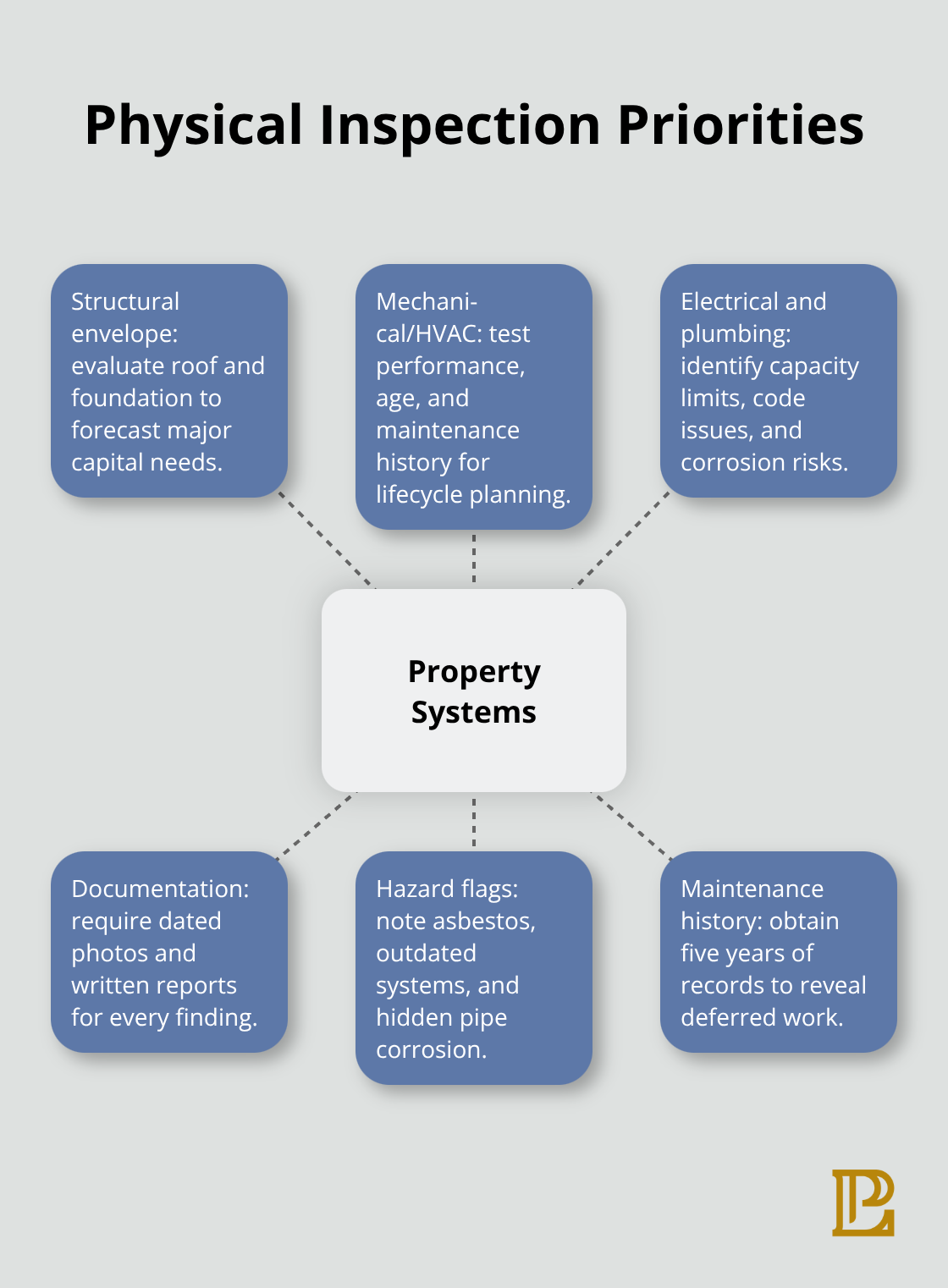
A structural inspection and environmental assessment separate sound investments from costly disasters. Hire a licensed structural engineer or building inspector to evaluate the roof, foundation, HVAC systems, plumbing, electrical, and parking areas; this typically costs $800 to $2,000 and takes 2–3 hours on-site. Don’t rely on the seller’s claims about recent repairs or system condition-obtain written documentation with photos and timestamps. Many Hermosa Beach commercial properties built before 1980 contain outdated electrical systems, asbestos insulation, or corroded pipes hidden behind walls. Request maintenance records for the last five years; if records are sparse or missing, assume deferred maintenance and budget accordingly.
Phase I Environmental Site Assessment
A Phase I Environmental Site Assessment (Phase I ESA) is non-negotiable for any commercial property purchase. This assessment costs between $1,700 and $2,500 in California and takes 7–10 business days to complete. The Phase I ESA must follow ASTM E1527-21 standards and be conducted by an Environmental Professional who meets EPA requirements; this documentation allows your lender and other stakeholders to rely on the findings for financing decisions. The Phase I identifies Recognized Environmental Conditions (RECs) by reviewing the property’s history, interviewing occupants, and inspecting for signs of contamination such as staining, improper chemical storage, or underground storage tanks. Common RECs on commercial properties include former gas stations, dry cleaners, industrial facilities, and agricultural sites-all of which can trigger cleanup liabilities reaching hundreds of thousands of dollars if discovered after closing.
Phase II Testing and Remediation Planning
If the Phase I identifies a REC, a Phase II ESA with soil and groundwater sampling becomes necessary to quantify contamination and estimate remediation costs. Phase II testing can add $3,000 to $8,000 or more depending on site conditions and sample depth. This step prevents you from inheriting environmental liabilities that could force expensive cleanup work or regulatory action after you take title.
Zoning Compliance and Permits
Zoning compliance verification happens simultaneously with environmental work. Confirm the property’s zoning classification aligns with your intended use by obtaining a zoning certificate from Hermosa Beach’s Planning Division and reviewing the current Zoning Code. Verify that past renovations and current operations have valid building permits and Certificates of Occupancy on file; unpermitted work can trigger costly compliance orders or fines. The city’s IN-THE-ZONE zoning update continues through 2026–2027, so check the Planning Division website for any pending zoning changes that might affect your property’s value or use.
ADA Compliance and Code Violations
Request written confirmation from the city that the property complies with ADA accessibility standards; non-compliance can result in lawsuits and expensive retrofitting. Gather all permits, occupancy certificates, code violation notices, and warranties related to the property. If violations exist, request written evidence that they has been resolved or obtain a timeline and cost estimate for remediation before closing. Once you’ve confirmed the physical condition and environmental status, your attention shifts to the financial health of the property and the tenants who occupy it.
Financial Performance and Tenant Stability
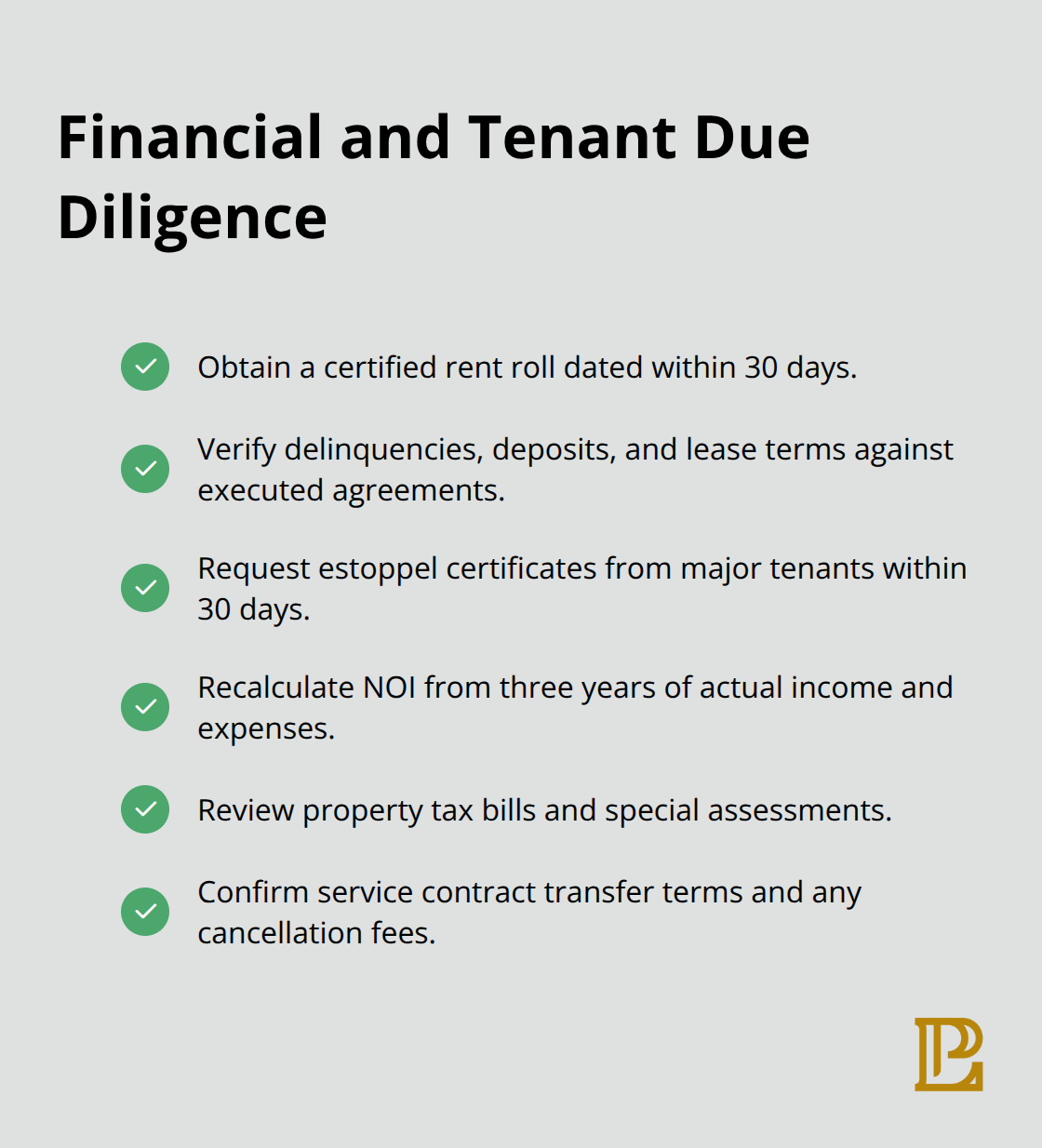
Lease agreements and tenant payment history reveal whether the property generates reliable income or harbors collection problems. Request a certified rent roll dated within the last 30 days showing current rent, previous rent amounts, any delinquencies, security deposits held, years each tenant has occupied the space, and lease start and end dates. Cross-check this rent roll against the full lease agreements to verify that documented rents match actual lease terms and catch any side agreements or informal rent reductions the seller failed to disclose.
Verify Tenant Payment History and Lease Terms
Review tenant payment history for the last 12 months to gauge cash-flow stability; if tenants consistently pay late or if collection rates fall below 95 percent, the property’s actual income is lower than advertised. Request estoppel certificates from major tenants within 30 days of your offer; these signed documents confirm lease terms, rent amounts, and whether tenants have claims against the seller. A tenant who signs an estoppel certificate stating rent is $5,000 monthly cannot later claim the seller promised a discount or owed them money. Many Hermosa Beach commercial buyers skip this step and discover post-closing that a tenant disputes the lease terms or refuses to pay at the documented rate, creating immediate cash-flow problems.
Calculate Net Operating Income Accurately
Operating expenses determine the property’s true profitability and reveal whether current management is efficient or wasteful. Obtain complete accounting records for the last three years including all income sources, operating expenses, utility bills, maintenance costs, and tax statements. Calculate Net Operating Income (NOI) yourself rather than accepting the seller’s figures: NOI equals total income minus operating expenses before debt service and capital improvements. If the seller claims NOI of $150,000 annually but utility bills average $2,000 monthly and you discover $8,000 in undocumented maintenance costs, the actual NOI drops significantly.
Understand Tax Obligations and Hidden Assessments
Property tax obligations in Hermosa Beach follow California’s Proposition 13 framework, meaning your assessed value resets to market value at purchase, triggering a reassessment and higher taxes. Review the last three years of property tax bills, any pending assessments, and successful or pending tax appeals to understand what you’ll owe after closing. Special assessments for local improvements, Mello-Roos districts, or property-owner associations can add $500 to $5,000 annually to your tax bill and often surprise new owners who didn’t review these hidden obligations.
Review Service Contracts and Transfer Terms
Verify all service contracts including janitorial, landscaping, pest control, and security; confirm whether these contracts transfer to you or terminate at closing and whether termination triggers early-cancellation fees. A five-year janitorial contract at $2,000 monthly may legally bind you unless the seller obtains a release.
Final Thoughts
Commercial property due diligence protects your capital and prevents costly surprises after closing. The checklist you’ve reviewed covers title verification, environmental assessment, zoning compliance, tenant stability, and financial analysis-each step eliminates risk and strengthens your negotiating position. Skipping any of these areas leaves you vulnerable to liens you didn’t know existed, environmental liabilities that cost hundreds of thousands to remediate, tenants who dispute lease terms, or zoning restrictions that block your business plan.
Before closing, confirm that the seller has delivered all required documents: the title report, ALTA survey, Phase I ESA with a Reliance Letter, zoning certificate, certified rent roll, three years of operating statements, lease agreements with estoppel certificates from major tenants, property tax bills, service contracts, and any permits or code violation notices. Tie your contingency period to the seller’s final document delivery so your review clock doesn’t start until you have everything in hand. If the seller delays or refuses to provide documents, that signals potential problems.
We at Pierview Law recommend engaging an attorney early in the process, particularly for title review, lease negotiations, and contingency drafting. Our business law and real estate services cover entity formation, contract drafting, and lease negotiations-all critical to protecting your interests during commercial property due diligence. Contact us to discuss your commercial property transaction and ensure your due diligence process is thorough and legally sound.