
Running a California business means navigating a complex web of state and federal regulations. One misstep in LA corporate law compliance can expose your company to fines, lawsuits, and operational disruptions that damage your bottom line.
At Pierview Law, we’ve seen firsthand how businesses struggle with employment classifications, tax reporting, and industry-specific rules. The good news is that building a solid compliance framework isn’t complicated-it just requires the right approach and consistent attention.
What California Businesses Must Get Right on Compliance
Employment Classification Under California Law
California employment law creates real consequences for misclassification. The state’s ABC test, established through Assembly Bill 5, presumes workers are employees unless your business proves three things: the worker operates independently, performs work outside your usual business operations, and maintains their own independent business. The California Department of Industrial Relations enforces this aggressively. A single misclassified worker triggers wage claims, penalties up to $5,000 per violation according to Labor Code Section 2699, and back pay obligations that compound quickly.
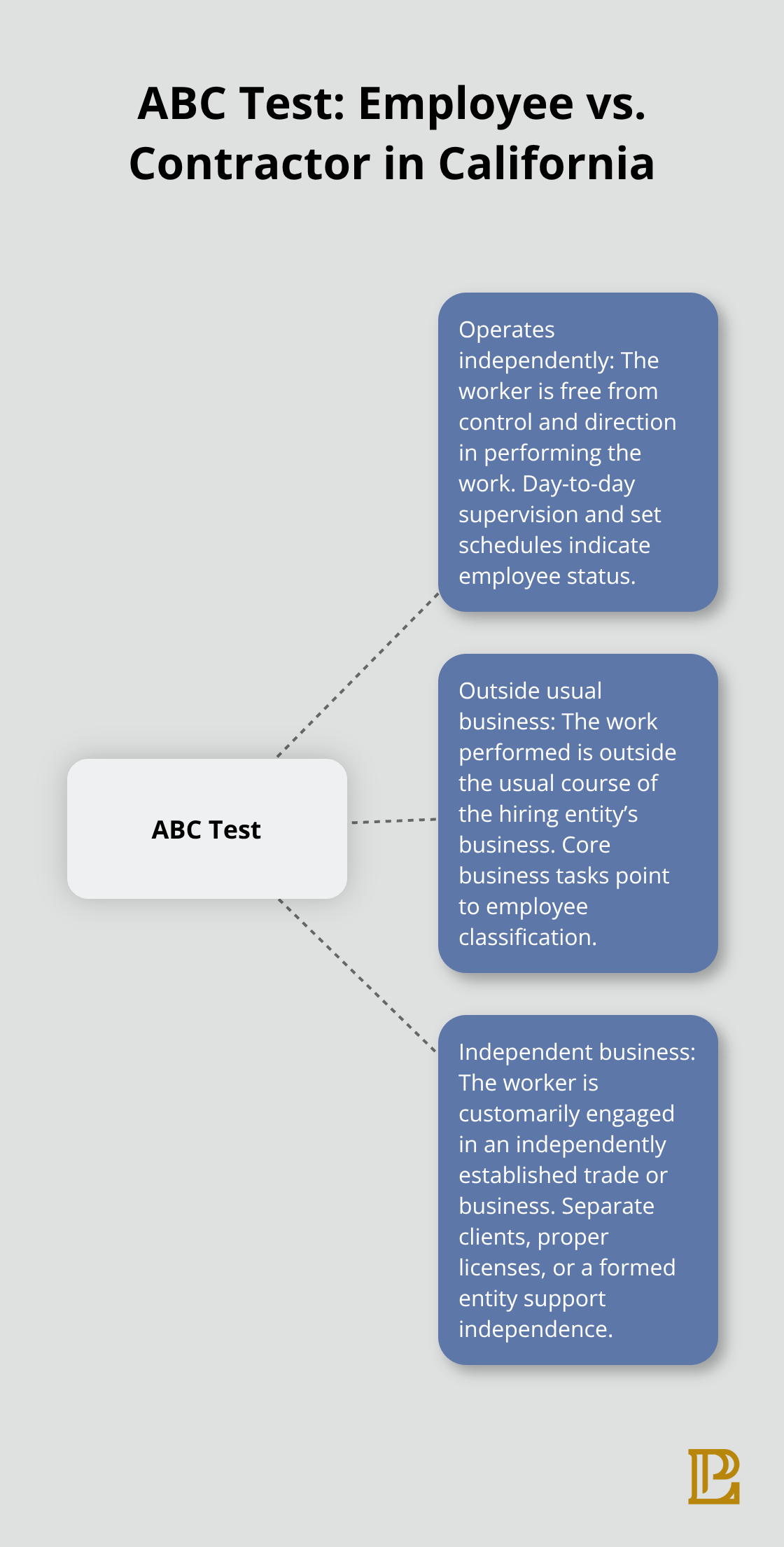
Many LA businesses incorrectly classify sales representatives, delivery drivers, and administrative contractors as independent contractors when they should be employees. The fix requires you to document how workers actually perform their duties, not how you wish they would. If someone works regular hours under your supervision, follows your procedures, and depends on your business for income, California law treats them as an employee regardless of what your contract says.
State and Federal Tax Structure Decisions
Tax compliance in California requires attention to multiple filing deadlines and thresholds. The state taxes corporate income at a flat 8.84% rate for C-corporations, but S-corporations operate as pass-through entities where income flows to shareholders. This distinction matters enormously for your bottom line-choosing the wrong structure costs money.
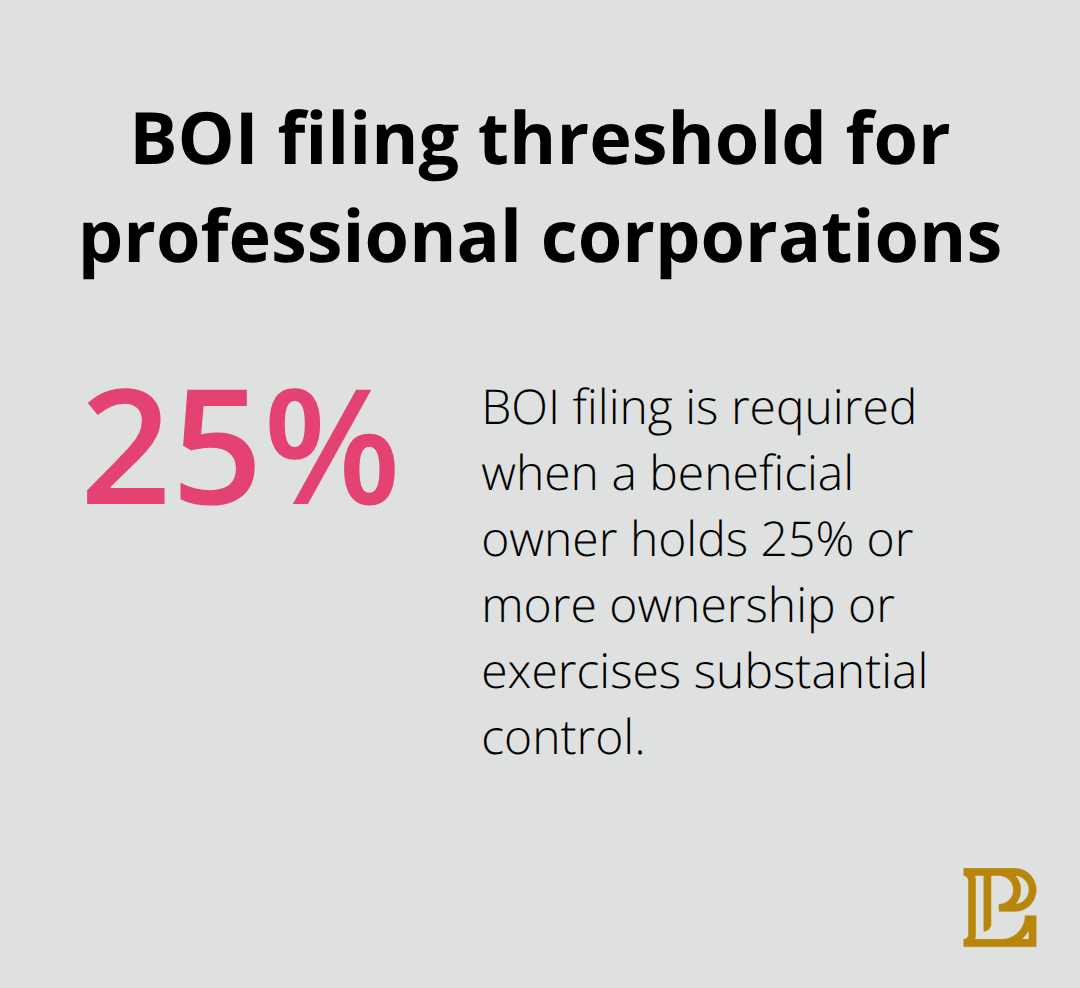
Beyond state taxes, California requires annual filings of the Statement of Information with the Secretary of State. Professional corporations must also file the new Beneficial Ownership Information Report with FinCEN if any beneficial owner holds 25% or more ownership or exercises substantial control. This federal requirement applies to all California professional corporations and carries penalties up to $500 daily for non-compliance.
Industry-Specific Regulatory Landscapes
Industry-specific rules vary dramatically depending on your business type. If you operate a dental practice, you need a professional corporation structure and must renew your Fictitious Name Permit every two years for a $325 fee. Restaurants and bars face additional licensing complexity around alcohol service hours. Real estate businesses must understand title requirements and zoning restrictions specific to coastal areas like Hermosa Beach, where regulations are stricter than inland Los Angeles.
The practical approach requires you to map out your specific industry requirements early, not after you’ve already structured your business incorrectly and incurred unnecessary tax liability. Each industry carries its own compliance obligations, and overlooking them during formation creates expensive problems later. Understanding these requirements upfront positions your business to operate legally from day one and protects you from costly corrections down the road.
Where LA Businesses Stumble on Compliance
Misclassifying Workers as Independent Contractors
California businesses make a critical mistake when they misclassify workers as independent contractors. Under Assembly Bill 5, the ABC test creates a presumption that all workers are employees unless your business meets three strict conditions. The California Department of Industrial Relations audits classifications aggressively, and a single misclassified worker triggers wage claims, penalties up to $5,000 per violation under Labor Code Section 2699, and back pay obligations that multiply quickly.
Many LA businesses treat delivery drivers, sales representatives, and administrative support staff as contractors because they work part-time or off-site. This reasoning fails under California law. If someone works under your supervision, follows your procedures, or depends on your business for income stability, they qualify as an employee regardless of what the contract says. The fix requires documenting how work actually happens, not how you wish it would happen.
Neglecting Record-Keeping Requirements
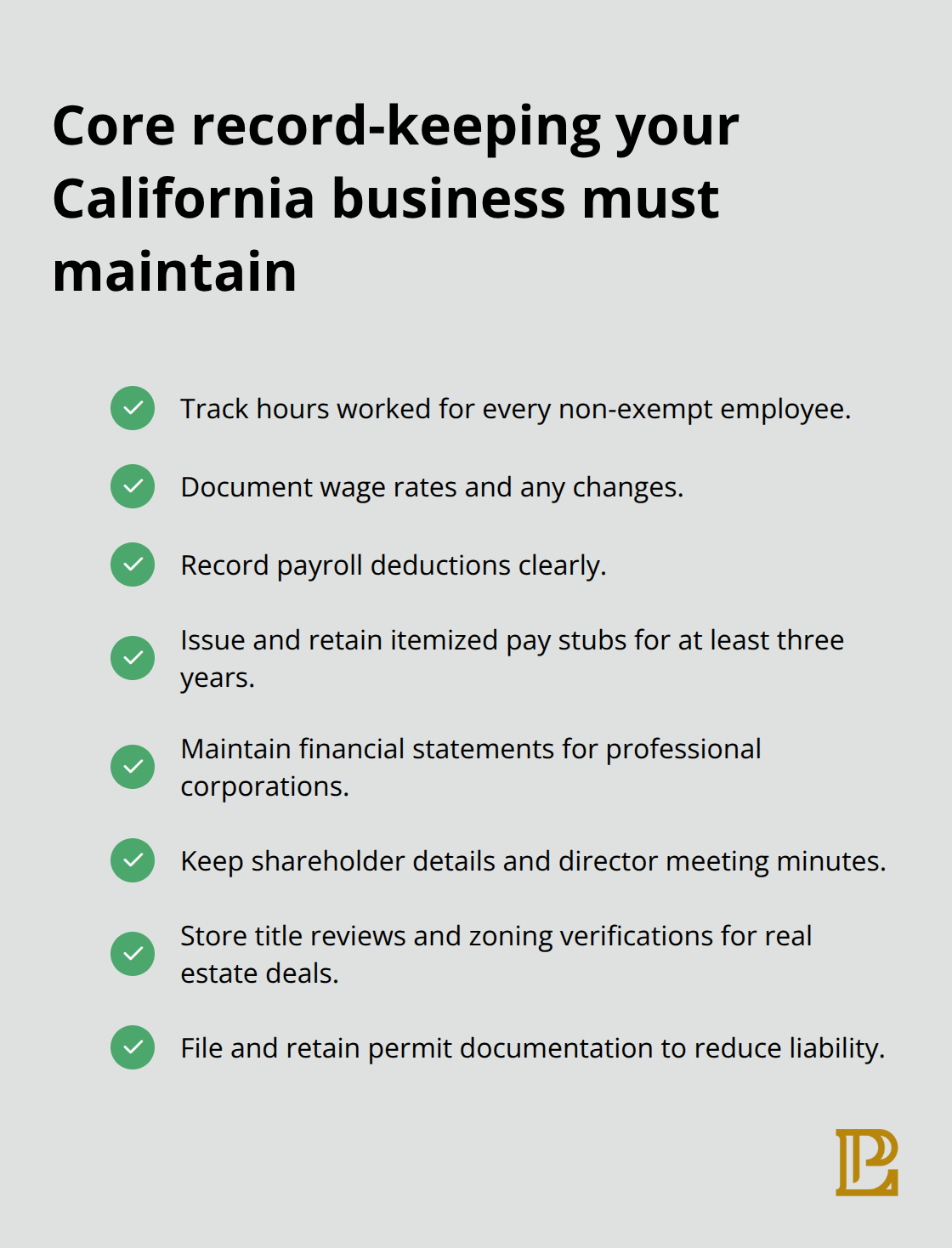
Treating record-keeping as optional rather than mandatory exposes your business to serious liability. California law requires businesses to maintain employment records including hours worked, wage rates, deductions, and itemized pay stubs for at least three years. Professional corporations must keep financial statements, shareholder details, and director meeting minutes organized and accessible. Real estate transactions demand title reviews, zoning verification, and permit documentation that protects your business from future liability.
When audits or disputes arise, businesses without organized records face penalties and lose the ability to defend their compliance. The absence of documentation becomes evidence against you, not a neutral factor. Establishing a filing system and retention schedule from the start prevents scrambling later when regulators or opposing parties request records.
Skipping Regular Compliance Reviews
A business that reviews compliance once during formation and never again drifts out of compliance gradually. Tax laws change annually, employment regulations shift, and industry-specific requirements update without warning. Professional corporations must file annual Statements of Information with the California Secretary of State and maintain annual shareholder and director meetings with documented minutes. Many LA businesses miss these deadlines, exposing themselves to penalties and loss of corporate status.
The solution requires scheduling quarterly or semi-annual reviews of employment classifications, tax filings, permit renewals, and industry-specific obligations. Building a compliance calendar with specific dates for each obligation removes guesswork and prevents costly oversights. This systematic approach transforms compliance from a reactive scramble into a manageable routine.
These three mistakes-misclassification, poor documentation, and infrequent reviews-create the foundation for larger problems. The next step involves building a framework that prevents these errors from taking root in your business.
Building Your Compliance Framework
Map Your Current Compliance Status
Start with a compliance assessment that maps your specific obligations rather than relying on generic checklists. Pull together your employment records, tax filings, permits, and licenses to understand what you currently have in place and what gaps exist. For professional corporations in California, verify you’ve filed your Statement of Information annually with the Secretary of State, obtained your Beneficial Ownership Information Report filed with FinCEN within 30 days of incorporation, and maintained current meeting minutes and corporate bylaws. If you operate in Hermosa Beach, review your business license status through the city’s online portal-your license remains valid for one year and requires annual renewal to stay compliant. Many new Hermosa Beach businesses qualify for a first-year business license tax waiver, which reduces startup costs (though this doesn’t apply to bars or restaurants serving alcohol after midnight). Document which industry-specific permits apply to your business, whether that’s a Fictitious Name Permit for dental practices or zoning reviews for commercial operations. This audit reveals exactly where your business stands and prevents you from addressing problems that don’t exist while missing ones that do.
Assign Clear Responsibility and Accountability
Once you understand your obligations, establish clear procedures that assign responsibility and create accountability. Designate someone on your team to maintain employment records including hours worked, wage rates, and itemized pay stubs for at least three years-this person becomes your compliance coordinator, not necessarily someone with legal training but someone who follows a system consistently. Create a compliance calendar with specific dates for each obligation: quarterly reviews of worker classifications using the ABC test, annual Statement of Information filings by the deadline, semi-annual audits of your documentation systems, and renewal dates for permits and licenses. Many LA businesses fail because they treat compliance as something to handle when problems appear, not as an ongoing responsibility.
Track Deadlines and Documentation
Set up a simple spreadsheet or use compliance management software to track filing deadlines, required documents, and responsible parties. Review your employment contracts and independent contractor agreements to verify they accurately reflect how work actually happens-if a worker operates under your supervision and depends on your business for income, no contract language changes their employee status under California law. Schedule quarterly reviews where you examine recent changes to tax law, employment regulations, or industry-specific rules that might affect your business (these updates happen regularly and can shift your compliance obligations). This systematic approach transforms compliance from a source of anxiety into a routine that protects your business from the costly mistakes outlined in the previous section.
Final Thoughts
LA corporate law compliance protects your business from fines, operational disruptions, and liability that damage growth. The three areas covered in this post-employment classification, tax structure, and industry-specific regulations-form the foundation of a compliant operation. Misclassifying workers, neglecting documentation, and skipping regular reviews create the conditions for serious problems that compound over time.
Proactive compliance management transforms how your business operates. When you establish clear procedures, assign responsibility, and track deadlines consistently, compliance becomes routine rather than reactive. Your business avoids the wage claims, penalties, and audit exposure that plague companies treating compliance as optional, while you also build credibility with clients, partners, and investors who expect professional operations.
The practical next step involves conducting a compliance assessment specific to your business. Pull together your employment records, tax filings, permits, and licenses to identify gaps, and if you operate in Hermosa Beach, verify your business license status through the city’s online portal and confirm renewal deadlines. We at Pierview Law help businesses build compliance frameworks that protect operations and support growth through business law services covering entity formation, contract drafting, and ongoing compliance support across Los Angeles County.