
Los Angeles commercial real estate is shifting rapidly. Flexible workspaces are replacing traditional offices, mixed-use developments are reshaping neighborhoods, and remote work continues to reshape demand patterns.
At Pierview Law, we help property investors and business owners navigate these changes with confidence. Understanding current market dynamics and legal requirements is essential before making your next move.
What’s Actually Happening in LA’s Commercial Real Estate Right Now
Los Angeles office vacancy hit 24.5% across the county, with Downtown Los Angeles sitting at over 31% according to Cushman & Wakefield. This isn’t theoretical damage-it reshapes how property deals work. Landlords now offer free rent periods stretching six months or longer and tenant improvement allowances reaching 15% of the deal value just to fill space.
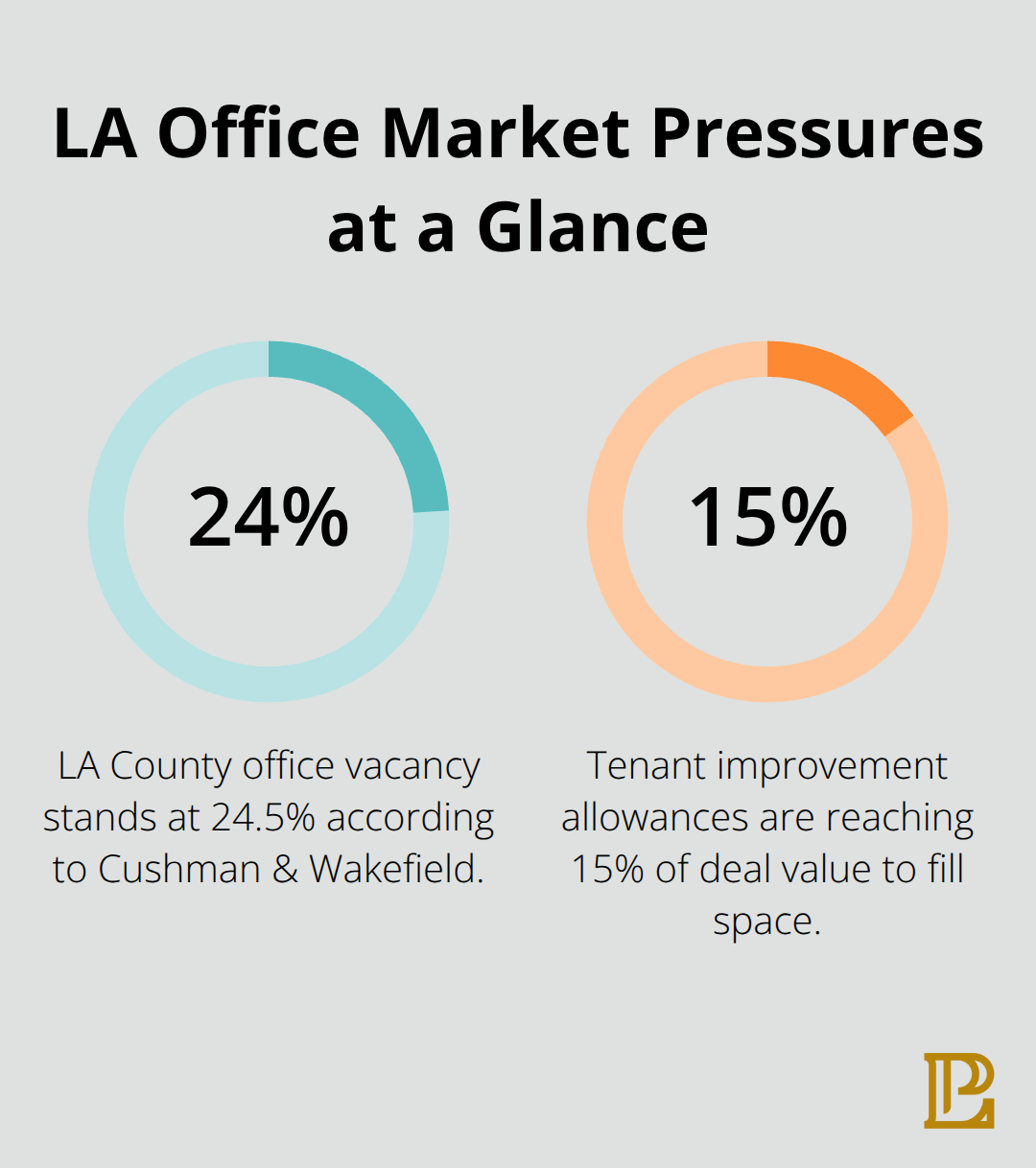
The legal sector remains the strongest leasing engine, with firms like Loeb & Loeb signing 139,200-square-foot deals in Century City, but this concentrated demand masks weakness everywhere else. Property owners who held onto traditional Class B and C office inventory face negative net absorption, meaning tenants leave faster than new ones arrive. If you evaluate an office building purchase in LA County right now, the asking price likely doesn’t reflect the concessions needed to actually lease the space.
Mixed-Use Properties Outperform Single-Use Formats
Hermosa Beach currently lists five properties for sale totaling over 40,000 square feet, with mixed-use and retail formats showing stronger leasing velocity than pure office. The average price per square foot in Hermosa Beach hovers around $890, but mixed-use properties on Pacific Coast Highway and Hermosa Avenue command $1,305 per square foot or higher because they serve multiple tenant types simultaneously. Properties built or renovated recently-like the 2022 construction near the waterfront-lease faster because they already accommodate flexible layouts. A building designed for one tenant type locks you into a weakening market, while mixed-use or adaptive space gives you negotiating room and multiple revenue streams.
Flexible Workspace Arrangements Drive Tenant Demand
Remote work destroyed demand for traditional nine-to-five office configurations, but it created opportunity for smaller, specialized spaces. Coworking and shared office arrangements now occupy significant portions of LA’s leased inventory because tenants want flexibility without long-term commitments. When you evaluate any commercial property in Los Angeles, assess whether the layout supports conversion to mixed-use or flexible arrangements-that flexibility directly impacts resale value and your ability to attract tenants during downturns. Properties that adapt to these changing tenant preferences maintain stronger occupancy rates and command premium positioning in a competitive market.
What Actually Determines Property Value in LA
Location Attracts the Right Tenant Types
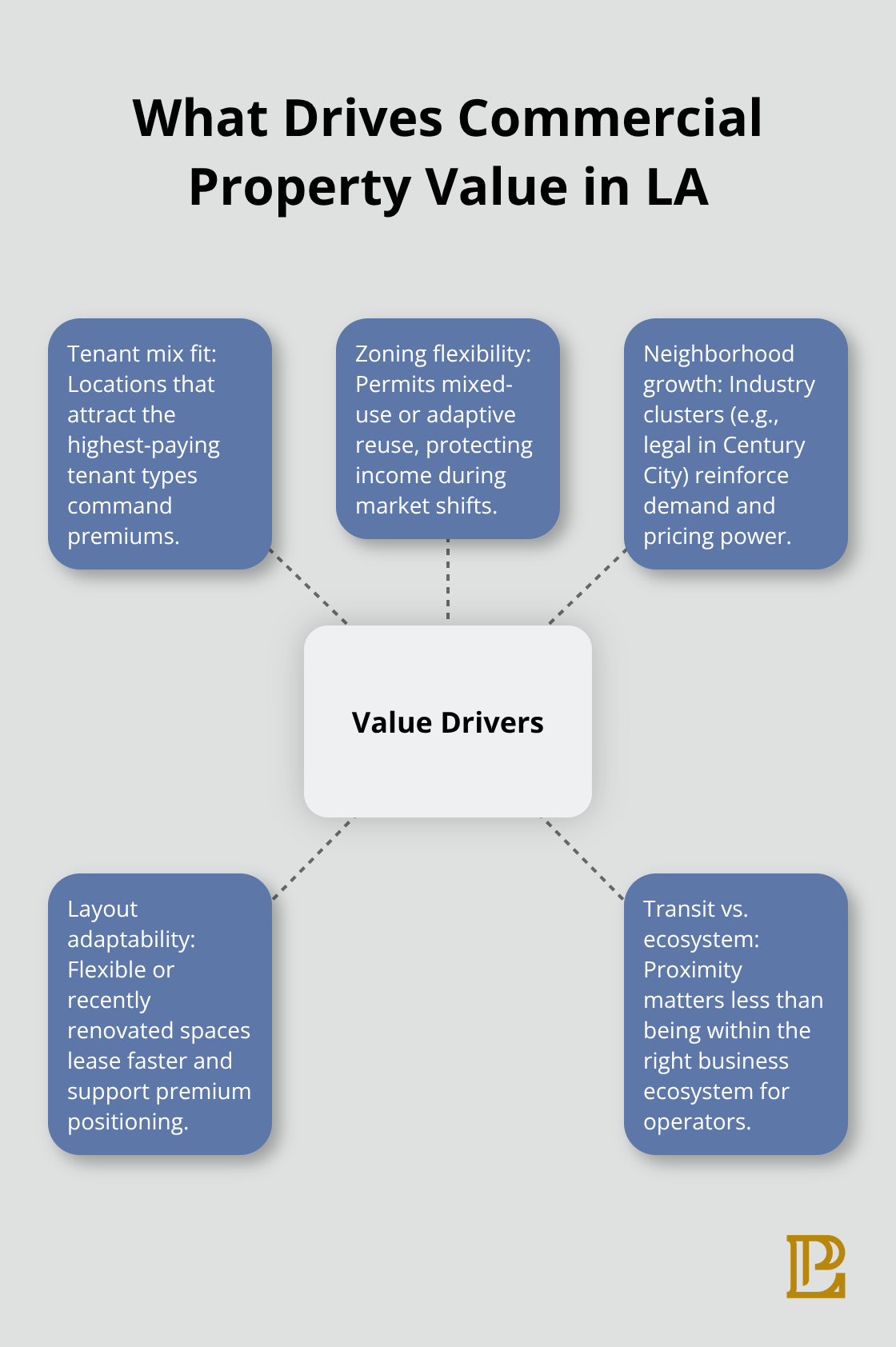
Location matters, but not the way most people think. Proximity to transportation hubs sounds logical until you realize that Hermosa Beach properties command $1,305 per square foot despite sitting 30 miles from Downtown LA’s major transit corridors. What actually drives value is the tenant mix that a location can support. Hermosa Beach’s Pacific Coast Highway corridor attracts retail and mixed-use operators willing to pay premium rates because foot traffic and beach proximity create revenue opportunities those tenants cannot find elsewhere. When you evaluate a property, stop asking whether it sits near a metro station and start asking what type of business will pay the highest rent for that specific location.
Downtown LA office space sits at 31% vacancy because the location alone no longer justifies premium pricing when tenants can work anywhere. Conversely, life sciences and healthcare operators in Orange County’s Irvine Spectrum pay top dollar despite moderate transit access because the business ecosystem there supports their operations. The strongest performing properties in Los Angeles right now sit in submarkets where the right tenant types cluster and reinforce each other’s presence.
Zoning Flexibility Protects Your Investment
Zoning determines whether you can capitalize on market shifts or get locked into a failing use. A building zoned for office-only use in LA County faces serious challenges given that office vacancy has climbed for 11 consecutive quarters and landlords now offer six-month free rent periods just to fill space. Properties with flexible zoning that permits mixed-use, retail, or adaptive conversion maintain negotiating leverage and can pivot to stronger-performing tenant types.
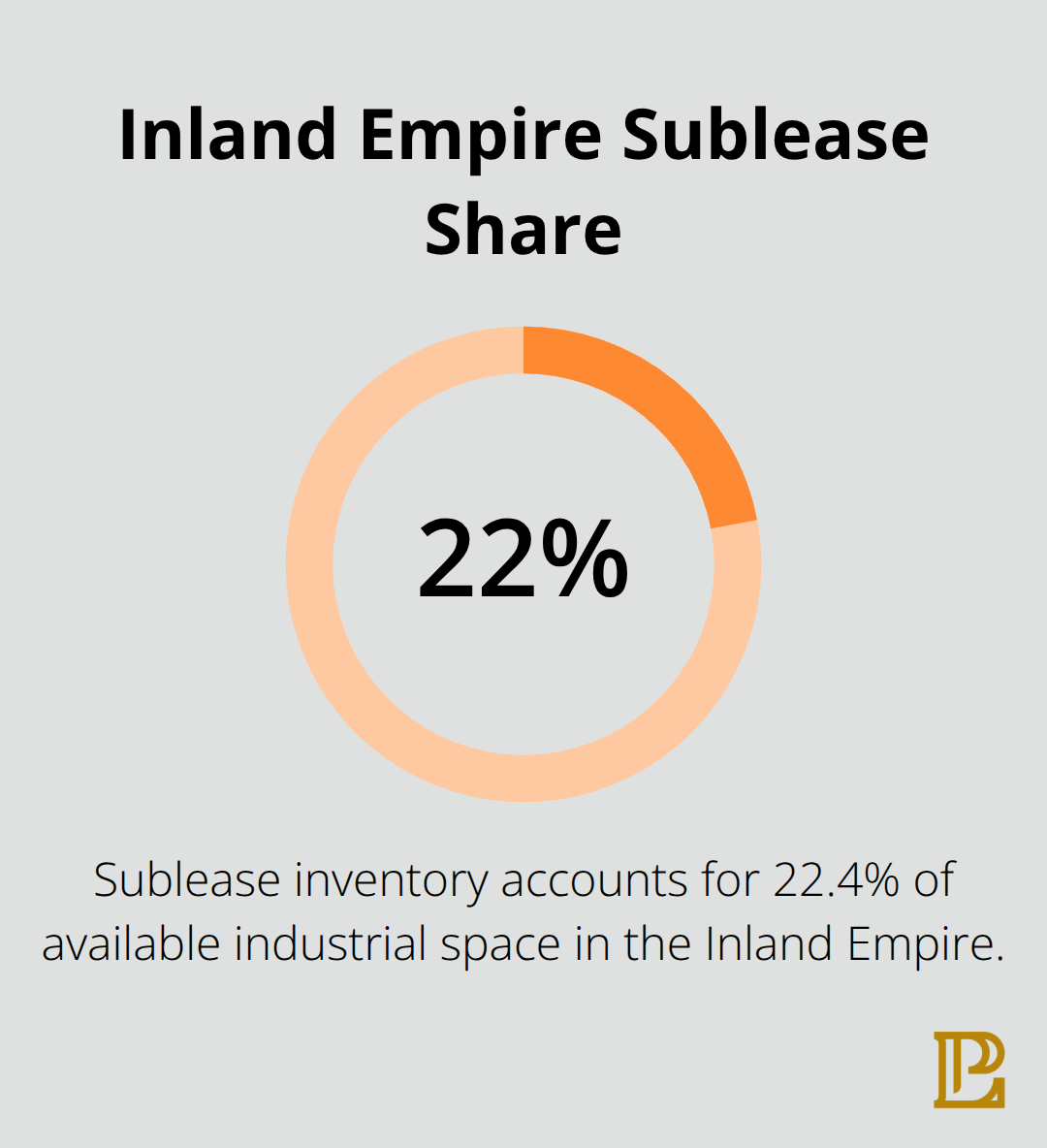
Inland Empire properties demonstrate how zoning flexibility creates value. Those markets attract health care providers and local businesses specifically because lower rents and flexible space configurations align with their operational needs, and industrial vacancy there has begun declining while sublease inventory sits at 22.4% of available space. Before you purchase any commercial property in Los Angeles County, verify the current zoning, identify what other uses the property could legally accommodate, and calculate whether a zoning change is feasible if the primary use weakens.
Economic Growth Concentrates in Specific Neighborhoods
Economic growth concentrates in specific neighborhoods, and that concentration shifts over time. Legal sector activity remains strong in Century City because firms want proximity to each other and to established client bases, but that same concentration means oversupply in other office markets. Your investment thesis should focus on neighborhoods where business growth is actually occurring, not where it existed five years ago.
The neighborhoods you target today will determine whether your property appreciates or depreciates over the next decade. Properties positioned in emerging growth corridors outperform those in established but stagnating submarkets. Understanding zoning implications and identifying properties positioned to benefit from neighborhood trends requires local knowledge that goes beyond standard market reports. Pierview Law works with property investors throughout Los Angeles County to review zoning restrictions, assess neighborhood trajectories, and structure deals that align with long-term value creation.
How to Structure a Commercial Real Estate Deal in LA
Verify Title Ownership and Identify Hidden Liabilities
Before you commit capital to any Los Angeles commercial property, verify title ownership and confirm that no liens, easements, or encumbrances will surprise you after closing. Title review reveals whether a seller actually owns what they claim to sell and whether previous transactions created obligations that transfer to you. Request a preliminary title report at least 30 days before closing to identify issues early enough to negotiate solutions.
Check for mechanic’s liens on recently renovated properties, especially those built or updated in 2012 or later, since construction work can generate claims that attach to the property. Verify that zoning permits the intended use and that no restrictive covenants prevent the tenant mix you plan to attract. Many Hermosa Beach properties show recent construction or renovation, but title defects from that work can cost tens of thousands to resolve after purchase.
Negotiate Lease Terms That Protect Your Income
The quality of your lease agreements determines whether the property actually generates the income projections you relied on when calculating purchase price. Landlords in LA County now offer six-month free rent periods and tenant improvement allowances just to fill space, which means your lease must clearly define what happens when that free period ends and whether the tenant has exit rights if the market weakens further.
Negotiate renewal options that favor your position rather than accepting tenant-friendly terms that lock you into below-market rates. Define maintenance responsibilities precisely because tenants will argue that landlord-funded improvements were their concessions rather than your obligations. Set clear lease terms around parking, common area charges, and operating expense caps so that tenant disputes don’t drain profitability.
Properties in Hermosa Beach showing mixed-use or flexible layouts command $1,305 per square foot, but only if leases protect your ability to capture that premium through renewal terms and use restrictions that prevent tenant substitution with lower-paying operators.
Compare Your Investment Against Real Market Data
Risk assessment requires comparing your property against actual market data rather than projections. Cushman & Wakefield reports that LA County office vacancy stands at 24.5% with Downtown LA exceeding 31%, meaning your investment thesis must account for extended lease-up periods and aggressive landlord concessions. Calculate what rent you can realistically achieve given current market conditions, subtract the free rent and tenant improvement allowances you’ll actually offer, and compare that net rent to the purchase price you’re considering.
Properties in declining submarkets may never reach asking prices, while those in emerging neighborhoods with life sciences or healthcare tenants show stronger fundamentals. Inland Empire industrial assets demonstrate positive absorption with vacancy declining, while sublease inventory accounts for 22.4% of available space, signaling that direct negotiations may yield better terms than competing for lease-listed space.
Build Flexibility Into Your Underwriting
Run sensitivity analysis on your underwriting by reducing projected occupancy by 20 percent and extending lease-up timelines by six months to account for current market weakness. Properties with flexible zoning that permit mixed-use or adaptive reuse maintain value during downturns because you can shift tenant types if original projections disappoint. This flexibility protects your capital when market conditions shift faster than your initial assumptions predicted.
Final Thoughts
LA commercial real estate demands more than market awareness-you need legal protection at every stage, from title verification through lease execution. The market data is clear: office vacancy exceeds 31% in Downtown LA, landlords offer aggressive concessions, and properties without zoning flexibility face serious downside risk. Your investment thesis must account for these realities and build in contingencies that protect your capital when market conditions shift.
Working with local legal counsel matters because LA County’s commercial landscape varies dramatically by submarket. What works in Hermosa Beach’s mixed-use corridor differs fundamentally from strategies in Inland Empire industrial markets or Orange County life sciences clusters. A lawyer familiar with local zoning, neighborhood trends, and title issues catches problems that generic templates miss, and title defects from recent construction, mechanic’s liens, restrictive covenants, and zoning restrictions can cost tens of thousands to resolve after closing if you don’t identify them beforehand.
Identify the specific property or submarket you’re targeting, then have a lawyer review the title and zoning before you commit to negotiations. Verify what lease terms actually protect your income given current market conditions, and run sensitivity analysis on your underwriting to account for extended lease-up periods and the free rent periods that are now standard in LA County deals. Contact Pierview Law to discuss your specific situation and move forward with confidence.