
Construction projects in Hermosa Beach often hit unexpected roadblocks. When disagreements arise over contracts, timelines, or payments, the costs-both financial and emotional-can spiral quickly.
At Pierview Law, we’ve seen how construction contract disputes derail projects and damage business relationships. The good news is that most conflicts can be resolved efficiently with the right approach and preparation.
What Causes Construction Disputes in Hermosa Beach
Ambiguous Contract Language
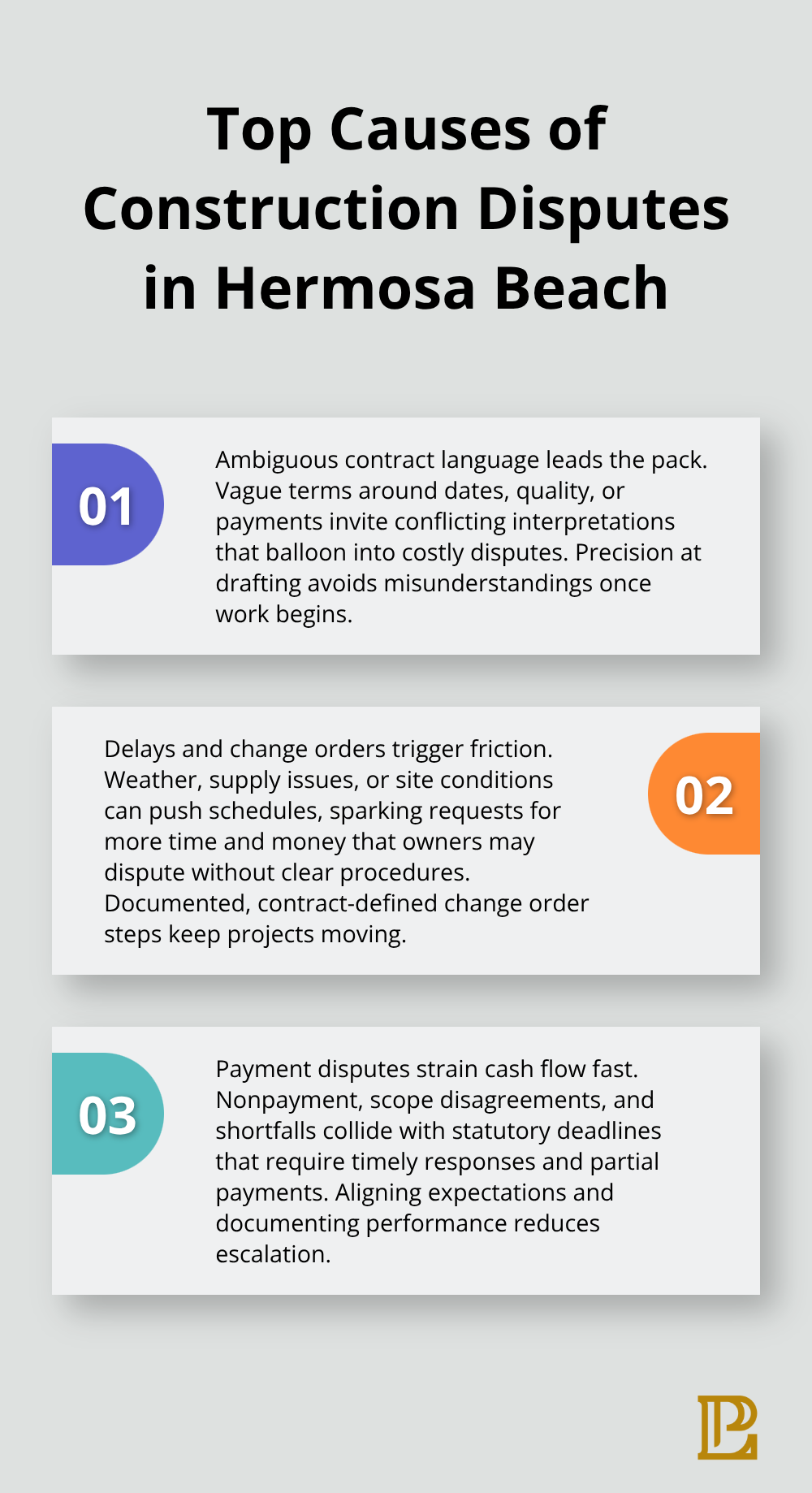
Ambiguous contract language stands as the leading source of construction disputes we see in Hermosa Beach. When terms like completion date, quality standards, or payment conditions lack precision, parties interpret them differently-and those differences explode into conflict. A contractor might read a contract clause about material specifications one way while the property owner reads it another. Thousands of dollars hang in the balance once work is underway.
The solution is straightforward: contracts need specific language tied to measurable standards, not vague references to industry norms or reasonable practices. Include exact product names, square footage calculations, completion timelines with calendar dates, and payment schedules that break down costs by phase. Precision during drafting costs far less than litigation later.
Delays and Change Order Conflicts
Delays and change orders create the second major category of disputes. A project falls behind schedule-weather, supply shortages, or unforeseen site conditions cause the slowdown. The contractor requests additional time and often additional payment. The property owner disputes both, arguing the delay stems from poor planning or inefficiency.
Change orders themselves become flashpoints. A property owner requests modifications mid-project, the contractor quotes a price, and disagreement follows about scope, cost, or whether the change order was properly documented. Without clear change order procedures in the contract, these disputes spiral quickly and halt progress.
Payment Disputes and Cash Flow Problems
Payment disputes round out the troublemakers. Contractors and subcontractors don’t receive full payment, property owners claim work fell short of contract standards, and cash flow grinds to a halt. California law now provides structured protections through Civil Code Section 8850, which requires property owners to respond to payment claims within 30 days, identify disputed portions, and pay undisputed amounts within 60 days.
Failure to comply triggers mandatory mediation and can lead to work suspension. Undisputed amounts that go unpaid accrue interest at 2 percent per month. These statutory requirements exist because payment disputes damage projects and relationships faster than almost any other conflict. Understanding these rules helps both contractors and property owners navigate the process and avoid costly escalation.
The path forward depends on how you respond to these disputes-and that response starts with knowing your options for resolution.
How to Resolve Construction Disputes in Hermosa Beach
Negotiation and Direct Communication
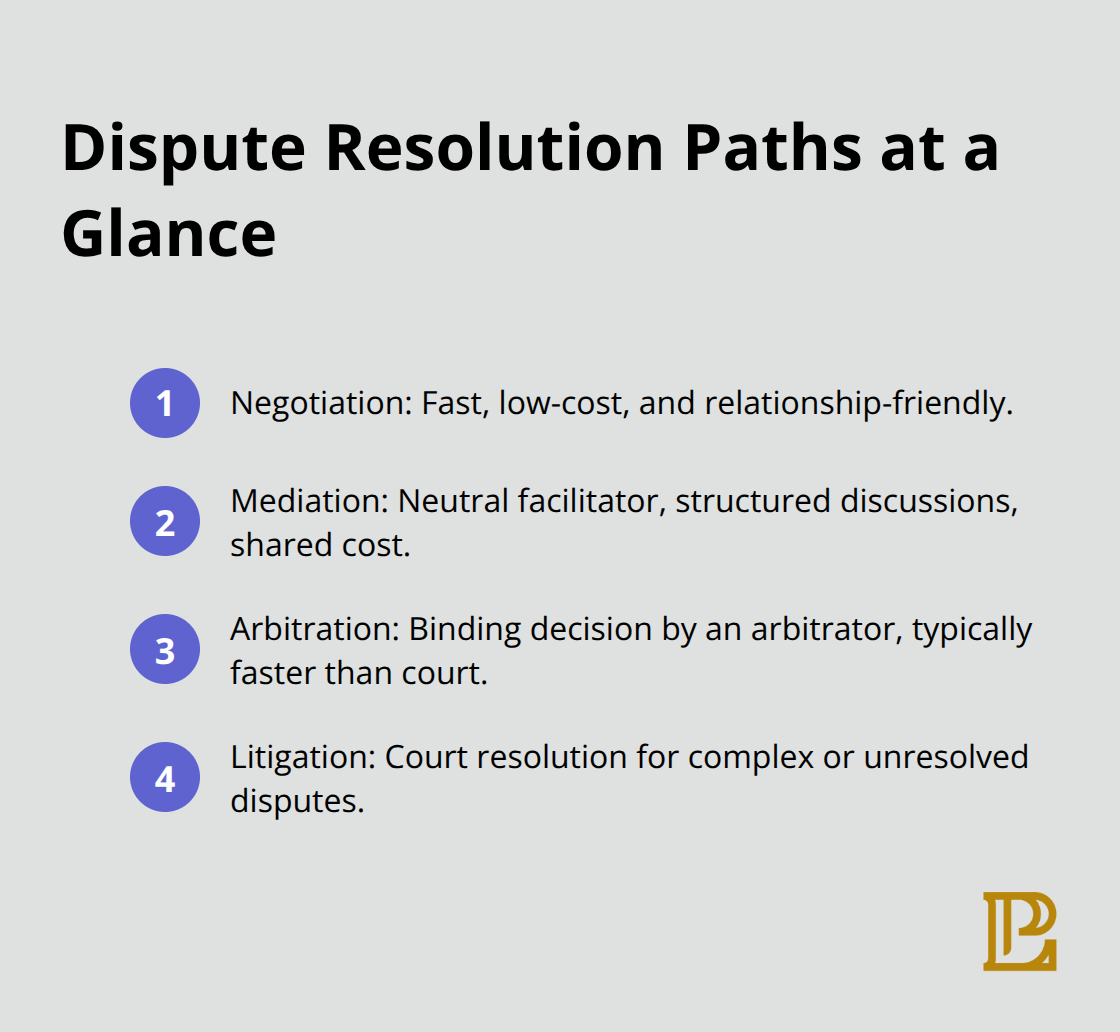
Construction disputes in Hermosa Beach don’t have to end in court. Most conflicts resolve faster and cost less when parties choose the right resolution path early. Negotiation works best when both sides maintain direct communication and willingness to find middle ground. This approach preserves relationships and keeps projects moving. A contractor and property owner can often settle payment disagreements or change order disputes through phone calls and emails if they focus on documented facts rather than blame. However, negotiation fails when one party refuses to engage or when the gap between positions grows too wide.
Mediation as a Structured Path Forward
At that point, mediation becomes the practical next step. Mediation brings in a neutral third party who facilitates discussion without imposing a decision. Both sides share the cost, typically ranging from $500 to $2,000 per session depending on the mediator’s background. California law now requires mediation for many construction disputes under Civil Code Section 8850 if initial negotiation and an informal meet-and-confer conference don’t resolve the matter. This mandatory mediation step prevents disputes from escalating to expensive litigation and gives parties a structured opportunity to settle. Mediation sessions usually last a few hours, and settlements reached through mediation become binding agreements enforceable in court.
Arbitration for Faster Resolution
Arbitration offers a faster alternative when mediation stalls or when the contract specifies arbitration as the dispute resolution method. An arbitrator hears evidence from both sides and issues a binding decision, typically within weeks rather than months. This process costs more than mediation-arbitrators charge hourly rates usually between $300 and $500 per hour-but saves money compared to court litigation, which can run hundreds of thousands of dollars and take years to resolve.
Litigation and Court Proceedings
Litigation remains the final option when arbitration isn’t available or when the dispute involves complex legal questions requiring a judge’s interpretation. Court proceedings in Hermosa Beach disputes go through Los Angeles County courts, where timelines stretch from 18 months to several years depending on case complexity and court schedules. Construction defect claims, mechanic’s lien disputes, and breach of contract cases all follow California procedural rules that demand meticulous documentation and skilled legal representation. Most construction attorneys in the Hermosa Beach area recommend exhausting negotiation and mediation before pursuing litigation because court costs, discovery expenses, and expert witness fees accumulate rapidly.
Getting Legal Guidance Early
A property owner or contractor facing a dispute should consult with an attorney early to understand which resolution method fits the specific conflict, contract terms, and timeline constraints. The choice between negotiation, mediation, arbitration, and litigation shapes both the outcome and the cost of resolution. Understanding these options before disputes escalate allows you to act strategically rather than react in crisis mode. With the right guidance, you can select a path that protects your interests while keeping your project and business relationships intact. The next section covers how to prevent these disputes from arising in the first place through careful contract drafting and communication practices.
Preventing Disputes Before They Start
Prevention beats resolution every time. A property owner or contractor in Hermosa Beach can avoid months of conflict and thousands in legal fees by investing a few hours in solid contract preparation and communication discipline. The difference between a project that runs smoothly and one that spirals into dispute often comes down to decisions made before work begins.
Draft Contracts That Match Your Project
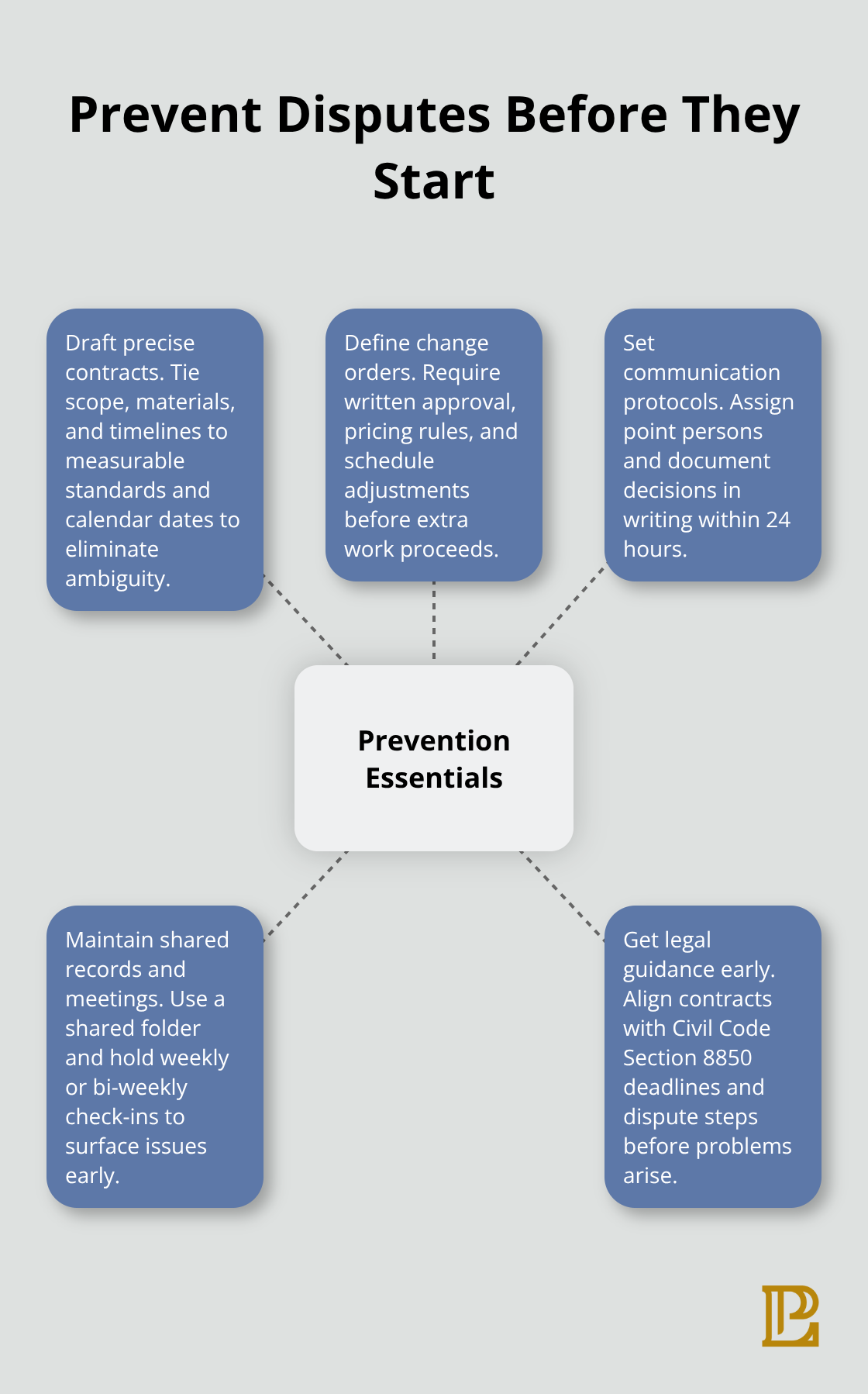
Start with a contract that addresses the specific project, not a generic template downloaded from the internet. Include exact completion dates, not vague references to seasonal timelines. Specify material brands and grades by name and product number rather than describing quality as industry-standard or acceptable. Break down payment schedules by project phase with dollar amounts and due dates tied to measurable milestones like foundation completion or roof installation.
California Civil Code Section 8850 now requires property owners to respond to contractor payment claims within 30 days and pay undisputed amounts within 60 days, so your contract language should align with these statutory deadlines to avoid confusion. Define what constitutes a change order and require written approval before work proceeds on scope changes. Detailed project schedules prevent schedule disputes by establishing realistic timelines and clearly identifying when delays occur and who caused them.
Establish Clear Change Order Procedures
Establish a change order process that specifies who can authorize changes, how costs are calculated, and how timeline adjustments are documented. Include a dispute resolution clause that maps out negotiation, mediation, and arbitration steps before litigation enters the picture. This clause protects both parties and keeps projects moving even when disagreements arise.
Create Communication Protocols That Work
Communication discipline matters as much as contract language. Assign one point person on each side-the general contractor and the property owner-who handles all project decisions and communications. Document every conversation about scope, schedule, or cost in writing via email within 24 hours, even if you discussed the matter verbally.
Send progress photos weekly and share inspection reports immediately when defects appear so parties can address issues before they compound. If delays occur, notify the other party in writing within 5 business days with the reason and expected recovery timeline. Payment invoices should itemize work completed by phase with dates and reference change order numbers if applicable.
Maintain Shared Records and Regular Meetings
Weekly or bi-weekly meetings on larger projects prevent small misunderstandings from festering into major conflicts. Maintain a shared project folder with all contracts, change orders, invoices, and correspondence so both parties see the same information. When disputes do arise despite prevention efforts, this documentation provides the foundation for efficient mediation or arbitration.
A contractor or property owner facing a complex project should consult an attorney during contract drafting rather than waiting until conflict erupts. Clear contracts cost far less than dispute resolution and preserve relationships that may span multiple projects over years.
Final Thoughts
Construction contract disputes in Hermosa Beach drain time, money, and relationships faster than almost any other business problem. The disputes covered in this post-ambiguous language, delays, and payment conflicts-all stem from preventable gaps in planning and communication. You now understand the three resolution paths available when disputes arise: negotiation works best for straightforward disagreements, mediation provides structure when direct talks stall, and arbitration or litigation become necessary only when earlier steps fail.
The contractors and property owners who avoid costly disputes invest in solid contracts before work starts. They assign clear decision-makers, document every conversation in writing, and establish realistic timelines tied to measurable milestones. They respond promptly to payment claims and address defects immediately rather than letting problems compound, which saves thousands-sometimes hundreds of thousands-in dispute resolution fees and project delays.
If you’re planning a construction project in Hermosa Beach or facing an existing dispute, contact us today to discuss your construction law needs. We help property owners and contractors navigate contract drafting and dispute resolution with practical, business-focused guidance that protects your interests and keeps your project moving forward.