
Construction disputes in Los Angeles cost businesses millions annually, and they often spiral when parties lack clear resolution strategies. Whether you’re dealing with payment disagreements, scheduling conflicts, or quality issues, knowing your options makes a real difference.
At Pierview Law, we’ve guided countless clients through construction disputes with practical solutions that protect their interests. This guide walks you through the most common disputes, proven resolution methods, and prevention tactics that actually work.
What Disputes Actually Happen on Los Angeles Construction Projects
Payment Disputes and Mechanics Liens
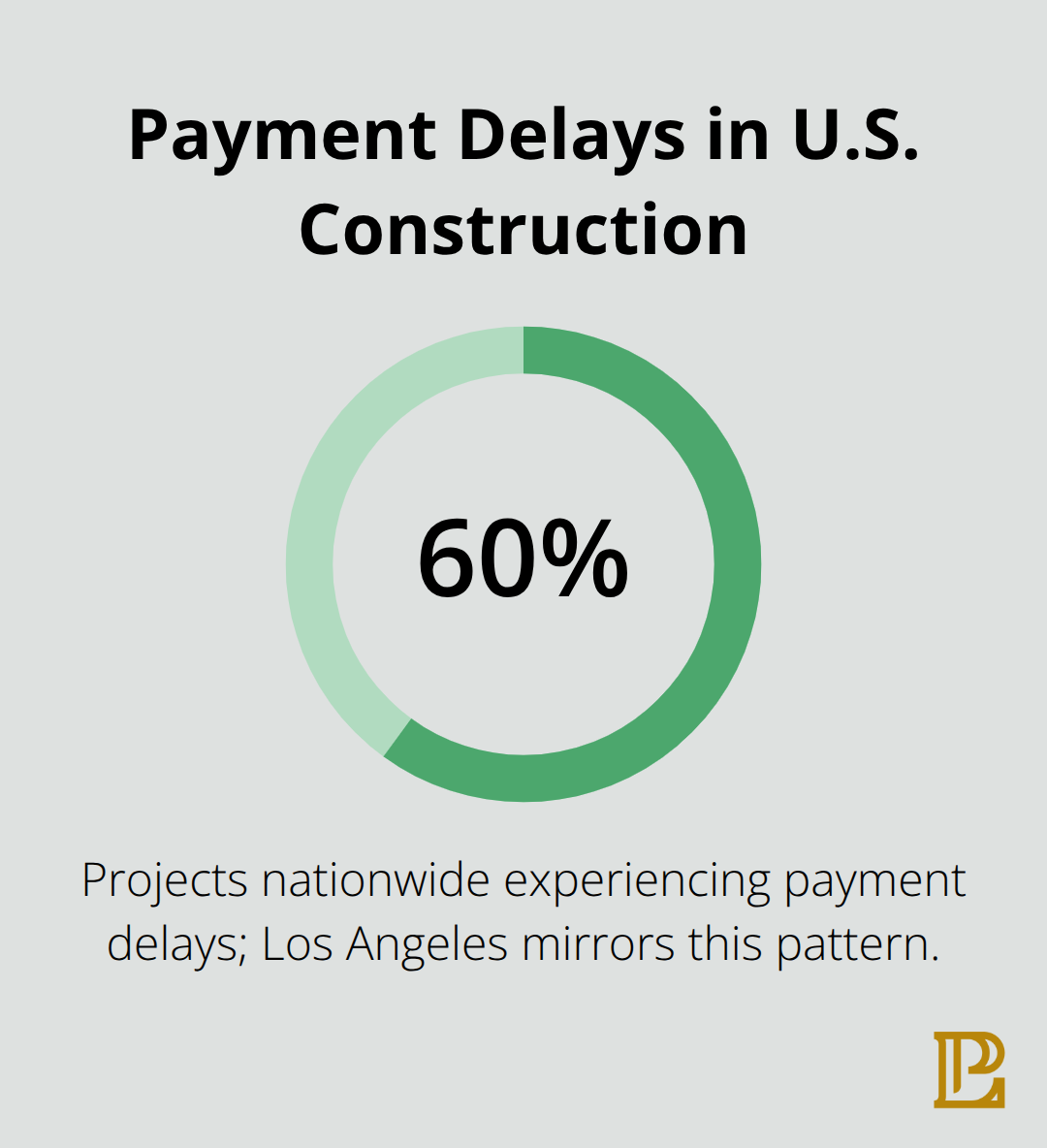
Payment disputes dominate Los Angeles construction conflicts, and they’re far more complex than simply not paying an invoice. Contractors frequently withhold payments citing defective work, while subcontractors claim scope creep justifies additional costs. Construction industry data shows that payment delays affect roughly 60% of construction projects nationally, and Los Angeles projects follow this pattern closely. The mechanics lien system complicates matters further-subcontractors and material suppliers must file notices to owner within strict timeframes or lose their right to secure payment through liens. Many disputes escalate because parties don’t understand these deadlines. Filing a mechanics lien in California requires following precise procedural steps, and missing even one detail can invalidate your claim.
Design Changes and Specification Conflicts
Design and specification disagreements arise when architects’ plans don’t match what contractors bid, or when owners request changes mid-project without adjusting timelines or budgets. These misalignments turn small clarifications into expensive arguments. Vague contract language about specifications creates the most friction-one party views completed work as acceptable while the other expects something different. Written change order procedures prevent most of these conflicts, yet many projects lack them entirely.
Schedule Delays and Timeline Issues
Delays and scheduling conflicts plague Los Angeles projects because contractors often underestimate how local permitting processes, weather, and supply chain disruptions affect timelines. A project delayed 30 days triggers cascading costs across labor, equipment, and financing. Contractors who establish detailed project schedules upfront and communicate schedule impacts in writing reduce their exposure significantly.
Quality and Workmanship Disagreements
Defective workmanship disputes stem from disagreements over whether completed work meets contract specifications or trade standards. What one party views as acceptable often conflicts with the other’s expectations, especially when contracts lack detailed quality benchmarks. Contemporaneous documentation-site photos, inspection reports, and written communications-protects both parties when quality questions arise.
How Disputes Overlap and Escalate
The reality is that most disputes in Los Angeles involve overlapping issues (a payment dispute frequently connects to quality concerns or schedule delays). Contractors who document everything contemporaneously, maintain organized change order records, and communicate in writing significantly reduce their exposure. Projects with vague scope language, missing change order procedures, or unclear payment schedules almost always face contract disputes. The difference between a project that settles quickly and one that becomes litigation often depends on whether the parties established written procedures upfront and followed them consistently. Understanding these dispute patterns helps you recognize when resolution becomes necessary.
How to Resolve Construction Disputes in Los Angeles
Start with Direct Negotiation
When a construction dispute emerges, your immediate choice between resolution methods determines whether you’ll spend months and thousands of dollars fighting or reach a workable settlement quickly. Direct negotiation remains the fastest path forward, especially when both parties still communicate professionally. Many disputes settle at this stage because parties recognize that continued conflict costs more than compromise. However, negotiation only works if both sides arrive prepared with organized documentation, realistic damage calculations, and clear authority to make decisions. The moment negotiations stall, waiting longer typically makes resolution harder, not easier, because positions harden and legal costs accumulate.
Mediation: A Practical Middle Ground
This is when mediation becomes your practical next step. A neutral mediator does not impose solutions but facilitates discussions by helping parties understand each other’s positions and identify common ground. Mediation succeeds roughly 70 to 80 percent of the time in construction disputes, according to construction industry data, because it preserves relationships while creating space for creative settlements that courts cannot impose.

The process typically takes one to three days, costs far less than arbitration or litigation, and remains confidential, protecting your reputation and future business relationships.
Preparation matters enormously in mediation: organize your contracts, change orders, invoices, and communications chronologically, prepare a clear written summary of your position with specific damage figures, and decide in advance what settlement range you’ll accept. Many mediators in Los Angeles understand construction disputes and the industry’s practical realities, which helps them guide parties toward solutions. Selecting the right mediator (one with construction knowledge and a directive approach rather than passive shuttle diplomacy) significantly improves your chances of settlement.
Arbitration When Mediation Fails
When mediation fails to produce settlement, arbitration offers a faster, more cost-effective alternative to court litigation. Unlike mediation, arbitration results in a binding decision from a neutral arbitrator who hears evidence and issues a final award. Many construction contracts in Los Angeles require arbitration before allowing litigation, making it a standard next step. Arbitration typically concludes within six to twelve months compared to two to four years for litigation, and the process remains largely private rather than public record.
Your arbitrator in construction disputes often possesses construction industry knowledge, which matters because technical workmanship or design questions require someone who understands trade standards and construction practices. This technical foundation helps arbitrators reach sound decisions on complex disputes that general judges might struggle to evaluate.
Litigation: Your Last Resort
Litigation in Los Angeles courts should be your last resort because it’s expensive, time-consuming, and public. Court cases involve formal pleadings, extensive discovery, expert reports, and trial preparation that drain resources. However, litigation becomes necessary when the other party refuses reasonable settlement, when you need a court-ordered injunction to stop harmful activity, or when disputes involve regulatory violations requiring judicial intervention.
The decision to litigate should not happen in isolation. Your attorney will evaluate whether your case has sufficient merit, whether the opposing party has assets to satisfy a judgment, and whether the costs of litigation justify the potential recovery. Construction disputes often involve technical questions that require bench trials (trials before judges) rather than jury trials, since judges better understand construction industry standards and practices.
Moving Forward with Professional Guidance
Each resolution method serves different circumstances, and recognizing when to transition from one approach to the next protects your interests and timeline. The parties who navigate disputes most successfully move decisively through these stages rather than remaining stuck in failed negotiations or delaying arbitration decisions. Your next step depends on understanding which resolution method matches your dispute’s complexity, the relationship you want to preserve with the other party, and your timeline for resolution. When disputes involve multiple parties, overlapping claims, or technical construction questions, the path forward becomes more intricate-which is precisely when professional legal guidance helps you avoid costly missteps and identify settlement opportunities others might miss.
How to Stop Construction Disputes Before They Start
Preventing disputes costs far less than resolving them, yet most Los Angeles construction projects lack the foundational practices that actually prevent conflict. The difference between projects that run smoothly and those that devolve into payment disputes, quality arguments, or schedule battles often comes down to whether parties established clear written procedures upfront and followed them consistently. Construction industry data shows that roughly 70 percent of disputes originate from ambiguous contract language, missing change order documentation, or communication failures that could have been prevented entirely.
Write Contracts That Leave No Room for Interpretation
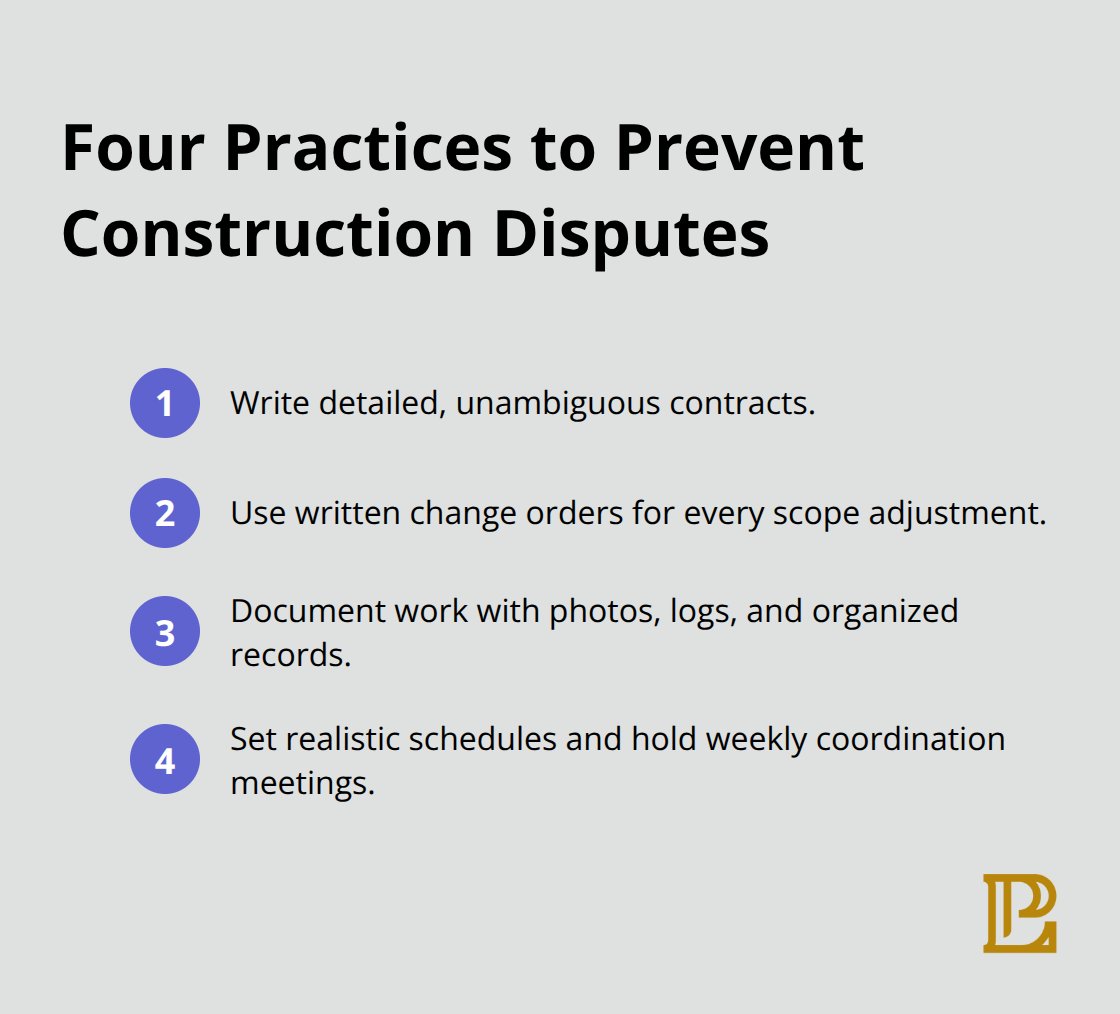
Your first defense is a contract that leaves no room for interpretation. Specify exactly what work the contractor will perform, list all materials by grade and brand, define quality standards by reference to trade practices or industry codes, establish a precise payment schedule tied to completion milestones, and describe how changes to scope will be processed and priced. Vague language like “quality workmanship” or “as directed by owner” creates disputes because each party interprets these terms differently when problems arise.
Many Los Angeles contractors and owners avoid written change orders to save time, then spend months fighting over whether scope changes justified cost increases or schedule delays. Written change orders take 20 minutes to complete and eliminate this entire category of dispute.
Document Everything as Work Progresses
Document every decision, approval, and site condition contemporaneously-photographs, inspection reports, daily logs, and email communications create an objective record that protects both parties if disagreements emerge later. When quality questions arise, contemporaneous photos and written inspection reports documenting what was actually completed prevent one party from claiming later that work didn’t meet standards.
Payment disputes frequently stem from invoicing errors or missing documentation rather than actual disagreement over work quality, so maintain organized records of what was completed each month, what was paid, and what remains outstanding. This documentation becomes invaluable if disputes require mediation or arbitration.
Establish Realistic Schedules and Regular Communication
Detailed project schedules prevent schedule disputes by establishing realistic timelines and clearly identifying when delays occur and who caused them. A contractor who schedules work with specific start and completion dates for each phase can demonstrate whether delays resulted from weather, permitting issues, material shortages, or owner-caused changes. Los Angeles projects face particular scheduling challenges because local permitting processes, coastal development restrictions, and supply chain disruptions create delays that inland projects might avoid.
Schedule delays of 30 days or more trigger substantial cost increases through extended labor, equipment rental, and financing charges, so recognizing delay sources early matters enormously. Regular communication between contractor, owner, and subcontractors prevents misunderstandings from festering into disputes. Weekly job meetings where parties discuss completed work, upcoming tasks, potential obstacles, and budget status create accountability and allow problems to surface when they’re still manageable.
Conduct Quality Inspections at Key Stages
Quality inspections at defined stages-foundation completion, framing completion, mechanical rough-in, final inspection-catch defective work early when correction costs far less than addressing problems after project completion or after owner occupancy. Waiting until final completion to identify workmanship issues means the contractor has already moved to another project, making remediation difficult and expensive.
Many disputes escalate because parties communicate only when problems become serious, leaving weeks of misunderstanding unaddressed. Construction contracts in Los Angeles should include clear dispute resolution procedures specifying how payment disputes, quality disagreements, and schedule conflicts will be handled, whether through negotiation, mediation, or arbitration. Parties who know their dispute process in advance navigate conflicts far more efficiently than those who must negotiate process during active disputes.
Final Thoughts
Construction disputes in Los Angeles demand a strategic approach that combines prevention, early resolution, and professional guidance. The disputes that cause the most damage are those that parties allow to fester through inaction or poor communication. Your best outcome comes from establishing clear contracts upfront, documenting everything as work progresses, and moving decisively through resolution methods when conflicts emerge.
Most construction disputes Los Angeles contractors and owners face settle through negotiation or mediation if parties approach them with realistic expectations and organized documentation. Payment disputes connect to quality concerns, schedule delays trigger cost disputes, and design changes create scope disagreements-navigating these interconnected problems without professional guidance frequently leads to costly mistakes that could have been prevented. The parties who navigate disputes most successfully move decisively through resolution stages rather than remaining stuck in failed negotiations or delaying decisions.
We at Pierview Law understand construction disputes because we work with contractors, subcontractors, material suppliers, and property owners throughout Los Angeles County. If you’re facing a construction dispute or want to strengthen your contracts before problems emerge, contact us at Pierview Law in Hermosa Beach, and we’ll provide personalized legal solutions tailored to your specific project. Visit our civil litigation services to learn more about how we can help protect your construction interests.