
California creators and businesses lose millions annually to copyright infringement. Whether someone copies your software, republishes your writing, or counterfeits your products, the financial and reputational damage adds up fast.
Copyright enforcement in California requires understanding both federal law and state-specific protections. We at Pierview Law help clients navigate registration, detection, and legal action to stop infringement before it spreads.
What California Copyright Law Actually Covers
Federal Protection Under the DMCA
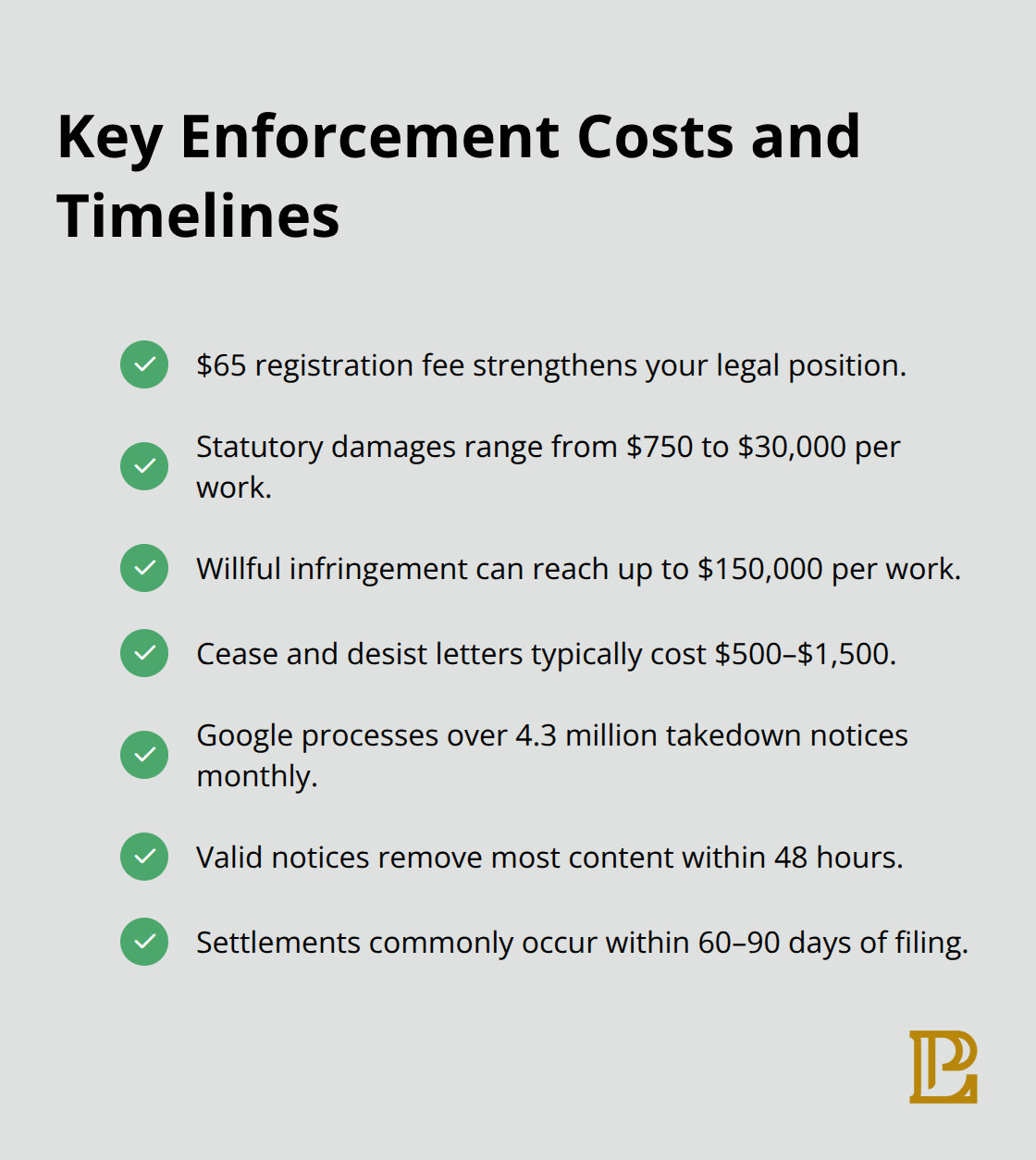
Federal copyright protection under the Digital Millennium Copyright Act shields your work the moment you create it, but California adds layers of state-level protection that many creators overlook. The DMCA, passed in 1998, makes it illegal to circumvent technological protections on copyrighted material, even if the underlying work itself isn’t infringing. This means someone cannot legally bypass encryption on your software or remove watermarks from your digital images, regardless of their intent. California courts have consistently upheld these federal protections, and violations result in damages ranging from $750 to $30,000 per infringement under federal law.
Why Registration Matters in Court
Registration with the U.S. Copyright Office isn’t required for protection to exist, but it transforms your legal position in court. Without registration before infringement occurs, you can only recover actual damages and profits-notoriously difficult to prove. With registration, you can claim statutory damages up to $150,000 per work for willful infringement, plus attorney fees. Most copyright cases settle quickly once a defendant realizes the plaintiff registered their work, because the financial exposure becomes too high to risk litigation.
California State Statutes and Strategic Options
California’s state statutes complement federal law by addressing specific local concerns. California Civil Code Section 3426 protects trade secrets, which overlaps with copyright in digital contexts. The state also recognizes right of publicity claims under Civil Code Section 3344, protecting creators whose images or likenesses are used without permission. When infringement happens in California, you have the option to file in federal court under federal copyright law or in California state court under state statutes, giving you strategic flexibility.
The Registration Timeline Advantage
Registering your copyright with the federal office before infringement occurs costs only $65 and converts a weak claim into a strong one. We at Pierview Law recommend registration within three months of publication for maximum protection, as this window allows you to claim statutory damages even if infringement started before registration. The combination of federal DMCA protections, California state statutes, and proper registration creates a comprehensive shield that deters most infringers from targeting your work in the first place. Understanding these layers of protection positions you to act decisively when infringement occurs.
What Infringement Actually Looks Like in California
Software Piracy and Unlicensed Code
Software piracy remains the most costly form of copyright infringement in California, with the Business Software Alliance reporting that unlicensed software use costs companies $62.3 billion globally each year. In California specifically, unauthorized copying of proprietary code, cloud-based applications, and SaaS platforms happens constantly across industries. Employees download cracked versions of design software, companies use unlicensed databases without paying licensing fees, and competitors reverse-engineer your algorithms to launch competing products. The damage extends beyond direct losses-stolen software often contains malware that compromises your entire network. California courts treat willful software infringement seriously, and defendants who knowingly use unlicensed code face statutory damages that quickly exceed what legitimate licensing would have cost.
Digital Content Theft Across Platforms
Digital content theft follows a predictable pattern in California’s creative economy. Your photography gets republished without attribution, your written content appears on competing websites, and your video tutorials surface on unauthorized streaming platforms. The infringer counts on you not noticing or lacking the resources to fight back. This form of infringement spreads rapidly because detection requires constant monitoring across multiple channels, and many creators lack the bandwidth to track unauthorized use at scale.
Plagiarism in Publishing and Academia
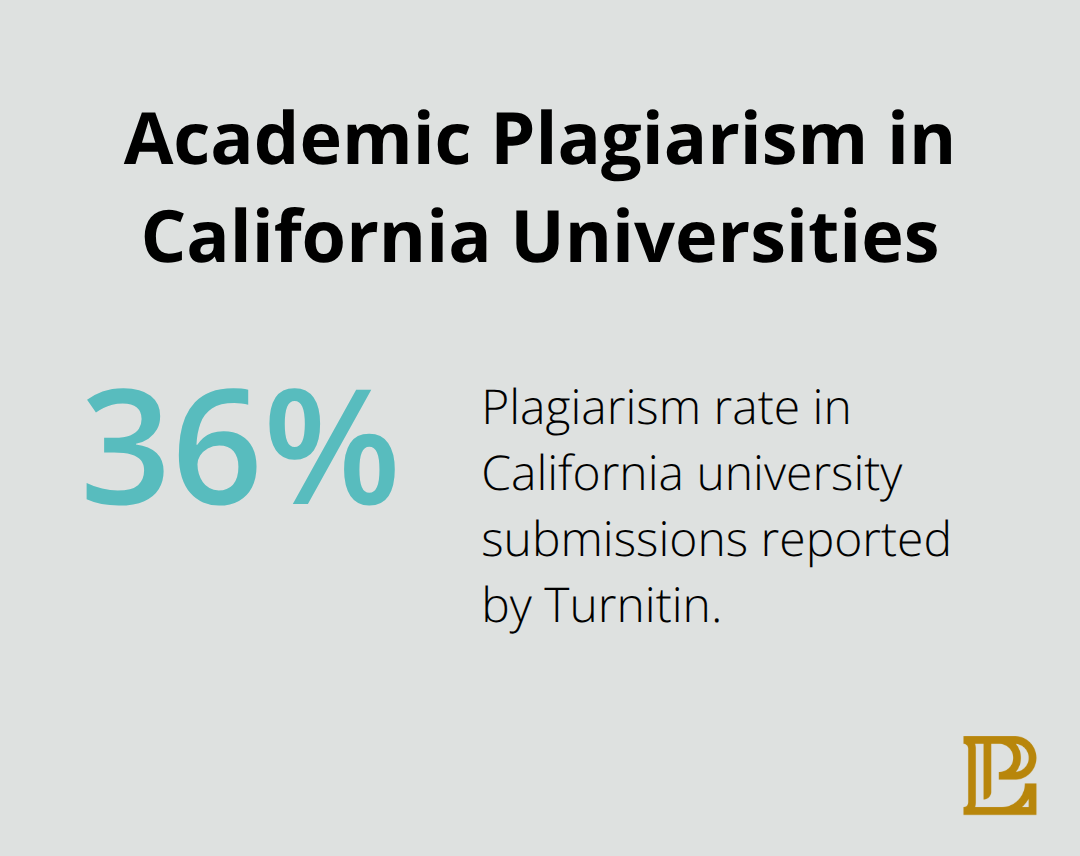
Publishing and academic plagiarism operates differently than casual copying. Someone claims authorship of your original manuscript, publishes your research without permission, or substantially copies your book structure and content. Turnitin, the plagiarism detection service, found that academic plagiarism rates in California universities hover around 36 percent of submissions, revealing how normalized content theft has become in educational settings.
Counterfeiting in Manufacturing
Counterfeiting in manufacturing creates a distinct category-someone produces knockoff versions of your branded products, using your trademarks and design elements to deceive consumers. This overlaps copyright protection with trademark law, giving you multiple legal angles to pursue enforcement. The infringer assumes you lack evidence, cannot afford litigation, or will not notice the theft. Taking immediate action through cease and desist letters or takedown notices stops the spread before it compounds into significant market damage.
How to Stop Infringement Fast
Act Immediately When You Find Unauthorized Use
Stopping infringement requires speed and strategy. The moment you find unauthorized use of your work, most creators hesitate because they assume litigation means months of expense and uncertainty. That assumption costs you market share and allows the infringer to build a larger audience or customer base on your stolen content. Moving from low-cost deterrence to formal legal action only when necessary protects your interests without unnecessary spending.
Send a Cease and Desist Letter First
A cease and desist letter costs between $500 and $1,500 to draft and sends a clear signal that you know about the infringement and will pursue legal remedies. Many infringers stop immediately because they realize you have documentation and intent, and continuing exposes them to statutory damages up to $150,000 per work. This letter creates a paper trail that strengthens your position if you later file suit in court.
File DMCA Takedown Notices Simultaneously
If the infringer operates online, file a DMCA takedown notice simultaneously with the hosting platform, payment processor, or search engine. Google processes over 4.3 million takedown notices monthly across all platforms, and most content disappears within 48 hours of a valid notice. The takedown works because platforms face liability if they ignore proper notices, creating automatic enforcement without you needing to pursue litigation. Document everything during this stage-screenshots, URLs, timestamps, and the content itself.
This documentation becomes critical if you move to civil court, where judges expect you to prove damages and the scope of infringement.
Pursue Civil Litigation When Infringers Ignore Warnings
Civil litigation should be your second move only if the infringer ignores cease and desist letters or continues despite takedowns. File suit in California federal court under copyright law, where you can claim statutory damages of $750 to $30,000 per work for ordinary infringement, or up to $150,000 per work for willful infringement. The willfulness threshold matters significantly-if you can show the infringer knew your work was protected and copied it anyway, you access the higher damage range plus attorney fees. Most defendants settle before trial once they understand the math. A photographer whose images were stolen across 50 websites faces potential damages of $37.5 million to $7.5 billion under statutory law, making settlement the rational choice for defendants. Settlement negotiations typically occur within 60 to 90 days of filing, saving both parties the cost of discovery and trial preparation.
Report Large-Scale Infringement to Law Enforcement
Criminal enforcement through law enforcement becomes relevant only in cases involving counterfeiting, large-scale piracy operations, or organized infringement rings. The FBI, Homeland Security, and the California Attorney General’s office pursue cases where infringement causes substantial economic harm or involves organized crime. You cannot initiate criminal prosecution directly, but you can report infringement to the FBI’s Internet Crime Complaint Center or local law enforcement with detailed evidence. These agencies prioritize cases involving counterfeit goods, software piracy rings, and trademark violations that deceive consumers at scale. For most individual creators and small businesses, the cease and desist plus takedown combination stops infringement without litigation costs.
Final Thoughts
Copyright enforcement in California starts with the $65 registration fee at the U.S. Copyright Office, which transforms your legal position from weak to strong. Without registration before infringement occurs, you lose access to attorney fees and statutory damages up to $150,000 per work for willful infringement, leaving you to prove actual losses in court instead. The three-step enforcement approach-cease and desist letter, DMCA takedown notice, and civil litigation-matches the infringer’s incentives and stops most violations before trial.
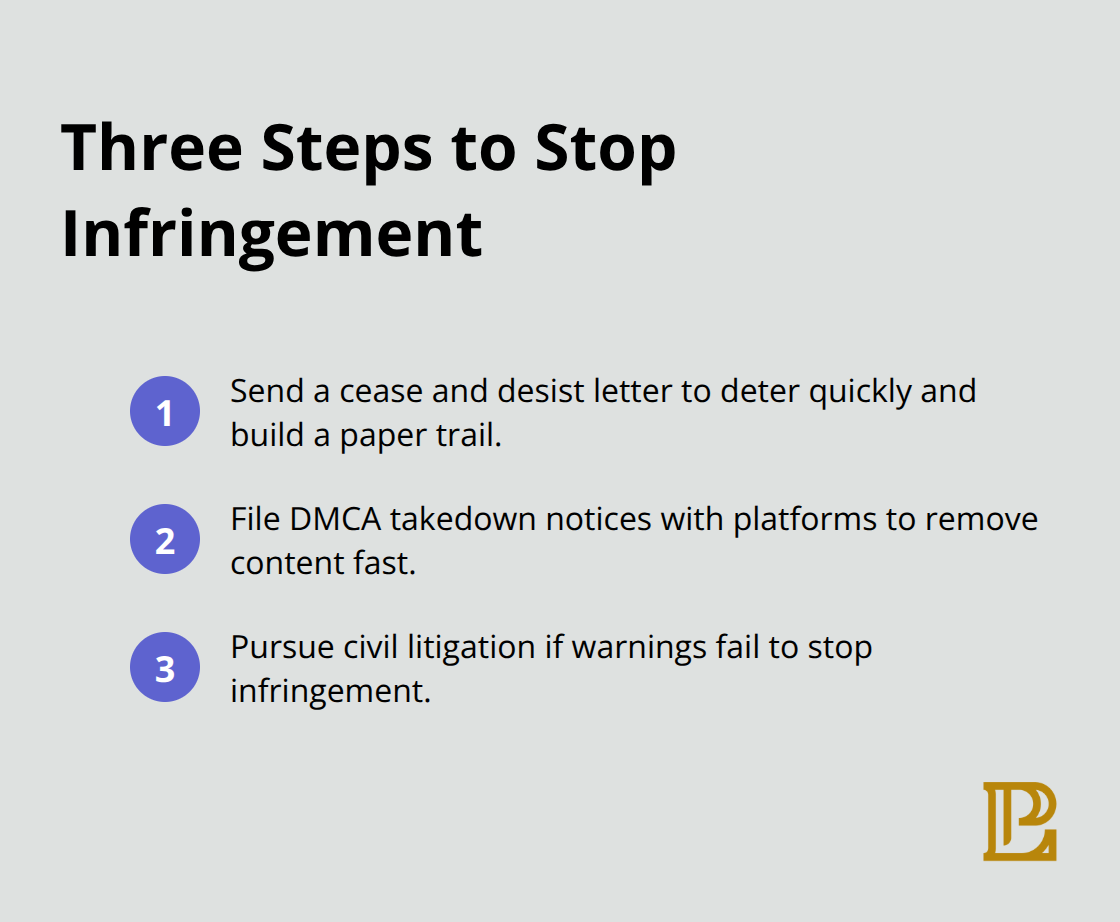
A cease and desist letter costs $500 to $1,500 and stops most infringers immediately, while DMCA takedown notices remove content within 48 hours without litigation expense. Civil litigation becomes necessary only when infringers ignore both warnings, and at that point, the documented evidence from your earlier steps makes settlement likely within 60 to 90 days. California creators and businesses operating in Los Angeles County benefit from understanding that copyright enforcement California requires both federal DMCA protections and state-level statutes, giving you multiple legal angles and strategic flexibility.
Contact Pierview Law to protect your creative works before infringement spreads. Our team understands the specific protections available under California law and federal copyright statutes, whether you need guidance on registration timing, cease and desist strategy, or civil litigation.