
Real estate financing in Los Angeles requires strategy and local knowledge. The market moves fast, lenders have strict requirements, and competition for properties is fierce.
We at Pierview Law help clients navigate these complexities every day. This guide walks you through your financing options and shows you how to close deals faster.
Your Real Estate Financing Options in Los Angeles
Traditional bank loans remain the most common financing path in Los Angeles, but they come with significant drawbacks for real estate investors. Most banks require 20 to 25 percent down payments, solid credit scores above 740, and extensive documentation including tax returns, W-2s, and proof of reserves. The approval process typically takes 30 to 45 days, which puts you at a disadvantage in a competitive market where properties sell within days. According to the National Association of Realtors, the median home price in Los Angeles County reached 580,000 dollars in 2026, making traditional financing less accessible for many investors.
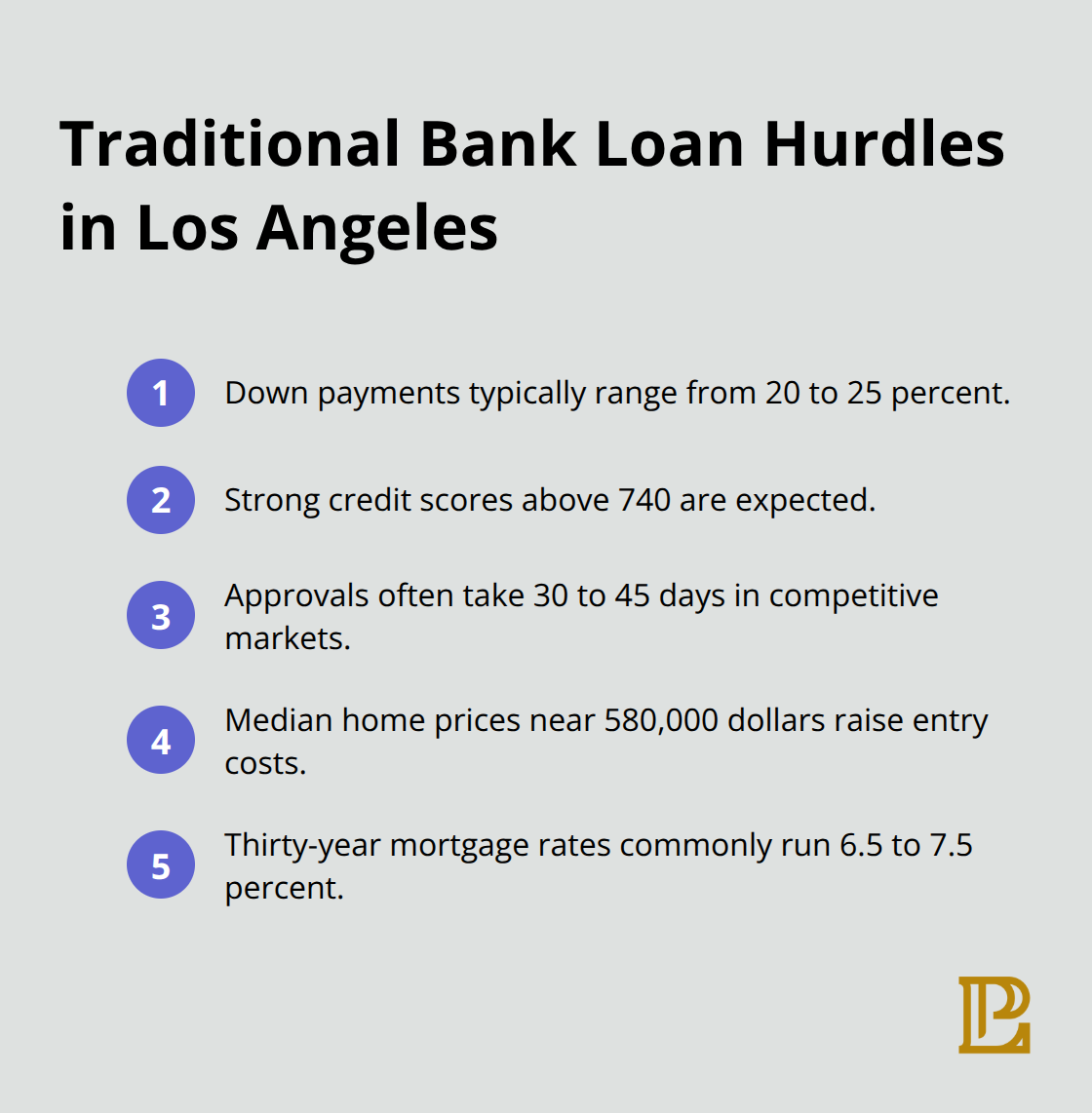
If you have strong financials and time to spare, bank loans offer the lowest interest rates, typically ranging from 6.5 to 7.5 percent for 30-year mortgages. However, if you need to close quickly or your financial profile doesn’t fit conventional lending boxes, this route will frustrate you.
Hard Money and Private Lenders Move Faster
Private money lenders and hard money lenders operate in a different universe than banks. They focus on the property value itself rather than your personal credit score, which means investors with past credit issues or those needing rapid funding can still secure capital. Hard money loans typically close in 7 to 14 days, a critical advantage when competing for properties in Los Angeles. Interest rates run higher, usually between 10 and 15 percent, and lenders charge origination fees of 2 to 5 percent of the loan amount. These costs matter, but they’re worth it when you’re buying a distressed property, need bridge financing between purchases, or are racing against other investors. A real estate attorney can help you structure hard money agreements that protect your interests while keeping closing timelines realistic.
Bridge Loans Fill the Gap
Bridge financing solves a specific problem: you found the perfect property but haven’t sold your current one yet. Bridge loans let you purchase immediately without waiting for your existing sale to close. Lenders typically offer bridge loans for 6 to 12 months at interest rates between 8 and 12 percent, plus fees. The monthly carrying costs are high, but they prevent you from losing deals or accepting lowball offers under time pressure. If you’re considering a bridge loan in Los Angeles County, understanding the exit strategy matters most. You need certainty that your current property will sell or that you’ll secure permanent financing before the bridge loan matures.
The financing path you choose directly impacts your ability to compete and close deals. Your next step involves understanding the specific obstacles that slow down transactions in this market.
What Makes Los Angeles Real Estate Financing So Difficult
Rising interest rates have fundamentally reshaped the financing landscape across Los Angeles County. The Federal Reserve’s rate increases from 2022 through 2024 pushed mortgage rates from the low 3 percent range to between 6.5 and 7.5 percent by 2026, according to data tracked by Freddie Mac. A buyer financing a 500,000 dollar property now pays roughly 300 dollars more per month compared to rates from just three years ago.
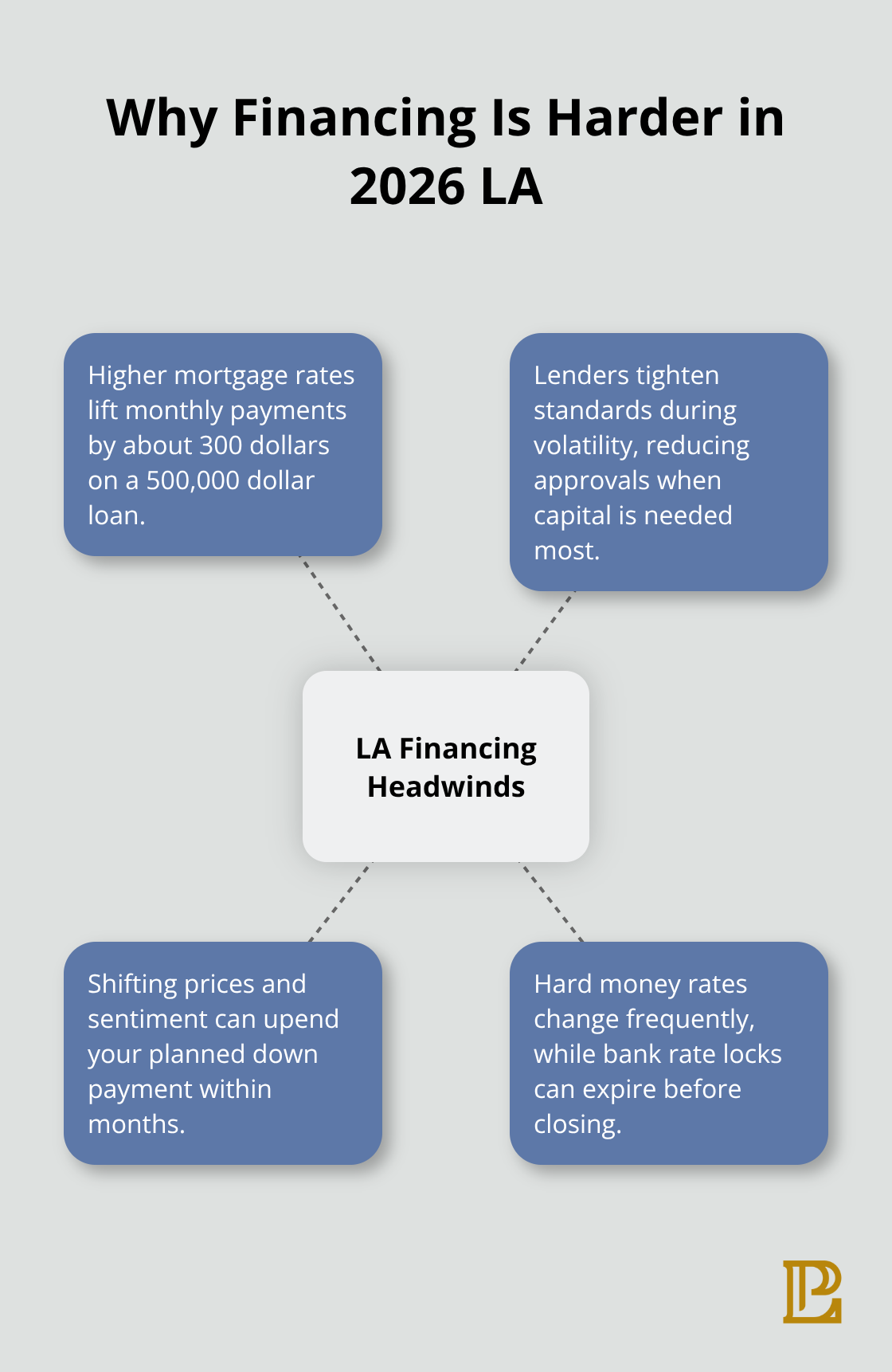
Market volatility compounds this problem because lenders tighten requirements during uncertain periods, making approval harder precisely when you need capital most. Property values in Los Angeles County fluctuate based on interest rate changes, economic reports, and investor sentiment, which means the down payment percentage you calculated three months ago might no longer work today. Hard money lenders adjust their rates almost weekly based on market conditions, while traditional banks hold rates steady but take longer to close, leaving you exposed to rate locks that expire before funding arrives.
Lenders Demand More Documentation Than Ever
Credit standards have become stricter across all lending channels. Traditional banks now require credit scores of 740 or higher, up from the 720 threshold common five years ago, and they want to see 12 months of bank statements, two years of tax returns, and proof of liquid reserves equal to six months of mortgage payments. Private lenders focus less on credit scores but demand extensive documentation about the property itself, including appraisals, title reports, and proof that you understand the local market. Recent late payments, foreclosures, or bankruptcy filings will trigger outright rejection from conventional lenders. Hard money lenders move past credit issues more easily, but they require detailed exit strategies showing exactly how you’ll repay the loan, which means you need solid business plans and comparable sales data ready before approaching them. The documentation process takes time, and delays here directly impact your ability to close quickly when competing against other investors in a fast-moving market.
Inventory Scarcity Demands Speed You Can’t Achieve Alone
Los Angeles real estate inventory remains constrained compared to historical averages. The Southern California Real Estate Information Network reported approximately 1.2 months of supply in Los Angeles County as of mid-2026, meaning properties disappear within days of listing. Multiple offer situations have become standard rather than exceptional, and sellers increasingly demand proof of financing or cash before they’ll negotiate seriously. This creates a trap: you need pre-approval to be competitive, but obtaining pre-approval takes time you don’t have. Bridge loans become necessary when you’re competing against all-cash buyers, yet the costs are substantial and lenders scrutinize your exit strategy carefully. A real estate attorney familiar with Los Angeles transactions helps you structure offers and financing arrangements that satisfy seller requirements without overcommitting yourself to unrealistic timelines or terms you can’t meet.
These obstacles explain why many investors struggle to close deals in this market. Understanding how to navigate them requires more than just knowing your financing options-it requires a strategic approach that addresses each barrier head-on.
How to Close Real Estate Deals Faster in Los Angeles
Work with Lenders Who Know Your Local Market
Local lenders operating in Los Angeles County understand market realities that national banks miss entirely. They know that properties in Hermosa Beach and surrounding areas move at different speeds than inland properties, they recognize seasonal fluctuations in buyer activity, and they’ve built relationships with title companies and appraisers that accelerate the verification process. When you work with a lender familiar with your specific market segment, you skip the back-and-forth explanations about why comparable sales data matters or why your exit strategy is realistic.
Hard money lenders in the Los Angeles area typically maintain networks of local real estate professionals, which means they can verify property conditions and market values faster than lenders operating from distant regional offices. Start by asking your real estate professional for lender recommendations, then interview at least three options before committing. Ask each lender about their average closing timeline, their typical interest rates for your property type, and their fee structure.
Request references from investors who closed deals in the last six months, not theoretical examples from years past. Local lenders also adjust their requirements based on actual market conditions rather than rigid corporate policies, which means you might qualify for better terms than a national bank would offer.
Prepare Your Documentation Before You Need It
Documentation delays destroy more deals in Los Angeles than financing denials do. Prepare your financial records before you identify a property, not after you’ve made an offer. Gather your last two years of tax returns, the most recent two months of bank statements showing liquid reserves, and documentation of any income sources beyond W-2 employment.
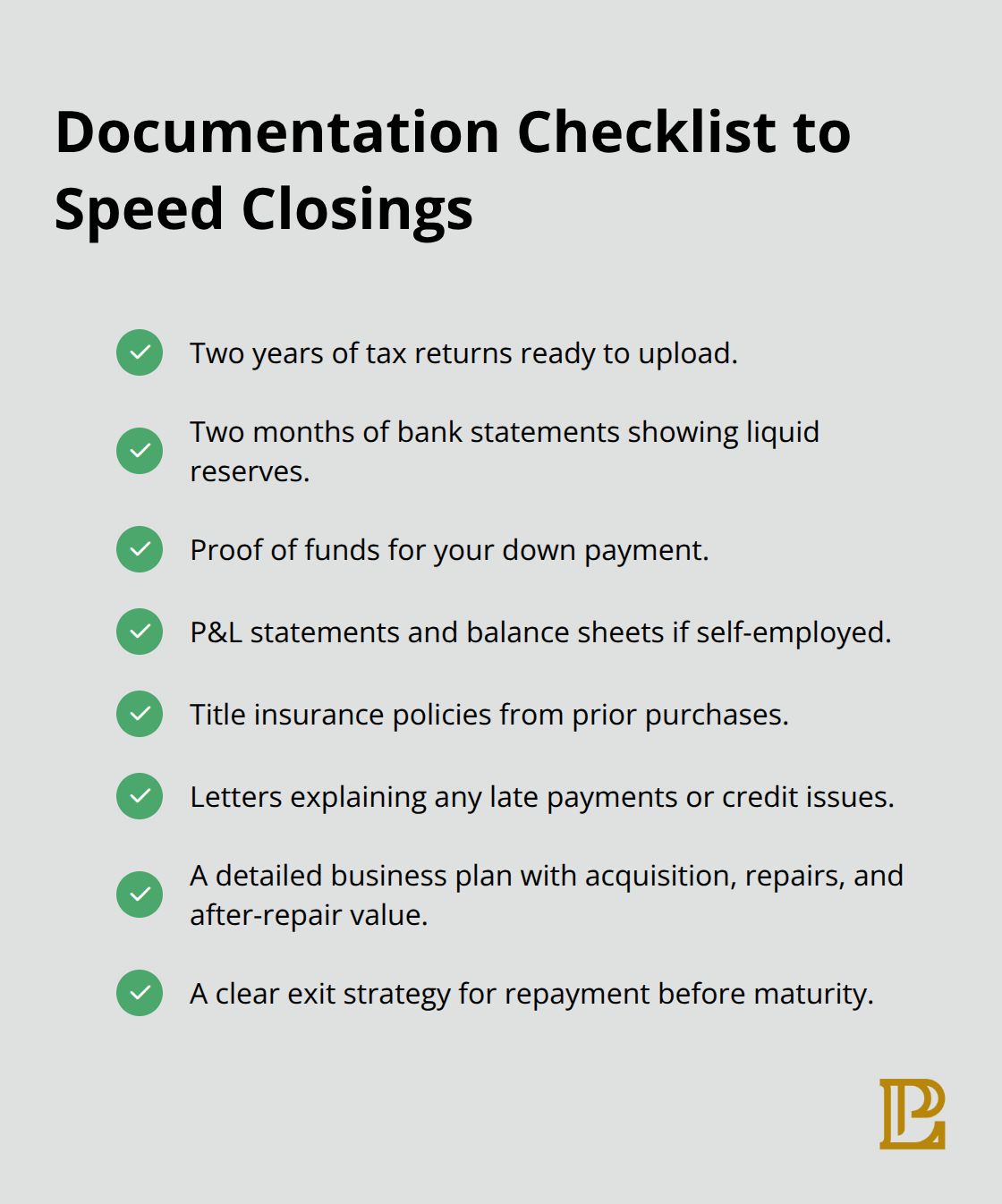
If you’re self-employed or own a business, prepare profit and loss statements and balance sheets that clearly show income trends. Organize title insurance policies from previous purchases, proof of funds for your down payment, and any letters explaining past credit issues or late payments. Hard money lenders want to see a detailed business plan that outlines the property acquisition cost, your repair budget (if applicable), the projected after-repair value, and your exit strategy showing how you’ll repay the loan.
Having this information compiled and organized cuts weeks from the financing process. When you submit a complete application with every document a lender requests upfront, you avoid the endless email chains asking for additional paperwork.
Have a Real Estate Attorney Review Your Loan Terms
Loan agreements contain language that protects lenders at your expense if you don’t understand what you’re signing. A real estate attorney identifies problematic provisions such as clauses allowing rate increases mid-loan or provisions that trigger default based on minor technical violations rather than actual payment failure. At Pierview Law, we help clients structure their financing documentation and review loan agreements before signing, which prevents costly misunderstandings about repayment terms, prepayment penalties, and what happens if your exit strategy changes.
An attorney also catches hidden costs embedded in loan documents (origination fees, appraisal charges, title insurance premiums) that lenders sometimes bury in fine print. You’ll understand exactly what you owe and when you owe it, which eliminates surprises at closing. This protection matters most with hard money lenders, where terms vary significantly and standard protections don’t always apply.
Final Thoughts
Real estate financing in Los Angeles demands strategy that addresses market speed, strict lending requirements, and competition for limited properties. The financing path you select-whether traditional bank loans, hard money lending, or bridge financing-directly determines whether you close deals or watch them slip away to faster competitors. Work with lenders who understand Hermosa Beach and Los Angeles County market conditions rather than national banks applying one-size-fits-all policies.
Prepare your financial documentation before you need it, which eliminates delays that kill transactions. Have a real estate attorney review your loan agreements to catch problematic terms and hidden costs before you sign (loan documents contain language that protects lenders at your expense, and hard money agreements vary so widely that standard protections often don’t apply). An attorney identifies clauses that trigger default based on technical violations, catches prepayment penalties buried in fine print, and ensures you understand exactly what you owe and when.
Real estate financing in Los Angeles also requires legal protection at every stage. Contact Pierview Law to discuss your financing strategy and ensure your loan agreements protect your interests.