
Running a business in California means staying on top of compliance requirements that change constantly. Missing deadlines or overlooking regulations can lead to penalties, fines, and legal problems that drain your resources.
At Pierview Law, we help business owners navigate California corporate compliance so you can focus on growth. This overview covers the key requirements your company needs to follow, common mistakes to avoid, and practical tools to keep your compliance program strong.
What California Corporations Must File and Pay
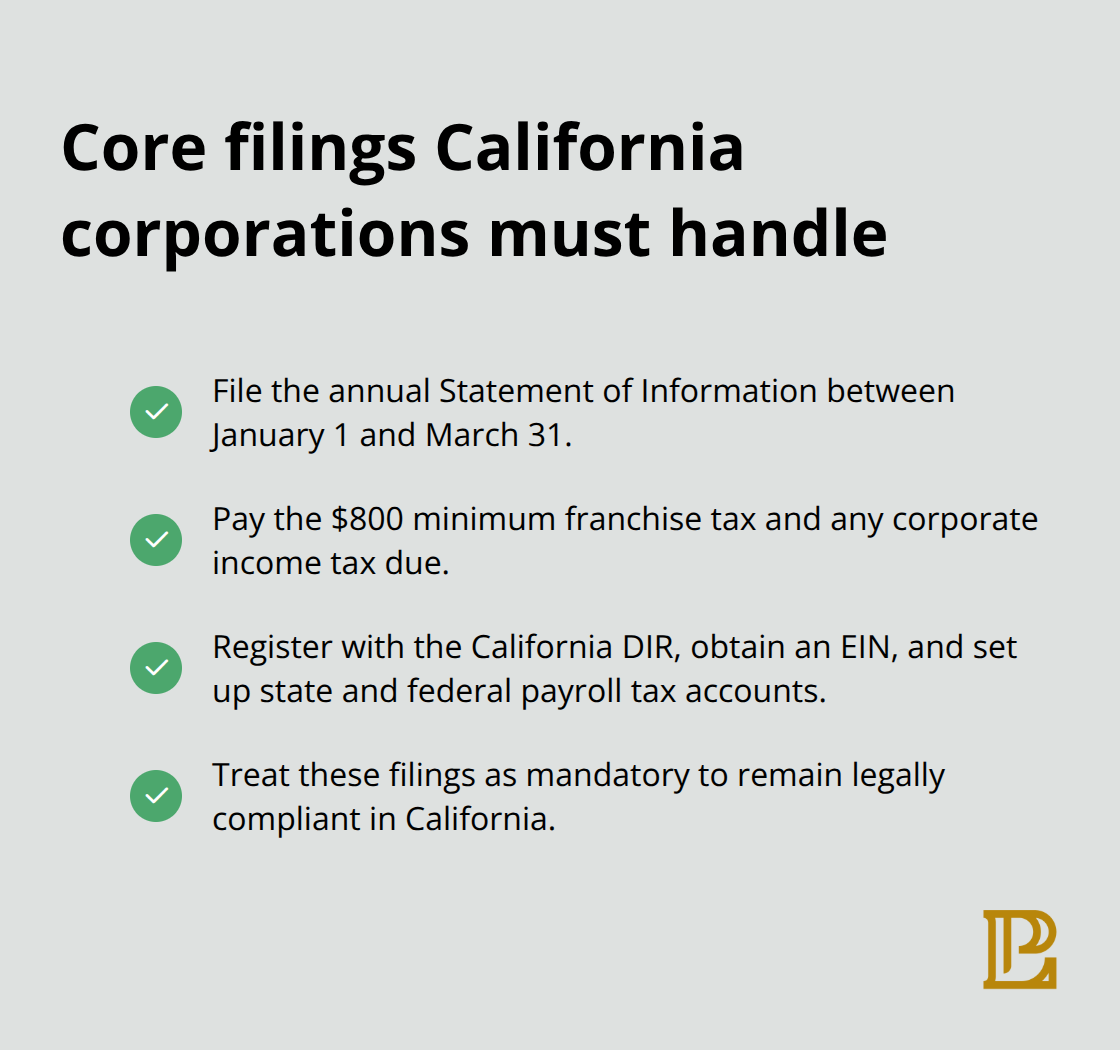
California corporations face three interconnected compliance demands that directly impact your bottom line. The California Secretary of State requires annual Statement of Information filings, due between January 1 and March 31 each year, with a late fee of $250 if you miss the deadline. The Franchise Tax Board imposes a minimum annual tax of $800 on all C corporations, regardless of profitability, plus corporate income tax on net earnings. Additionally, if your corporation has employees, you must register with the California Department of Industrial Relations, obtain an Employer Identification Number from the IRS, and set up payroll tax accounts with both state and federal agencies. These aren’t optional steps-they’re mandatory filings that determine whether your business operates legally in California.
Payroll taxes demand constant attention
Payroll tax compliance ranks as the area where most California business owners stumble. You must withhold federal income tax, Social Security, and Medicare from employee paychecks, plus California state income tax and California Unemployment Insurance. The California Department of Tax and Fee Administration requires quarterly estimated tax payments if you expect to owe $500 or more. Your payroll deposits follow strict schedules based on the amount you owe-some employers must deposit daily, while others deposit semi-weekly or monthly. Missing even one payroll tax deadline triggers penalties ranging from 2% to 15% of the unpaid amount, according to the IRS. Penalties compound quickly when multiple quarters fall behind. Setting up automatic payroll processing through a service like ADP or Gusto eliminates manual calculation errors, since these platforms automatically calculate withholdings, generate required tax forms, and flag filing deadlines before they arrive.
Employment law changes constantly in California
California’s labor laws shift more frequently than federal regulations, and staying current matters significantly. The state raised its minimum wage to $16.50 per hour effective January 1, 2024, with additional increases scheduled through 2026. California requires meal and rest breaks for most employees-a 30-minute unpaid meal break for shifts over six hours, and a 10-minute paid rest break for every four hours worked. Misclassifying workers as independent contractors when they should be employees creates substantial liability; the ABC test from Dynamex Operations West, Inc. v. Superior Court establishes that workers are employees unless your business proves they control their work, operate outside your usual business operations, and maintain an independent trade. Businesses face six-figure settlements from wage claims that start with simple classification errors or missed break periods. You must maintain accurate records of hours worked, wages paid, and deductions for at least three years.
Record-keeping requirements protect your business
California law mandates that you maintain detailed payroll records for every employee. These records must include hours worked, wages paid, deductions applied, and the dates of payment. The state requires you to keep these records for a minimum of three years, and some records (like tax documents) must be retained longer. Failing to maintain proper records leaves your business vulnerable to wage and hour claims, since you cannot easily prove you paid employees correctly. Digital payroll systems create an audit trail that protects you if disputes arise. When compliance questions emerge, having organized records demonstrates your commitment to following California employment law.
Where California Corporations Actually Fail on Compliance
Most California corporations don’t intentionally ignore compliance requirements-they simply underestimate how quickly penalties accumulate when systems break down. The mistakes that cost businesses the most money share a common thread: they stem from treating compliance as a one-time task rather than an ongoing process that demands attention every single quarter. These failures follow predictable patterns that you can avoid with deliberate action.
Corporate records expose you when disputes arise
Corporate record-keeping failures create the most dangerous exposure because they eliminate your ability to defend yourself when disputes arise. California requires you to maintain detailed records of corporate decisions, shareholder meetings, board actions, and financial transactions, yet many business owners store these materials haphazardly across multiple devices or file cabinets. When the Franchise Tax Board audits your corporation or an employee files a wage claim, you cannot reconstruct what happened without organized documentation.
Digital document management systems like Notion or Microsoft 365 cost between $10 and $30 per month and create searchable, time-stamped records that survive audits. The real cost of poor record-keeping appears when you face a dispute and cannot prove you followed proper procedures-legal fees to reconstruct records or defend against claims typically exceed $5,000, making the investment in organized systems trivial by comparison.
Payroll tax deadlines punish delays aggressively
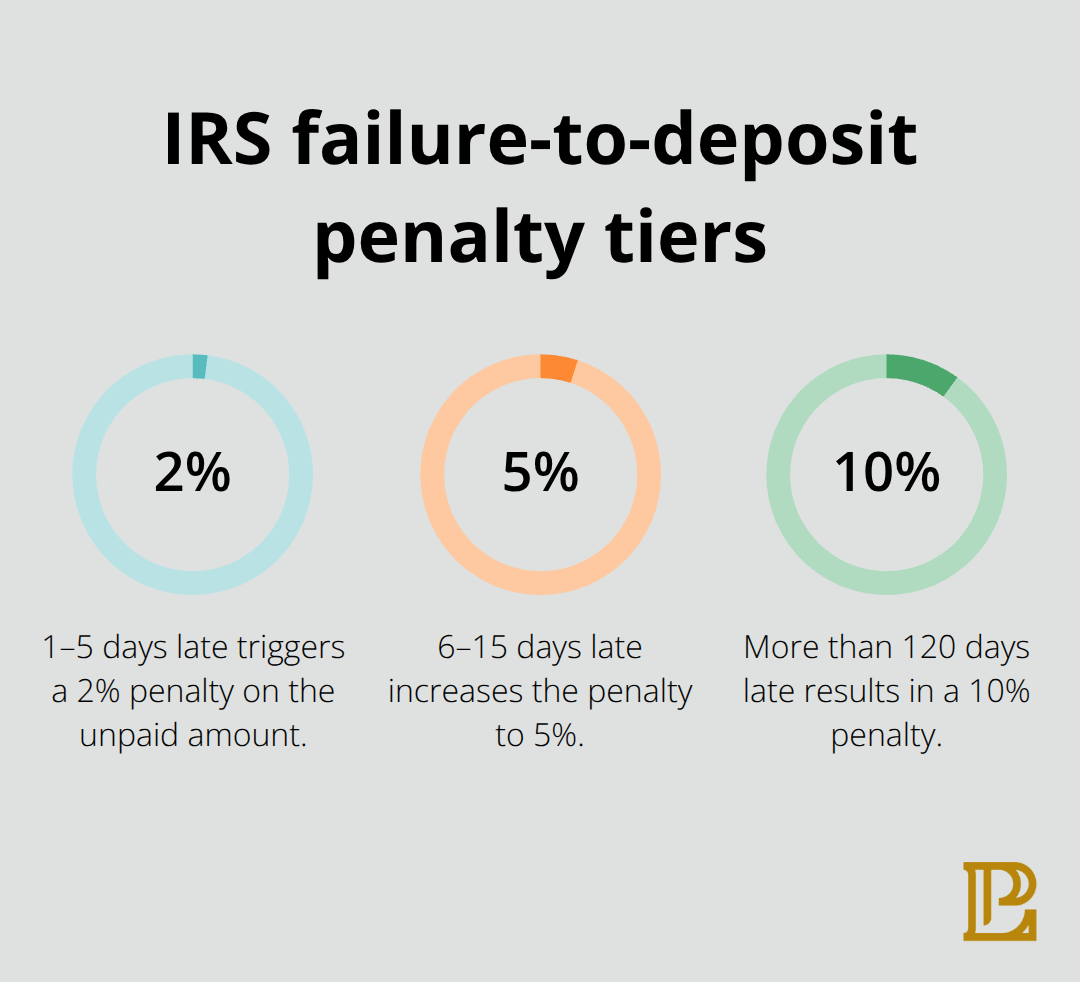
Payroll tax deadlines represent a critical failure point because the penalty structure punishes delays aggressively. The IRS assesses failure-to-deposit penalties at 2% if you deposit one to five days late, jumping to 5% for six to fifteen days late, and reaching 10% for deposits more than 120 days late.
California compounds this pressure with its own penalties for late payroll tax payments, which start at 10% of the unpaid amount plus interest accruing daily.
A single missed quarterly deadline on a $25,000 payroll tax obligation costs you roughly $2,500 in penalties before interest charges accumulate. Automating payroll through services like Gusto or ADP eliminates human error entirely and generates compliance calendars that alert you weeks before filing dates arrive.
Labor law changes shift faster than most businesses adapt
Labor law changes in California shift frequently enough that businesses relying on outdated knowledge face consistent violations. The minimum wage increase to $16.50 in January 2024 affected thousands of businesses that failed to update their payroll systems, resulting in underpayment liability plus penalties. California’s paid family leave program expanded in 2023 to cover non-biological parents, yet many HR departments never learned about this change and incorrectly denied claims.
The state’s strict meal and rest break requirements trigger wage claims regularly because employers misunderstand when breaks apply-a 5.5-hour shift does not require a meal break under California law, but employers routinely provide one anyway and then deduct it from pay, creating violations. Subscribing to California Department of Industrial Relations email alerts costs nothing and delivers updates about regulatory changes directly to your inbox before they affect your business.
These compliance failures don’t happen in isolation. They compound across your business operations, and addressing one area without fixing the others leaves significant gaps in your protection. Understanding which tools and resources actually work for California businesses separates companies that stay compliant from those that face mounting penalties.
Tools That Actually Work for California Business Compliance
California businesses waste money on compliance software that promises everything and delivers confusion. The state and federal databases you need are free and direct, while paid software solutions range from genuinely useful to completely unnecessary depending on your business size and complexity.
Free State and Federal Compliance Databases
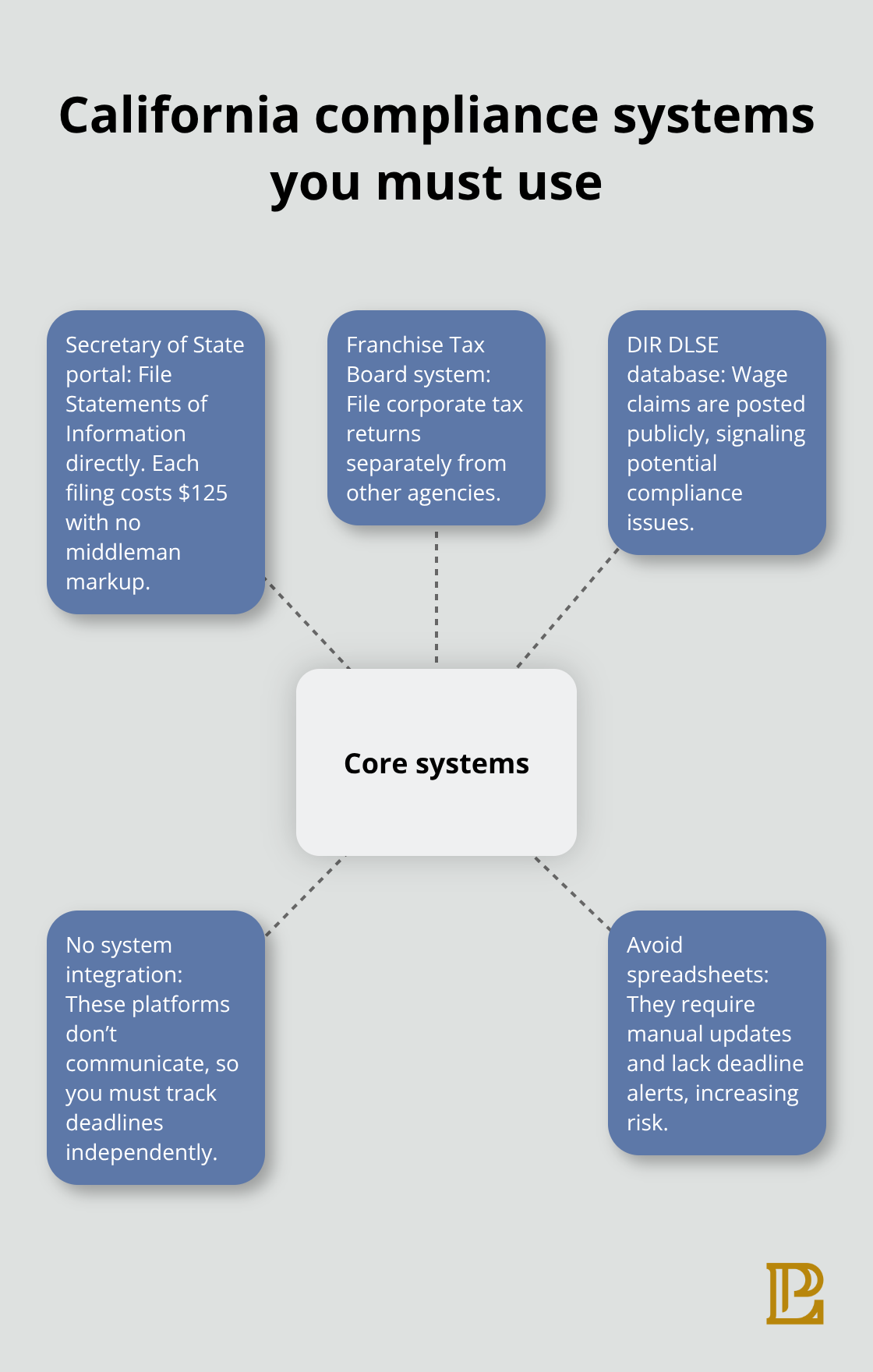
The California Secretary of State website hosts the Statement of Information filing portal where you submit annual reports directly, costing $125 per filing with no middleman markup. The Franchise Tax Board operates a separate filing system for corporate tax returns, and the California Department of Industrial Relations maintains the Division of Labor Standards Enforcement database where wage claims appear publicly. These three systems don’t communicate with each other, which means you must track deadlines independently across multiple platforms. Spreadsheets fail at this task because they require manual updates and offer no deadline alerts.
Payroll Software That Eliminates Manual Errors
Payroll software like Gusto or ADP integrates with tax filing systems and automatically generates California-specific forms including Schedule CA, eliminating the manual work that creates errors. Gusto charges approximately $39 per month plus $6 per employee, while ADP starts around $99 monthly for small businesses, and both services generate quarterly tax filings automatically rather than forcing you to navigate separate portals. These platforms handle withholding calculations, tax form generation, and deadline tracking without human intervention.
Compliance Management Systems Prevent Missed Deadlines
Compliance management software serves a specific purpose: preventing the missed deadlines that trigger penalties. HubSpot’s free compliance calendar helps track filing dates across platforms, though it requires manual entry of your deadlines. Notion templates cost nothing and create searchable records of corporate decisions and payroll documentation that satisfy California’s three-year retention requirement. The real value appears when you face a Franchise Tax Board audit or wage claim and can instantly produce organized records rather than spending weeks reconstructing documents.
Record Storage and Legislative Alerts
Digital record storage through Microsoft 365 or Google Workspace costs $10 to $20 monthly and creates time-stamped audit trails that demonstrate your compliance efforts if disputes arise. The California Chamber of Commerce publishes free compliance guides updated quarterly, and subscribing to their legislative alerts costs nothing while keeping you informed about labor law changes before they affect your payroll. These alerts notify you of minimum wage increases, new employment regulations, and other changes that impact your business operations directly.
Final Thoughts
California corporate compliance requires attention across three interconnected areas: annual filings with the Secretary of State, payroll tax management, and employment law compliance. Missing deadlines in any single area triggers penalties that compound quickly, turning a small oversight into a costly problem. The practical reality is that most California corporations fail not because they ignore compliance intentionally, but because they lack systems to track deadlines across multiple agencies that don’t communicate with each other.
Strengthening your compliance program starts with automating payroll through services like Gusto or ADP, which eliminate manual calculation errors and generate California-specific tax forms automatically. Next, implement digital record storage through Microsoft 365 or Google Workspace to maintain the three-year documentation trail California law requires. Subscribe to California Department of Industrial Relations email alerts so labor law changes reach you before they affect your payroll, and establish a quarterly compliance calendar that tracks your Statement of Information deadline, Franchise Tax Board filing dates, and payroll tax deposit schedules across one centralized system.
These steps address the compliance failures that cost California businesses the most money, yet compliance becomes significantly more complex when your business faces disputes, undergoes tax audits, or navigates contract negotiations. When these situations arise, attempting to handle them alone exposes your company to substantial liability. Contact Pierview Law to discuss your specific compliance needs and strengthen your legal foundation.