
Your board faces real pressure in Los Angeles. State regulations, shareholder expectations, and fiduciary duties create a complex environment where governance mistakes can cost your business millions.
At Pierview Law, we’ve seen how Los Angeles governance practices separate thriving companies from those caught in costly disputes. This guide walks you through the boardroom readiness your business needs.
What Los Angeles Companies Need to Know About Governance
California’s Strict Fiduciary Standards
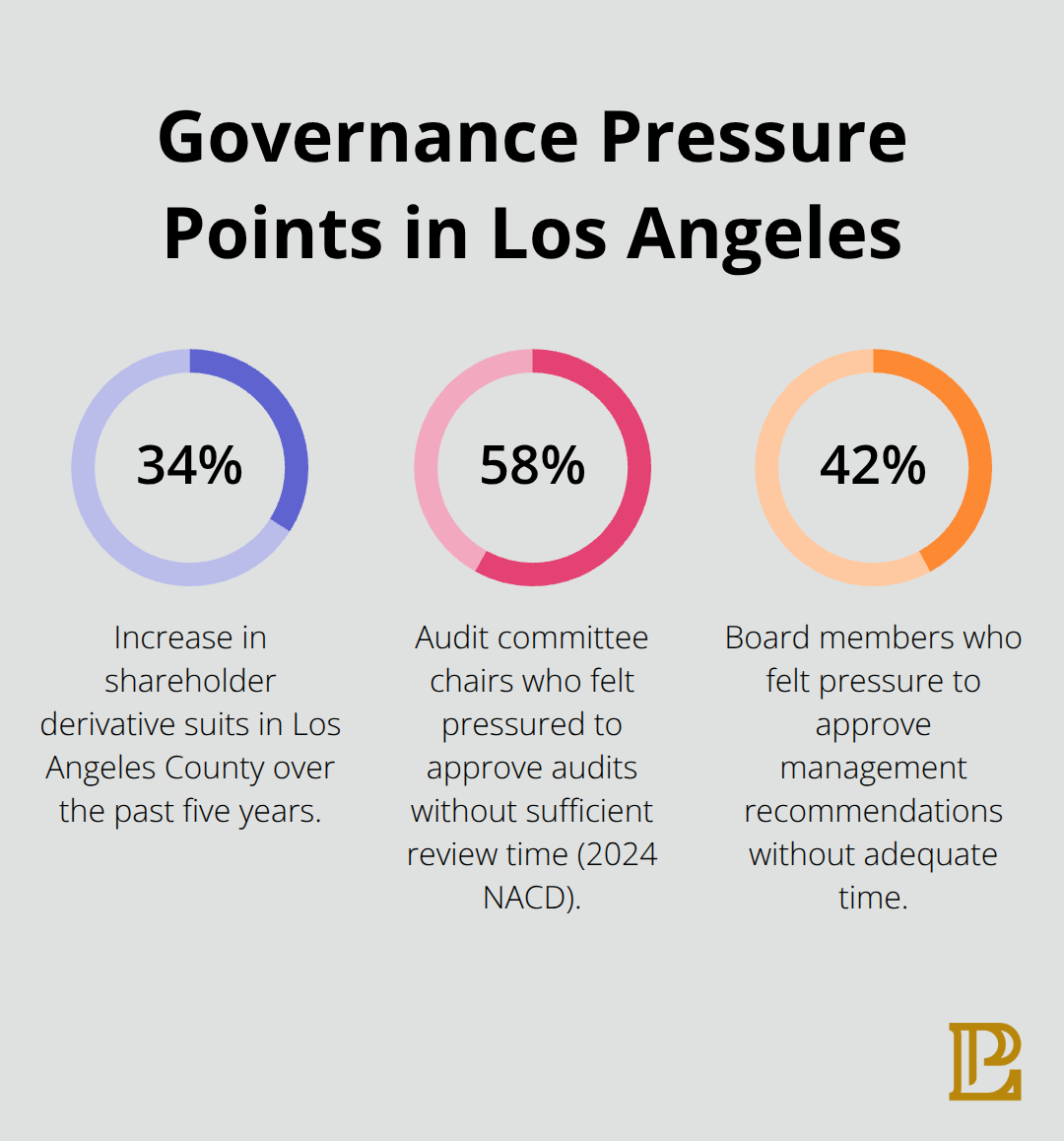
Company law in California imposes strict fiduciary duties on board members, and Los Angeles companies operate under additional layers of regulation that many boards underestimate. The California Corporations Code requires directors to act in good faith, with the care an ordinarily prudent person would use, and in a manner the director believes is in the best interest of the corporation. This standard sounds straightforward until your board faces a real conflict or a shareholder challenge. Los Angeles County has seen a 34% increase in shareholder derivative suits over the past five years according to legal filing data, meaning boards that treat governance as optional pay the price.
The state mandates specific disclosure requirements for related-party transactions, executive compensation, and material risks that boards cannot delegate away. Your board must actively monitor these obligations rather than rubber-stamping management decisions. Companies operating in multiple California counties face compounding compliance burdens because local regulations sometimes exceed state minimums. Hermosa Beach-based companies and those throughout Los Angeles County particularly need to understand how state securities regulations interact with federal requirements under the Sarbanes-Oxley Act if they have public shareholders or debt holders with governance covenants.
Active Board Oversight Beyond Financial Approval
The board’s role extends far beyond approving quarterly financials. Directors must actively assess whether management operates within approved risk parameters, whether compensation structures align with shareholder interests, and whether the company has adequate controls to prevent fraud or regulatory violations. A 2024 survey by the National Association of Corporate Directors found that 58% of board audit committee chairs felt pressure to approve audits without sufficient time for review, creating liability exposure that individual directors cannot escape.
Your board needs concrete policies defining what matters require full board approval versus what management can handle independently. These written policies protect both the company and individual directors by establishing clear decision-making authority.
Managing Conflicts and Risk
Conflicts of interest demand particular attention because Los Angeles business relationships are interconnected, and a director’s outside business dealings can create undisclosed conflicts that expose the entire board to liability. Boards should establish written conflict-of-interest policies that require advance disclosure and recusal procedures, not just annual acknowledgment forms that directors sign without reading.
Risk management cannot be an afterthought delegated to management either. The board must receive regular reports on operational risks, compliance failures, and litigation exposure, then document how it addressed those issues. This documentation protects directors from personal liability claims and demonstrates that the board fulfilled its oversight responsibilities. When governance gaps appear in your current structure, addressing them requires both legal guidance and practical implementation-which brings us to the specific steps your board must take to achieve true readiness.
Building a Board That Actually Works
Assess Your Board’s Real Capabilities
Your board composition determines whether governance becomes a competitive advantage or a liability. Los Angeles companies often inherit boards filled with long-standing relationships rather than strategic skill sets, and this approach backfires when actual decisions need to be made. Conduct a brutally honest assessment of what your current directors bring to the table. The National Association of Corporate Directors reports that boards completing formal skills assessments identify capability gaps in 73% of cases, yet most Los Angeles companies skip this step entirely.
Map out the specific competencies your business requires: financial acumen, industry knowledge, risk management experience, regulatory compliance background, and operational expertise. If your board lacks these areas, you have a governance problem that no amount of meeting preparation can fix. Recruit directors with concrete experience in those domains rather than selecting based on personal relationships or status.
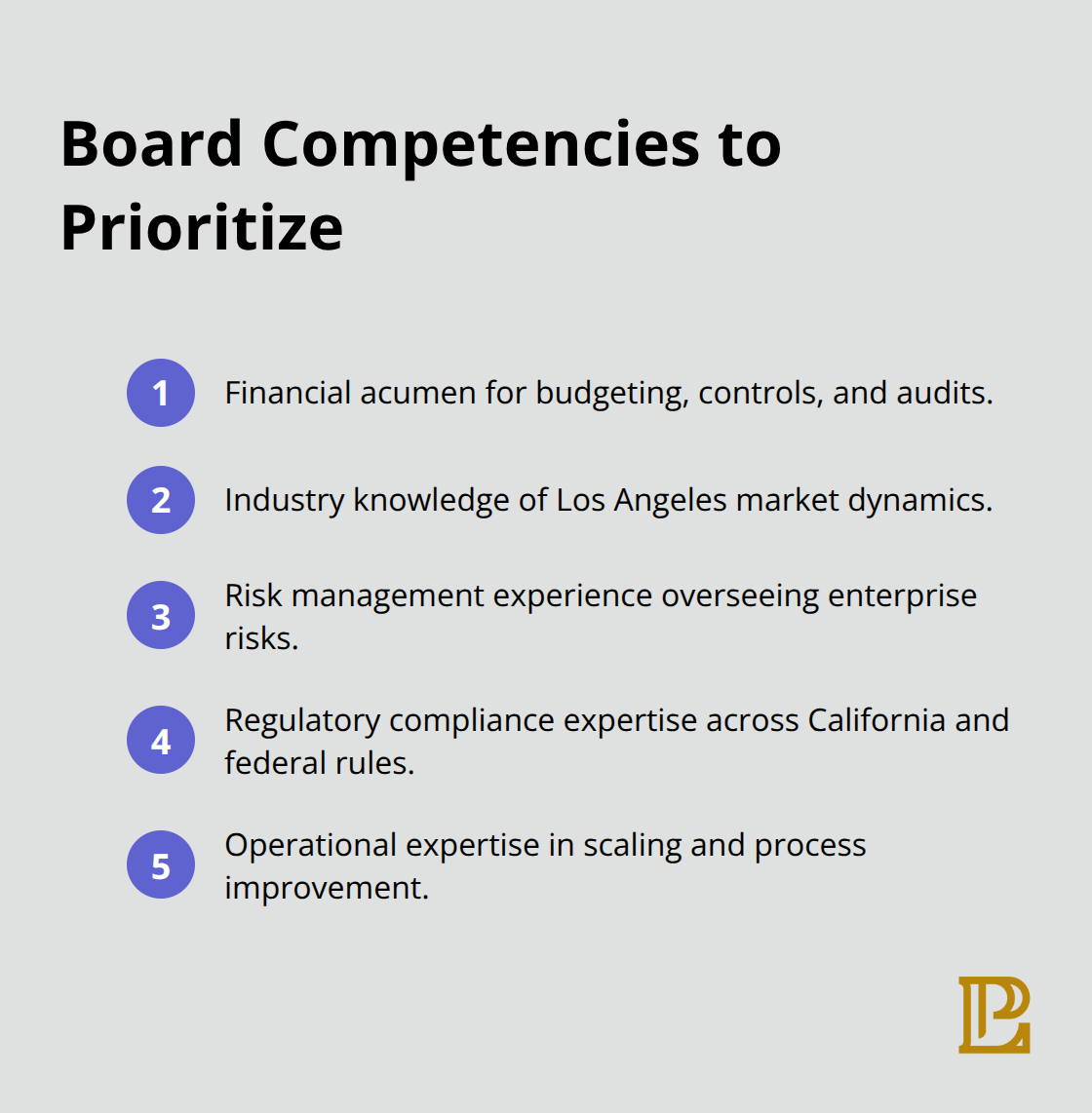
Hermosa Beach-based companies and larger Los Angeles enterprises should prioritize directors who understand both California regulations and the specific market dynamics of their industry.
Define Decision-Making Authority in Writing
Once your board composition stabilizes, develop written policies that define exactly how decisions flow through your organization. Your conflict-of-interest policy should require advance written disclosure of any business relationship that could benefit a director, not just annual sign-offs that people ignore. Create a policy matrix showing which decisions require full board approval, which need only committee review, and which management handles independently. This clarity prevents the rubber-stamp mentality that creates liability.
The board should meet at least quarterly, with agendas distributed five business days in advance so directors can prepare meaningfully. This practice transforms meetings from ceremonial gatherings into substantive decision-making forums where directors actually contribute informed perspectives.
Invest in Continuous Board Education
Training matters significantly: allocate budget for directors to attend governance education programs covering fiduciary duties, risk management, and compliance updates specific to your industry. Your board members should understand that governance excellence protects their personal assets and the company’s future, transforming what feels like bureaucratic overhead into genuine risk reduction.
When governance gaps appear in your current structure, addressing them requires both legal guidance and practical implementation-which brings us to the specific mistakes Los Angeles companies make when they fail to execute these foundational steps.
Common Governance Mistakes Los Angeles Companies Make
Inadequate Oversight of Executive Management
Los Angeles boards consistently approve management decisions without independent verification, creating measurable liability for individual directors. The National Association of Corporate Directors found that 42% of board members felt pressure to approve management recommendations without adequate time for independent analysis, yet most boards continue scheduling meetings without sufficient preparation time or supporting documentation. When a board rubber-stamps executive compensation, approves major contracts, or accepts management’s risk assessments without questioning underlying assumptions, individual directors expose themselves to personal liability that directors and officers insurance often refuses to cover.
Los Angeles County litigation data shows that shareholder derivative suits increasingly target individual directors for breach of fiduciary duty, with settlements averaging $2.1 million over the past three years. Your board needs systems that force genuine scrutiny rather than relying on director integrity alone. Require management to submit detailed written analyses for all major decisions at least five business days before board meetings. This practice gives directors time to prepare questions and conduct independent verification rather than hearing proposals for the first time during the meeting itself.
Failure to Manage Conflicts of Interest
Conflicts of interest destroy boardroom credibility faster than any other governance failure. A director who sits on your compensation committee while their consulting firm bills the company thousands monthly creates obvious conflicts, yet Los Angeles boards frequently allow these arrangements because directors avoid difficult conversations. Without written policies requiring advance disclosure and automatic recusal, conflicts remain hidden until they surface in litigation or regulatory investigations.
Establish a conflict-of-interest policy that requires advance written disclosure of any business relationship that could benefit a director, not just annual sign-offs that people ignore. Your policy should specify that directors with conflicts automatically recuse themselves from voting on related matters and leave the room during discussions. Los Angeles business relationships are interconnected, and a director’s outside business dealings can create undisclosed conflicts that expose the entire board to liability. Address these tensions directly through written procedures rather than hoping directors will volunteer information about their competing interests.
Neglecting Compliance and Risk Management
Compliance and risk management failures follow predictably when boards lack oversight structures. Companies often discover regulatory violations only after customers file complaints or government agencies launch investigations, meaning the board never received reports on compliance gaps that management knew existed. Your board must receive quarterly written reports on litigation exposure, regulatory investigations, compliance failures, and operational risks, with documentation showing how the board responded to each issue.
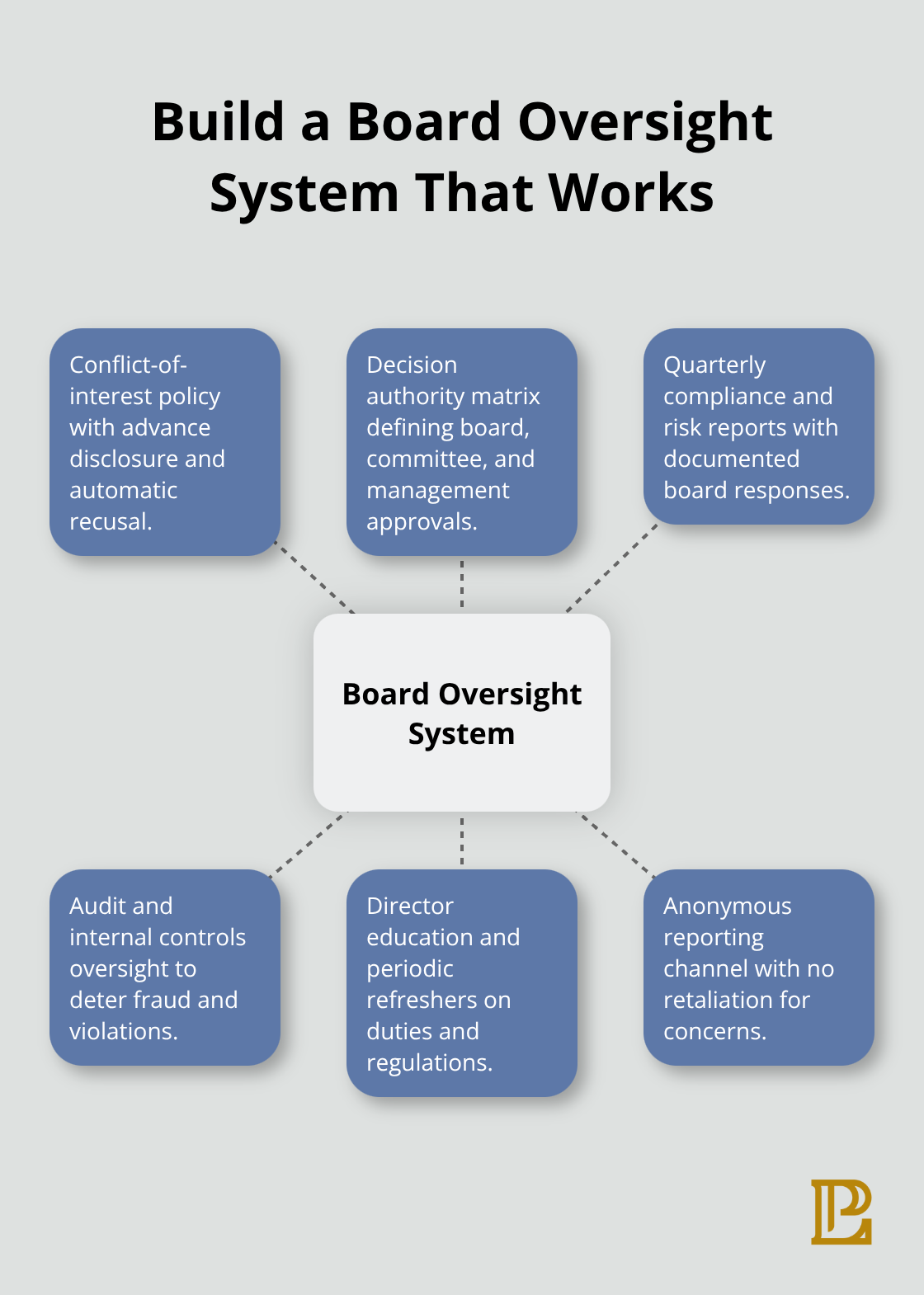
When the board receives these reports but takes no action, that documented inaction becomes evidence of breach of fiduciary duty in future litigation. Assign one board member to lead compliance oversight and require management to submit written compliance certifications quarterly. Create a process where board members can anonymously report concerns about management’s honesty or risk-taking without fear of retaliation. These systems transform governance from a ceremonial obligation into actual protection for your business and your directors’ personal assets.
Final Thoughts
Boardroom readiness requires three concrete actions that separate Los Angeles companies protecting their assets from those headed toward costly disputes. First, conduct an honest assessment of your board’s actual capabilities against your business needs, then recruit directors with specific competencies rather than personal connections. Second, document your decision-making authority through written policies covering conflicts of interest, executive oversight, and compliance reporting. Third, implement quarterly compliance certifications and risk management reports that force your board to actively monitor management rather than rubber-stamp decisions.
Los Angeles governance practices demand this level of rigor because California’s fiduciary standards impose personal liability on individual directors who fail to exercise genuine oversight. The 34% increase in shareholder derivative suits over the past five years shows that boards treating governance as optional pay millions in settlements. Your directors face personal asset exposure that standard directors and officers insurance often refuses to cover when governance failures surface in litigation, making active board participation a financial necessity rather than a legal formality.
We at Pierview Law work with Los Angeles County businesses to implement governance structures that protect both the company and individual directors. Contact us to assess your current governance gaps and develop the boardroom readiness your business requires.