
California businesses lose millions annually to IP theft, trademark disputes, and patent conflicts. Without a clear governance strategy, your company remains vulnerable to costly legal battles and competitive threats.
At Pierview Law, we’ve seen firsthand how intellectual property risk management in California protects companies from these preventable losses. This guide walks you through the risks, strategies, and frameworks you need to safeguard your IP today.
Three IP Threats Every California Business Faces
Trademark Disputes Cost More Than You Think
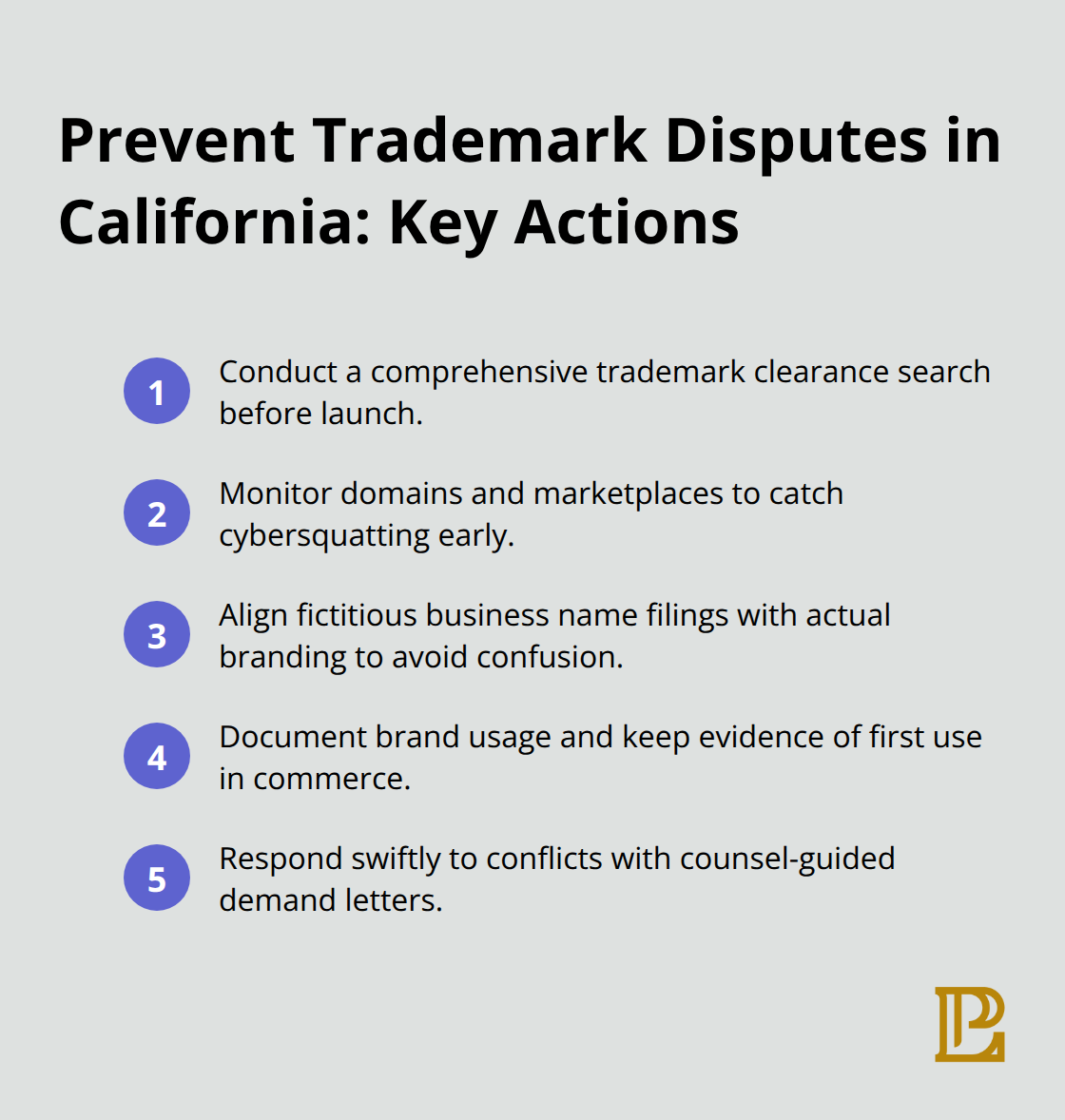
Trademark disputes rank among the costliest IP battles California companies encounter. When a competitor uses a confusingly similar mark or when your brand gets hijacked online, the damage compounds quickly. The California Trademark Act and the state’s cyberpiracy statute provide legal tools, but prevention beats litigation every time.
Start with a comprehensive trademark clearance search before launching any product or brand. This single step costs far less than defending a lawsuit or rebranding after infringing on someone else’s mark. Monitor your domain registrations actively and watch for cybersquatting attempts. If you operate under a fictitious business name, verify your county filings match your actual branding to prevent consumer confusion. Many California companies skip this step and later face cease-and-desist letters that basic due diligence would have prevented.
Patent Infringement Exposes You to Massive Liability
Patent disputes hit harder financially than most business owners anticipate. If someone copies your patented technology, the financial exposure becomes severe. Patent infringement cases in California routinely cost hundreds of thousands to defend, so file your patent applications before public disclosure to preserve your rights. Don’t delay filing or assume you can protect innovations through informal agreements.
The first-to-file system means speed matters. File your applications early and document your filing dates carefully. This protects your competitive edge and strengthens your position if disputes arise later.
Trade Secret Theft Demands Immediate Action
Trade secret theft represents the third and most damaging tier of IP risk. California’s Uniform Trade Secrets Act allows damages even when a secret hasn’t yet generated revenue, which means your unfinished innovations deserve protection from day one. The reality is blunt: companies that treat trade secrets casually lose them.
Implement access controls immediately and require written confidentiality agreements with all employees and contractors. Document your reasonable efforts to maintain secrecy through formal confidentiality programs, clear policies, and restricted access to sensitive information. Conduct regular audits to confirm your protections remain intact. These steps transform your trade secrets from vulnerable assets into legally defensible property.
Your IP portfolio faces real threats across multiple fronts. The next section outlines the governance strategies that stop these threats before they damage your business.
How to Spot and Stop IP Problems Before They Escalate
Catalog Your IP Assets Through Structured Audits
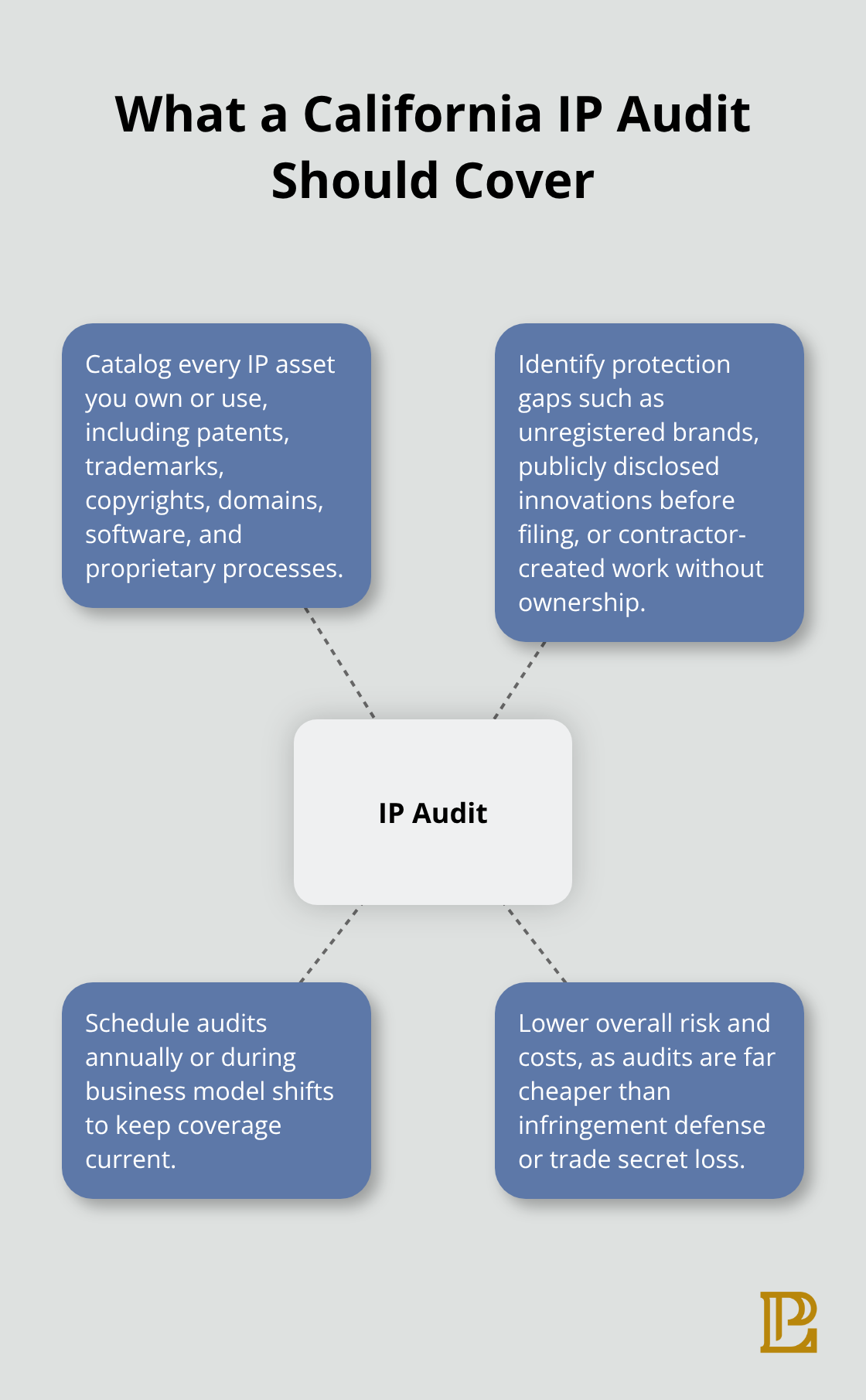
Waiting for an IP problem to surface means you’ve already lost ground. Companies that avoid costly disputes build systems to identify risks early and respond before damage occurs. Start with a structured IP audit that catalogs every asset your company owns or uses. Document patents, trademarks, copyrights, domain names, software, customer lists, and proprietary processes. Most California businesses operate without a complete picture of their IP holdings, which means they can’t protect what they don’t know they have. Your audit should also identify gaps in protection-brands you use but haven’t registered, innovations you’ve disclosed publicly before filing patents, or contractor-created work you don’t formally own. Conduct this audit annually or whenever your business model shifts. The cost of an internal audit or working with counsel on a focused review runs far lower than defending infringement claims or losing trade secrets to competitors.
Document Ownership and Confidentiality with Precision
Strong documentation systems transform IP governance from theoretical to operational. Implement a centralized filing system where all employment and contractor agreements explicitly address IP ownership, with clear language that work created during employment belongs to your company. California Labor Code 2870 restricts what employers can claim, so align your agreements with this statute-vague language invites disputes later. Require written confidentiality agreements with anyone accessing sensitive information, including employees, contractors, vendors, and advisors. Document the reasonable measures you take to maintain secrecy: restricted access logs, encryption protocols, confidentiality training records, and periodic audits of who can access sensitive data. When trade secret litigation arises, courts examine whether you took demonstrable steps to protect information. Companies with documented confidentiality programs win these cases; those without detailed records lose them regardless of the secret’s actual value.
Track Competitor Activity and Respond Quickly
Monitor competitor activity and market threats through regular searches of trademark databases, patent filings, and domain registrations. Set up alerts for your brand name and key product terms so you catch infringing marks or cybersquatting attempts within days, not months. If you discover a competitor using confusingly similar branding or filing patents that overlap your innovations, respond quickly with cease-and-desist letters or office action responses. Speed matters because delay weakens your legal position and signals to competitors that enforcement is unlikely. Track these enforcement actions in a centralized log so you demonstrate consistent protection efforts, which strengthens your rights under California law. This proactive monitoring transforms reactive crisis management into strategic risk control.
Building Your IP Protection Framework
Establish Clear Ownership Through Written Agreements
Ownership and assignment policies form the backbone of IP protection, yet most California businesses operate without clear documentation. Draft explicit IP assignment clauses in every employment agreement that state unambiguously that work created during employment belongs to the company. California Labor Code 2870 carves out a narrow exception for inventions created entirely on an employee’s own time with no company resources and unrelated to the business, so your language must reflect this limitation or courts will void overly broad claims.
Contractor agreements demand even sharper precision because contractors retain ownership by default unless a written assignment explicitly transfers rights to you. Document the moment each IP asset is created, who created it, and under what circumstances. This paper trail becomes invaluable if disputes arise or if you need to demonstrate clear ownership during investor due diligence. Many California companies lose millions in company valuation because they cannot prove who owns the software, designs, or trade secrets that drive their business.
Implement Technical and Administrative Controls
Confidentiality agreements and access controls operationalize protection across your organization. Require written confidentiality agreements with employees, contractors, vendors, and anyone else accessing sensitive information, and train staff on what qualifies as confidential material. Implement technical controls including encryption, restricted access logs, and multi-factor authentication for systems holding trade secrets or proprietary data.
Document these measures consistently through audit trails and periodic access reviews because California courts examine whether you took demonstrable steps to maintain secrecy. This documentation transforms abstract protection efforts into legally defensible evidence that your company treated information as confidential.
Maintain Your IP Registration Calendar
Establish a centralized IP registration calendar that tracks all trademark renewals, patent maintenance fees, and domain registration expirations so critical protections never lapse. Set reminders at least 90 days before renewal deadlines and assign clear responsibility to specific team members. A single missed deadline costs thousands in legal fees to restore lapsed rights, making automated tracking systems worth the investment.

Conduct Regular Audits and Update Agreements
Schedule annual IP audits to confirm your protection measures remain aligned with your evolving business, and update assignment and confidentiality agreements whenever your organizational structure changes or new roles emerge. These regular reviews catch gaps before they become liabilities and keep your governance framework responsive to business growth.
Final Thoughts
Intellectual property risk management in California requires more than legal compliance-it demands that you treat your company’s most valuable assets as strategic priorities. The threats are real: trademark disputes drain resources, patent conflicts expose you to massive liability, and trade secret theft destroys competitive advantage overnight. Companies that wait for problems to surface always pay more than those who build protection systems in advance.
The framework we’ve outlined transforms IP governance from an afterthought into operational reality. You conduct regular audits to know what you own, document ownership through written agreements that reflect California law, implement access controls and confidentiality programs that demonstrate reasonable protection efforts, monitor competitor activity and respond quickly when threats emerge, and maintain your registration calendar so critical protections never lapse. These steps cost far less than litigation and position your business to grow without constant fear of IP disputes.
A well-protected IP portfolio strengthens your company valuation, attracts investor confidence during due diligence, and creates competitive barriers that competitors cannot easily overcome. When you can prove clear ownership, documented protection measures, and active enforcement, your business becomes more attractive to buyers, partners, and capital sources. Contact Pierview Law to build an IP protection framework tailored to your specific risks and growth stage.