
A poorly drafted M&A contract can cost you thousands in disputes, renegotiations, or failed deals. California M&A contracts require precision because state laws create unique obligations that generic templates miss.
At Pierview Law, we’ve seen deals derail over vague language and missing regulatory details. This guide walks you through the essential elements, common mistakes, and best practices that protect your transaction from start to finish.
What Goes Into a California M&A Contract
The foundation of any successful M&A transaction rests on three interconnected elements that must work together seamlessly. Purchase price and payment terms define the financial obligation, but California courts scrutinize how these terms are structured because they affect tax treatment, liability exposure, and dispute resolution. The price itself should specify the base amount, any earn-outs or contingent payments, and the mechanism for adjustments post-closing.
Purchase Price and Earn-Out Structures
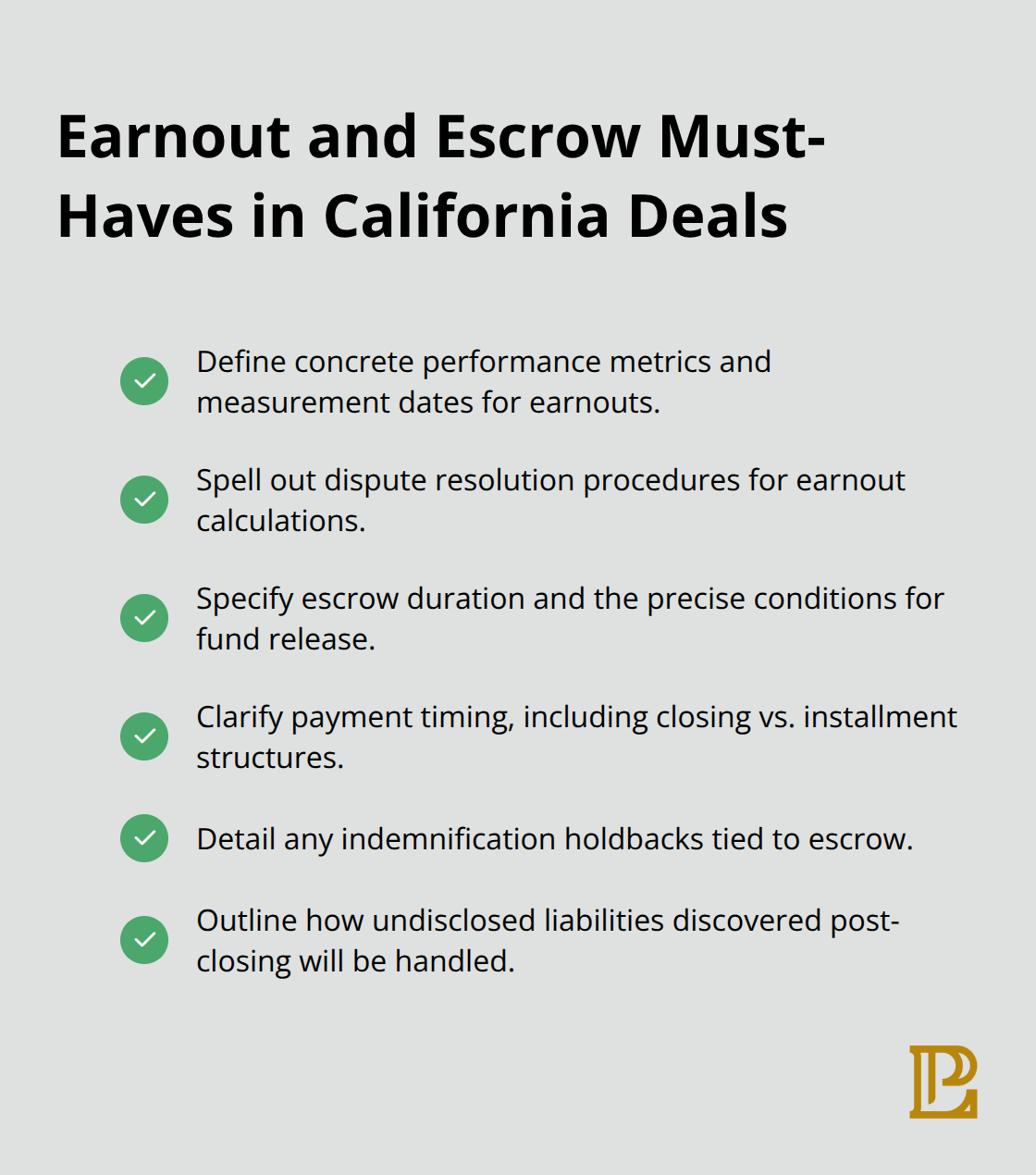
Earn-outs create particular friction in California deals because they often trigger disputes over how earnout conditions were calculated. Rather than vague language about performance targets, your contract needs specific metrics, measurement dates, and dispute resolution procedures for earnout calculations. Payment terms must address whether funds transfer at closing or in installments, whether the seller receives escrow holdbacks for indemnification claims, and what happens if the buyer discovers undisclosed liabilities after closing.
California courts have found that escrow arrangements without clear release schedules lead to prolonged disputes. The contract should specify exactly how long the escrow period lasts and what conditions trigger fund release. This precision prevents the buyer and seller from fighting over money that sits in escrow indefinitely.
Representations and Warranties Shape Deal Reality
These contractual statements about the business being sold carry enormous weight because they define what the buyer actually receives and what recourse exists if those statements prove false. Financial representations require specific detail about revenue, expenses, customer concentration, and outstanding liabilities rather than general assertions that financial statements are accurate.
If the seller claims that the largest customer represents only 15 percent of revenue, the contract should identify that customer by name and require documentation supporting the claim. Warranty language must distinguish between matters the seller actually knows versus matters the seller should have discovered through reasonable investigation. California courts tend to enforce knowledge qualifiers strictly, meaning a seller cannot hide behind lack of knowledge about matters that proper investigation would have revealed.
Environmental and Intellectual Property Warranties
Environmental representations deserve particular attention in California because state regulations impose strict liability for contamination regardless of fault. The seller must warrant the property’s environmental condition and identify any Phase I or Phase II environmental assessments already completed. Intellectual property representations should identify all patents, trademarks, and copyrights the business owns or licenses, and confirm that no third-party claims threaten those rights.
Closing Mechanics and Conditions Precedent
These provisions control when the transaction actually closes and what must happen before both parties’ obligations become binding. Conditions precedent protect both buyer and seller by making closing contingent on specified events, such as regulatory approvals, third-party consents, or the accuracy of representations at closing. California M&A deals often require regulatory approval from industry-specific agencies, and the contract must specify which party bears the burden of obtaining approvals and what happens if approval is denied or delayed beyond a certain date.
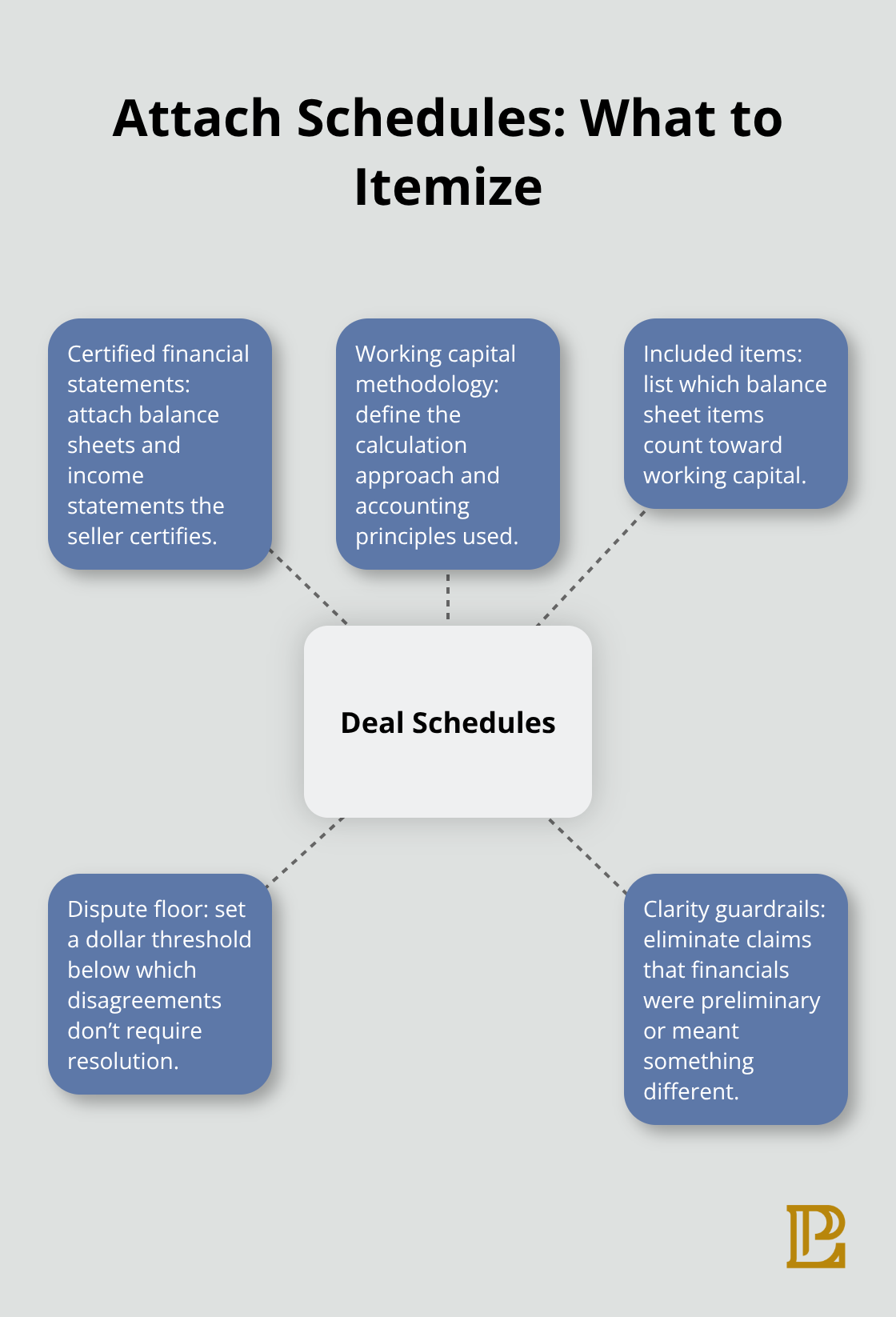
The closing mechanics section should detail the exact steps that occur at closing, including what documents each party delivers, how funds transfer, and how the parties handle post-closing adjustments to the purchase price. Working capital adjustments create substantial disputes when the contract fails to specify the calculation methodology, the accounting principles applied, and the timeframe for resolving disagreements over the closing balance sheet. Rather than leaving these details to post-closing negotiation, your contract should establish a detailed schedule showing how working capital gets calculated, which balance sheet items are included, and whether the parties will use an independent accountant to resolve disputes.
Indemnification and Liability Protection
Indemnification mechanics should specify the escrow amount, the period during which claims can be brought, basket thresholds below which claims are not paid, and caps on the seller’s total liability for breached representations. These protections (when drafted with precision) prevent one party from absorbing unexpected losses after the transaction closes. The next section examines the common mistakes that undermine even well-intentioned drafting efforts, showing you where most California M&A contracts fail.
Where M&A Contracts Fall Apart
Undefined Terms Destroy Deals
Vague language destroys more California M&A deals than any other drafting mistake. We at Pierview Law see contracts where parties use terms like “material adverse change” or “reasonable efforts” without defining what those phrases actually mean in the context of the specific transaction. When the buyer later claims that a 12 percent revenue decline constitutes a material adverse change, and the seller argues it does not, both parties point to the same undefined contract language and reach an impasse.
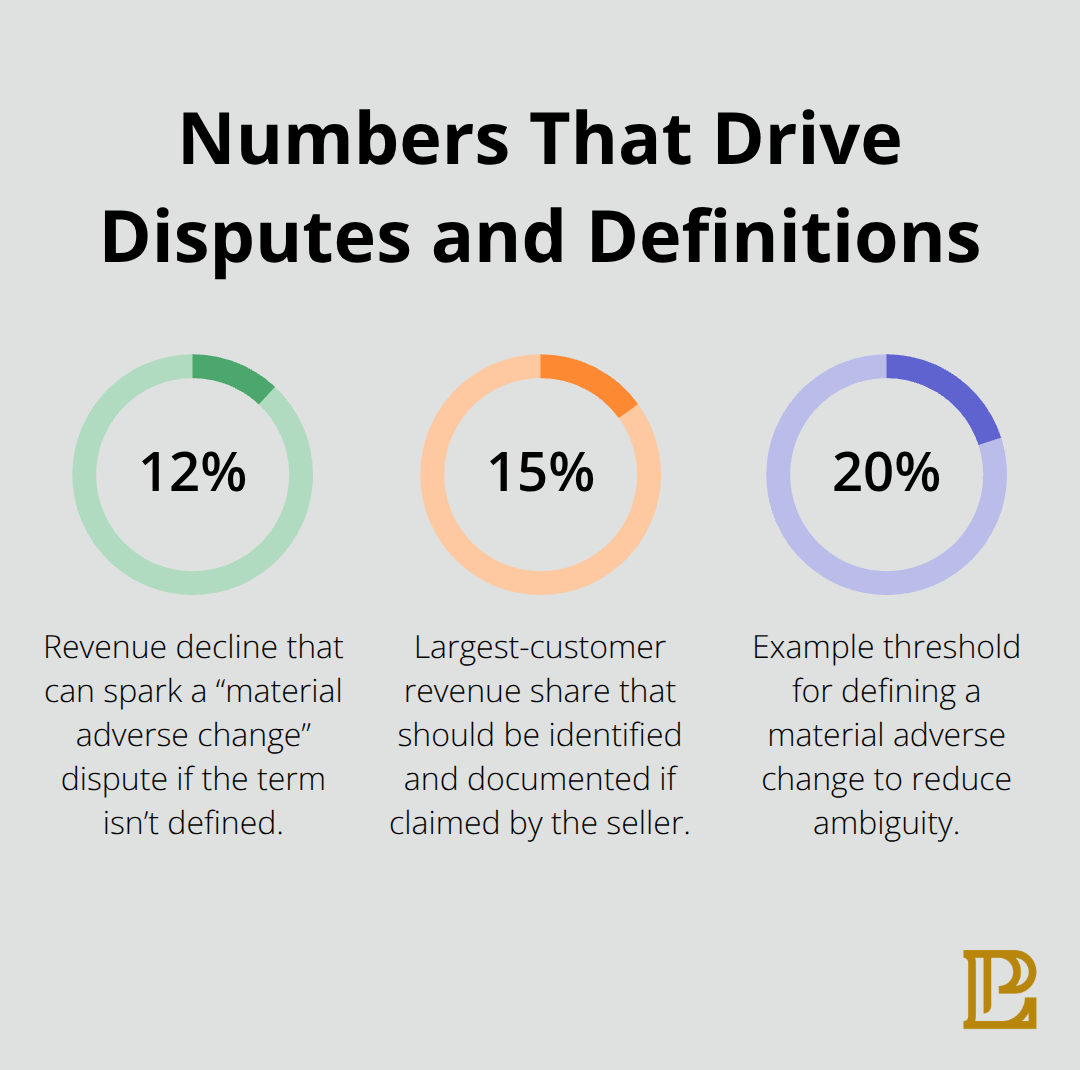
The contract should specify that material adverse change means a decline exceeding 20 percent in quarterly revenue compared to the prior year, or whatever threshold the parties actually intend. Without this precision, you are essentially asking a California court to guess at the parties’ intent, and litigation costs will dwarf any amount in dispute.
Inadequate Due Diligence Provisions
Due diligence provisions often receive minimal attention during drafting, yet they create massive problems when undisclosed liabilities surface after closing. Many California M&A contracts simply state that the buyer had the opportunity to conduct due diligence, without specifying what information the seller must provide, what access the buyer receives to facilities and records, or what timeline applies to the investigation process.
If the seller fails to disclose a pending lawsuit involving a major customer, the buyer cannot claim breach of warranty if the contract contains no specific representation about pending litigation. The contract must require the seller to disclose all litigation, regulatory investigations, customer complaints, and environmental issues, with the seller certifying that the disclosure is complete and accurate. Additionally, the contract should establish a specific due diligence period (typically 30 to 60 days) during which the buyer can investigate the business and request additional information. If the buyer identifies issues during this window, the contract should allow the buyer to terminate or renegotiate rather than proceeding blindly into closing.
Misaligned Risk Allocation
Risk allocation failures occur when the contract fails to clearly assign responsibility for unknown liabilities. Does the seller remain liable for tax obligations discovered after closing, or does the buyer absorb that cost? Who bears responsibility if a customer relationship deteriorates post-closing due to pre-existing issues the buyer should have discovered?
California courts interpret ambiguous risk allocation provisions against the drafter, meaning if you drafted the contract and the language is unclear, the court will likely rule against your position. The solution requires explicit language assigning each category of risk to either the buyer or seller, with corresponding indemnification obligations that survive closing for a specified period. These allocation decisions directly impact how your indemnification provisions function in practice, which brings us to the specific mechanics that protect both parties after the transaction closes.
How to Draft M&A Contracts That Actually Hold Up in California
Define Every Term That Matters
The difference between a contract that protects your deal and one that creates litigation comes down to language precision and structural completeness. California courts enforce M&A contracts according to what the parties actually wrote, not what they intended, which means vague or incomplete drafting becomes your problem in court. Start with a definition section early in your contract that establishes exact meanings for every term that could trigger disputes. If your contract uses material adverse change, define it with specific financial thresholds. If it references reasonable efforts, specify what efforts the party must actually undertake. The National Law Review found that 67 percent of M&A disputes stem from contractual ambiguity rather than genuine disagreements about facts, which tells you that clearer language prevents costly litigation.
Attach Schedules That Itemize Everything
Every representation and warranty should reference specific schedules that itemize exactly what the seller represents. Rather than a general statement that financial statements are accurate, attach the actual balance sheets and income statements as exhibits, then have the seller certify those specific documents. This approach eliminates the seller’s ability to later claim they meant something different or that the financial statements were preliminary. When you address working capital adjustments, the contract should specify the exact accounting methodology, identify which balance sheet items count toward working capital, and establish a dollar threshold below which disputes do not require resolution. Many California deals use a 0.5 percent threshold, meaning disagreements under that amount get absorbed by the buyer without further negotiation.
Address California’s Regulatory Requirements
California’s regulatory environment creates additional drafting requirements that generic templates overlook. If your transaction involves regulated industries like cannabis, real estate licensing, or professional services, the contract must address whether regulatory approvals are conditions precedent to closing and which party bears the cost and timeline risk if approvals delay. The California Department of Tax and Fee Administration requires specific contractual language addressing sales tax obligations and successor liability, particularly for asset sales. Include a specific representation from the seller confirming all sales tax obligations have been paid and identifying any pending assessments.
Handle Real Estate and Environmental Issues
Real estate transactions in Hermosa Beach require title insurance commitments and Phase I environmental assessments incorporated into the contract as conditions of closing, with the contract specifying whether the buyer or seller remedies any environmental issues identified. Environmental representations deserve particular attention in California because state regulations impose strict liability for contamination regardless of fault. The seller must warrant the property’s environmental condition and identify any Phase I or Phase II environmental assessments already completed.
Create Comprehensive Disclosure Schedules
Include comprehensive schedules covering customer concentration, key employee agreements, lease obligations, and intellectual property registrations. These schedules should identify every material item rather than stating that additional items exist or that the disclosure is subject to the buyer’s knowledge. Specificity in schedules prevents post-closing disputes where the buyer claims the seller failed to disclose material information that should have appeared in the schedules. When disputes arise over contract interpretation or performance, our civil litigation team at Pierview Law steps in to represent you at trial or alternative resolution forums.
Final Thoughts
California M&A contracts succeed or fail based on how thoroughly you address the specific details that matter in your transaction. The principles we’ve covered-defining every term, attaching comprehensive schedules, and addressing California’s regulatory requirements-form the foundation of contracts that actually protect your deal. Vague language, missing due diligence provisions, and misaligned risk allocation create the disputes that drain resources and derail transactions.
California courts enforce contracts according to what the parties actually wrote, not what they intended, which means your drafting choices directly determine whether you have recourse if something goes wrong. A contract that clearly defines material adverse change, specifies how working capital adjusts, and itemizes every representation protects both buyer and seller by establishing expectations that survive the pressures of closing day. The stakes in M&A transactions are too high to rely on generic templates or hope that both parties will interpret unclear language the same way.
When you need help protecting your California M&A contracts, Pierview Law provides the contract drafting, regulatory compliance, and dispute resolution that address your specific situation rather than applying one-size-fits-all solutions. Our team handles the details that matter in Los Angeles County transactions, whether you’re buying, selling, or financing a business. Contact us to discuss how we can protect your M&A deal with contracts that actually hold up when disputes arise.