
Buying property in California means protecting one of your biggest financial investments. A title review in California practice reveals hidden problems-liens, ownership disputes, or boundary issues-before you close the deal.
At Pierview Law, we’ve seen deals fall apart because buyers skipped this step. Getting it right from the start saves you thousands in legal fees and headaches down the road.
What Title Review Involves in California Real Estate
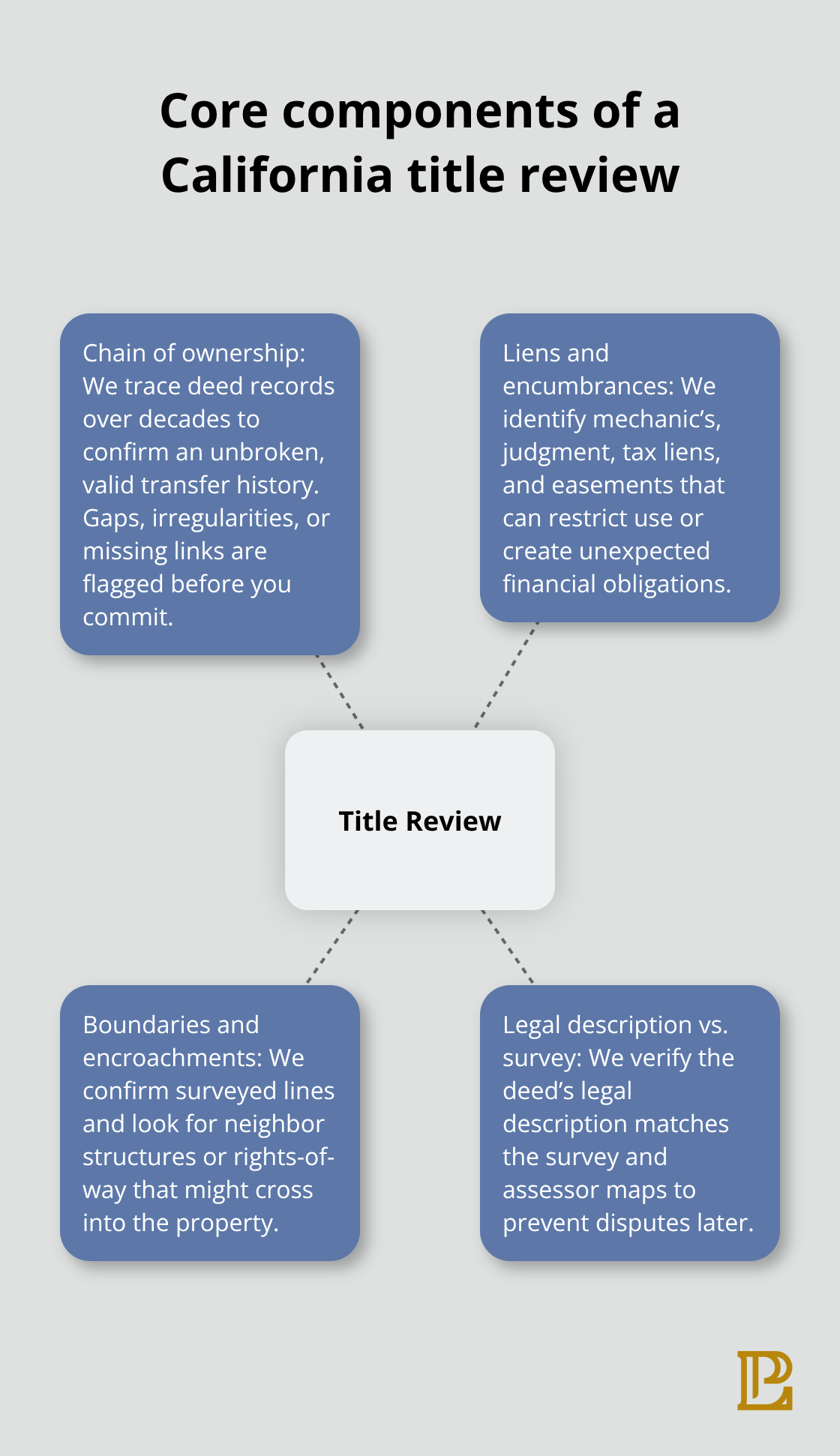
A title review examines three core areas that determine whether you can safely buy and finance a property. We trace the chain of ownership through deed records going back decades, looking for gaps, irregularities, or transfers that don’t align with what the seller claims. We identify liens, judgments, tax claims, and easements filed against the property that could restrict your use or create financial obligations you didn’t expect. We verify that the legal description matches the actual surveyed boundaries and that no encroachments from neighbors or undisclosed rights-of-way exist. This isn’t theoretical work-it’s concrete detective work that stops problems before they become yours.
Examining Deed Records and Chain of Ownership
Public records in Los Angeles County show every transfer, mortgage, and claim against a property. We pull the preliminary title report, examine each recorded document, and confirm the chain connects properly from the original grant to today’s seller. A broken chain-say, a deed recorded in 1987 that doesn’t reference the prior 1982 transfer-signals a problem that could cloud your ownership later. We cross-check the property description across all documents to catch clerical errors like misspelled names or incorrect parcel numbers. If the chain has gaps or the descriptions don’t match, we flag it immediately so you can decide whether to proceed, negotiate a price reduction, or walk away. Waiting until closing day to discover a missing heir or a forged deed costs far more than catching it during review.
Identifying Liens, Judgments, and Encumbrances
Liens filed against a property-mechanic’s liens from contractors, judgment liens from lawsuits, federal tax liens, or HOA assessments-must be cleared before you take title. The preliminary title report lists these, but the report alone doesn’t explain what each one means or how to remove it. We determine which liens the seller must pay off at closing, which ones you can negotiate to escrow, and which ones might indicate deeper problems. A mechanic’s lien from a 2019 renovation suggests unpaid contractor work; a judgment lien from a personal lawsuit may have nothing to do with the property but still clouds title. Easements and rights-of-way-including utility easements, access rights, and prescriptive easements claimed by neighbors-are equally important. An easement allowing a neighbor to cross your driveway or run a sewer line under your yard is permanent and affects how you can develop or use the property. We identify these in the title report and the recorded documents, then advise whether they’re standard (utility easements usually are) or problematic (a neighbor’s claimed right to build on your land is not).
Verifying Property Boundaries and Legal Descriptions
Surveys and recorded property descriptions sometimes don’t match reality. A fence may sit six feet inside or outside the legal boundary, or the deed description may reference a road that no longer exists. Los Angeles County’s varied municipal codes and parcel maps add complexity, especially in mixed-use developments or older neighborhoods where boundaries were recorded decades ago. We compare the legal description in the deed against the survey and the county assessor’s map to spot discrepancies. If a survey exists, we review it line by line. If one doesn’t exist and the deal is large or the boundary is unclear, we recommend ordering a survey before closing. A boundary dispute with a neighbor discovered after purchase can cost tens of thousands to resolve through quiet title litigation, whereas identifying it during review allows you to negotiate a boundary stipulation or escrow funds to resolve it. We also check for encroachments-a neighbor’s structure, driveway, or landscaping crossing into your property-which can affect your rights and future development.
Once we complete this three-part review, we move to the next critical step: identifying the specific title issues that most commonly surface in California deals and understanding how they impact your transaction.
What Title Problems Actually Cost You
Liens filed against a property represent real money you’ll owe at closing. Mechanic’s liens from unpaid contractors, judgment liens from lawsuits, federal tax liens, and HOA assessments don’t disappear when you buy the property-they transfer to you unless the seller pays them off. These obligations must be cleared before closing, and we’ve seen buyers inherit $50,000 to $150,000 in unexpected liens because they didn’t review title carefully. A mechanic’s lien filed in 2021 for unpaid drywall work signals that the seller may have other hidden debts or disputes with contractors. A judgment lien from a personal lawsuit, even one unrelated to the property, clouds your title and makes it harder to refinance or sell later.
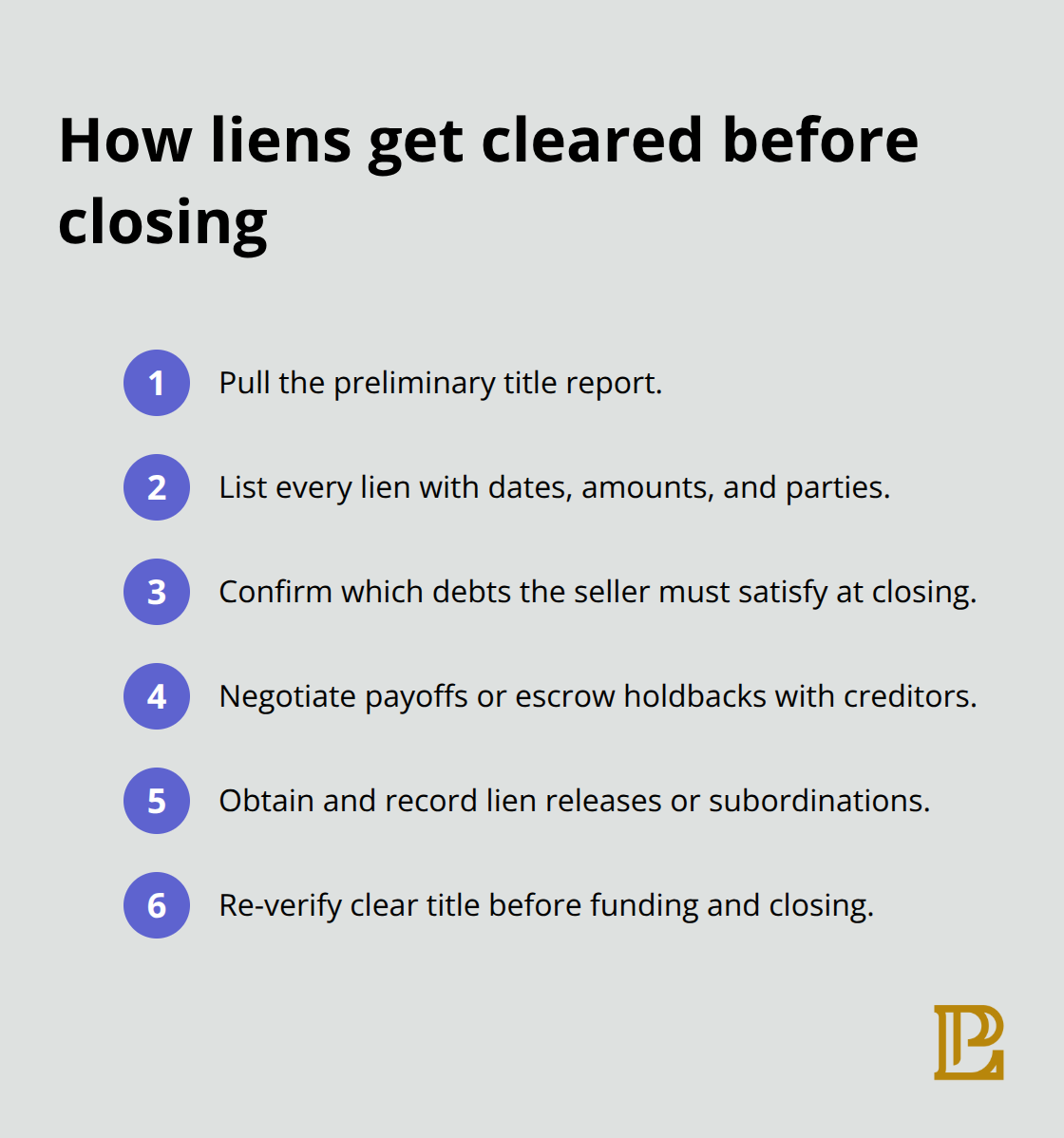
Identifying and Clearing Liens Before Closing
We pull the preliminary title review report and identify every lien against the property. The report lists mechanic’s liens, judgment liens, tax liens, and assessments, but it doesn’t explain what each one means or how to remove it. We determine which liens the seller must pay at closing, which ones you can negotiate into escrow, and which ones might indicate deeper problems. Some liens settle for less than face value if the creditor knows the sale is contingent on resolution. This negotiation happens during title review, when you still have leverage-not after you’ve committed funds and signed closing documents.
Easements and Rights-of-Way That Restrict Your Property
Easements and rights-of-way are permanent restrictions that survive every ownership change. A utility easement allowing the electric company to access underground lines is standard and usually acceptable, but a prescriptive easement-where a neighbor claims the right to cross your driveway or use part of your yard because they’ve done so openly for five years-is far more serious. Los Angeles County records reveal easements that aren’t always obvious from a property walk-through. We search the recorded documents and title report for these claims, then assess whether they restrict your intended use or future development. A neighbor’s claimed right to park on your property or run irrigation across your land affects how you can develop the lot or what price a future buyer will pay.
Undisclosed Heirs and Competing Ownership Claims
Undisclosed heirs and ownership claims arise most often in estate or inherited-property situations. When a property passes through probate or a trust, competing claims from beneficiaries, ex-spouses, or creditors can surface years after transfer. We verify the chain of title through probate records and trustee deeds to confirm that the current seller has clear authority to convey the property. A missing heir discovered after you’ve taken title can force you into quiet title litigation to confirm your ownership, a process that typically costs $10,000 to $30,000 in legal fees and takes six to twelve months. Catching these issues during review-before you commit funds and sign closing documents-allows you to walk away, renegotiate price, or require the seller to clear the problems as a condition of sale.
Boundary Discrepancies and Survey Errors
Boundary discrepancies and survey errors are equally costly to ignore. If a survey reveals that a fence sits six feet inside the legal boundary, or that the recorded description doesn’t match the actual lot, you face a choice: negotiate a boundary stipulation with the neighbor, order a corrective deed, or pursue quiet title relief. Each remedy has different timelines and costs. We recommend ordering a survey early in the transaction if boundaries are unclear, especially in older Hermosa Beach neighborhoods where recorded descriptions sometimes reference roads that no longer exist. A $500 survey ordered during title review prevents a $20,000 boundary dispute after closing. We also check the county assessor’s parcel map against the legal description to catch mismatches. In mixed-use developments or commercial real estate properties with shared areas, overlapping easements and unclear boundaries are common. We map these issues explicitly so you understand exactly what you’re buying and what restrictions apply.
The goal is straightforward: move every problem to the title review phase, where solutions are negotiable, rather than discovering them after you own the property. Once you understand what title problems cost, the next step is learning how to protect your investment through a thorough review process tailored to your specific transaction.
How Title Review Saves You Money Before You Own the Property
A clean title report before closing protects you from inheriting financial obligations that weren’t yours to begin with. When we at Pierview Law complete a title review, we’re not just checking boxes-we’re preventing situations where you discover after purchase that a $45,000 mechanic’s lien, a $12,000 HOA assessment, or a $30,000 tax lien transfers to you at closing. These aren’t theoretical numbers. The State Bar of California’s Client Trust Account Protection Program and related guidelines exist because real buyers have lost substantial sums by taking title without knowing what debts were attached to it. A mechanic’s lien filed by a contractor in 2022 for unpaid drywall work doesn’t vanish when the property changes hands-it follows the title. If the seller doesn’t pay it off at closing, you own the debt.
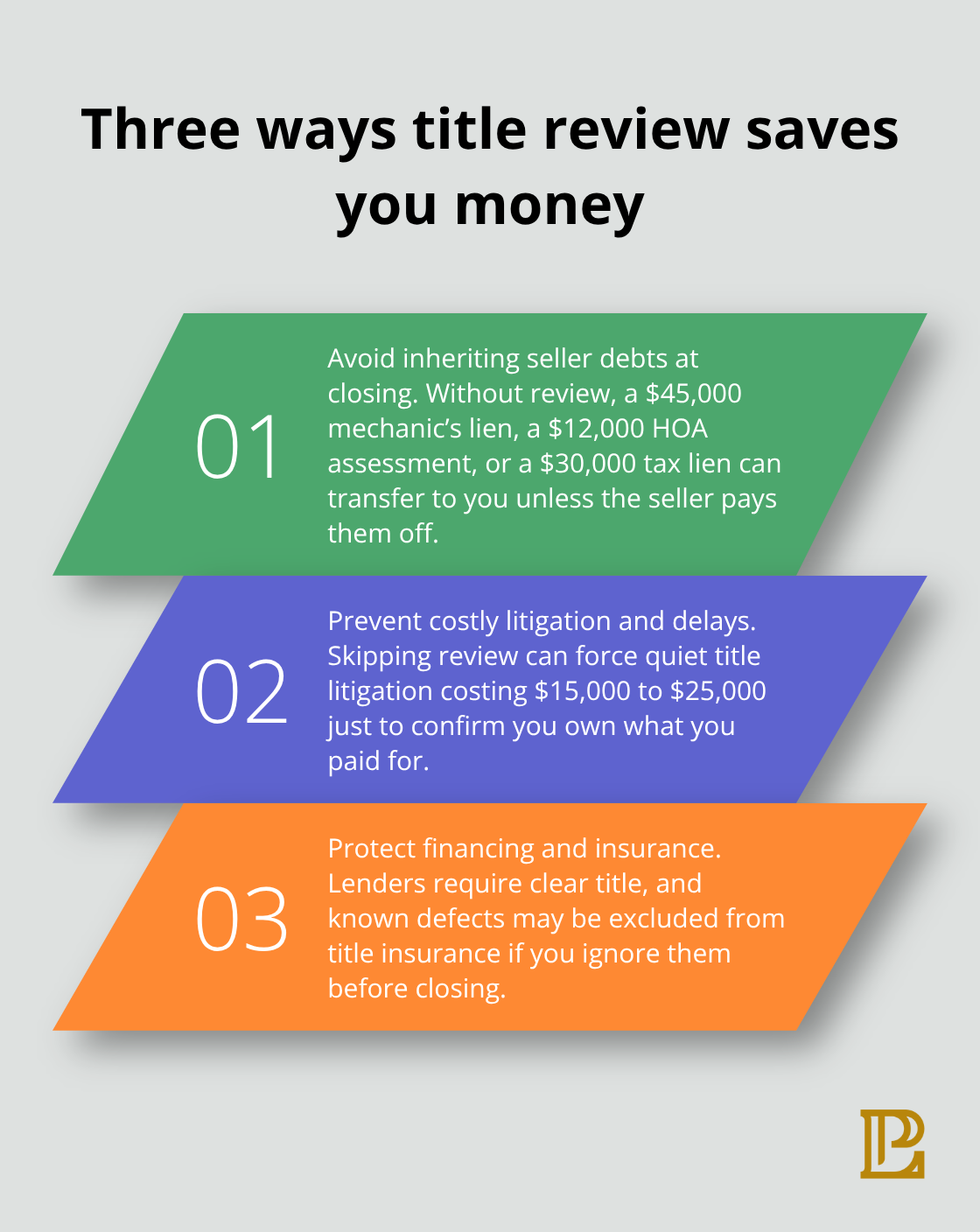
Worse, the contractor can place a second lien on your property or pursue collection against you personally. Title review identifies these liens during negotiation, when you have leverage to demand the seller pay them off, escrow funds to cover them, or walk away entirely. We’ve seen buyers who skipped this step forced into quiet title litigation costing $15,000 to $25,000 in legal fees just to confirm they actually own what they paid for. That money could have stayed in your pocket if the liens had been addressed during review.
Liens Transfer to You at Closing Without Title Review
A mechanic’s lien filed by a contractor in 2022 for unpaid drywall work doesn’t vanish when the property changes hands-it follows the title. If the seller doesn’t pay it off at closing, you own the debt. The contractor can place a second lien on your property or pursue collection against you personally. Title review identifies these liens during negotiation, when you have leverage to demand the seller pay them off, escrow funds to cover them, or walk away entirely. Buyers who skip this step face quiet title litigation costing $15,000 to $25,000 in legal fees just to confirm they actually own what they paid for.
Lenders Require Clear Title Before Funding Your Loan
Banks and mortgage companies require a clear title commitment before they’ll fund your loan. If the preliminary title report shows unsolved liens, easements restricting use, or boundary disputes, your lender walks away. You lose your financing, the deal collapses, and you’re left explaining to the seller why the transaction failed. Title review conducted before closing ensures your lender will fund the transaction and your title insurance will protect you afterward.
Title Insurance Won’t Cover Problems You Knew About
Title insurance protects you against losses from defects hidden in public records, but it won’t cover problems you were aware of and ignored. If you close with a known easement, a boundary discrepancy, or a competing ownership claim that you chose not to resolve, the title company will exclude it from coverage. That means if a neighbor later claims the right to access your driveway based on an undisclosed easement, or if a boundary dispute forces you to hire a surveyor and attorney to defend your property line, you’re paying out of pocket because the title company won’t back you. Title review confirms you can refinance or sell the property later without discovering new title defects that block those transactions.
Final Thoughts
Title review in California practice protects one of your largest financial investments and prevents liens, easements, and boundary disputes from transferring to you at closing. Without this review, you risk inheriting debts that weren’t yours, losing lender financing at the last minute, or discovering title defects that block future refinancing or sales. The problems we’ve discussed in this post-mechanic’s liens, judgment claims, easement restrictions, and ownership clouds-surface in real transactions and cost real money when you discover them after you own the property.
A thorough review before closing gives you the power to negotiate solutions, walk away, or proceed with full knowledge of what you’re buying. We at Pierview Law handle title review as part of our residential and commercial real estate practice in Hermosa Beach and throughout Los Angeles County, pulling preliminary title reports, examining deed records and boundary issues, and identifying liens and easements that require resolution. Our approach moves every problem to the review phase, where you have leverage and options, rather than discovering it after you own the property.
Clear ownership gives you financial security and the ability to refinance, sell, or develop your property without title defects blocking those transactions. If you’re buying property in California and want to protect your investment, reach out to Pierview Law to discuss your title review and closing timeline.