
Your creative work has real value, and copyright protection in California is how you defend it legally. Without proper protection, your original designs, writing, music, or other creations can be copied and sold by others.
We at Pierview Law help Hermosa Beach business owners and creators understand their copyright rights and take action when infringement happens. This guide walks you through what copyright protection means, common threats you’ll face, and concrete steps to safeguard your work.
How Copyright Protection Actually Works in California
Automatic Protection Upon Creation
Copyright protection in California activates the moment you create an original work. You don’t need to register, publish, or place a copyright notice on your creation for it to be protected under federal law. The U.S. Copyright Office confirms that copyright exists from the moment a work is fixed in a tangible medium of expression, whether that’s a written manuscript, recorded music, digital file, or architectural design. Your work becomes legally yours the instant you finish it, regardless of whether you’ve taken any formal steps.
This automatic protection carries a significant limitation that many California creators overlook. You cannot file an infringement lawsuit in federal court unless your work is registered with the U.S. Copyright Office. Registration costs only $65 per work and takes a few weeks, but it’s the gate you must pass through to pursue legal action against copycats. Without registration, you have no practical recourse if someone steals your work.
Registration as Your Legal Gateway
The registration requirement exists for a reason: it creates an official record that strengthens your position in court. When you register before infringement occurs, you gain access to statutory damages and attorney’s fees-remedies that make litigation worthwhile even for smaller works. If you register after infringement starts, you lose these enhanced protections and can only recover actual damages, which are often difficult to prove and calculate.
The process itself is straightforward. Visit the U.S. Copyright Office website, complete the application, pay the fee, and submit your work. Most registrations process within weeks. For creators in Hermosa Beach and throughout Los Angeles County who generate significant income from their work, we recommend registering your works promptly rather than waiting for a problem to arise.
Duration of Copyright Protection
For works created after January 1, 1978, copyright lasts for your lifetime plus 70 years, according to the U.S. Copyright Office. This extended protection means your creative output remains legally protected well beyond your working years, which is valuable if you’re building a legacy or creating works intended to generate revenue indefinitely. Works made for hire, anonymous works, and pseudonymous works receive 95 years from publication or 120 years from creation, whichever is shorter.
Understanding which category your work falls into prevents gaps in protection. You should document the creation date and ownership details immediately, as this documentation becomes critical if disputes arise years later when memories fade and original files may be lost. This foundation sets you up to address the common infringement issues that threaten creators across California.
Common Copyright Infringement Issues in California
How Infringement Takes Shape
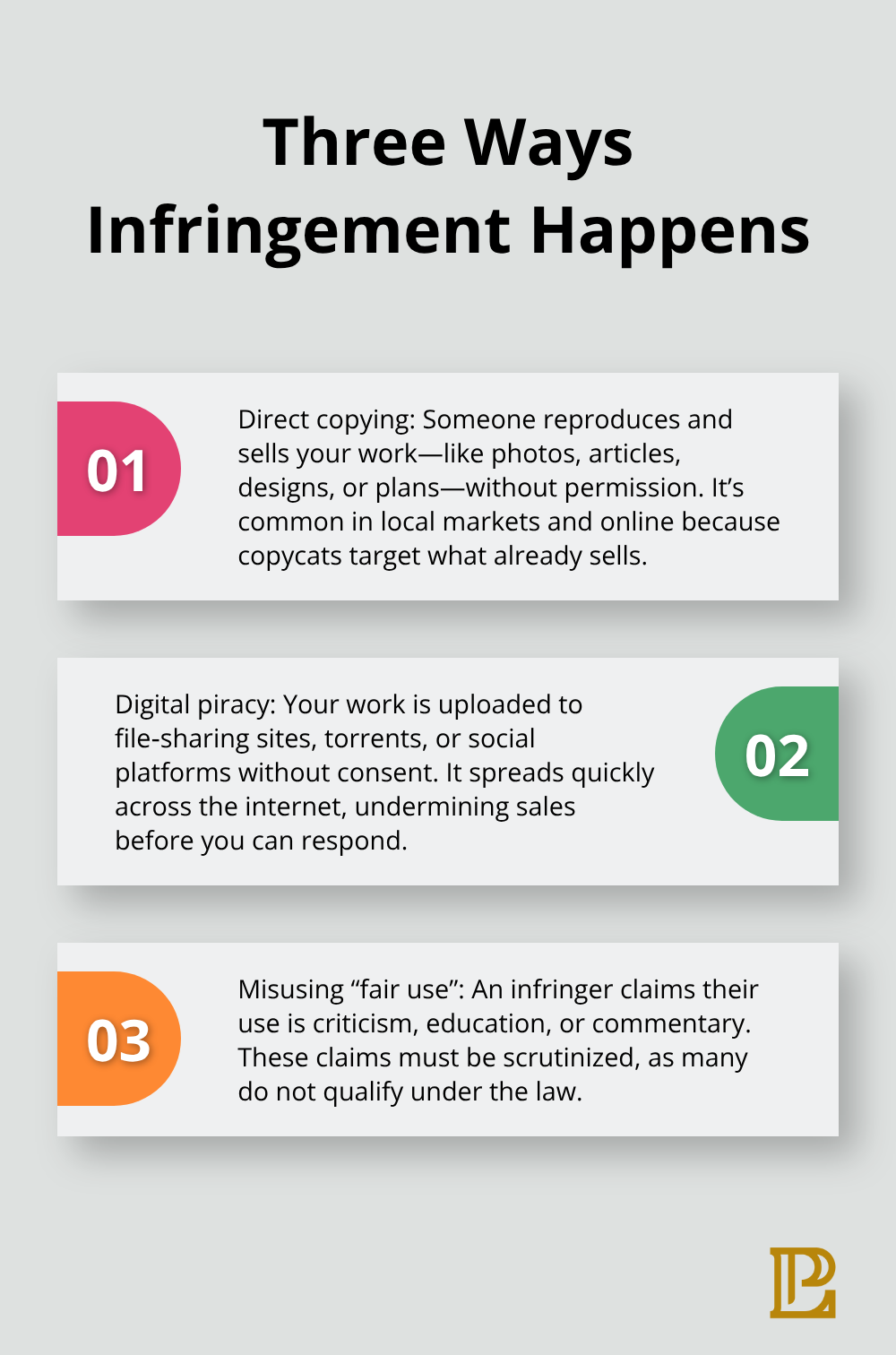
Copyright infringement in California manifests in three distinct forms that threaten your income and reputation. The first is straightforward copying: someone reproduces your work without permission and sells it, whether that’s your photography, written content, product designs, or architectural plans. This happens constantly in Hermosa Beach and across Los Angeles County, often by competitors who know your work sells. The second form is digital piracy, where your work gets uploaded to file-sharing sites, torrent platforms, or social media without your consent, spreading across the internet faster than you can track it. According to the U.S. Copyright Office, digital infringement now accounts for the majority of copyright disputes filed in federal court. The third form is the most deceptive: someone claims their use of your work falls under fair use, a legal doctrine that permits limited copying for criticism, education, or commentary.
Understanding Fair Use Disputes
Fair use creates genuine disputes because it has no bright-line rule. Courts evaluate each case based on four factors: the purpose of the use, the nature of your original work, how much of your work was used, and whether the infringement harms your market. Many Hermosa Beach creators lose income to fair use claims that wouldn’t hold up in court, simply because they don’t challenge them.
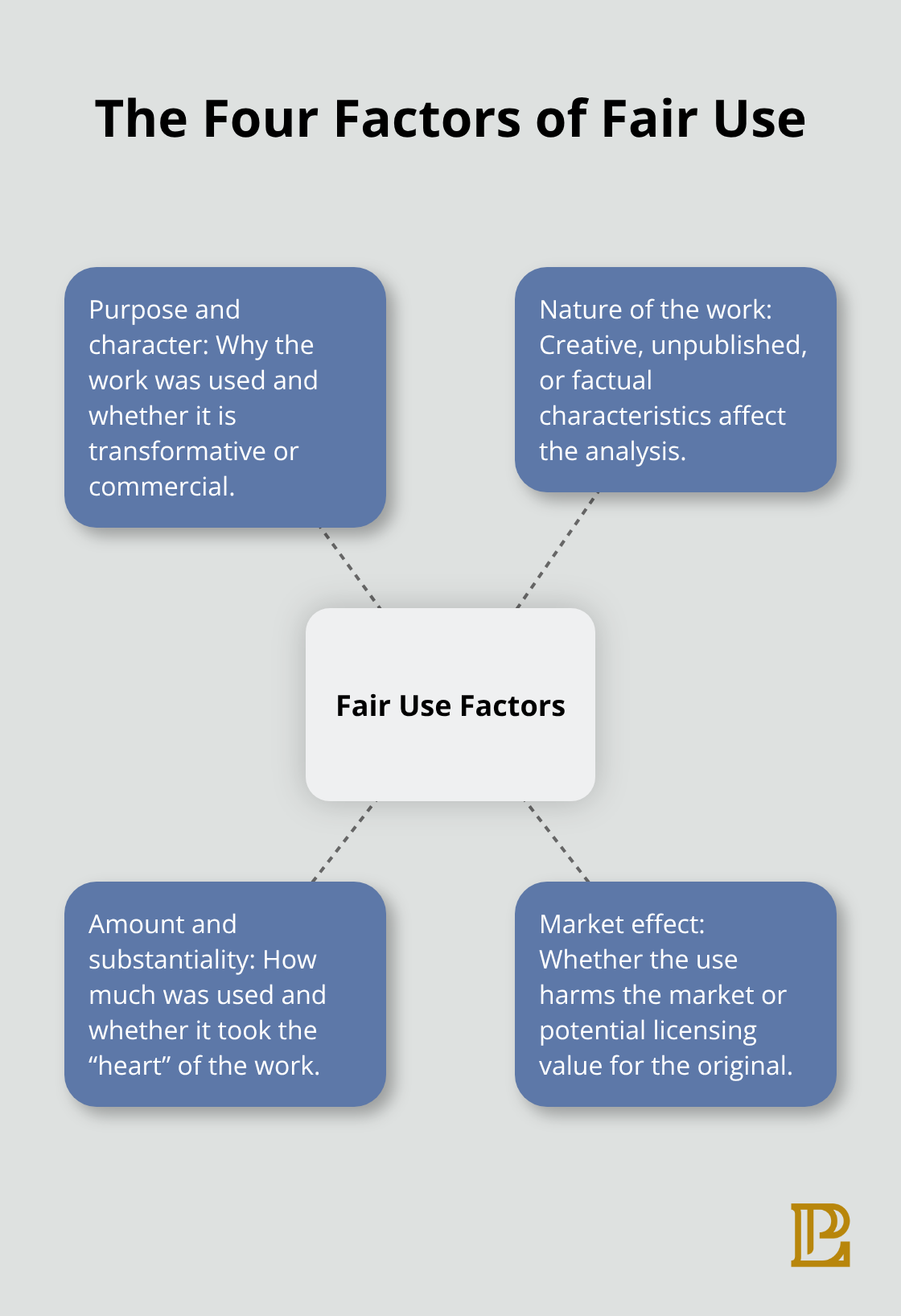
The ambiguity around fair use means you cannot assume that any secondary use of your work qualifies as legal, even when the infringer claims educational or transformative intent.
Detecting and Documenting Infringement
Infringement spreads fastest online where detection becomes your first challenge. You cannot monitor every corner of the internet alone, which is why many creators use Google Alerts for their work’s title and distinctive phrases, or services like Copyscape that scan the web for duplicate content. If you discover infringement, document everything immediately: take screenshots with timestamps, save URLs, and record the date you found it. This documentation becomes your evidence if you later pursue legal action.
Taking Action Against Infringers
Send a cease-and-desist letter to the infringer, which often resolves the problem without litigation. If the infringer ignores your letter or continues after receiving it, you have grounds to file a Digital Millennium Copyright Act takedown notice with platforms hosting your work, forcing them to remove the content. For serious infringement causing significant income loss, federal litigation becomes necessary, but only if your work is registered with the U.S. Copyright Office. This registration requirement transforms from an administrative step into your actual defense mechanism when real violations occur, making the next steps you take to protect your creative works essential to your long-term success.
Steps to Protect Your Creative Works in California
Register Your Copyright with the U.S. Copyright Office
Registration with the U.S. Copyright Office is non-negotiable if you want real legal protection. The $65 fee and few weeks of processing time separate creators who can actually sue infringers from those who cannot. You should protect your work before you publish it or share it publicly, because registration grants you access to statutory damages up to $150,000 per infringement and attorney’s fees recovery. If you wait until after infringement occurs, you lose these remedies and can only recover actual damages, which means proving lost sales or licensing income-a nearly impossible task.
The application process takes minutes on the U.S. Copyright Office website. You upload your work, fill out basic information about creation date and ownership, and submit payment. Most creators in Hermosa Beach and Los Angeles County who generate income from their work should register each significant piece within days of completion, not months or years later.
Document Your Creation Process and Ownership
Documentation of your creation process protects you in disputes and happens alongside registration. You should save dated file versions, emails showing your work in progress, invoices to clients, and any communications proving you created the work. This evidence becomes critical when someone claims they independently created something identical to yours or when you need to prove damages in court.
Ownership proof matters more than most creators realize. Timestamps on your files, correspondence with clients, and payment records all establish that you created the work first. Courts rely on this documentation when infringers challenge your claims, so treat these records as legal assets rather than administrative clutter.
Monitor and Enforce Your Copyright Rights
Monitoring your work online requires consistent action, not passive hope. You should set up Google Alerts for your work’s title and distinctive phrases, use Copyscape monthly to scan for duplicates, and check social media platforms where your work appears.
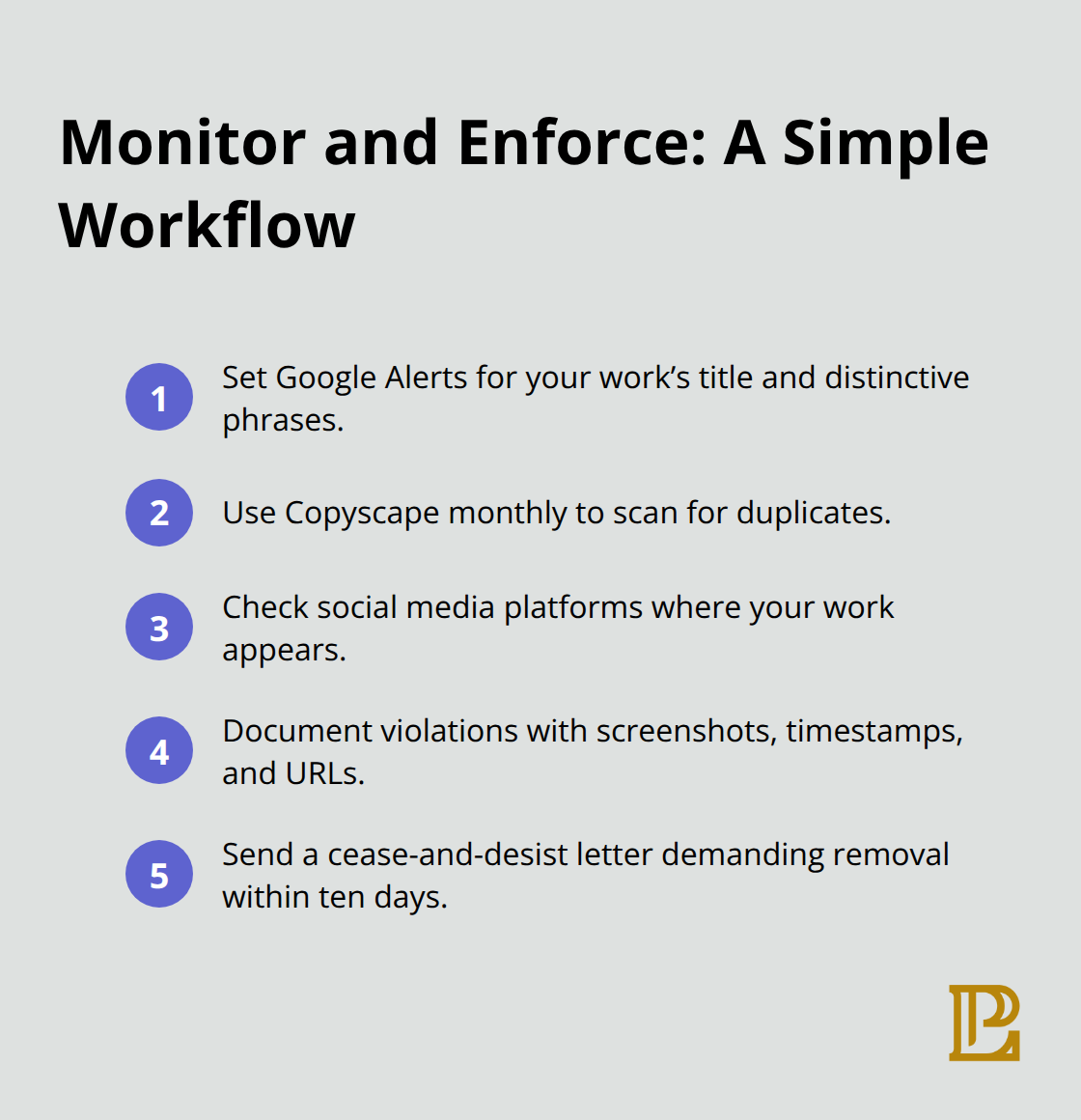
When you find infringement, you must document it immediately with screenshots showing timestamps and URLs, then send a cease-and-desist letter demanding removal within ten days.
Most infringers comply because they know federal law backs your claim. For serious violations causing measurable income loss, you can evaluate whether federal litigation makes financial sense, but that decision only becomes possible because you registered your work in the first place. The combination of registration, documentation, and active monitoring transforms your copyright from a theoretical right into a practical defense mechanism.
Final Thoughts
Copyright protection in California requires action, not assumptions. Your work gains automatic protection the moment you create it, but that protection remains incomplete without registration. The $65 registration fee and few weeks of processing time transform your copyright from a theoretical right into a practical legal weapon. Without registration, you cannot sue infringers in federal court, which means stolen work goes unpunished and your income disappears.
The common infringement issues you’ll face are real and frequent-competitors copy your designs, platforms host your content without permission, and infringers hide behind fair use claims they don’t understand. Digital piracy spreads your work across the internet faster than you can track it. These threats won’t disappear on their own, which is why monitoring your work and documenting infringement matters from day one.
If you’ve discovered infringement or need guidance on protecting your creative works, contact us at Pierview Law to discuss your situation with someone who understands both copyright law and the business impact of theft.