
A poorly drafted contract can cost your LA business thousands in disputes, lost revenue, or legal fees. Corporate contract drafting requires precision-vague language, missing clauses, and overlooked compliance issues create real problems down the line.
We at Pierview Law have seen how the right contract protects your interests, while a rushed one leaves you exposed. This guide walks you through what matters most.
What Must Go Into Every Corporate Contract
Clear Party Identification and Scope Definition
A contract without clear party identification and defined scope fails before it begins. Start with the basics: name each party exactly as they appear in official business documents, specify their legal entity type (LLC, corporation, partnership), and include their principal business address. Vague references like “the company” or “the vendor” create interpretation problems later. Define the scope with precision-what services or goods are being provided, what territory does the agreement cover, and what time period applies.
Payment Terms That Leave No Room for Dispute
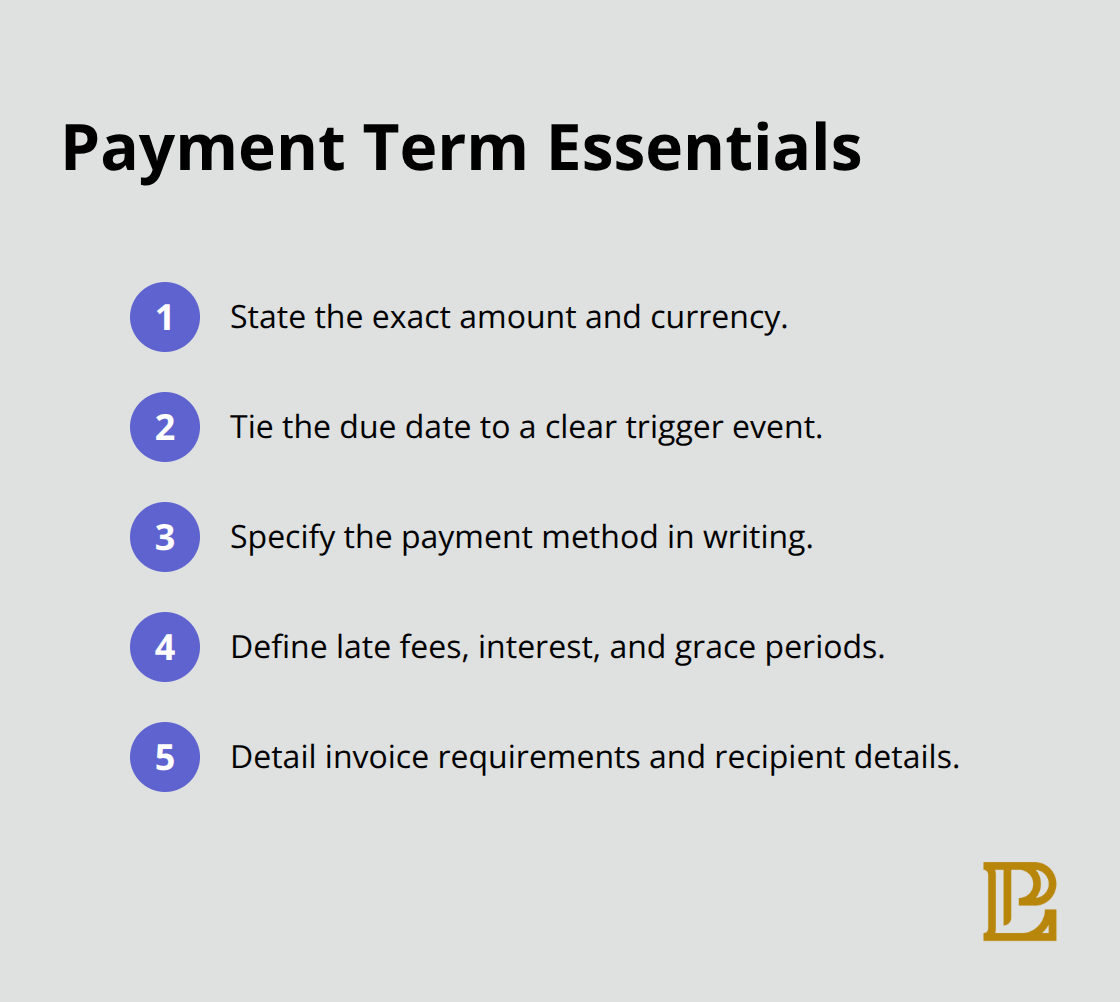
When payment terms appear in your contract, state the exact amount in the specific currency, the due date calculated from a concrete trigger point like invoice date, and the payment method such as wire transfer or ACH. Ambiguous phrases like “prompt payment” or “reasonable timeframe” generate disputes because each party reads them differently. California courts have consistently ruled against vague payment language, so specificity protects both sides. Instead of writing “payment shall be made within a reasonable period,” write “USD 50,000 shall be paid within 30 calendar days of invoice date via wire transfer to the account specified in writing by Vendor.”
Liability Limitations and Indemnification Clauses
Liability limitations and indemnification clauses are where most LA business owners stumble. These sections must clearly allocate which party bears financial risk for what situations. Define indemnification scope precisely-specify whether it covers third-party claims, regulatory fines, or both, and state any dollar caps on liability exposure. Exclude indirect and consequential damages explicitly unless both parties agree otherwise. For example, state that neither party shall be liable for lost profits, lost revenue, or business interruption costs arising from breach or negligence.
Insurance and Quality Standards
Insurance requirements should be spelled out with exact coverage amounts and policy types required from each party. If you work on a manufacturing or supply agreement in California, acceptance criteria, inspection procedures, and conformity standards prevent disputes over product quality. These protections matter whether you manufacture goods or purchase them.
Documentation and Change Management
Document every modification in writing through formal change orders rather than email exchanges or verbal agreements. This practice (along with version control and redlining) creates a clear record that courts recognize and enforce. These steps might feel tedious, but they’re what separate contracts that hold up in court from those that collapse under pressure. Once you have these elements in place, the next critical step is recognizing the common pitfalls that undermine even well-intentioned drafting efforts.
What Kills Contracts in Practice
Ambiguous Language Creates Interpretation Disasters
Ambiguous language ranks as the top reason contracts fail in real disputes. California courts cannot read minds, and when a contract uses vague phrases, judges interpret them against whoever drafted the document. If you write that payment is due in a reasonable timeframe or services must meet industry standards, you have created a serious problem. The other party will interpret reasonable and standards differently, and litigation becomes inevitable.
Instead, state exact payment dates tied to specific events: invoice date, delivery date, or project milestone completion. Define standards by reference to concrete documents like product specifications, industry certifications, or regulatory codes. If you require ISO 9001 compliance, say so explicitly. If you need goods delivered by the 15th of each month, write that date. Courts have ruled repeatedly that specificity prevents disputes far more effectively than general language, and the cost of clarity at drafting time is zero compared to the cost of litigation later.
Missing or Inadequate Dispute Resolution Clauses
Dispute resolution clauses that are missing or inadequate leave you fighting in the wrong place at the wrong time. Many LA business owners skip this section entirely, assuming disputes will never happen, and then find themselves in federal court in an unfamiliar jurisdiction, spending six figures on discovery before trial even starts.
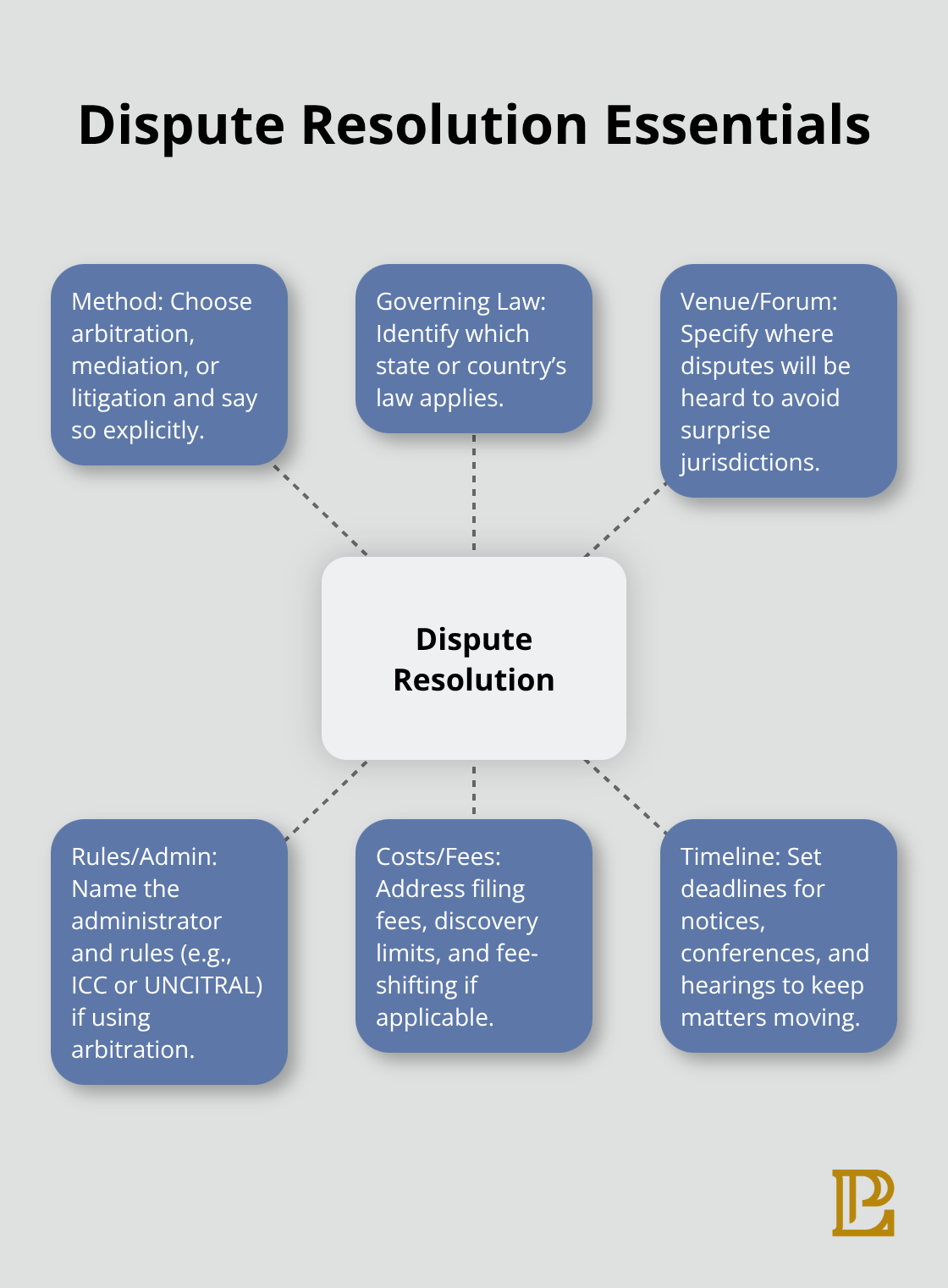
Your contract must specify whether you will use arbitration, mediation, or litigation, which state or country’s law governs the agreement, and where disputes will be heard. Arbitration through organizations like the ICC or UNCITRAL often costs less and moves faster than court litigation, but you must elect it in writing beforehand. This single clause protects your business from unexpected legal expenses and lengthy court battles.
Regulatory Compliance Gaps and IP Ownership Issues
Regulatory compliance gaps create a critical failure point that many contracts overlook. If you operate in California and work with the City of Hermosa Beach on public works projects, your contract must reference compliance with California Department of Industrial Relations requirements, prevailing wage obligations, and the Planet Bids procurement portal where addenda become binding the moment they post. Failure to include these terms means your contract may be unenforceable or expose you to fines.
Similarly, if you handle intellectual property, confidential data, or licensed materials, your contract must explicitly assign ownership and define usage rights. Vague IP clauses have led to costly disputes where both parties claim ownership of the same work product. Write into your agreement exactly who owns what, what licenses are granted, and what restrictions apply. These gaps-vague language, missing dispute resolution, and regulatory oversights-account for the majority of contract failures in LA business deals. The next step is understanding how to prevent these problems through proven best practices that work in the California legal environment.
How to Build Contracts That Actually Work in California
California Law Requires Precision and Local Knowledge
California contract law imposes specific requirements that LA business owners often overlook until a dispute forces them to pay attention. The state’s courts interpret ambiguity against the drafter, meaning your contract language must withstand judicial scrutiny far more rigorously than contracts in other states. This is why working with legal counsel who understands California’s commercial code and case law matters more than you might think. A Los Angeles attorney familiar with California precedent will flag issues that templates or out-of-state counsel miss entirely.
For example, California courts have ruled that non-compete clauses are generally void unless they protect legitimate business interests and are narrowly tailored-a standard that differs significantly from many other states. Similarly, California imposes specific notice requirements and timeframes for contract termination that must appear explicitly in your agreement. When you draft without local knowledge, you risk creating a document that looks complete but fails under California law.
Build Flexibility Into Your Contract Terms
Flexibility in contract language protects your business from rigid terms that become obstacles when circumstances shift. Rather than writing fixed requirements, build mechanisms for change through formal amendment procedures that both parties understand and agree to follow. If you negotiate a supply agreement with pricing that assumes stable material costs, include a cost-adjustment clause tied to published indices like the Producer Price Index, which the Bureau of Labor Statistics releases monthly. This prevents disputes over whether price increases were foreseeable or justify contract modification.
Document Every Modification in Writing
When you document every modification in writing through change orders rather than email exchanges or conversations, you create an enforceable record that courts recognize. Many LA businesses lose leverage in disputes because they made verbal agreements or sent casual emails approving changes, then discovered those modifications weren’t binding. Change orders should reference the original contract, specify exactly what changes, identify the effective date, and require signatures from both parties.
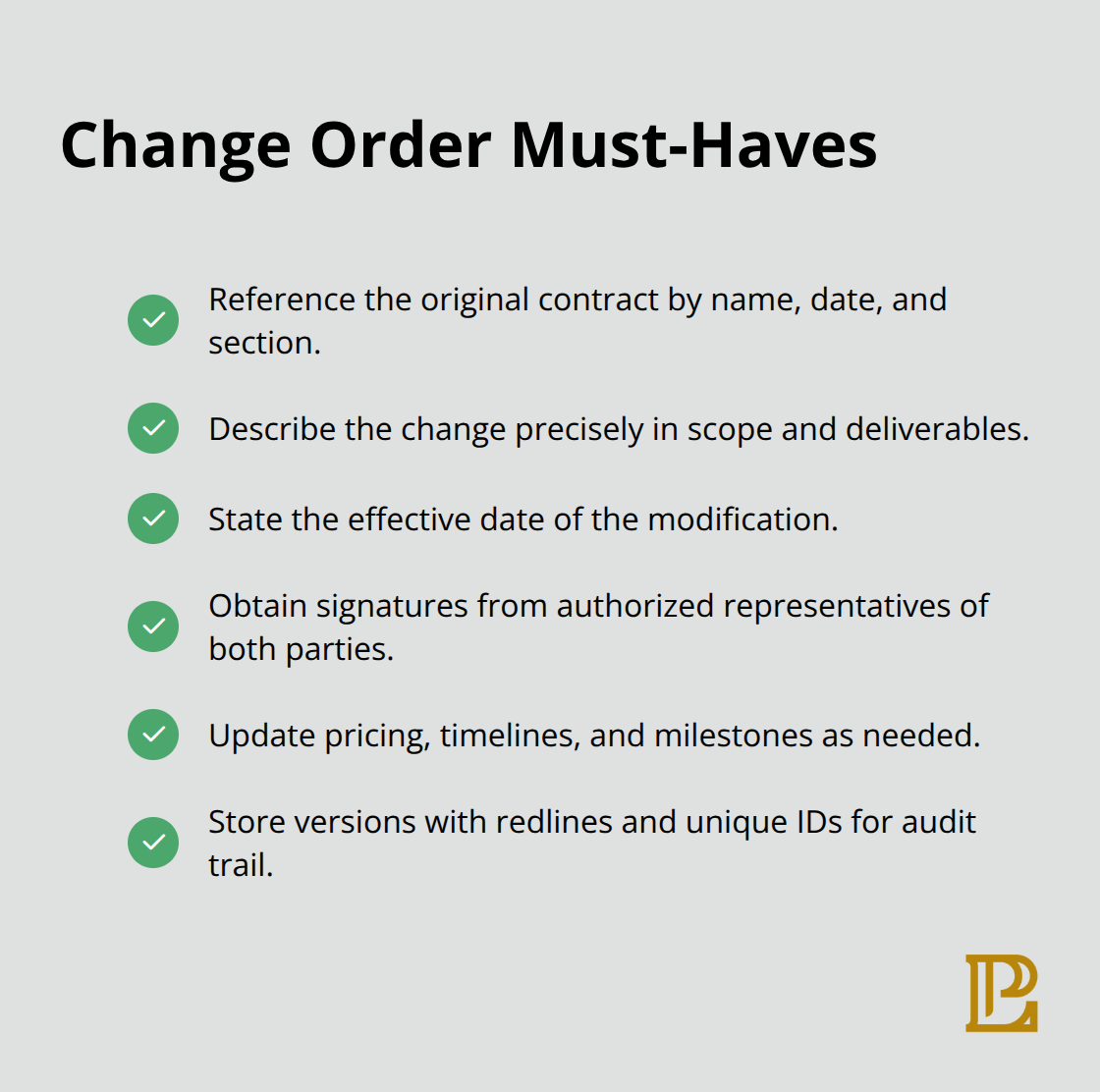
Version control and redlining in your contract management process mean you can prove what each party agreed to at each stage. This documentation also matters if you work with the City of Hermosa Beach, where addenda posted to the Planet Bids portal become binding immediately, and your internal records must track every update. The practical reality is that contracts evolve during performance, and how you manage that evolution determines whether disputes escalate or resolve cleanly.
Final Thoughts
Corporate contract drafting in Los Angeles demands more than templates and standard language. The elements we’ve covered-clear party identification, precise payment terms, liability limitations, dispute resolution clauses, and regulatory compliance-form the foundation of contracts that actually protect your business. Skipping any of these creates exposure that costs far more to fix through litigation than to address during drafting.
Professional review before signing separates smart LA business owners from those who learn expensive lessons later. A Los Angeles attorney familiar with California law will catch ambiguities, missing clauses, and compliance gaps that you might miss entirely. California courts interpret contract language strictly and against the drafter, meaning vague terms become liabilities rather than protections.
If you operate in Hermosa Beach or anywhere in Los Angeles County, contact Pierview Law to review your current contracts or draft new ones properly. We handle entity formation, contract drafting, and financing support for businesses of all sizes. Your contracts should work for your business, not against it.