
LA commercial real estate moves fast, and staying informed is the difference between a smart investment and a costly mistake. Whether you’re an investor hunting for opportunities or a tenant negotiating your next lease, understanding the current market landscape matters.
We at Pierview Law help clients navigate these decisions every day. This guide breaks down what’s happening in the market right now and shows you how to move forward with confidence.
What’s Shifting in LA’s Office, Industrial, and Retail Markets Right Now
Office Space: Premium Buildings Win, Mediocre Stock Loses
LA’s commercial real estate market split into distinct winners and losers in Q1 2026, and the split tells you everything about where to look next. The greater Los Angeles office market leased 3.5 million square feet in Q1 2026 according to Avison Young, with net absorption reaching 537,000 square feet-a sharp rebound from late 2025 contraction. That positive absorption masks a brutal reality for mediocre office space. Tech, media, and professional services tenants consolidated into premium buildings with modern amenities, while lower-quality office stock sat empty. Hybrid work didn’t kill office demand; it killed bad office.
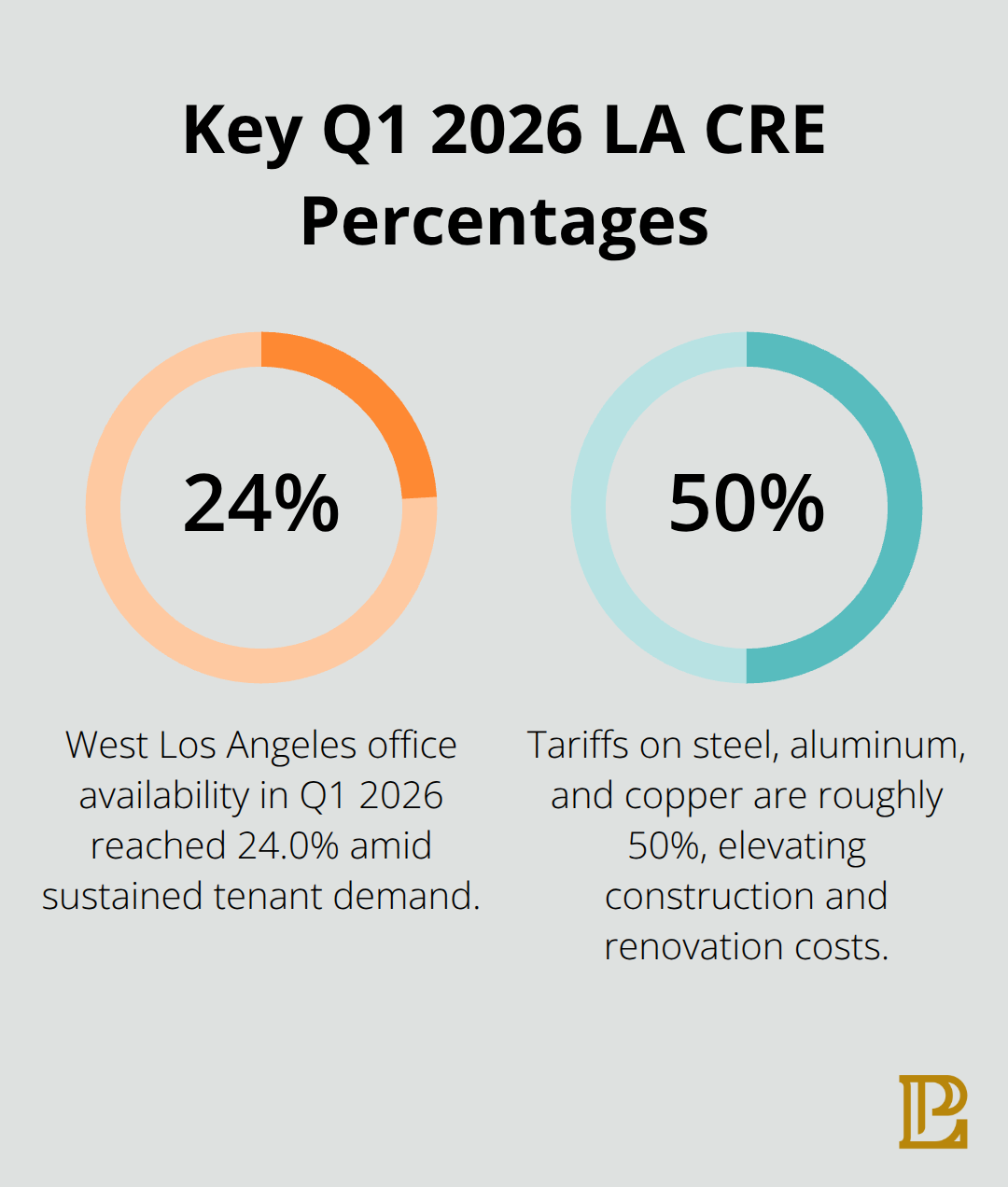
West Los Angeles saw 1,097,533 square feet of leasing activity in Q1 2026, but transaction counts jumped from 189 to 234 deals-meaning tenants took smaller, more efficient footprints. Availability tightened to 24.0% in Q1 2026 as landlords benefited from sustained tenant demand, but asking rents rose modestly to $43.65 per square foot, suggesting value-driven strategies won over premium pricing. For investors, properties in Beverly Hills, Marina del Rey, Venice, and Brentwood commanded attention-these submarkets absorbed the most positive occupancy gains in Q1 2026.
Where Tenants and Investors Should Focus
Tenants should act quickly in tight markets, but prioritize buildings offering efficient layouts and workplace amenities that justified the rent. Three consecutive quarters of positive absorption in West LA signaled sustained momentum, but only in premium assets. Lenders remained selective on larger transactions, with West Los Angeles lending origination starting 2026 at 107 million dollars concentrated on smaller, financeable deals. This selectivity matters if you financed property: focus on properties in high-demand submarkets with clear absorption trends.
Industrial, Retail, and Cost Pressures Reshaping Development
Industrial and warehouse space told a completely different story. Nearshoring and onshoring trends drove genuine demand for manufacturing facilities and large distribution centers, not speculative interest. Retail rebounded too, with grocery-anchored and neighborhood centers performing well, though regional malls remained distressed. Material costs stayed elevated due to tariffs on steel, aluminum, and copper at roughly 50%, which affected development timelines and construction budgets. When you evaluated any commercial property in Los Angeles County, you factored in these cost pressures alongside market fundamentals.
If you negotiated a lease or considered an acquisition, the data clearly favored properties with efficient operations, modern technology, and tenant-friendly amenities over aging stock. These market dynamics shape how you structure deals and what you prioritize in due diligence-which brings us to the practical steps you should take when evaluating opportunities and protecting your interests through proper legal review.
What Actually Moves Property Values and Rents in LA Right Now
Location Determines Tenant Willingness to Pay
Location inside Los Angeles County determines whether tenants pay $43.65 per square foot or leave your building empty. West Los Angeles submarkets like Beverly Hills, Marina del Rey, Venice, and Brentwood commanded the strongest absorption in Q1 2026 because they sit near concentrations of tech, media, and professional services companies. Proximity to major business hubs translates directly into measurable lease velocity and occupancy rates. Properties within walking distance or a short drive of entertainment districts, financial centers, or tech corridors attract tenants willing to pay premium rates for efficient space.
The inverse holds equally true: a well-maintained building in a secondary location struggles to fill vacancies even with aggressive pricing. A media company won’t relocate to Inland Empire warehouse space, and a logistics operation won’t pay West LA office rents for a desk. If you own or lease property, verify that your location actually serves the tenants you target.
Financing Conditions Control What Investors Pay and Tenants Afford
Financing conditions directly shape what investors can pay and what tenants can afford. West Los Angeles lending origination started 2026 at 107 million dollars, concentrated on smaller, financeable deals, according to Avison Young. Larger transactions remained constrained because lenders stayed selective about which properties qualified for capital. This selectivity matters intensely: if your property doesn’t meet current lending standards (whether due to age, tenant mix, or operating performance), you’ll face fewer buyers and refinancing options.
Interest rate movements amplify this effect. The Federal Reserve ended quantitative tightening in December 2025, which gradually affects construction timelines and acquisition financing costs. Rising rates compress cap rates and reduce acquisition prices; falling rates expand buyer pools. Tenants feel this indirectly through higher lease rates when landlords pass financing costs along. Monitor refinancing demand throughout 2026, as improving market sentiment could unlock capital for acquisitions and leasehold improvements.
Supply of Quality Space Versus Obsolete Stock
Supply and demand imbalance explains why some buildings command rent growth while others compete on price. Net absorption in Q1 2026 reached 537,000 square feet across greater Los Angeles, with availability tightening to 24.0%, according to Avison Young. Tight supply favors landlords, but only if their buildings meet tenant standards. Mediocre office stock sat empty while premium properties leased rapidly because tenants chose quality over cost.
The real dynamic isn’t supply versus demand-it’s supply of desirable space versus supply of obsolete space. Lower-quality office stock faces obsolescence risk and may require upgrades or repurposing to remain competitive. Material cost pressures from tariffs on steel, aluminum, and copper at roughly 50% directly affect renovation budgets and timeline assumptions. When evaluating whether to upgrade a property or accept lower rents, calculate the actual cost of improvements against the rent premium you can command in your specific submarket.
Deal Size Shifts Signal Changing Tenant Behavior
Tenants took 234 direct lease transactions in West Los Angeles during Q1 2026 compared to 189 in the prior quarter, meaning deal sizes shrank as occupiers right-sized footprints. This shift toward smaller transactions creates opportunities for smaller tenants to access desirable space but signals that larger tenants face space constraints or reduced expansion appetite. The pattern reflects how occupiers prioritize efficiency and the overall workplace experience over square footage alone.
Understanding these three forces together-geographic location, financing conditions, and building quality-shapes how you structure deals and what you prioritize in due diligence. The next step involves protecting your interests through proper legal review and negotiation strategies that account for these market realities.

How to Negotiate Smarter Deals and Spot Real Opportunities
Use Market Data to Strengthen Your Position
Negotiating from data beats negotiating from assumptions. If you’re a tenant, West Los Angeles leasing activity jumped to 234 transactions in Q1 2026 from 189 in the prior quarter, meaning landlords faced pressure to move smaller deals quickly. That shift gives you leverage. Walk into negotiations knowing that landlords prioritize occupancy velocity over maximum rent, especially on smaller footprints. Request shorter lease terms, flexible renewal options, or tenant improvement allowances tied to building quality and location.
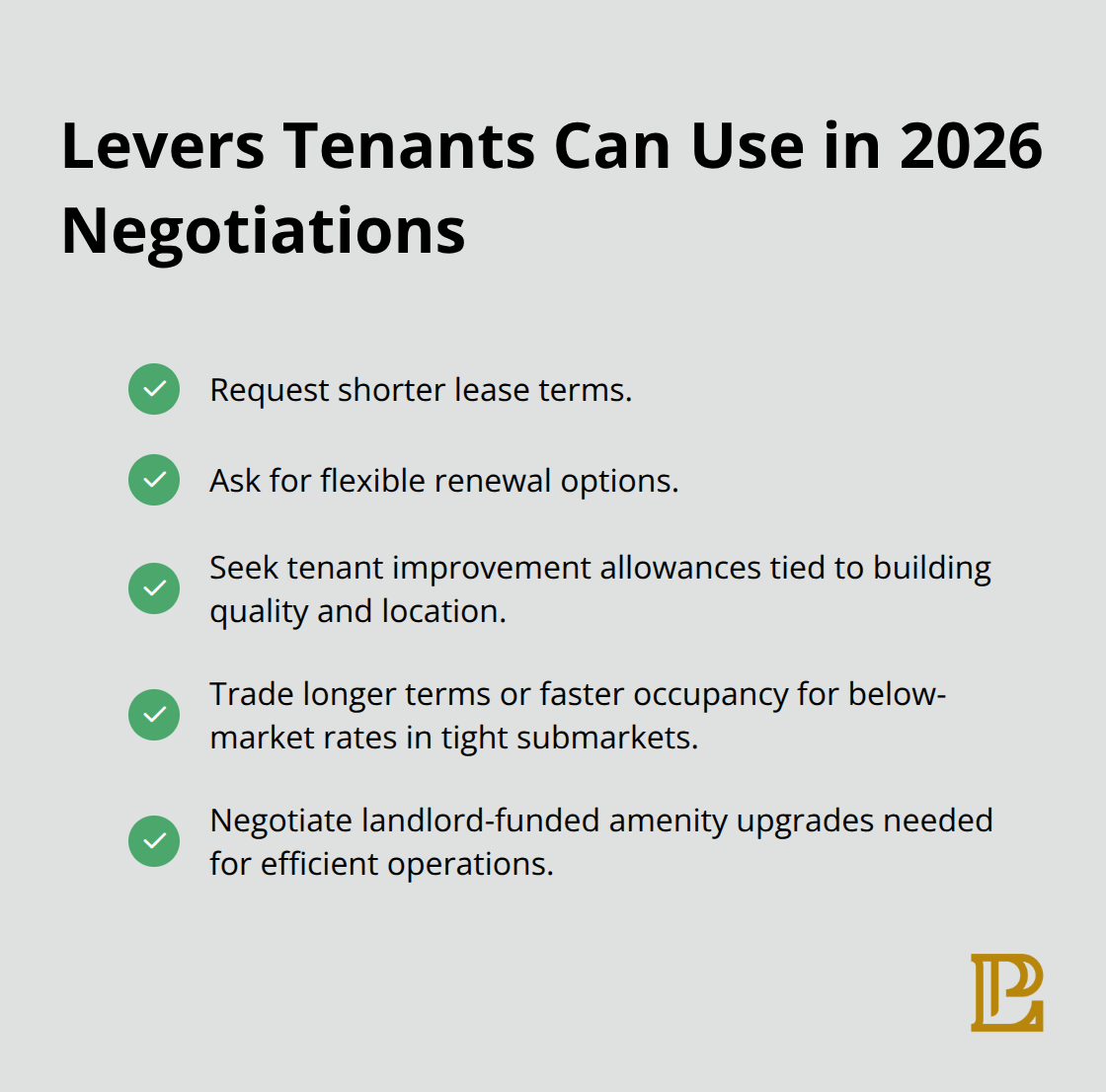
Properties in Beverly Hills, Marina del Rey, Venice, and Brentwood absorbed the strongest occupancy gains in Q1 2026, so if you target those submarkets, you compete against other tenants for limited inventory. Offer longer lease terms or faster occupancy in exchange for below-market rates, or demand that landlords fund amenity upgrades you need to operate efficiently.
Understand Financing Constraints to Identify Weak Negotiating Positions
Know your building’s lender standards before you negotiate. West Los Angeles lending origination started 2026 at 107 million dollars focused on smaller, financeable deals, according to Avison Young. Buildings that qualify for traditional financing command lower cap rates and attract institutional tenants willing to pay premium rents. Properties that don’t meet lender standards face refinancing constraints, which weakens the landlord’s negotiating position.
If a landlord cannot refinance or faces financing constraints, they will accept lower rents rather than hold space vacant. This reality shifts the entire negotiation dynamic in your favor as a tenant or gives you acquisition targets as an investor.
Target Undervalued Properties with Operational Upside
Investors hunting for undervalued properties should target buildings that sit below current lender standards but could reach those standards through modest operational improvements. Mediocre office stock faced obsolescence risk while premium properties leased rapidly, so look for buildings with solid bones but outdated tenant mix or management practices. A property occupied by low-revenue tenants at below-market rents becomes valuable once you attract higher-quality occupants.
Material costs from tariffs on steel, aluminum, and copper at roughly 50% affect renovation budgets, but only certain improvements move the needle. Focus on changes that tenants actually value: efficient floor plates, modern HVAC systems, reliable internet infrastructure, and parking availability. Skip cosmetic upgrades that don’t improve operating performance.
Bring Legal Review Into Early-Stage Deal Evaluation
When you identify a potential acquisition or lease, bring a real estate attorney into the conversation early. Due diligence goes beyond title review and lease language. A real estate attorney works with investors and tenants to verify that properties meet current lending standards, that tenant rosters align with market demand, and that lease terms protect your interests through market cycles. An attorney catches financing constraints, environmental issues, or lease language that exposes you to unexpected costs.
Title problems, mechanic’s liens from prior renovations, or undisclosed environmental contamination can cost far more than legal fees. Financing availability shapes deal structure and timing, so your attorney should review financing commitments and lender requirements alongside property documentation. The market moves fast, but moving without proper legal review moves you toward costly mistakes.
Final Thoughts
LA commercial real estate rewards investors and tenants who act on current market data rather than assumptions. The market split decisively in Q1 2026: premium buildings in Beverly Hills, Marina del Rey, Venice, and Brentwood absorbed tenants rapidly while mediocre office stock sat empty. Net absorption reached 537,000 square feet across greater Los Angeles, availability tightened to 24.0%, and asking rents rose modestly to $43.65 per square foot-these numbers tell you exactly where opportunity lives and where capital gets trapped.
Tenants should target amenity-rich buildings in high-demand submarkets and negotiate aggressively while deal velocity remains high. Investors should hunt for undervalued properties with operational upside, focusing on buildings that sit below current lender standards but could reach them through modest improvements. Both sides benefit from understanding that financing conditions control deal structure and timing, so you need to monitor refinancing demand and lender selectivity as 2026 unfolds.
The single most important step you can take right now is bringing proper legal review into your decision-making process early. Title problems, environmental issues, financing constraints, and lease language that exposes you to unexpected costs will cost far more than legal fees. Contact Pierview Law to discuss how we protect your interests and accelerate your decision-making process when you evaluate an acquisition, negotiate a lease, or refinance existing property.