
Your brand is your most valuable business asset, especially in Hermosa Beach’s competitive market. When counterfeiters, imposters, or bad actors target your reputation, the damage spreads fast-through lost sales, customer trust, and legal liability.
At Pierview Law, we help business owners implement brand protection strategies that stop threats before they escalate. This guide shows you the legal tools and practical tactics that actually work.
Why Brand Damage Costs More Than You Think
Counterfeit Products Drain Revenue and Customer Trust
Counterfeit products, social media impersonation, and unauthorized use of your brand do more than create headaches-they drain money directly from your bottom line. When a customer buys a knockoff product bearing your name, you lose that sale and the customer’s trust. Academic research on Amazon’s Brand Registry shows that trademark fraud and brand impersonation have surged as platforms make it easier for bad actors to register fake brands and sell counterfeit goods. In Los Angeles County, where e-commerce and online retail drive significant business volume, the risk cuts deep. A single counterfeit operation costs a business thousands in lost revenue while simultaneously damaging your reputation with customers who unknowingly purchased inferior or dangerous products. The financial hit extends beyond lost sales-you’ll spend money on legal action, takedown notices, customs enforcement, and brand monitoring services to fight back. These costs accumulate fast, especially if you wait too long before acting.
Reputation Damage Suppresses Growth and Customer Loyalty
Your brand reputation directly influences whether customers choose you or a competitor. In Hermosa Beach and across Los Angeles County, word-of-mouth and online reviews shape purchasing decisions more than ever. When counterfeiters flood the market with fake versions of your product, customers blame you for poor quality, safety issues, or broken promises. That negative review on a marketplace or social platform sticks around, suppressing your search rankings and conversion rates. Business owners who ignore brand threats often see customer acquisition costs rise because they must spend more on advertising and marketing to overcome the reputation damage. Worse, you lose repeat customers-people who had a bad experience with a counterfeit product won’t give you a second chance. The longer you allow brand impersonation or unauthorized use to persist, the harder it becomes to rebuild trust. Proactive brand protection preserves the goodwill you’ve spent years and significant money building.
Legal Gaps Create Enforcement Vulnerabilities
Inadequate brand protection creates legal vulnerability that bad actors exploit. If you haven’t registered your trademark with the USPTO, you have limited recourse against counterfeiters and squatters who register similar marks before you do. Federal trademark registration gives you the right to sue infringers in federal court and recover damages, including attorney fees and treble damages in cases of willful infringement. Without it, your options narrow dramatically. Additionally, if your brand operates across state lines or internationally-which most businesses in Los Angeles County do-you need registrations in each jurisdiction where you operate or plan to expand. The Madrid System allows you to file one international application covering multiple countries, typically costing around $653 for a basic one-class US filing plus additional country fees. Recording your trademark with U.S. Customs and Border Protection costs $190 per classification but enables CBP to seize infringing goods at ports, stopping counterfeits before they reach consumers. Many business owners skip these steps thinking they’re unnecessary expenses, then face massive enforcement problems when infringement explodes.
Building Your Registration Strategy Across Markets
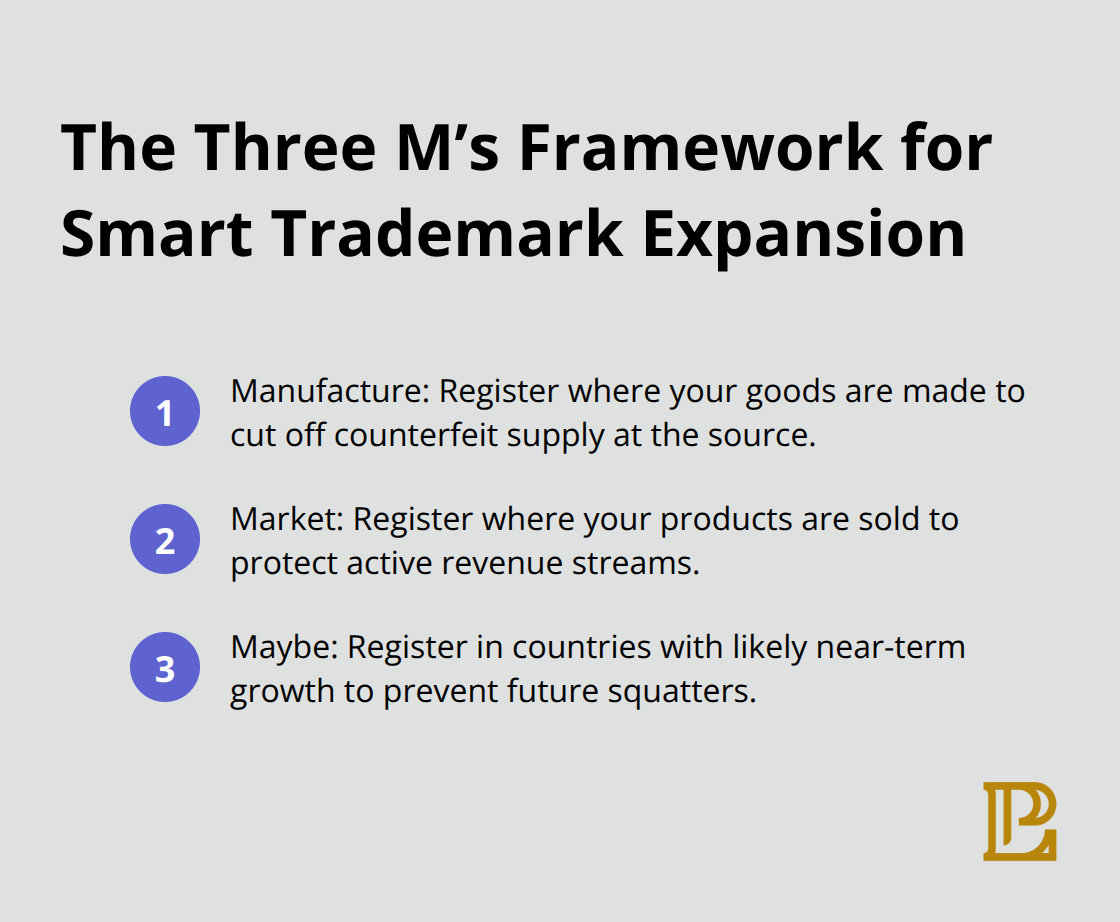
Your registration strategy must cover your actual and anticipated markets to close gaps that bad actors exploit. A comprehensive approach starts with federal trademark registration, then extends to international jurisdictions where you currently operate or plan to expand. State-level registrations in California (around $70 per class) and other key markets add another layer of protection, though federal registration typically provides stronger enforcement power. The Three M’s framework helps prioritize: Manufacture first (where goods are made), Market second (where products are sold), and Maybe third (countries with potential future growth). This approach prevents you from spreading resources too thin while still protecting your core business.
Customs recordation with CBP and similar agencies in other countries (such as Canada’s CBSA or China’s General Administration of Customs) stops counterfeit goods at borders before they reach your customers. These registrations and recordings work together to create a comprehensive enforcement network that deters bad actors and gives you legal standing to fight infringement aggressively.
IP Tools That Actually Stop Brand Theft
Federal Trademark Registration Gives You Real Legal Power
Federal trademark registration stands as your strongest legal weapon against counterfeiters and brand squatters, yet many business owners in Hermosa Beach delay filing because they underestimate its power. When you register with the USPTO, you gain the right to sue infringers in federal court and recover damages up to three times the actual harm if infringement is willful, plus attorney fees. Without federal registration, you’re confined to state-level claims and common law rights, which offer minimal leverage against organized counterfeiters operating across state lines.
The USPTO filing process costs $225 to $275 per class, and applications filed through an attorney historically show higher acceptance rates because counsel conducts comprehensive searches beforehand to avoid conflicting marks. Search the USPTO TESS database yourself first using Google and official USPTO tools to identify similar marks, then file your intent-to-use application if you haven’t yet launched, or use-in-commerce if you’re already selling.
Customs Recordation Stops Counterfeits at the Border
Recording your registered mark with U.S. Customs and Border Protection costs $190 per classification and enables CBP agents to intercept counterfeit shipments at ports before they reach retailers or consumers. This single step transforms CBP into an active enforcement partner, stopping bad actors from flooding your market with fake goods.
International Protection Through the Madrid Protocol
For businesses operating across multiple countries, the Madrid Protocol allows you to file one international application covering numerous jurisdictions from your US registration, typically costing around $653 for a basic one-class filing plus additional fees per country. A Los Angeles County business targeting Canada and Mexico should register in those countries through the Madrid System or direct filings, since a US registration provides zero protection across borders.
Copyright and Trade Secret Protection Complete Your Defense
Copyright registration protects your original creative works including product designs, packaging graphics, marketing materials, and software, though copyright exists automatically upon creation. Registering with the US Copyright Office before infringement occurs allows you to recover statutory damages up to $150,000 per work and attorney fees, transforming what might otherwise be an uneconomical claim into a viable enforcement action.
Trade secrets demand different protection entirely because they lose value once disclosed, so you cannot register them like trademarks or copyrights. Instead, implement reasonable security measures including confidentiality agreements with employees, restricted access to sensitive information, and clear policies marking documents as proprietary. California law, which governs Hermosa Beach businesses, recognizes trade secret protection under the Uniform Trade Secrets Act, allowing you to sue for damages and injunctive relief if someone misappropriates your secrets. Document your security measures thoroughly because courts require evidence that you took reasonable steps to maintain secrecy.
Building a Layered IP Defense Strategy
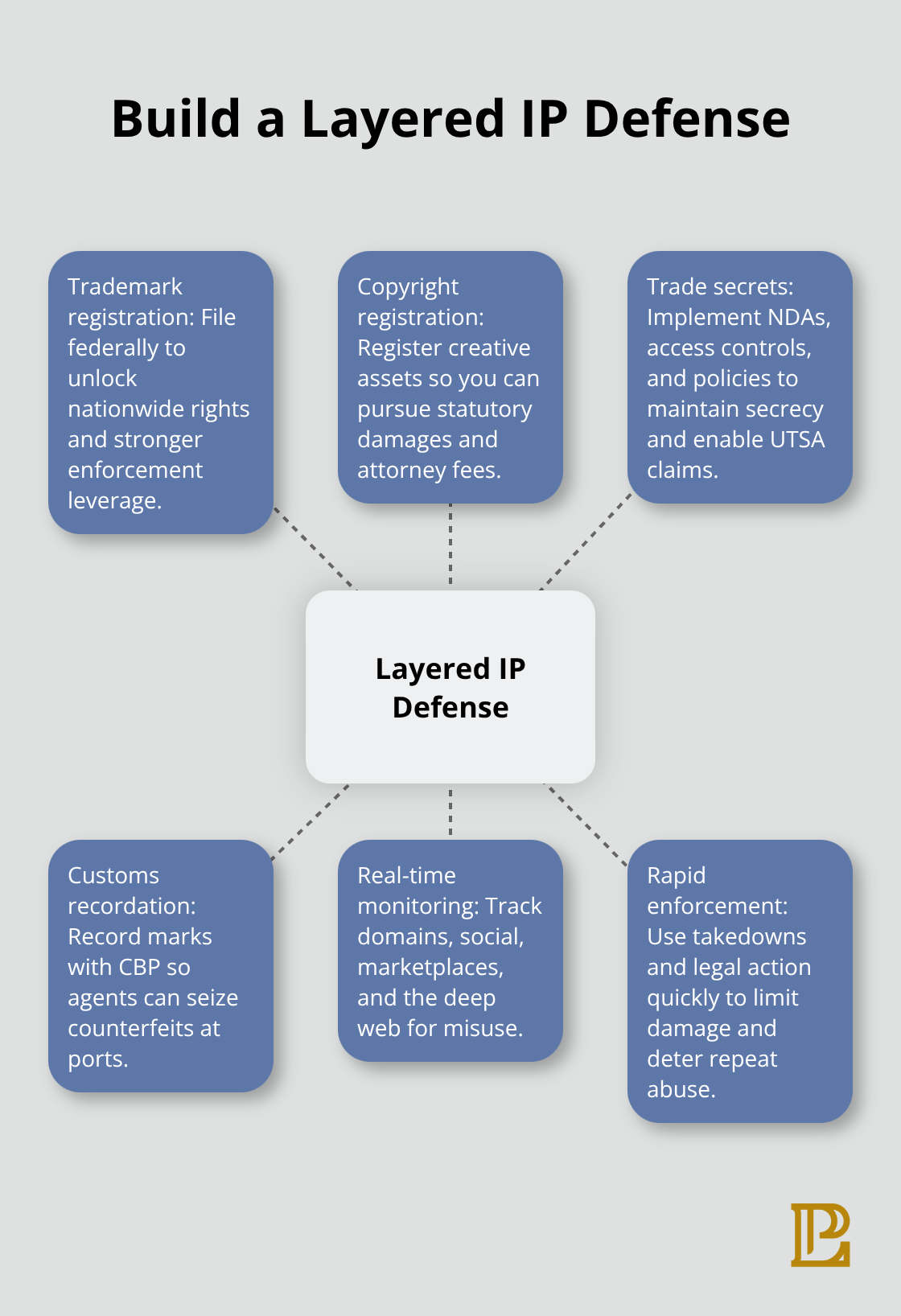
Many business owners focus exclusively on trademark protection while ignoring copyright and trade secret safeguards, leaving significant IP undefended. A layered approach combining trademark registration, copyright filings for creative assets, and documented security protocols for proprietary information creates comprehensive protection across all forms of intellectual property your business relies on. Once your IP foundation is solid, the real challenge emerges: identifying and stopping the bad actors who actively target your brand.
What Threats Actually Target Your Brand
Counterfeiters Target Established Brands for Profit
Counterfeit products, social media impersonation, and unauthorized marketplace listings represent the three most damaging threats to your Hermosa Beach business, and each requires a different detection and response approach. Counterfeiters don’t operate randomly-they target established brands with strong customer bases and pricing power because those brands generate profit margins worth the legal risk. Research on Amazon’s Brand Registry shows that trademark fraud has surged dramatically, with bad actors registering fake brands or hijacking legitimate listings to sell knockoff goods. When a counterfeit operation targets your products, customers who buy the fake version blame you for quality issues, safety problems, or broken promises. Your business absorbs the reputation damage while the counterfeiter pockets the margin.
The financial impact compounds because you’ll spend thousands on legal takedown notices, brand monitoring services, and customs enforcement to fight back. A single counterfeit operation can drain your revenue stream while simultaneously destroying customer trust that took years to build.
Social Media Impersonation and Marketplace Hijacking Spread Fast
Social media impersonation operates through a different mechanism-bad actors create fake accounts impersonating your brand to harvest customer data, redirect traffic to phishing sites, or sell counterfeit products through social platforms. Amazon’s Brand Registry data shows that nonsense marks (one-word invented marks with no dictionary meaning) have exploded to roughly 4.5% of all trademark filings annually, often registered by bad actors who then use those marks to flood marketplaces with counterfeit goods.
Marketplace listing hijacking occurs when someone gains control of your product listing and either diverts sales, substitutes counterfeit inventory, or damages your brand through negative reviews. These threats escalate fast because platforms like Amazon prioritize speed and volume over verification, meaning a bad actor can launch a counterfeit operation within days. The window to respond shrinks dramatically once customers start purchasing fake goods bearing your name.
Real-Time Monitoring Stops Bad Actors Before They Scale
Your response strategy must combine real-time monitoring with rapid enforcement across the specific channels where your customers actually shop. Invest in brand monitoring tools that track domains, social media accounts, marketplace listings, and the deep web for unauthorized use of your trademarks, logos, and brand names-tools that use AI to flag suspicious activity within hours rather than weeks. Set up automated alerts so your team receives notification the moment someone registers a domain similar to yours or launches a suspicious social account.
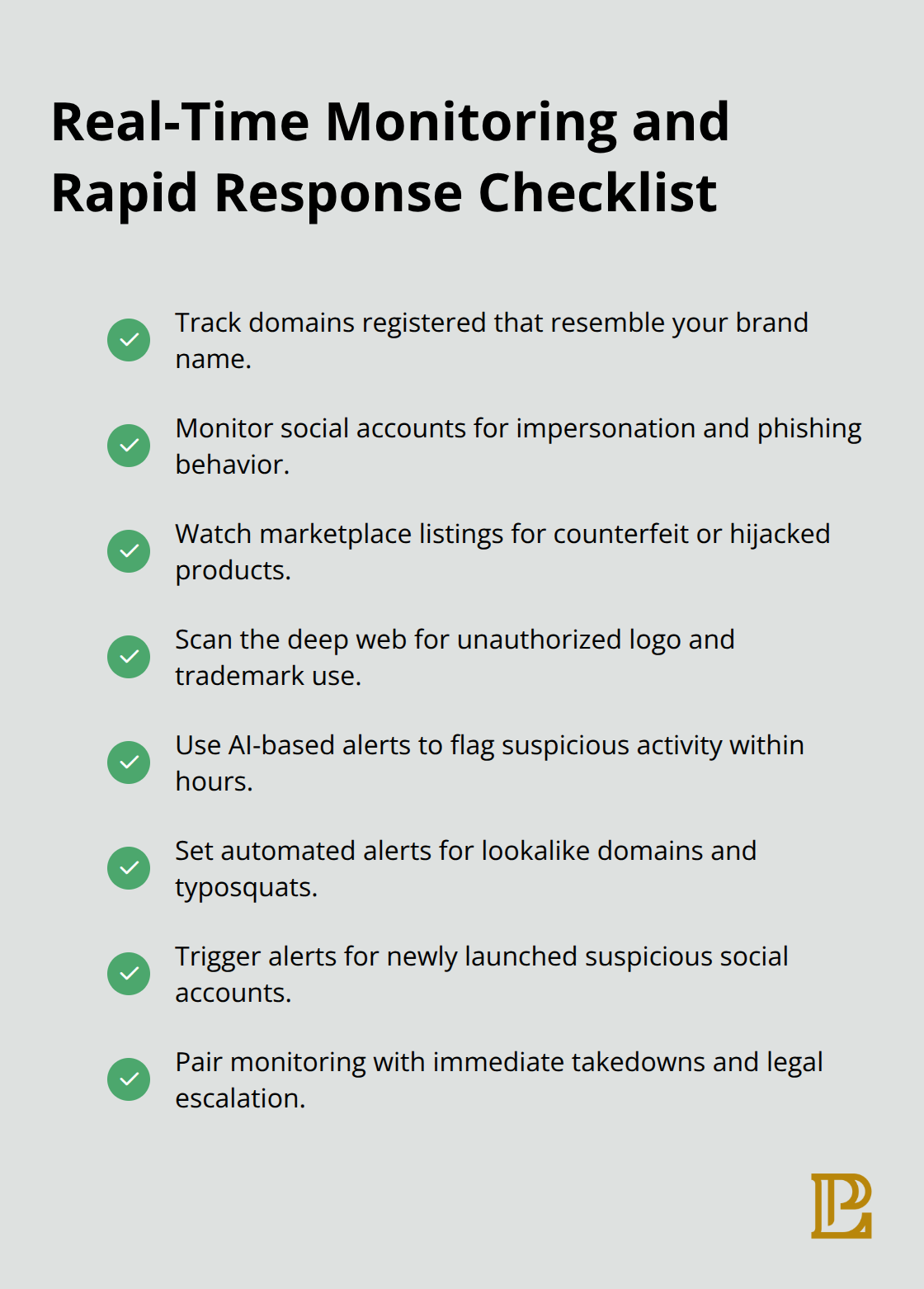
Document everything you find because evidence of infringement strengthens your legal position if enforcement escalates to litigation. When you discover counterfeit listings on Amazon, report them immediately through the Brand Registry reporting portal rather than waiting for customer complaints to surface the problem.
Enforcement Actions That Work
For social media impersonation, file DMCA takedown notices with the platform directly and contact an attorney because some cases require legal letters to accelerate removal. Customs recordation with CBP, which costs $190 per classification, transforms border agents into active enforcement partners who can seize counterfeit shipments before they reach your warehouse or retailers.
In California, which governs Hermosa Beach businesses, the Uniform Trade Secrets Act allows you to pursue damages and injunctions against anyone who misappropriates your confidential business information, but only if you’ve documented reasonable security measures to protect those secrets. Speed matters more than perfection-a takedown notice sent within 24 hours of discovering counterfeits stops sales faster than a perfectly crafted legal letter sent weeks later. Your brand protection program succeeds when detection and response happen in parallel, not sequentially.
Final Thoughts
Brand protection strategies require ongoing commitment rather than one-time effort, and they protect your revenue, reputation, and legal standing in Hermosa Beach and across Los Angeles County. Start with federal trademark registration through the USPTO, then extend protection to jurisdictions where you currently operate or plan to expand. Record your marks with U.S. Customs and Border Protection to stop counterfeit shipments at ports, layer in copyright registration for creative assets, and implement documented security protocols for trade secrets (these steps create comprehensive defense that deters bad actors and gives you legal standing to fight infringement aggressively).
Real-time monitoring transforms your brand protection from reactive to proactive, and automated alerts catch counterfeit listings, fake social accounts, and domain squatting within hours rather than weeks. Document everything you find because evidence strengthens your legal position if enforcement escalates to litigation. Speed matters more than perfection when responding to brand threats, so act immediately when you discover infringement rather than waiting for the perfect moment to respond.
The financial and reputational costs of inadequate brand protection far exceed the investment required to build a solid defense, and a single counterfeit operation can drain thousands in lost revenue while destroying customer trust. We at Pierview Law help Hermosa Beach business owners implement brand protection strategies that actually work, covering trademark registration, copyright protection, trade secret safeguarding, and enforcement actions against infringers. Contact us to discuss how we can protect your brand and support your business growth across Los Angeles County.