
Mergers and acquisitions in Hermosa Beach present unique legal complexities that require careful navigation. Corporate law mergers and acquisitions involve multiple regulatory layers and compliance requirements specific to California.
We at Pierview Law understand the intricate legal framework governing M&A transactions in this coastal business hub. Success depends on thorough preparation and strategic legal planning.
Due Diligence Requirements in M&A Transactions
Due diligence periods average 60-90 days and demand systematic examination of financial records, legal documents, and regulatory compliance materials. The Federal Trade Commission now extends preliminary reviews to 120 days for deals that exceed $50 million, which makes thorough preparation mandatory rather than optional. Financial statement analysis must include three years of audited financials, tax returns, and monthly cash flow statements. Legal document review covers corporate formation papers, material contracts that exceed $50,000 annually, and all litigation records from the past five years.
Financial Records That Drive Transaction Success
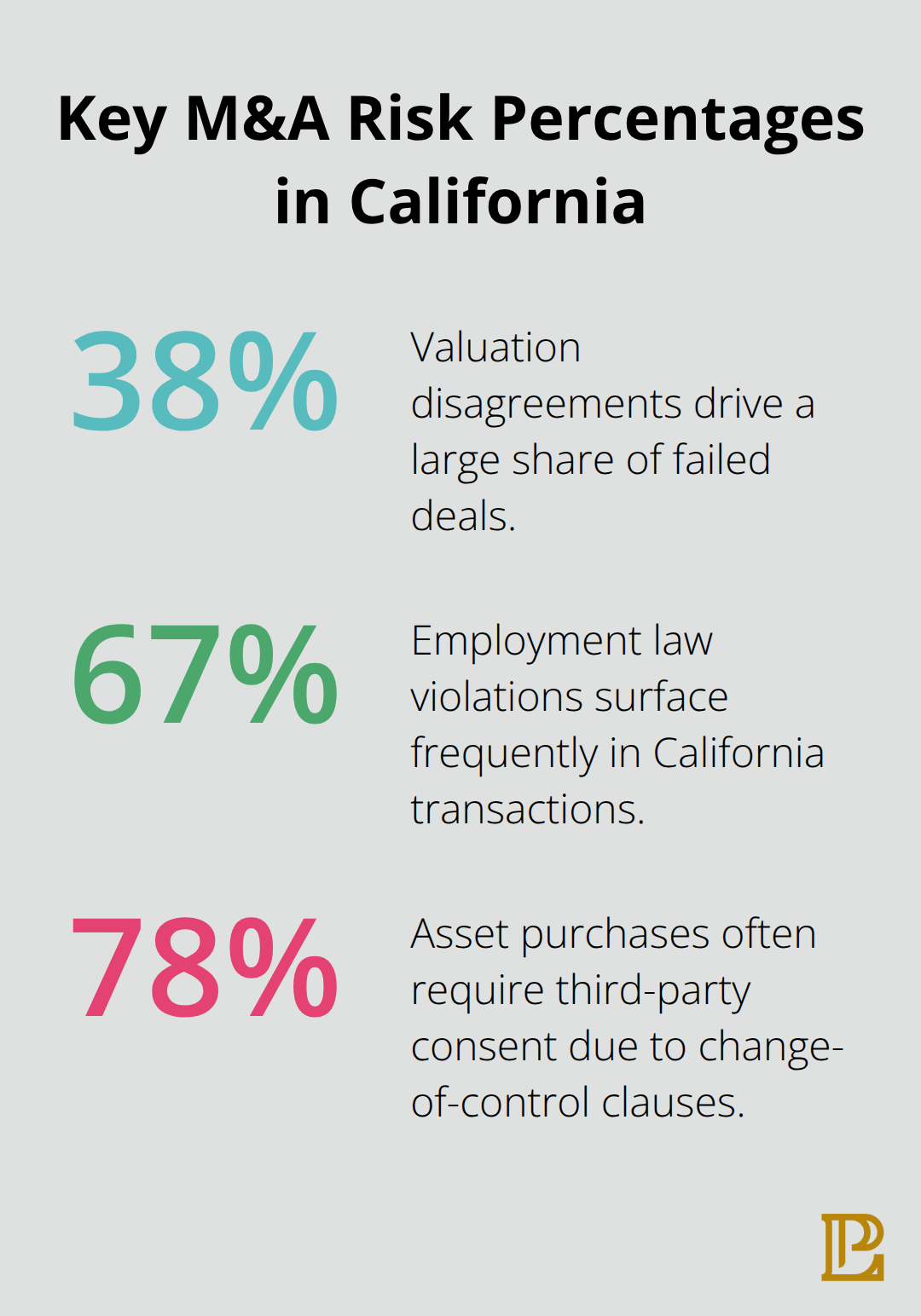
Corporate tax returns, audited financial statements, and accounts receivable reports form the foundation of financial due diligence. The Harvard Business Review reports that valuation disagreements account for 38% of M&A transaction failures, with price expectation gaps that range 25-40% between buyers and sellers. Monthly profit and loss statements, balance sheets, and cash flow projections for the next 12 months provide transaction clarity. Bank statements, loan agreements, and credit facility documentation reveal hidden liabilities that can derail transactions.
Regulatory Compliance Documentation Requirements
Environmental assessments become mandatory for manufacturing, hospitality, and retail businesses in Hermosa Beach due to coastal proximity regulations. California mandates specific documentation under Chapter 11 of the California Corporations Code (including certificates of good standing and franchise tax clearances). SBA loan approvals now extend 90-120 days due to heightened scrutiny, which requires complete regulatory compliance documentation upfront. Employment law compliance records, including wage and hour audits, worker classification determinations, and safety inspection reports, prevent post-closing disputes that average $200,000-$500,000 in resolution costs.
Intellectual Property and Asset Verification
Patent portfolios, trademark registrations, and copyright documentation require thorough verification to prevent post-acquisition disputes. Trade secret protection protocols and non-disclosure agreements must undergo review to maintain competitive advantages. Asset verification includes equipment appraisals, real estate titles, and inventory assessments that impact final purchase prices. These verification processes directly influence how buyers and sellers structure their M&A deals under California law.
Structuring M&A Deals Under California Law
Asset purchases dominate Hermosa Beach M&A transactions for businesses under $10 million because they allow buyers to select specific assets while they avoid hidden liabilities. Stock purchases work better for larger transactions where buyers want complete business continuity and tax benefits from net operating losses they acquire. The Tax Policy Center shows that companies that acquire rivals with losses can reduce their effective tax rate by up to 10%, which makes stock purchases attractive for profitable acquirers. Asset purchases require individual contract assignments and third-party consents, which adds 30-45 days to deal timelines but provides liability protection that stock purchases cannot match.
Tax Strategy Determines Transaction Structure
Seller finance appears in 20-30% of transactions under $10 million, with sellers who accept notes over 5-7 years to defer capital gains taxes and maintain cash flow. Private equity firms pay premium valuations of 8-12 times revenue for successful tech ventures, but they structure deals to minimize tax exposure through depreciation benefits and interest deductions. California’s 13.3% state capital gains rate makes installment sales attractive for sellers, while buyers prefer asset purchases to maximize depreciation write-offs on tangible assets. The MIT Sloan School of Management reports that merged operations boost productivity by 10-15%, but only when tax structures align with operational plans they integrate.
Regulatory Approvals Control Deal Timeline
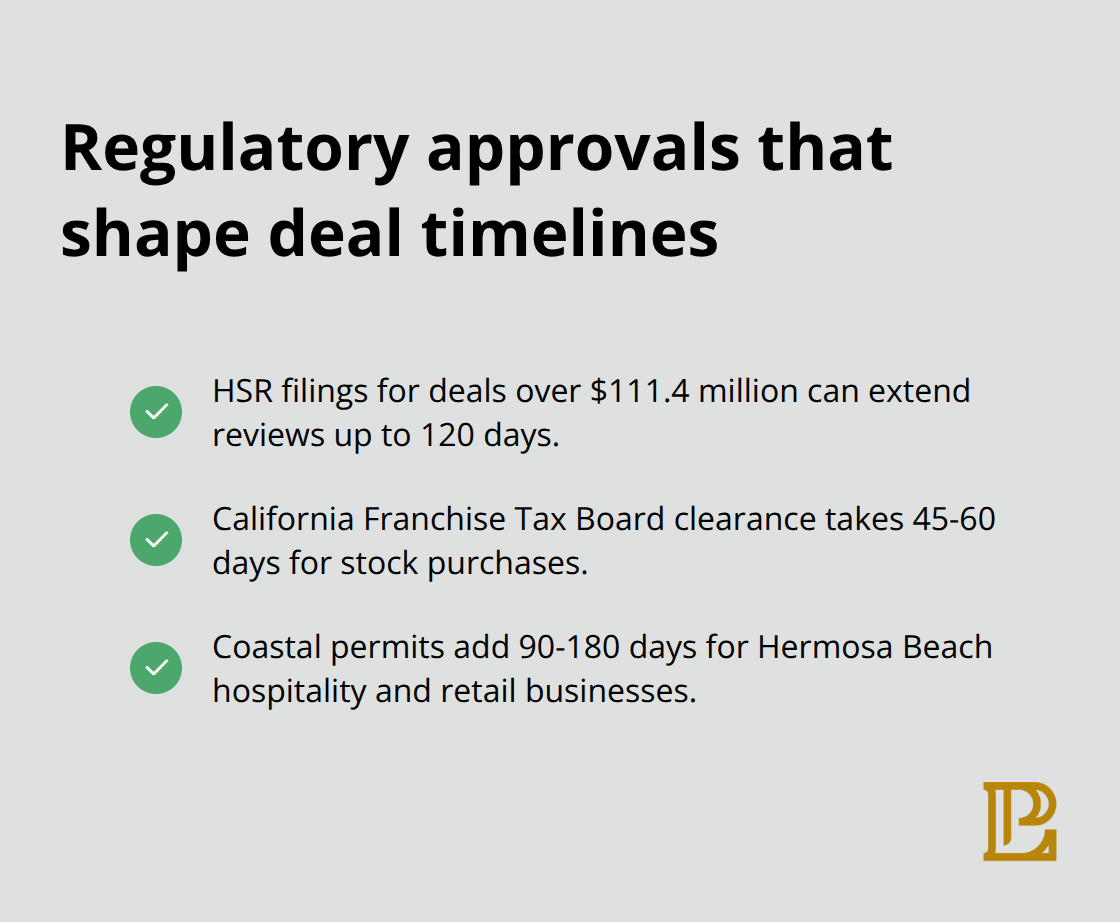
The Federal Trade Commission requires Hart-Scott-Rodino filings for transactions that exceed $111.4 million in 2025, with review periods that extend 120 days for complex horizontal mergers. California Franchise Tax Board clearance takes 45-60 days and becomes mandatory for stock purchases to transfer good standing status to new ownership. Environmental permits and coastal development approvals add 90-180 days for Hermosa Beach hospitality and retail businesses due to California Coastal Commission requirements (which apply to all coastal zone properties). These regulatory timelines force deal structures toward asset purchases when speed matters more than tax optimization.
Contract Assignment Complexities
Asset purchases require buyers to obtain consent from landlords, suppliers, and key customers before they can transfer material contracts. Third-party consent requirements can delay closings by 60-90 days when major contracts contain change-of-control provisions that trigger renegotiation rights. Stock purchases avoid these consent requirements but expose buyers to all corporate liabilities (including unknown contingent obligations). However, these structural challenges pale in comparison to the employment law compliance issues that can emerge during M&A transactions in California’s complex regulatory environment.
Common Legal Challenges in Hermosa Beach M&A
Employment law violations surface in 67% of California M&A transactions according to the Department of Labor, with wage and hour disputes that cost buyers an average of $340,000 in post-close settlements. Worker misclassification issues hit hardest in Hermosa Beach’s hospitality and tech sectors, where companies face penalties of $5,000-$25,000 per misclassified employee plus back wages and benefits. The California Private Attorneys General Act allows employees to file representative actions that can reach seven-figure settlements, which makes employment audits mandatory before any deal closes. Stock purchases transfer all employment liabilities to buyers, while asset purchases require careful employee transition plans to avoid wrongful termination claims.
Environmental Liabilities That Sink Coastal Deals
Hermosa Beach properties face heightened environmental scrutiny due to coastal zone regulations and potential contamination from decades of industrial activity. Phase I environmental assessments cost $3,000-$8,000 but prevent Phase II investigations that average $25,000-$75,000 when contamination appears. The California Coastal Commission requires separate permits for any business expansion within 3,000 feet of the ocean (which adds 120-180 days to deal timelines and $15,000-$50,000 in permit fees). Underground storage tanks from former gas stations create liability exposure of $100,000-$2 million for soil remediation, which makes environmental insurance policies worth 1-3% of purchase price a smart investment for buyers.
Contract Assignment Roadblocks
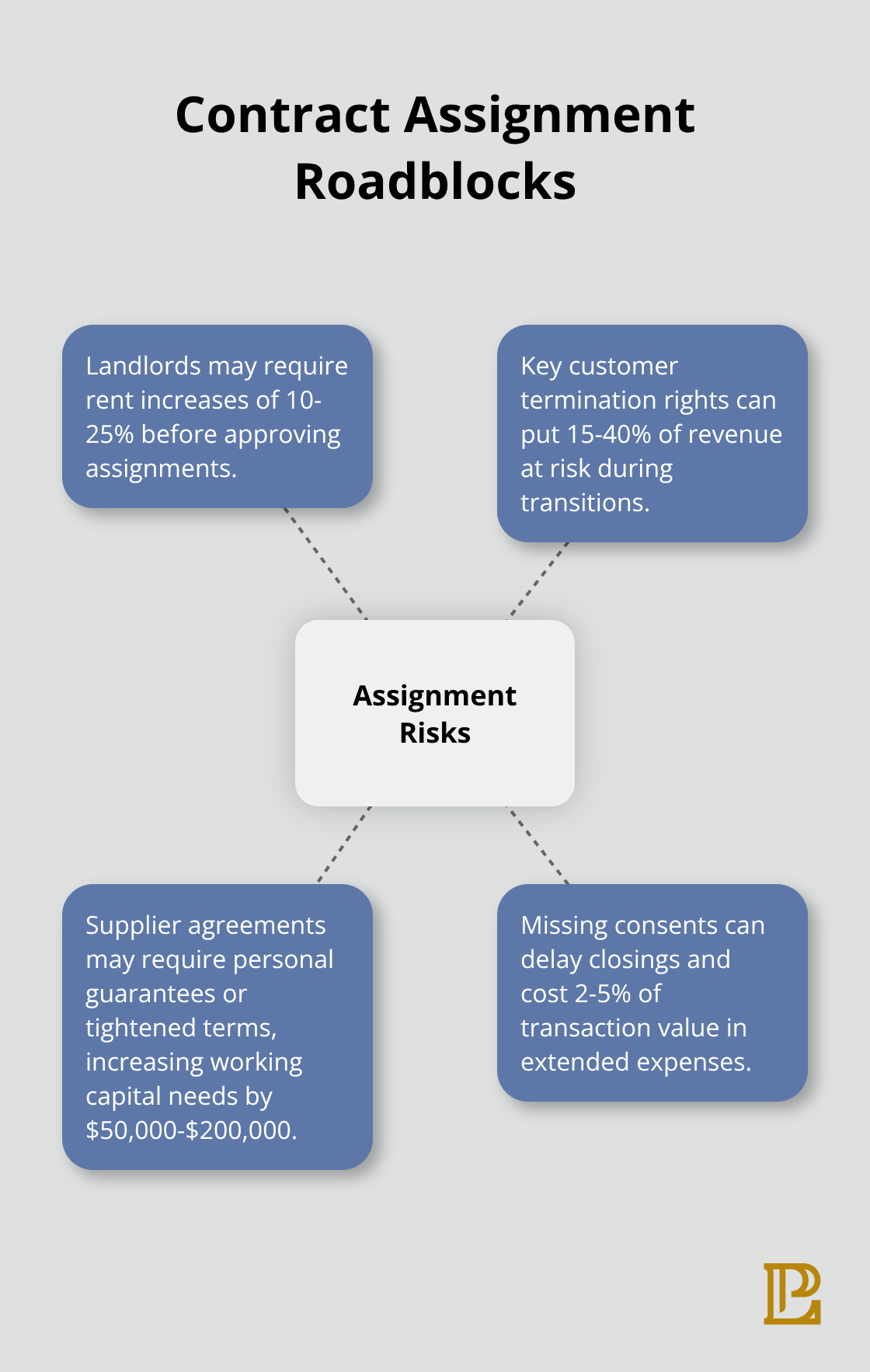
Material contracts that contain change-of-control clauses require third-party consent in 78% of asset purchases, with landlords who demand rent increases of 10-25% before they approve assignments. Key customer contracts often include termination rights that ownership changes trigger, which puts 15-40% of revenue at risk during transitions. Supplier agreements may require personal guarantees from new owners or demand renegotiated payment terms that increase working capital needs by $50,000-$200,000. Deal teams must identify all consent requirements during initial due diligence to avoid deal delays that cost 2-5% of transaction value in extended costs and lost opportunities.
Regulatory Compliance Gaps
California’s complex regulatory framework creates compliance gaps that buyers often overlook until post-close audits reveal violations. Business license transfers require separate applications to Hermosa Beach city authorities (which can take 45-90 days for approval). Professional licensing requirements affect service businesses where individual licenses don’t transfer with ownership changes, which forces buyers to hire new licensed professionals or face operational shutdowns. Tax compliance issues surface when sellers fail to disclose outstanding liabilities to the California Franchise Tax Board or Employment Development Department, which exposes buyers to penalties that range from $10,000-$100,000 per violation.
Final Thoughts
Corporate law mergers and acquisitions in Hermosa Beach require careful attention to California’s regulatory framework and coastal zone requirements. The 38% failure rate from valuation disagreements and the $200,000-$500,000 cost of post-close operational failures demonstrate why professional legal guidance becomes essential. Success depends on comprehensive due diligence that addresses employment law compliance, environmental liabilities, and contract assignment complexities.
Environmental assessments, regulatory approvals, and employment audits need legal oversight to prevent costly surprises after deal completion. These complex requirements make early legal involvement necessary to structure deals properly and navigate California’s regulatory landscape. Professional guidance helps businesses avoid the pitfalls that derail transactions and create unexpected liabilities.
We at Pierview Law handle the sophisticated legal requirements that M&A transactions demand in Hermosa Beach’s unique business environment. Our team addresses the regulatory compliance challenges that coastal businesses face during ownership transitions (from environmental permits to employment law compliance). Contact Pierview Law to discuss your M&A objectives and develop a legal strategy that protects your interests throughout the transaction process.