
Intellectual property valuation determines the monetary worth of patents, trademarks, copyrights, and trade secrets. Business owners in Hermosa Beach face this complex process during mergers, divorces, and licensing deals.
We at Pierview Law see clients struggle with accurate IP assessments that meet California’s legal standards. The right valuation method protects your assets and supports your business goals.
Methods for Intellectual Property Valuation
Three valuation approaches dominate intellectual property assessment in California, each serving different business scenarios. The cost approach calculates replacement expenses for developing similar IP assets, making it effective for newer technologies without established market comparisons. Software patents typically cost $15,000 to $25,000 to develop according to USPTO data, while trademark registration averages $1,500 per class.
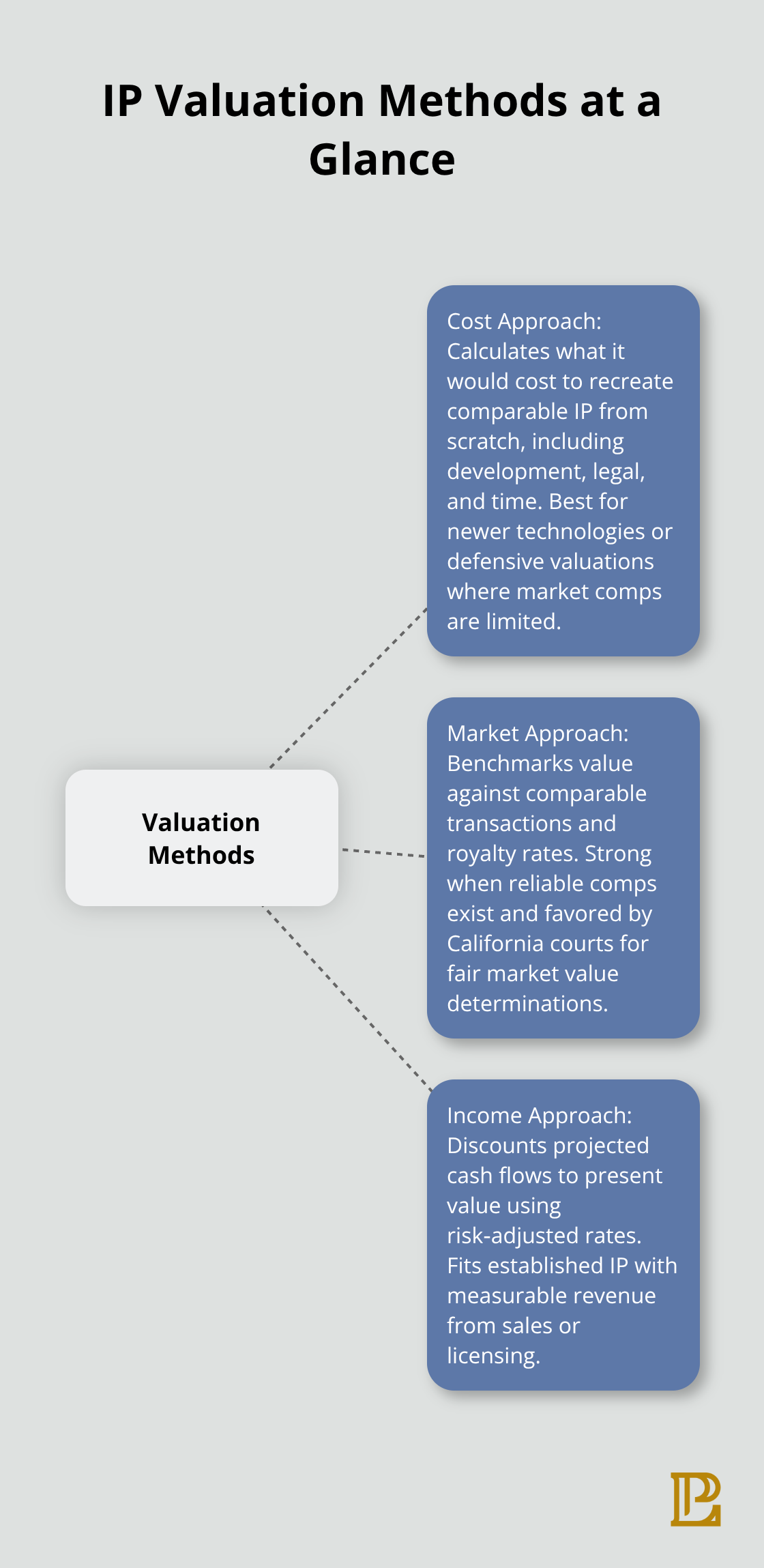
This method works best for defensive valuations and insurance purposes but often undervalues unique innovations.
Cost Approach Measures Development Expenses
The cost approach determines value by calculating what you would spend to recreate similar IP assets from scratch. This method includes direct development costs, legal fees, and time investments required to reach the same protection level. Technology companies find this approach useful for newer patents without comparable market transactions. However, the cost approach fails to capture market demand or revenue potential that drives true economic value.
Market Approach Delivers Real-World Benchmarks
The market approach compares your IP to similar assets sold in recent transactions. Patent licenses in the technology sector average 3-7% royalty rates based on industry reports, while trademark licenses typically range from 1-5%. This method requires access to comparable transaction data, which remains limited for specialized IP. California courts favor market-based valuations in divorce proceedings because they reflect actual buyer willingness to pay.
Income Method Projects Future Cash Flows
The income approach projects future revenue streams and discounts them to present value (using rates between 15-25% for technology assets). This method suits established IP that generates measurable income through direct commercialization or strategic partnerships. Manufacturing companies report 20-40% profit margins attributed to patent protection according to WIPO studies. The income approach often produces the highest valuations but requires detailed financial projections and market analysis.
California’s legal framework adds specific requirements that influence which valuation method courts accept in different proceedings.
Legal Requirements for IP Valuation in California
California courts impose specific evidentiary standards on IP valuations that differ from federal requirements. The California Evidence Code Section 801 requires valuation opinions to rest on matters that professionals in the field reasonably rely upon, while federal courts under Daubert standards emphasize scientific reliability. Business owners must recognize that California state courts accept market-based valuations more readily than theoretical income projections, particularly in divorce proceedings where California Family Code Section 2552 requires assets to carry fair market value. The California Uniform Trade Secrets Act under Civil Code Sections 3426-3426.11 adds complexity by requiring trade secret valuations to demonstrate actual economic value from confidentiality.
Documentation Standards Change by Case Type
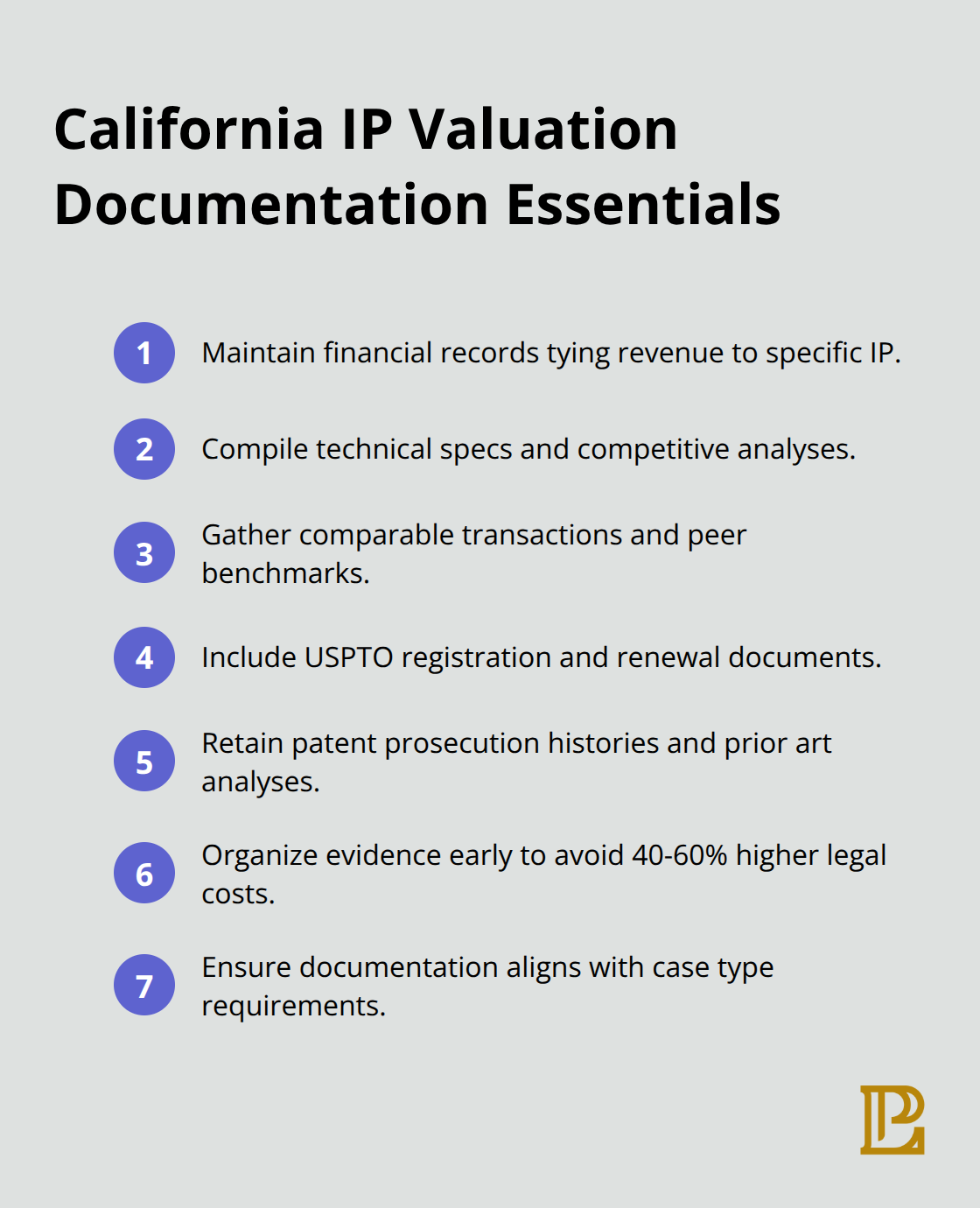
Licensing disputes require comprehensive financial records that show actual revenue attribution to specific IP assets, while merger transactions need detailed technical specifications and competitive analysis reports. California courts in Los Angeles County consistently reject valuations that lack supporting transaction data or peer comparisons, according to recent case precedents. Federal trademark valuations must include USPTO registration certificates and renewal documentation, while patent valuations require detailed prosecution histories and prior art analysis. Many business owners fail to maintain proper documentation until litigation begins, which weakens their valuation position and increases legal costs by 40-60% compared to well-documented cases.
Professional Certification Standards Affect Court Acceptance
California requires IP appraisers to hold ASA or ASB certifications for court testimony, while federal proceedings accept broader professional qualifications. The American Society of Appraisers reports that non-certified valuations face rejection rates exceeding 70% in California state courts (compared to 45% in federal venues). Business owners should engage certified appraisers early in any transaction or dispute to avoid costly re-valuations that delay proceedings by months.
State Regulations Override Federal Guidelines
California’s Business and Professions Code Section 17200 prohibits unfair business practices that can affect IP valuation accuracy, while federal regulations focus primarily on technical compliance. State courts apply California Civil Code provisions that federal courts may not consider, creating different valuation outcomes for identical IP assets. These regulatory differences become particularly important when Hermosa Beach businesses face IP disputes that could proceed in either state or federal court systems.
Common IP Valuation Scenarios in Hermosa Beach
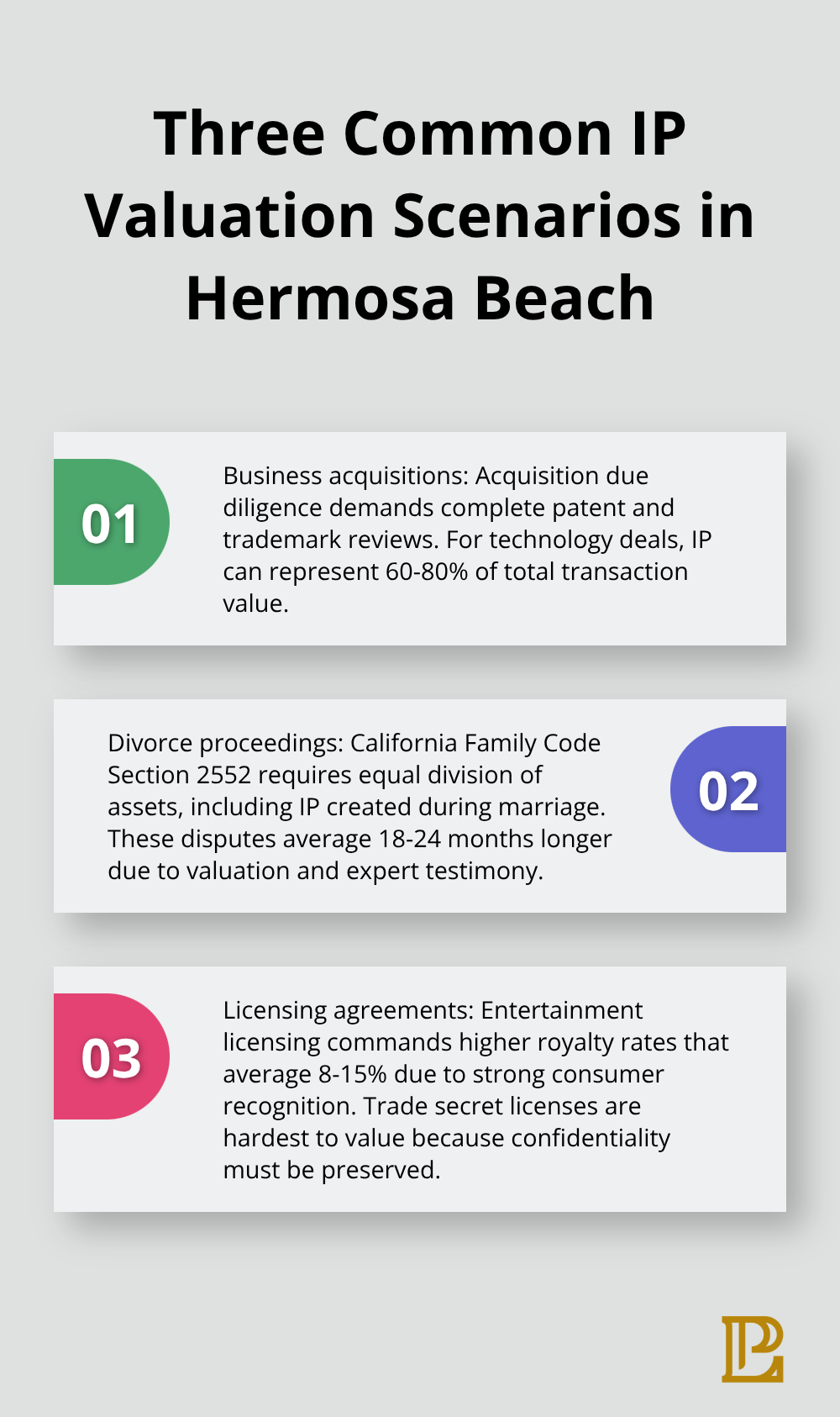
Hermosa Beach businesses encounter three primary IP valuation situations that demand different approaches and documentation standards. Business acquisitions require comprehensive patent portfolios and trademark assessments, where technology companies typically see IP assets represent 60-80% of total transaction value according to Ocean Tomo data. Divorce cases create unique challenges because California Family Code Section 2552 requires equal asset division, which forces courts to value intangible assets like customer lists, proprietary software, and trade secrets that spouses developed during marriage. The Los Angeles County Superior Court reports that IP disputes in divorce cases average 18-24 months longer than standard property divisions, primarily due to valuation complexities and expert witness requirements.
Business Sales Drive Complex Valuations
Technology startups in Hermosa Beach face intense scrutiny during acquisition talks because buyers demand detailed IP due diligence reports that include patent prosecution histories, trademark clearance searches, and competitive landscape analysis. Software companies command premium valuations when their IP portfolios demonstrate clear market differentiation and defensive capabilities against larger competitors. Manufacturing businesses struggle more with IP valuations because their patents often cover incremental improvements rather than breakthrough innovations (which leads to disputes over royalty rates that typically range from 2-8% of net sales). Acquisition lawyers report that inadequate IP documentation kills 30-40% of deals before completion.
Divorce Proceedings Complicate Asset Division
California courts must divide IP assets equally between spouses, which creates valuation disputes when one spouse developed patents or trademarks during marriage. Trade secrets present particular challenges because courts must balance confidentiality requirements with fair disclosure needs for accurate valuation. Business owners often discover that their IP assets carry higher values than expected, which can shift entire divorce settlements and require additional expert testimony (extending proceedings by months).
Licensing Agreements Require Revenue Projections
Licensing agreements in Hermosa Beach technology sector typically involve established companies that seek to monetize unused patents or expand market reach through strategic partnerships. Entertainment industry businesses command higher royalty rates that average 8-15% because their copyrights and trademarks carry strong consumer recognition and market demand. Trade secret licenses present the greatest valuation challenges because companies must prove economic value while they maintain confidentiality.
Final Thoughts
Accurate intellectual property valuation requires you to select the right method based on your specific business situation and legal requirements. The cost approach works best for newer technologies, while market comparisons provide reliable benchmarks for established IP assets. Income projections deliver the highest valuations but demand detailed financial analysis and market research.
California’s legal framework adds complexity through specific documentation standards and certification requirements that differ from federal guidelines. Business owners must maintain comprehensive records that include USPTO certificates, prosecution histories, and financial attribution data to support their valuations in court proceedings. Professional legal assistance becomes necessary when IP assets represent significant business value or face potential disputes (particularly in high-stakes transactions or litigation).
We at Pierview Law help Hermosa Beach businesses navigate complex intellectual property valuation through our business law services. Our team handles everything from initial asset documentation to courtroom representation during valuation disputes. The right approach prevents costly delays and strengthens your position whether you face acquisition talks, divorce proceedings, or license negotiations.