
Your technology IP licensing strategy directly impacts your bottom line. Whether you’re sitting on valuable patents or looking to monetize innovations, the right approach can transform intellectual property into consistent revenue.
At Pierview Law, we help Hermosa Beach business owners navigate licensing agreements that protect their interests while opening new market opportunities. This guide walks you through proven strategies that work.
Why Licensing Converts Innovation Into Revenue
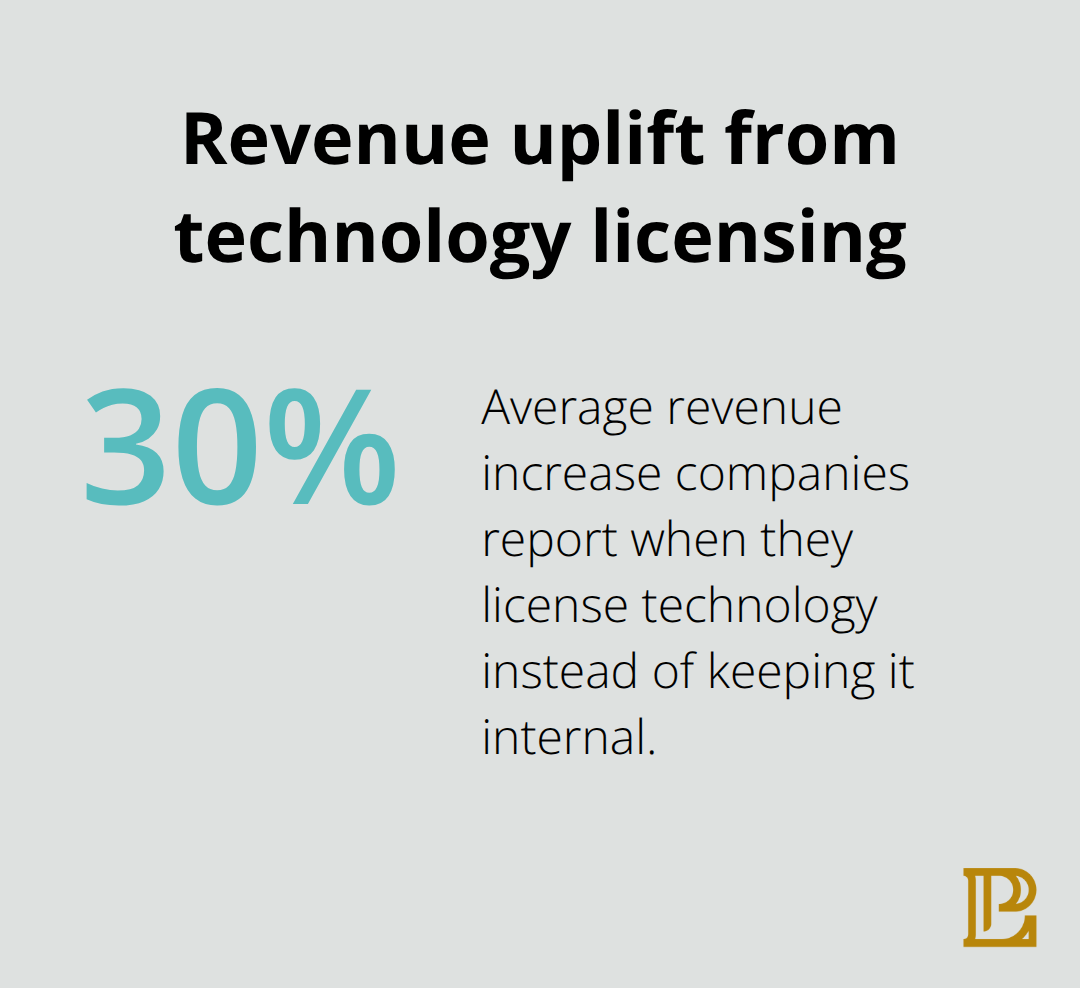
Licensing your technology generates immediate revenue without requiring you to manufacture, market, or distribute the product yourself. A World Intellectual Property Organization study found that companies licensing their technologies often see about a 30% increase in revenue compared to those keeping innovations locked away. This matters especially for Hermosa Beach business owners who lack the capital or operational bandwidth to commercialize every patent they develop.
Rather than watching your innovations gather dust, licensing converts them into cash flow while you retain ownership. The upfront payments alone can be substantial-median upfront fees in certain sectors reach around $50 million, providing the capital cushion many growing businesses need to fund their next round of R&D or operations.
Reaching New Markets Without Breaking the Bank
Expanding into new geographic regions or industry verticals typically demands massive investment in manufacturing facilities, distribution networks, and local regulatory navigation. Licensing transfers that burden to your partner while you capture revenue through royalties and milestone payments. A licensee with established presence in their market handles production quality, supply chain logistics, and regional compliance. This approach lets you scale without the operational headaches. The key is identifying partners with genuine market strength and complementary capabilities-someone who can actually execute, not just sign a contract. Due diligence on financial stability and technical competency separates deals that generate revenue from deals that generate headaches.
Strategic Partnerships That Create Mutual Value
Licensing functions as a partnership framework that lets both parties win. Your licensee gains access to proven technology without bearing full development costs. You gain a revenue stream and market validation from a partner invested in success. Cross-border licensing, field-of-use restrictions, and exclusive arrangements all serve different strategic goals. An exclusive license commands higher payments but limits your own ability to license elsewhere; non-exclusive licenses let you monetize the same technology across multiple partners at potentially lower per-partner rates. The decision depends entirely on your business objectives and competitive positioning.
Structuring Agreements That Prevent Disputes
Poorly structured deals fail because they lack alignment on expectations, royalty triggers, or performance obligations. Clear licensing agreements embed specificity on scope, term, royalty calculations, and termination rights so both parties understand exactly what they’re agreeing to and what happens if circumstances change. When disputes arise over licensing terms or compliance, having a well-drafted agreement becomes your strongest protection. The difference between a licensing deal that generates steady revenue and one that creates legal conflict often comes down to how thoroughly the initial agreement addresses contingencies and obligations. Getting the structure right at the outset saves time, money, and relationships down the road-which is why the next section focuses on the specific strategies that separate successful licensing from costly mistakes.
Building Your IP Licensing Foundation
Audit Your IP Portfolio Before You License Anything
Starting your licensing strategy without a clear understanding of what you actually own is like negotiating a real estate deal without a title search. You need to know exactly which patents, trade secrets, software code, and trademarks sit in your portfolio before you can license anything. An IP audit forces you to catalog these assets, assess their remaining patent life, evaluate market demand, and determine which innovations are worth licensing versus which are core to your competitive advantage. Technology landscapes shift rapidly, and what seemed unmarketable five years ago might suddenly attract licensees as industries evolve. The audit also reveals which innovations you’ve already disclosed publicly (which can affect patentability) and which remain protected trade secrets requiring confidentiality provisions in any licensing agreement.
Value Your Technology Based on Market Reality
Valuations follow the audit, and this is where most business owners stumble. Licensing valuations aren’t based on what you spent developing the technology or what you think it’s worth. They’re based on what a licensee will actually pay, which depends on market size, competitive alternatives, royalty rates in your industry, and the licensee’s ability to commercialize the innovation.
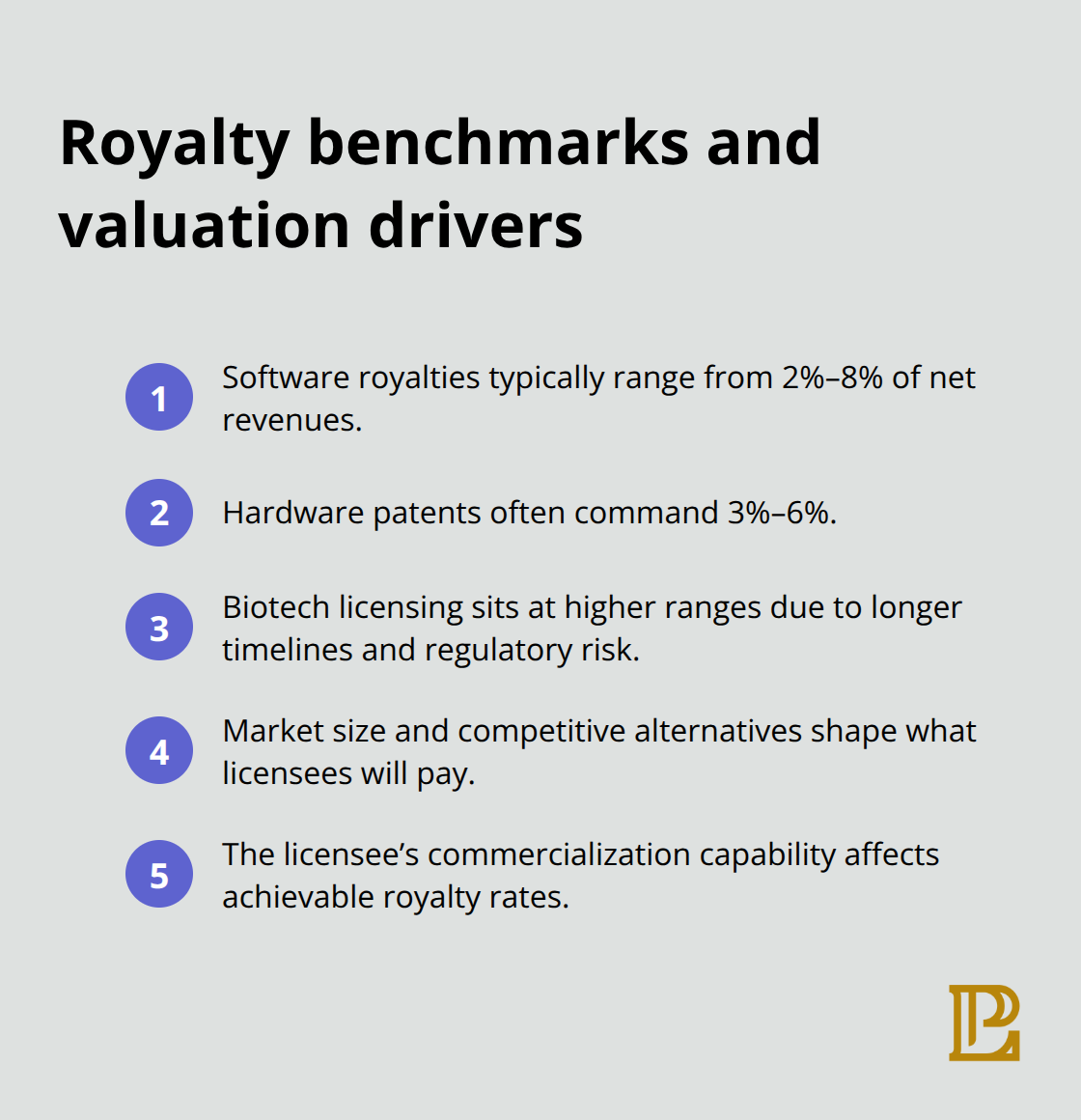
Research your specific sector’s benchmarks. In software licensing, royalty rates typically range from 2% to 8% of net revenues, while hardware patents often command 3% to 6%. Biotech licensing sits at higher ranges due to longer development timelines and regulatory risk. Knowing these ranges prevents you from pricing yourself out of deals or leaving money on the table.
Draft Agreements With Precision and Specificity
Drafting licensing agreements that actually work requires specificity that most templates miss entirely. A license must clearly define what rights you’re granting: Does it cover manufacturing, distribution, sublicensing, or just internal use by the licensee? Does it extend globally or to specific territories? What field of use restrictions apply-can they license your manufacturing technology to competitors in adjacent markets? These distinctions directly impact your revenue and your ability to license the same technology to others. Royalty structures demand equal precision. A 5% royalty on gross revenues sounds clear until disputes arise over what counts as revenue, whether returns reduce royalties, or how bundled products get allocated. Net revenue definitions, minimum royalty thresholds, quarterly payment timing, and audit rights all belong in the agreement. Include performance milestones too: if the licensee commits to reaching specific sales targets or market launch dates, tie royalty rates or exclusivity to achieving those milestones. This keeps your partner motivated and gives you an exit if they’re not executing.
Structure Payment Terms That Align Incentives
Payment terms matter more than most realize. Upfront payments provide immediate capital but may signal overconfidence in the deal. Milestone payments tied to development progress, regulatory approvals, or first commercial sale align incentives and reduce your risk if the licensee abandons the project. This approach protects your interests while demonstrating confidence in the partnership.
Select Licensees Through Rigorous Due Diligence
Selecting the right licensee determines whether your licensing strategy succeeds or fails. Financial stability matters-your partner must have the capital to develop and commercialize your technology without running out of money mid-project. Technical capability is equally critical. A partner with distribution strength but no R&D capability may struggle to adapt your technology to their market, while a partner with strong engineering but weak sales channels won’t generate the revenue projections promised. Conduct thorough due diligence on potential licensees before signing anything. Review their financial statements, speak with their existing partners, and assess whether they’ve successfully commercialized similar technologies. The best licensing deals happen between parties with complementary strengths and genuine alignment on what success looks like. Once you’ve selected your licensee and finalized the agreement structure, the real work begins-monitoring compliance and adapting your strategy as market conditions change.
Where Licensing Deals Actually Fall Apart
Protect Trade Secrets Before You Expose Them
Most licensing failures don’t happen because the technology was bad or the market didn’t exist. They happen because business owners and their partners fail to protect sensitive information, fail to anticipate disputes through clear agreement language, or stop paying attention after signing the contract. Your trade secrets, manufacturing processes, and unreleased product roadmaps represent enormous competitive value. When you bring a potential licensee into discussions, you expose information that could walk out the door if that partner decides not to license from you. A non-disclosure agreement isn’t bureaucratic overhead-it’s your legal barrier against a licensee using your confidential information to develop competing technology or licensing it to your competitors. Define exactly what information qualifies as confidential, specify how long confidentiality obligations last after the relationship ends, and include clear remedies for breaches. Many business owners skip this step because they trust the other party, then watch that trust evaporate when a licensee’s engineer leaves and takes your trade secrets to a rival firm.
Write Agreements That Prevent Disputes, Not Create Them
Poorly structured licensing agreements create disputes over royalty calculations, exclusivity boundaries, and performance obligations that clear language could have prevented. If your agreement says the licensee must pay 5% royalties without specifying whether that’s calculated on gross or net revenue, you’ll spend years arguing over whether returns, discounts, and bundled product sales reduce what they owe you. Field-of-use restrictions demand equal specificity. Can the licensee sublicense your technology to their subsidiaries? Can they use it in adjacent industries? Can they license improvements they develop back to you, or are those improvements exclusively theirs? These questions must be answered in writing before the first royalty payment arrives. Royalty structures require precision that most templates miss entirely. Net revenue definitions, minimum royalty thresholds, quarterly payment timing, and audit rights all belong in the agreement. Include performance milestones too: if the licensee commits to reaching specific sales targets or market launch dates, tie royalty rates or exclusivity to achieving those milestones (this keeps your partner motivated and gives you an exit if they’re not executing). Just as key terms and negotiation tactics shape M&A outcomes, the specificity of your licensing agreement determines whether disputes arise or get prevented.
Monitor Compliance Systematically or Lose Control
Many business owners sign licensing agreements, collect the first few payments, and assume everything will run smoothly. Reality is messier. Licensees fail to meet sales projections, stop paying minimum royalties, fail to maintain quality standards, or exceed field-of-use restrictions without permission. Without systematic monitoring-quarterly royalty audits, periodic compliance certifications from the licensee, and scheduled business reviews-you won’t discover problems until they’ve metastasized. Build audit rights directly into your licensing agreement so you can verify the licensee’s reported sales figures and royalty calculations. Require the licensee to provide quarterly compliance certifications confirming they’re meeting performance milestones and staying within agreed field-of-use boundaries.
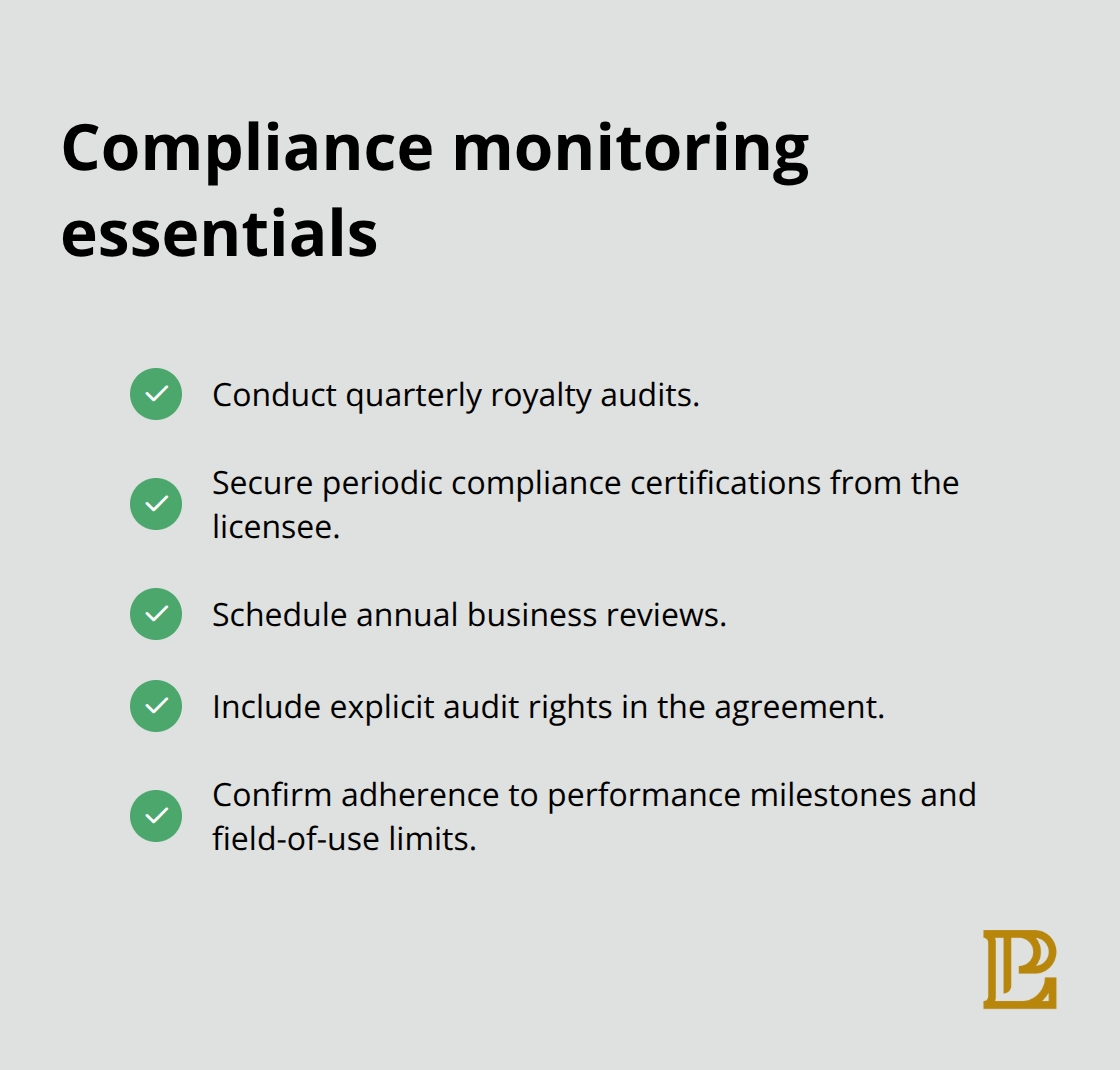
Schedule annual business reviews to discuss market conditions, competitive pressures, and whether the licensing relationship remains strategically aligned for both parties (this approach catches problems early when corrective action is still possible rather than discovering years later that your partner has been underpaying royalties or licensing your technology outside the agreed territory).
Final Thoughts
Technology IP licensing transforms innovation into measurable revenue while preserving your ownership and competitive position. Most business owners underestimate how much value sits unmonetized in their patent portfolios, and a thorough audit reveals which innovations deserve licensing attention. Realistic valuations based on market benchmarks prevent you from pricing yourself out of deals or leaving money on the table, while clear agreement language eliminates the disputes that consume time and resources better spent growing your business.
Strategic partnerships with capable licensees accelerate your market reach into new territories and industries without the capital investment that direct expansion demands. Milestone-based payment structures align incentives so your licensee stays motivated to commercialize your technology successfully, and audit rights catch problems early when corrective action remains possible. The long-term value of technology IP licensing extends far beyond immediate royalty payments-it positions your business for sustainable growth across multiple markets and revenue streams.
Your next step involves assessing which innovations in your portfolio warrant licensing and which require deeper protection. We at Pierview Law help Hermosa Beach business owners structure licensing agreements that protect their interests while creating genuine partnership value. Contact us to discuss how we can help you monetize your innovations while maintaining control over your most valuable assets.