
Subcontractor disputes can derail projects and drain resources faster than most business owners expect. Payment delays, scope disagreements, and quality issues create friction that damages relationships and timelines.
At Pierview Law, we’ve seen how the right resolution approach makes all the difference. This guide walks you through practical paths to settlement, from negotiation to litigation.
What Actually Causes Subcontractor Disputes
Payment Delays Drive Most Conflicts
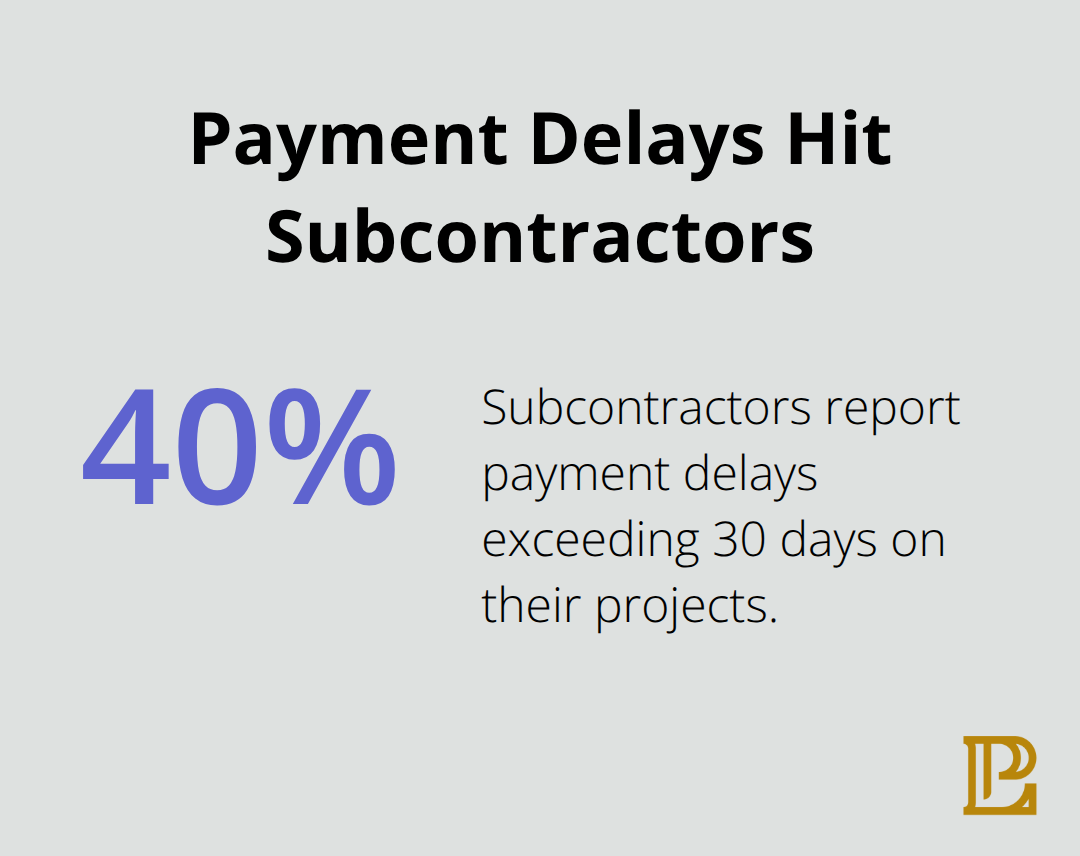
Payment delays rank as the single largest driver of subcontractor conflicts, and the numbers tell a stark story. Construction payment studies show that roughly 40% of subcontractors report payment delays exceeding 30 days on their projects. California’s Civil Code § 8850, effective January 1, 2026, now mandates that owners respond to payment claims within 30 days and pay undisputed amounts within 60 days-a clear signal that payment friction has reached critical levels in the construction industry.
When owners withhold payment beyond these windows, undisputed amounts accrue interest at 2% per month, a penalty that compounds quickly and forces settlement conversations. The reality is blunt: most payment disputes stem not from complexity but from cash-flow games and poor documentation. Owners sometimes use retention or disputed portions as leverage to avoid paying invoices they actually owe.
Documentation Creates Leverage
Contractors and subcontractors who track every invoice timestamp, change order, and acceptance date hold the upper hand in these disputes because they can prove what was owed and when. A detailed contract that spells out scope, unit rates, payment schedules, and quality standards eliminates at least half the friction before work begins.
If you manage subcontractors, insist on written change orders before any scope expansion, photograph completed work at each phase, and maintain a dated log of communications. If you work as a subcontractor, request written approval of any scope changes in real time and send a follow-up email confirming what was discussed. These habits cost nothing but prevent disputes that can cost thousands in legal fees and lost time.
Scope Creep and Timeline Misalignment
Scope creep and timeline misalignment create the second major category of conflict, though these disputes often hide underlying payment problems. When a contract lacks clear definitions of deliverables, unit pricing, or completion milestones, disagreements about who owes what naturally follow. Quality disputes-missing finishes, materials that don’t match specs, or work that fails inspection-typically escalate only when payment is already delayed (if the subcontractor had been paid on time, minor quality issues would resolve through negotiation rather than legal action).
The practical takeaway is straightforward: disputes multiply when communication breaks down and documentation is weak. Scope changes that lack written approval create the most expensive conflicts because neither party can prove what was actually agreed. Once you understand what triggers these disputes, the path forward becomes clearer-and that’s where resolution methods make all the difference.
How to Resolve Subcontractor Disputes Without Going to Court
Mediation Stops Disputes Before Costs Spiral
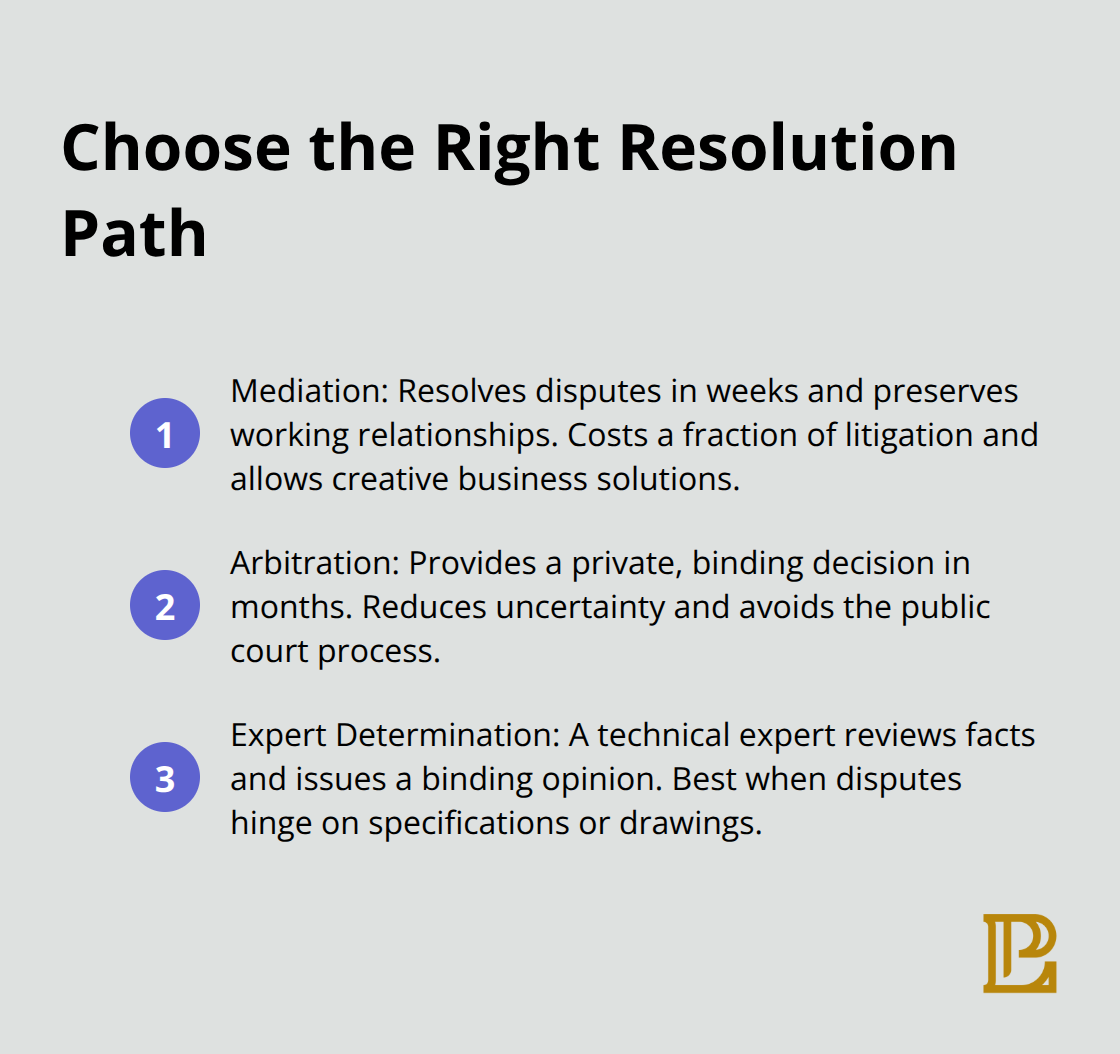
Mediation halts disputes before they drain your budget on litigation. When a payment or scope disagreement surfaces, both parties meet with a neutral third party in a structured negotiation that often resolves the issue in weeks rather than months. Construction mediators with real engineering or contracting backgrounds understand technical specifications and project realities that judges rarely grasp, which means they craft practical solutions neither party would reach alone. The American Arbitration Association updated its Construction Industry Mediation Procedures in March 2024 to offer flexible processes that fit projects of any size, and JAMS provides industry-specific mediation for multi-party disputes when multiple subcontractors are involved.
Mediation typically costs a fraction of litigation-often resolving disputes for thousands rather than tens of thousands in legal fees-and keeps projects moving forward. California’s Civil Code § 8850 now requires owners and contractors to attempt informal negotiation and mediation before pursuing other remedies, which means you cannot skip this step anyway. Prepare for mediation by gathering your contracts, change orders, correspondence, and photos of completed work; bring someone with settlement authority so decisions happen at the table. Mediators with construction backgrounds move faster through technical disagreements because they already know the language and can identify solutions like partial payments, future credits, or revised specifications that courts cannot offer.
Arbitration Delivers Binding Finality
Arbitration makes sense when you need a binding decision and want to avoid the public record and lengthy timeline of court. Unlike mediation, arbitration produces a final ruling that both parties must accept, which appeals to owners and contractors tired of uncertainty. Med-Arb combines mediation with binding arbitration-parties attempt settlement first, and if talks fail, the same neutral issues a binding decision-which gives you finality without the all-or-nothing gamble of litigation.
Many modern construction contracts already require mediation or arbitration as a condition before litigation, including AIA A201 and ConsensusDocs forms, so check your contract language before choosing a path. If your contract includes an arbitration clause but disputes still arise over payment timelines or retention release, California law applies statutory penalties regardless of arbitration-you can still claim 2% monthly interest on improperly withheld amounts even if the claim goes to arbitration.
Expert Determination for Technical Disputes
For technical disputes involving engineering specs, material standards, or construction defects, expert determination allows you to hire an engineer or specialist to review the disputed work and issue a binding opinion, sidestepping legal arguments entirely. This approach works best when both parties agree the core issue is factual rather than contractual-a material that failed to meet specifications, for example, or work that does not match the engineer’s drawings.
The key difference between these methods is speed: arbitration typically concludes in months, mediation in weeks, while court litigation can stretch two to three years. Arbitration requires finality; mediation preserves the working relationship and reaches a business solution that keeps the project alive. Expert determination works when the dispute turns on technical facts rather than contract interpretation or payment obligations.
When disputes involve payment timelines, retention withholding, or claims under California’s new prompt-payment statutes, the resolution method you choose affects how quickly you recover what you are owed. Understanding which path fits your situation-and which your contract already requires-determines whether you settle in weeks or spend years in court.
When Litigation Becomes Necessary
Understanding the True Cost of Court
California construction cases typically run eighteen to thirty-six months from complaint to trial, with discovery alone consuming six to twelve months. Attorney fees in contested construction cases average fifteen to fifty thousand dollars for straightforward disputes and can exceed one hundred thousand for complex claims involving multiple parties or technical issues. The financial reality is harsh: litigation should be your last option, not your first, because the cost often exceeds what you recover.
That said, California law gives you leverage before you ever walk into a courtroom. Civil Code § 3260.1 allows you to recover 2% monthly interest on improperly withheld payments plus attorney fees if you prevail, which means an owner who wrongfully holds back five thousand dollars owes you interest and legal costs on top of the principal.
Statutory Penalties Create Settlement Pressure
This statutory penalty applies regardless of whether you litigate or settle, so use it as negotiation fuel rather than a reason to file suit immediately. Before filing, send a demand letter that cites the specific statute and the amount owed, including accrued interest calculated at 2% monthly from the due date. Many disputes settle after a well-drafted demand letter because owners realize the penalty exposure exceeds what they hoped to save by withholding payment.
Review your contract for arbitration or mediation clauses before filing; many construction contracts already require these steps first, and courts will dismiss your case if you skip them. Private construction disputes under Civil Code § 8850 now require owners to respond within thirty days and pay undisputed amounts within sixty days, creating clear timelines that give you leverage in settlement talks. Public works claims follow Public Contract Code § 7107, which requires retention release within sixty days and payment to subcontractors within seven days of the general contractor receiving funds.
Documentation Determines Case Strength
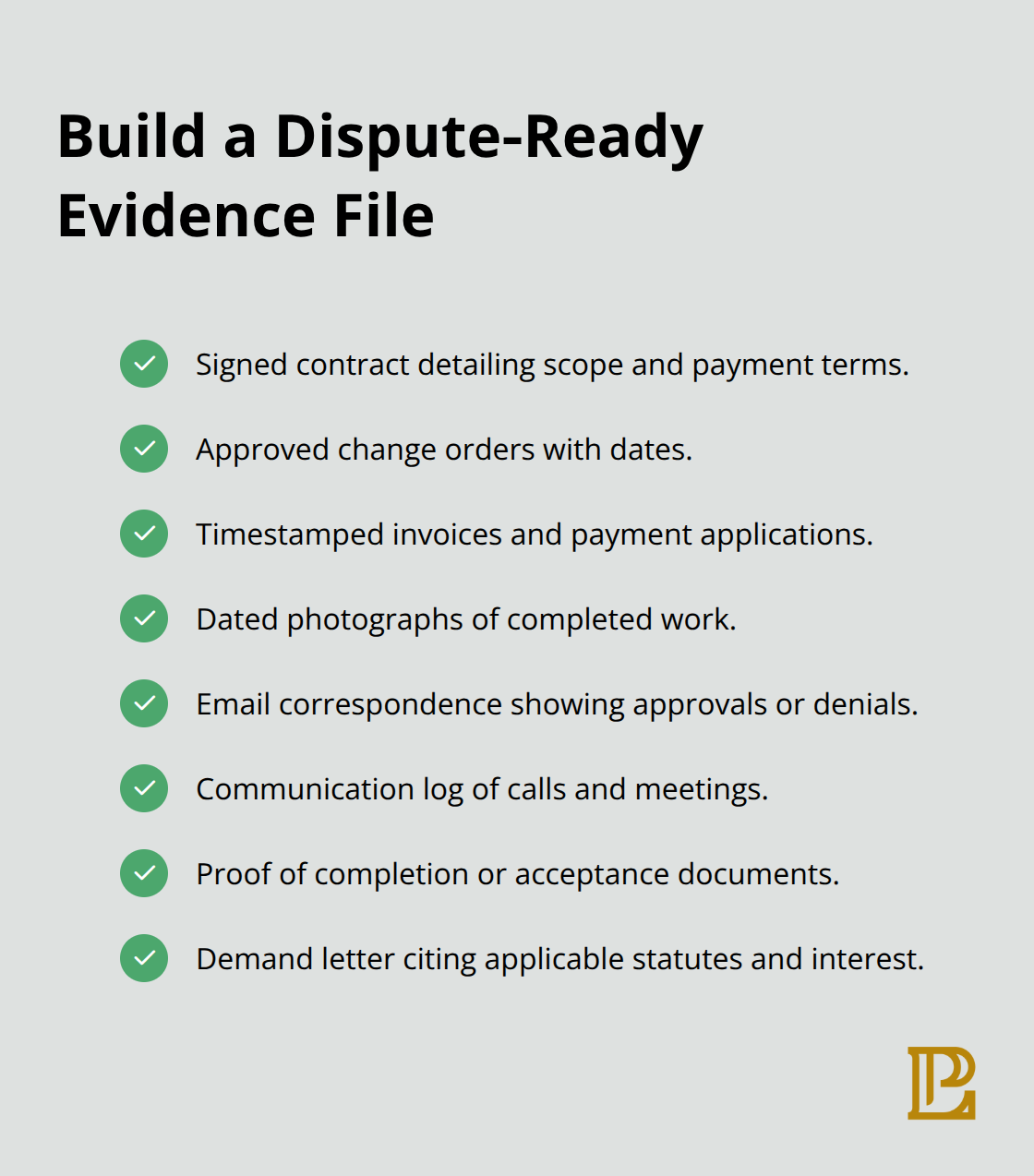
Document everything before you meet with an attorney: gather invoices with timestamps, change orders, photographs of completed work, emails showing approval or denial, and any correspondence about payment disputes. Courts require detailed records to prove what was actually owed and when, and weak documentation weakens your case even if you are technically right.
If your dispute involves retention withholding, California law mandates release within forty-five days of completion for private work and sixty days for public projects; if the owner misses these deadlines, you have a statutory claim regardless of whether the work quality was perfect. Construction cases turn on contract language and documentation. Judges focus on what the contract actually says, not what either party believed it meant, so ambiguous contracts invite costly disputes.
Contract Language and Damage Proof
If your contract language is vague about payment terms, scope definitions, or quality standards, litigation becomes a gamble. Courts also require clear proof of damages; you cannot simply claim you lost profit or had to delay other projects without specific calculations and supporting evidence. The prevailing party in California construction litigation can recover attorney fees under Civil Code § 3260.1 if the dispute involves wrongful payment withholding, which means the loser potentially pays both sides’ legal bills. This rule shifts the financial equation and makes settlement more attractive once litigation costs become clear.
The key is knowing which California statutes apply to your situation. These statutes create penalties that often make litigation unnecessary because the financial pressure on the other party becomes real. If you operate in Los Angeles County and face a construction dispute, our civil litigation team can prepare pleadings, manage discovery, and represent you at trial or in alternative resolution forums, helping you navigate the decision between settlement and court.
Final Thoughts
Subcontractor dispute resolution works best when you prevent disputes before they start. Clear contracts with defined scope, unit pricing, payment schedules, and quality standards eliminate most friction before work begins. Written change orders, dated photographs of completed work, and timestamped invoices create the documentation that either resolves disputes quickly or gives you leverage in settlement talks.
California law now gives you structured paths to resolution when disputes surface. Civil Code § 8850 requires owners to respond to payment claims within 30 days and pay undisputed amounts within 60 days, with 2% monthly interest accruing on improperly withheld sums. Mediation resolves most disputes in weeks rather than months, costs a fraction of court fees, and preserves working relationships, while arbitration delivers binding finality when mediation fails.
The decision to litigate depends on contract language, documentation quality, and whether statutory penalties already give you leverage. Before filing suit, send a demand letter citing the applicable statute and calculated interest-many owners settle once they understand the penalty exposure. If you need guidance on whether your dispute qualifies for mediation, arbitration, or litigation, or if you need help drafting demand letters or reviewing contract language, contact Pierview Law to discuss your situation and determine the most efficient path forward.