
A poorly drafted contract can cost your LA business thousands in disputes, lost revenue, or legal fees. Corporate contract drafting in California requires precision-vague language, missing liability clauses, and unclear terms create openings for conflict.
We at Pierview Law have seen how the right contract protects your interests from day one. This guide walks you through the mistakes to avoid and the practices that work.
What Breaks Contracts Before They’re Even Signed
Vague Language Creates Expensive Disputes
Vague language destroys deals faster than almost anything else. When a contract states that deliverables will be completed in a timely manner or services will meet industry standards, you’ve created a lawsuit waiting to happen. One party reads timely as two weeks; the other reads it as two months. Industry standards means nothing without defining whose standards apply or what metrics matter. California courts look at the written terms objectively to figure out what both sides actually agreed to, but vague language makes that impossible.
The fix demands brutal specificity. Instead of timely manner, write delivery by March 15, 2027. Instead of industry standards, specify services will include three rounds of revisions with feedback provided within five business days. Numbers, dates, and measurable outcomes eliminate the ambiguity that leads to disputes. Vague contracts cost LA businesses tens of thousands more to litigate than the original deal was worth.
Liability Clauses That Don’t Match Your Risk
Liability clauses that don’t match your actual business risk expose you to catastrophic losses. Many LA businesses copy templates that cap liability at the contract price or exclude certain damages entirely, without asking whether that protection actually covers what could go wrong. If you’re a software vendor and the cap is $50,000, but a client’s system failure costs them $500,000 in lost revenue, that cap won’t save you from a lawsuit-it just means you’ll fight about whether the cap applies to that particular loss.
California courts enforce liability caps, but they require crystal-clear language about what’s covered and what isn’t. Indemnification clauses must specify exactly which party pays for which losses. If your vendor breaches a data security promise and you face regulatory fines, who covers those fines? The contract should say. Tailoring these clauses to your business risk prevents the scenario where you thought you were protected but weren’t.
Dispute Resolution Methods Get Overlooked Until Conflict Arrives
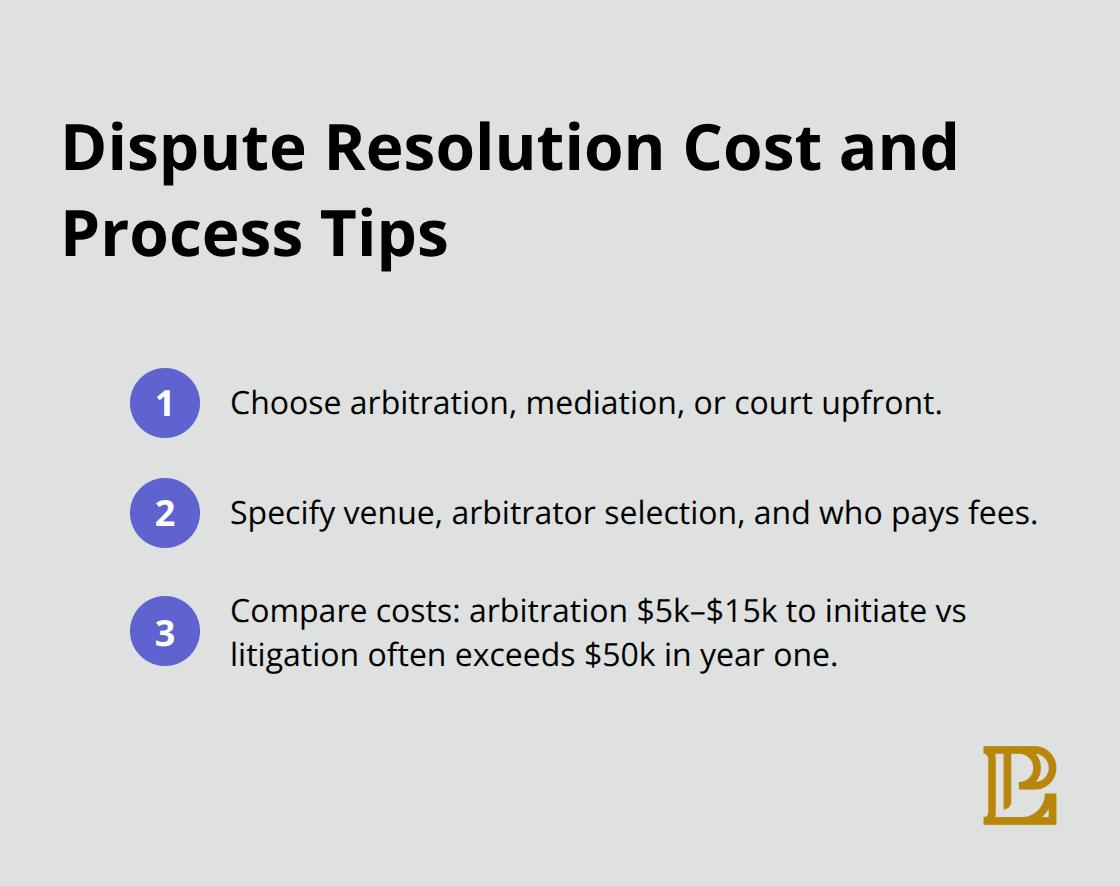
Many contracts stay silent on whether disputes go to arbitration, mediation, or court, which means if something breaks down, you’ll spend months fighting about where to fight instead of solving the actual problem. Arbitration clauses cost $5,000–$15,000 to initiate versus litigation costs that can exceed $50,000 in the first year alone, according to the American Arbitration Association. Define your dispute process upfront: specify arbitration in Los Angeles County, name the arbitrator selection process, and clarify who pays arbitration fees.
These three elements-precise language, tailored liability protection, and clear dispute paths-separate contracts that actually work from expensive mistakes. Once you’ve addressed these foundational issues, the next step involves identifying the specific elements that California law requires in every business contract.
What Must Be in Every California Business Contract
Scope, payment, and termination clauses form the backbone of any contract that actually works. Without them, you operate on assumptions instead of agreements. The scope defines exactly what work gets done, by whom, and when. Payment terms specify amounts, due dates, and consequences for lateness. Termination clauses tell both parties how to exit if things fall apart.
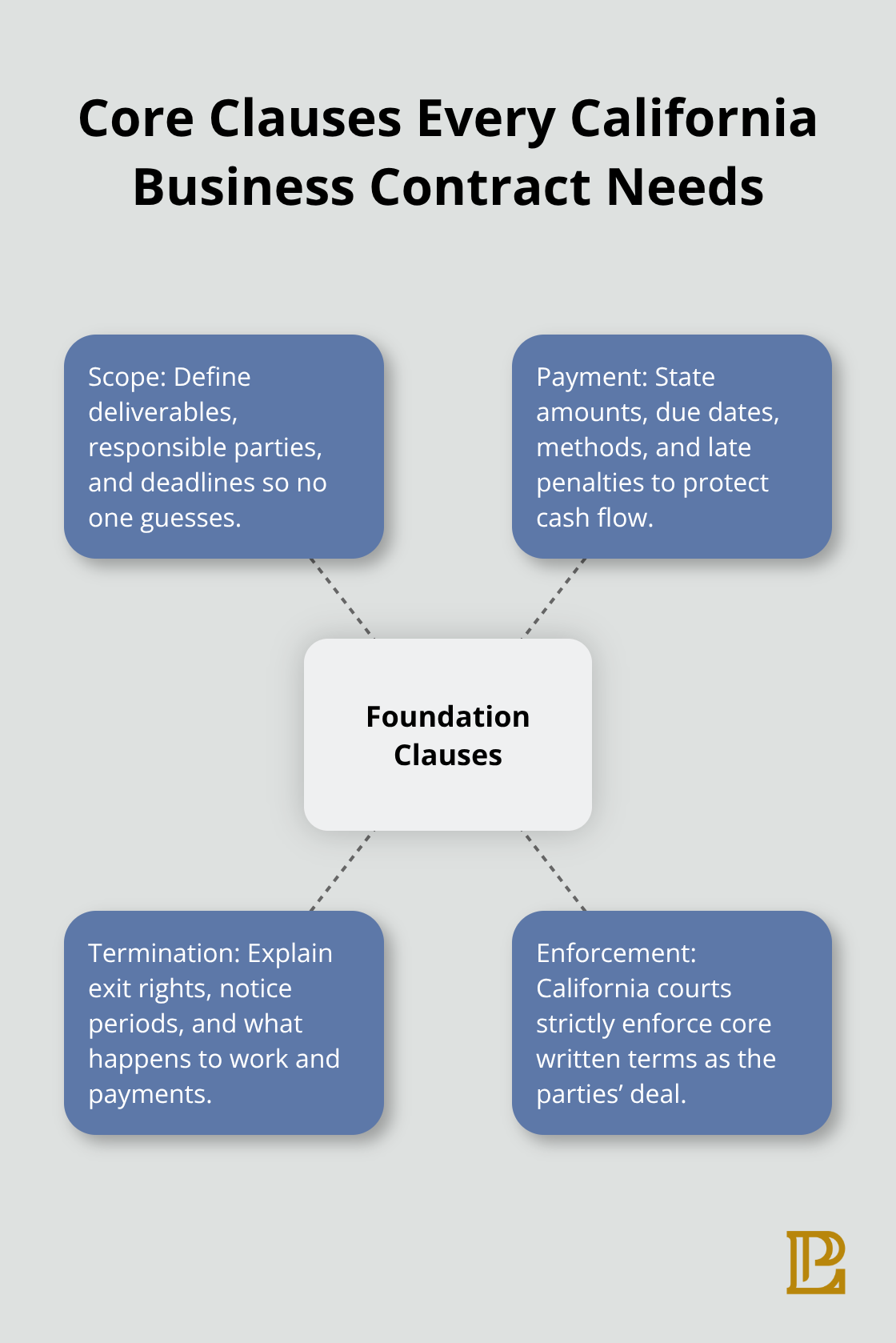
California courts enforce these elements strictly because they represent the core deal both sides struck. A contract missing any of these three invites disputes that cost far more than the original agreement was worth.
Define Scope So No One Guesses What Deliverables Mean
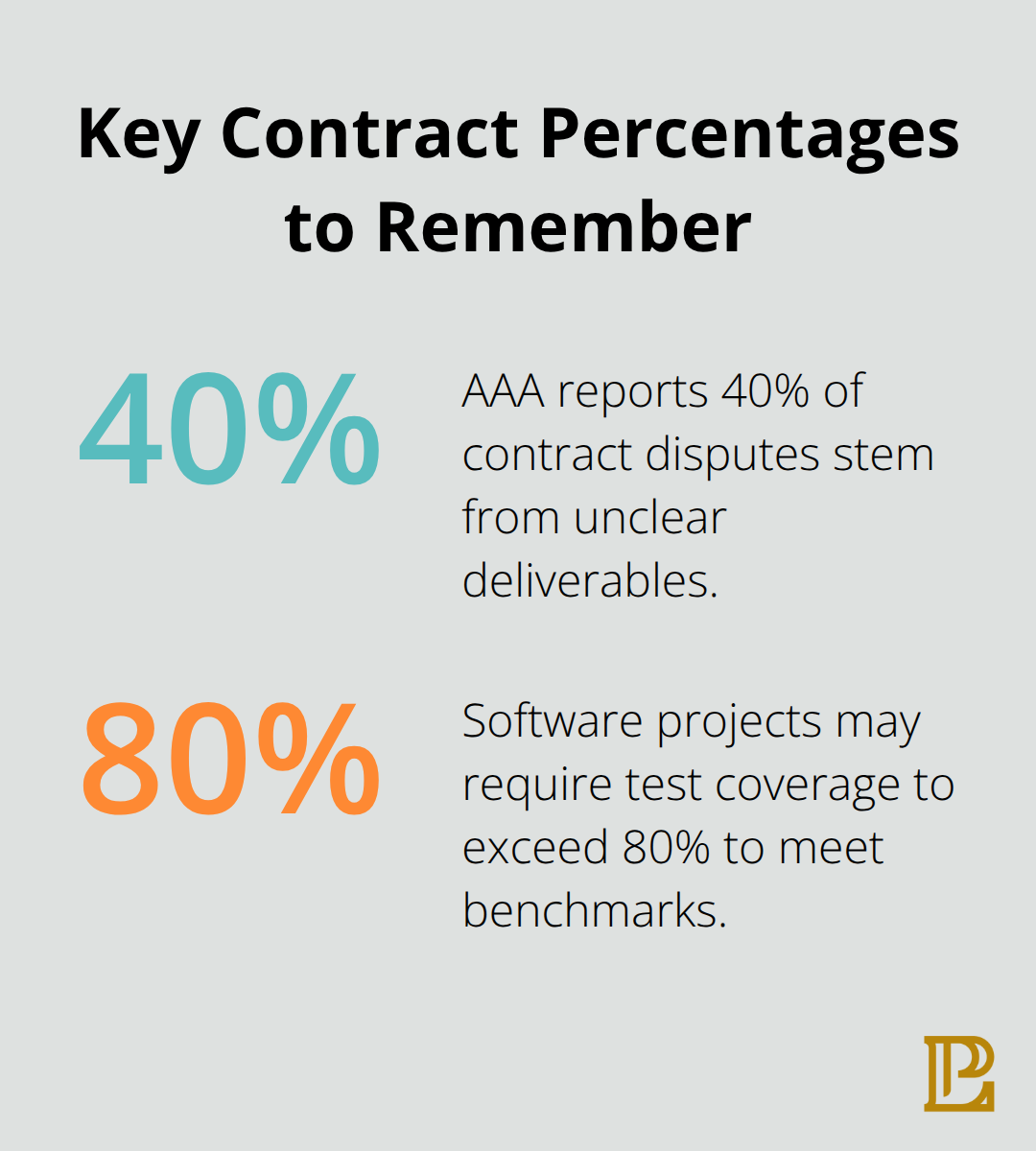
Scope of work separates contracts that deliver from contracts that disappoint. Write down every deliverable with measurable criteria. Instead of saying the vendor will provide marketing services, state the vendor will deliver two social media posts per week, each with at least three images and a 150-word caption, posted by 9 a.m. Pacific Time every Monday and Thursday. Name the platforms, specify the format, and include approval timelines. When a client wants a website redesign, your contract should list the number of pages, the revisions included, the technology stack, and the launch date. The American Arbitration Association found that 40 percent of contract disputes stem from unclear deliverables, making specificity the cheapest insurance you can buy. Include acceptance criteria so both parties know when work is actually complete. If acceptance requires client sign-off, state how many business days the client has to review and approve before the work counts as accepted.
Lock Down Payment Terms to Prevent Cash Flow Disasters
Payment terms determine whether you get paid on time or chase invoices for months. California businesses frequently accept net 30 terms without considering their own cash flow needs. Specify the exact amount due, the invoice date, the due date, and the payment method. Net 30 means payment is due 30 days from invoice date, but many contracts leave this ambiguous. State whether you invoice upon completion, upon delivery, or on a schedule. If you do ongoing work, specify whether you invoice monthly, quarterly, or per milestone. Late payment penalties matter more than most contracts acknowledge. Adding a 1.5 percent monthly interest charge on overdue invoices motivates timely payment without litigation. California Civil Code Section 1916-3 allows interest on late payments, so include this clause. If you extend credit as a service provider, losing 30 days of cash flow compounds quickly. Set a threshold for stopping work if invoices exceed 45 days past due, and include this stopping point in your contract upfront so the client knows the consequence.
Termination Clauses Protect Both Sides When Relationships End
Termination clauses define how either party exits the contract and what happens to obligations, payments, and work product. Without clear termination language, one party may claim they can walk away immediately while the other believes the contract runs for a full year. Specify whether either party can terminate for convenience (any reason) or only for cause (breach or failure to perform). If termination for convenience is allowed, set a notice period-typically 30 to 90 days-and specify whether the terminating party owes payment for work completed through the notice period. If termination is for cause only, define what constitutes cause with precision. Late payment beyond 15 days, failure to deliver by the agreed date, or breach of confidentiality obligations should each be named separately. Include what happens to work in progress. If a client terminates mid-project, does your company keep the retainer, refund a portion, or charge for time already spent? Clarify this before disputes arise. Address intellectual property ownership at termination-if you create content or code, the contract should state who owns it if the relationship ends.
These three elements-scope, payment, and termination-form the foundation that prevents most contract disputes. LA corporate law compliance requirements shape every contract you draft and the compliance steps that protect your business from regulatory exposure.
How to Draft Contracts That Survive California’s Legal Reality
California’s legal environment punishes contracts drafted without state-specific knowledge. The state’s courts interpret contracts strictly, enforce written terms as written, and hold both parties accountable for what they actually agreed to in plain language. This means your contract either complies with California law from the start, or it becomes a liability the moment someone disputes it. Compliance isn’t optional-it’s the foundation that determines whether a court enforces your contract or tosses it out.
Verify Capacity and Authority Before Anyone Signs
California Civil Code Section 1556 requires that anyone entering a contract must have capacity-meaning they’re a competent adult 18 or older, of sound mind, or a legitimate business entity. Many contracts fail because they don’t verify who actually signed on behalf of a company. If a contract is signed by someone without authority to bind their company, California courts will void it. Require that any representative signing on behalf of a business provide a corporate resolution or board authorization proving they have the power to sign.
For real estate transactions and contracts for services over $500, California’s Statute of Frauds under Civil Code Section 1624 requires the agreement to be in writing. Generic online templates miss this requirement entirely, and that gap costs LA businesses thousands when enforcement becomes necessary. Your contract must also reflect a meeting of the minds-meaning both parties understood and agreed to the same terms. California courts assess this objectively through the written document and the parties’ outward conduct, not through what either party privately believed.
Write Down What Both Parties Actually Exchange
Consideration-something of value exchanged between parties-is mandatory under California Civil Code Section 1605. If one party receives a benefit without giving anything back, the contract fails. Many LA service agreements overlook this when they include one-sided confidentiality clauses or non-compete terms that benefit only one side. Balance the obligations so both parties give and receive something.
Include a severability clause stating that if any portion of the contract is deemed unenforceable, the rest of the agreement remains valid. California courts respect these clauses and will enforce the remaining terms even if one provision fails. This single addition prevents an entire contract from collapsing because one clause doesn’t survive legal scrutiny.
Assign Specific Tasks to Specific People
Define roles and responsibilities with brutal clarity because California courts will hold you to exactly what the contract states. Assign specific tasks to specific people or departments. Instead of saying your vendor will provide customer support, state your vendor will respond to support emails within four business hours, maintain a help desk phone line open 8 a.m. to 6 p.m. Pacific Time Monday through Friday, and resolve critical issues within 24 hours.
Name the person responsible for approving work, the person responsible for delivering it, and the person responsible for paying invoices. When multiple departments are involved, specify which department owns which obligation. If a project requires coordination between your company and the vendor, name the project manager from each side and include their contact information in the contract itself. This prevents the scenario where six months in, no one remembers who was supposed to do what.
Include performance benchmarks so both parties know whether work is actually on track. If a vendor is building software, specify that code reviews happen weekly and that test coverage must exceed 80 percent. If you’re providing marketing services, specify that monthly reports showing traffic, conversion rates, and cost per acquisition are due by the fifth business day of each month.
These benchmarks become the evidence you need if you eventually dispute whether work met the contract’s requirements.
Update Contracts When Your Business Changes
Contracts are not static documents-they become obsolete the moment your business changes. Schedule a contract review at least annually and whenever your business structure, revenue model, or service offerings shift significantly. If you acquire another company, your existing vendor contracts may no longer fit your new structure. If California employment law changes, your independent contractor agreements may violate AB5’s misclassification rules.
The U.S. Department of Labor updated overtime thresholds in 2024, which affects how you classify workers and structure compensation clauses. Review your contracts against these regulatory changes before they become liabilities. Include a clause that allows either party to propose amendments, with a process for reviewing and approving changes in writing. This prevents the drift where both parties operate under different understandings of what the contract requires.
Many LA businesses operate under contracts written three years ago that no longer reflect how they actually do business. That gap creates disputes when someone finally reads the original terms and realizes they conflict with current practice. Update contracts to match reality, or reality will expose the contract as unenforceable.
Final Thoughts
Corporate contract drafting in California demands precision that templates cannot provide. Vague language, inadequate liability protection, and missing dispute resolution terms cost LA businesses thousands when conflicts arise. The elements that matter most-precise scope definitions, locked-down payment terms, and clear termination paths-protect you from day one or expose you to liability the moment someone disputes the agreement.
Professional legal review catches problems that templates miss and identifies whether your liability caps actually match your business risk. A lawyer familiar with California law spots missing severability clauses, capacity issues, and compliance gaps that could render your contract unenforceable. The cost of thorough contract review typically runs far less than the legal fees you’ll pay fighting over an ambiguous agreement later.
Audit your current contracts against the standards covered here and look for vague deliverable descriptions, payment terms that don’t specify due dates or late penalties, and termination language that leaves both parties guessing. Pierview Law handles contract drafting and review for LA businesses across all industries and understands California’s legal requirements to build agreements that actually work. Contact them at 310-975-3183 or andy@pierviewlaw.com to discuss your contract needs.