
Tenant improvements negotiation can make or break a commercial lease deal. Property owners who get this wrong end up with budget overruns, construction delays, and disputes that drain time and money.
At Pierview Law, we help Hermosa Beach business owners structure leases that protect their interests while keeping tenants happy. The right approach balances flexibility with firm guardrails on costs, timelines, and quality standards.
What Tenant Improvements Actually Mean for Your Lease
Tenant improvements are the modifications a tenant makes to a commercial space to suit their business operations. These aren’t minor cosmetic changes-they’re structural or significant alterations that add value to the property and can cost anywhere from thousands to hundreds of thousands of dollars. Property owners in Hermosa Beach need to understand that tenant improvements represent a major negotiation point because they directly affect your property’s future marketability, maintenance obligations, and long-term profitability.
The tenant might want custom layouts, upgraded flooring, specialized HVAC systems, or built-in fixtures specific to their industry. You need to decide whether you’ll fund these improvements through a tenant improvement allowance, whether the tenant covers costs entirely, or if you’ll split expenses. Getting this wrong means you either overspend on improvements that don’t match your property’s market positioning, or you end up with a space that’s too customized for the next tenant to lease.
Understanding Improvement Allowances and Your Budget Control
A tenant improvement allowance is money you provide to the tenant for construction work, typically expressed as a dollar amount per square foot. If you offer $50 per square foot on a 5,000 square foot space, that’s a $250,000 commitment. This allowance should reflect your local market-Hermosa Beach commercial spaces typically see allowances ranging from $25 to $100 per square foot depending on the space type and tenant quality.
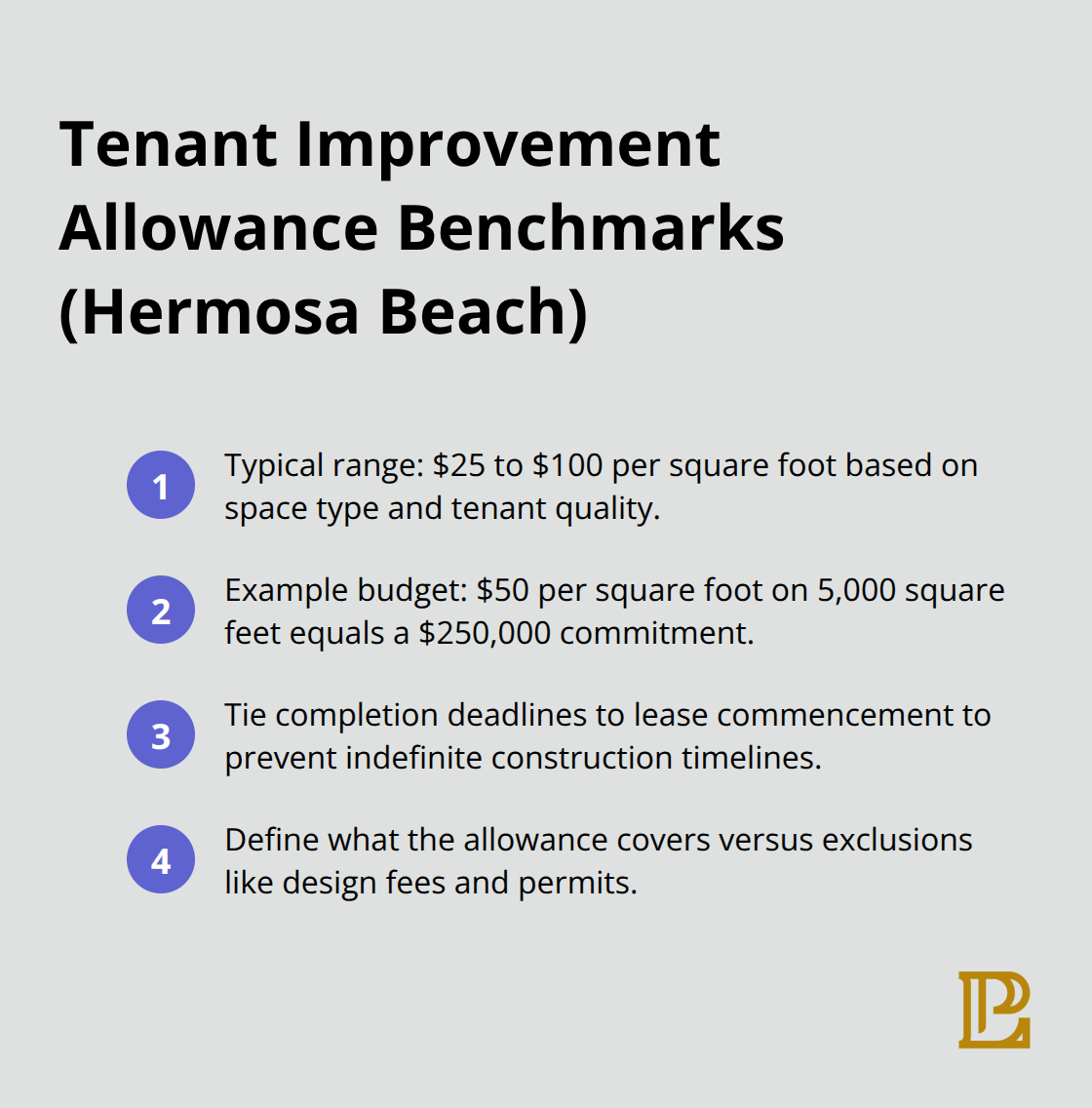
The critical mistake property owners make is setting allowances without clear specifications about what’s included and what isn’t. Your lease must specify whether the allowance covers design fees, permits, or only hard construction costs. You also need change order procedures that require your written approval before any work exceeding the budget moves forward. Without this language, tenants can claim you approved cost overruns verbally, and you’ll be stuck paying bills you never intended to authorize.
The allowance should also include a completion deadline tied to lease commencement-if the tenant doesn’t finish improvements by that date, their rent starts anyway. This protects you from indefinite construction timelines that delay your revenue stream.
Negotiating Standards That Protect Your Asset
The types of improvements tenants request vary dramatically by industry. A restaurant tenant needs commercial-grade kitchen equipment and grease traps. A medical office needs specialized electrical systems and HIPAA-compliant infrastructure. A tech startup might want open floor plans with minimal structural work.
Your lease must establish which improvements require your prior written approval, which are prohibited entirely, and which fall within the allowance without approval. Prohibit anything that damages the building’s structural integrity, violates building codes, or makes the space unsuitable for future tenants. Many property owners fail to require that improvements meet local building codes and zoning requirements-you’re ultimately liable if a tenant’s contractor cuts corners.
Require the tenant to obtain all necessary permits and provide you with copies before work begins. The lease should also state that all improvements become part of the property and belong to you when the lease ends, unless you agree otherwise in writing. This prevents disputes about what the tenant can remove when they leave.
Setting Clear Approval and Inspection Rights
You need approval rights that give you control without creating bottlenecks. Specify that the tenant must submit detailed plans and specifications for your review at least 30 days before construction starts. You’ll want to identify which improvements fall within the allowance (and thus don’t need approval) versus which ones require your sign-off. This distinction prevents constant back-and-forth negotiations over minor decisions.
Your lease should also grant you the right to inspect the work at various stages-foundation, framing, mechanical systems, and final completion. You can hire a third-party inspector to verify that work meets code and your specifications (the tenant typically pays for this). Document all inspections in writing and require the tenant to correct any deficiencies before you release final payment from the allowance.
The next section covers how to protect yourself during the actual construction phase, where most disputes and cost overruns occur.
How to Lock Down Tenant Improvement Terms That Protect Your Bottom Line
Your lease language determines whether tenant improvements stay within budget or spiral into expensive disputes. Most property owners in Hermosa Beach treat improvement allowances as flexible guidelines rather than hard limits with enforcement mechanisms. You need specific contract language that removes ambiguity and gives you control over costs, timelines, and quality standards before construction starts.
Define What the Allowance Covers and What It Excludes
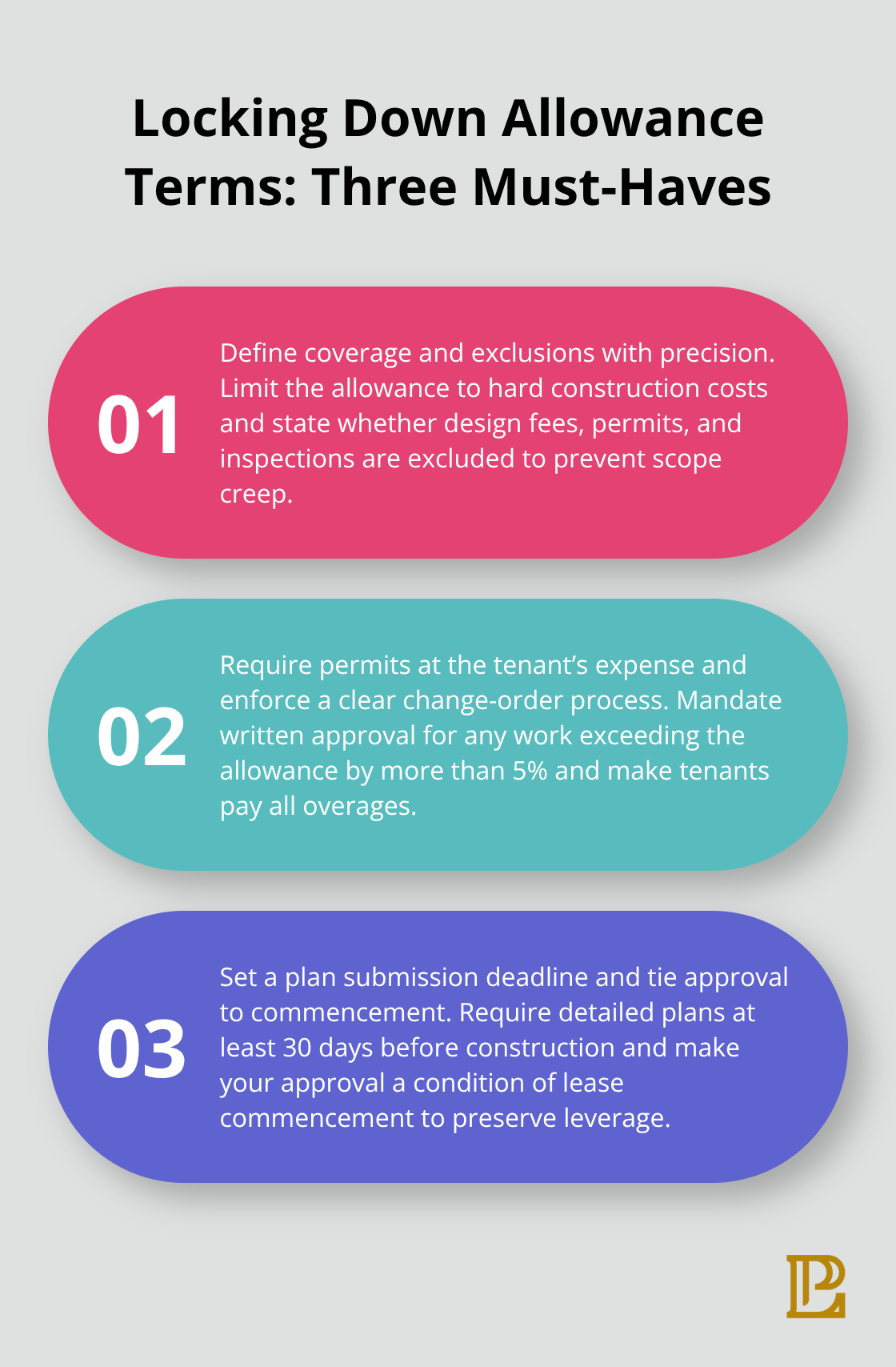
The allowance should cover only hard construction costs-materials, labor, and equipment directly tied to the improvements. Exclude design fees, permits, inspections, and insurance from the allowance unless you explicitly state otherwise. This distinction matters because tenants will claim permit costs fall within the allowance if your lease doesn’t specify.
Your lease must also require the tenant to obtain all permits at their expense and provide copies before any work begins. Establish a change order process that requires your written approval for any work exceeding the allowance by more than 5 percent. If a tenant wants improvements beyond the allowance, they pay the difference-no exceptions.
Require Detailed Plans Before Construction Starts
Set a deadline for the tenant to submit detailed plans and specifications at least 30 days before construction begins. Your approval of these plans should be a condition of lease commencement, not a suggestion. Many property owners allow construction to start while plans are still under review, which eliminates your leverage if problems surface later.
Require the tenant to use licensed, insured contractors and provide you with proof of general liability insurance (minimum $2 million coverage) and workers’ compensation insurance before work begins. A contractor without proper insurance creates liability exposure that follows you for years.
Prohibit Improvements That Damage Your Asset
Prohibit specific improvements that compromise your property: structural modifications without engineering approval, asbestos or lead removal without certified professionals, anything that violates Hermosa Beach building codes or zoning ordinances, and any changes to the building’s exterior. Include language stating that all improvements become your property when the lease ends, regardless of whether the tenant installed them at their expense or within the allowance.
This provision prevents tenants from claiming they can remove custom built-ins or specialized systems when they vacate.
Inspect Work at Critical Stages
Schedule inspections at framing, mechanical systems, and final completion stages. You can hire a third-party inspector to verify work quality and code compliance-the tenant pays for this inspection, typically $1,500 to $3,000 depending on project scope. Document every inspection in writing and require the tenant to correct deficiencies within 10 days before you release final payment.
This inspection documentation becomes critical evidence if disputes arise later.
Tie Rent Commencement to Substantial Completion
Rent commencement should tie to substantial completion of improvements, not project start date. If the tenant drags out construction, their rent starts anyway on the date specified in your lease. This eliminates incentives for tenants to delay completion while still occupying the space rent-free.
The next section covers how to protect yourself during the actual construction phase, where most disputes and cost overruns occur.
Protecting Yourself While Construction Happens
Construction phase is where tenant improvement deals fall apart. You’ve signed the lease with clear terms, but now contractors are on-site, costs are climbing, and timelines slip. Property owners in Hermosa Beach who don’t enforce their lease provisions during construction end up absorbing unexpected expenses and dealing with incomplete or substandard work. The time to protect yourself is before the first nail gets driven, and enforcement happens daily while work is underway.
Require Insurance and Bonding Before Work Starts
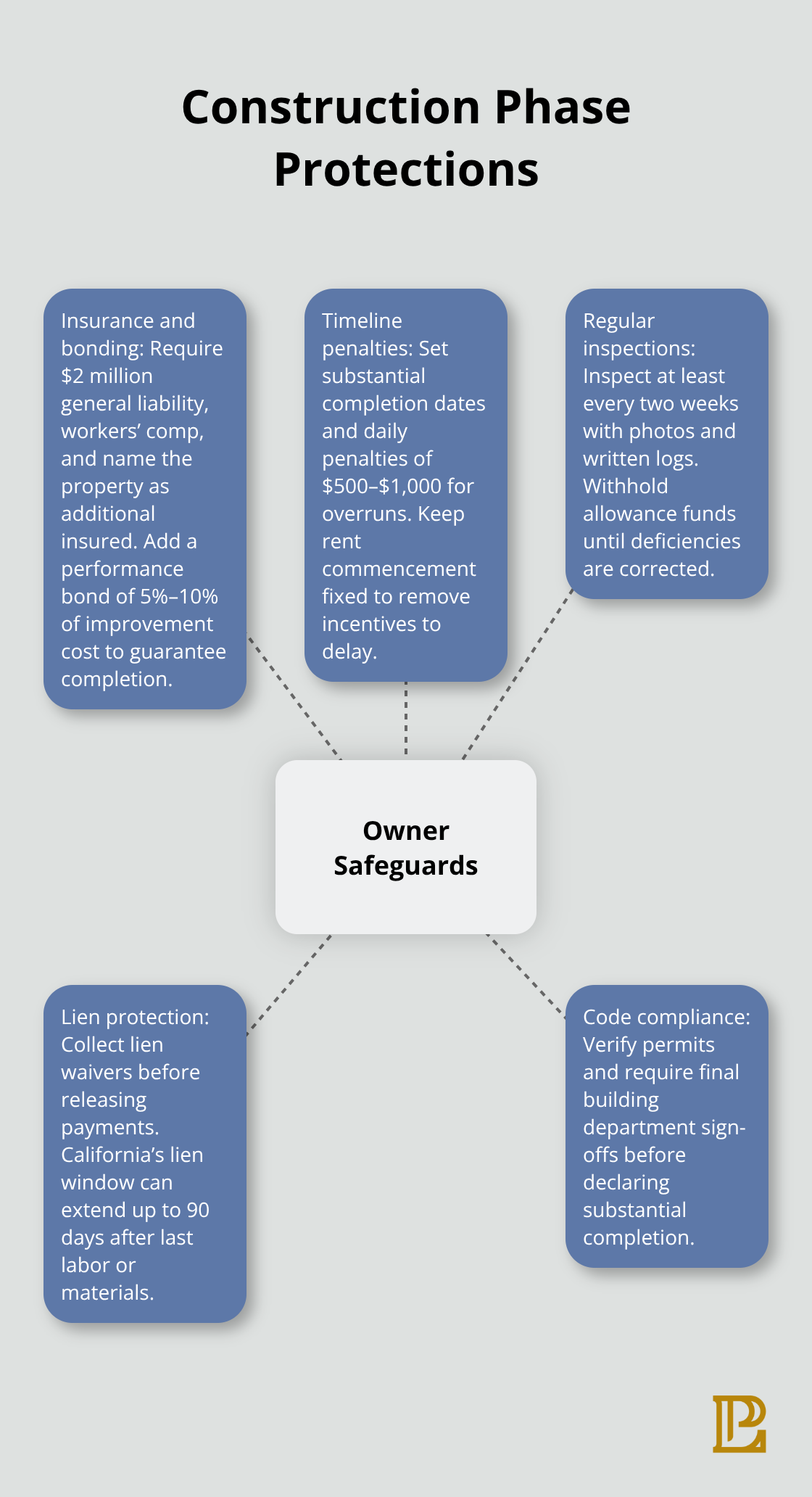
Insurance and bonding aren’t paperwork formalities-they’re your financial safety net. Require the tenant to provide a certificate of insurance showing general liability coverage of at least $2 million and workers’ compensation insurance before any contractor sets foot on your property. Don’t accept verbal promises or insurance certificates that expire mid-project. Request that your property be named as an additional insured on the general liability policy, which gives you direct coverage if someone gets injured on-site. Many property owners skip this step and end up personally liable for accidents that occur during tenant improvements. California construction sites see approximately 170,000 injuries annually according to the California Division of Occupational Safety and Health, so this protection matters.
Additionally, require a performance bond from the contractor-typically 5 to 10 percent of the improvement cost-that guarantees completion even if the contractor abandons the project. A $100,000 improvement project should have a $5,000 to $10,000 bond backing it. This bond becomes your recovery source if the contractor disappears or delivers defective work.
Enforce Timelines with Daily Penalties
Timeline enforcement separates property owners who stay profitable from those who bleed money. Your lease should specify substantial completion dates with daily penalties if work extends beyond the deadline. Set penalties at $500 to $1,000 per day, which creates genuine financial consequences for delays. Document every delay in writing-email the tenant when the deadline passes and reference the lease penalty clause. Most tenants will mobilize to finish work once daily penalties start accruing.
Rent commencement should remain fixed regardless of construction progress; if improvements aren’t substantially complete by the lease start date, the tenant pays rent anyway. This eliminates the tenant’s incentive to drag out construction while occupying space rent-free.
Conduct Regular Inspections and Document Everything
During construction, conduct inspections at minimum every two weeks and photograph everything. Take photos of completed work, materials on-site, and any deficiencies you observe. These photos become critical evidence if disputes arise about work quality or whether improvements met your specifications. Create a written inspection log documenting the date, work completed, deficiencies found, and required corrections. Have the tenant sign off on inspection reports so they can’t later claim they didn’t know about problems.
Before releasing any payment from the improvement allowance, require the tenant to provide lien waivers from all contractors and suppliers, confirming they’ve been paid. This prevents mechanics’ liens from being filed against your property after you’ve already paid the tenant. California law allows contractors and suppliers to file liens within 90 days of last providing labor or materials, so lien waivers protect you from phantom claims months after construction ends.
Verify Code Compliance and Building Department Sign-Off
Verify that all work complies with Hermosa Beach building codes and obtain sign-offs from the building department. Many tenants hire cut-rate contractors who skip permits or use substandard materials to save money. You’re responsible for code violations if work doesn’t meet standards, and correcting code violations after lease signing costs exponentially more than preventing them upfront. Request copies of all permits and final inspection approvals from the building department before you consider the project substantially complete.
Final Thoughts
Tenant improvements negotiation requires clear lease language, strict enforcement during construction, and advance planning that protects your property and bottom line. Property owners in Hermosa Beach who treat improvement allowances as flexible guidelines rather than firm commitments absorb cost overruns, manage construction delays, and deal with substandard work that damages their asset. The three core principles that separate successful lease deals from problematic ones are specificity in your contract terms, documentation at every stage, and consistent enforcement from day one.
Your lease must define what the allowance covers, establish approval procedures before work begins, require insurance and bonding, and include daily penalties for timeline delays. During construction, conduct regular inspections, photograph all work, collect lien waivers before releasing payment, and verify building department sign-offs. These practices eliminate ambiguity and give you leverage if disputes arise-property owners who skip these steps typically face $10,000 to $50,000 in unexpected costs per lease, depending on project scope.
Working with legal counsel who understands Hermosa Beach commercial real estate prevents costly mistakes before they happen. Pierview Law handles lease negotiations, contract drafting, and dispute resolution for property owners throughout Los Angeles County, reviewing improvement allowances, approval procedures, and enforcement mechanisms to protect your interests while keeping tenants satisfied.